
Budapest to Ljubljana by Train: What to Expect
When we started planning the Budapest-to-Ljubljana leg of our trip, we had three real options: rent a car, take the bus, or take the train. Here’s how we landed on the train, and exactly what the ride was actually like.
Car, Bus, or Train: How We Decided
Flying was ruled out before we even got to the other options. There’s no direct flight between Budapest and Ljubljana, so any flight route would have meant a connection and a long layover. That left us comparing car, bus, and train.
Rental car was the first thing we ruled out. It’s a fine option if you’re picking up and dropping off at the same location, but we needed a one-way rental between two different cities, and the drop-off fee made it significantly more expensive than the alternatives.
Bus was our next option. We looked at FlixBus, which runs the route in about 6 hours 45 minutes — the fastest of the three options, and there may be other carriers on the route as well. In the end we decided against it purely because that’s a long stretch to spend on a bus, seated in one spot with limited ability to move around.
Train is what we ended up booking. It’s slower than the bus, but it gave us the ability to get up, walk around, stand by a window, or stretch our legs — which mattered more to us than shaving off an hour.
Booking the Train
We booked about two months in advance through RailNinja, and chose the non-stop train rather than one with a connection. This route only offers one class of service — there’s no first class option on this train. We also paid extra for a reserved seat.
Tickets came out to about $50 per person, including the seat reservation fee.
That reservation fee is worth calling out specifically: if you’re traveling in summer, book your seats early and pay for the reservation if it’s offered. Without it, there’s no guarantee you and your travel companions will be seated together, and on a train this full, that’s not a risk worth taking.
There are two direct trains to choose from each day. Our train departed Budapest in the morning and covers the route in about 7 hours 45 minutes, getting us into Ljubljana in the afternoon — though in our case, it ended up running about 45 minutes late. There’s also a later direct train that departs in the afternoon, but it arrives in Ljubljana around 1:00 am. We ruled that one out and went with the morning departure instead.
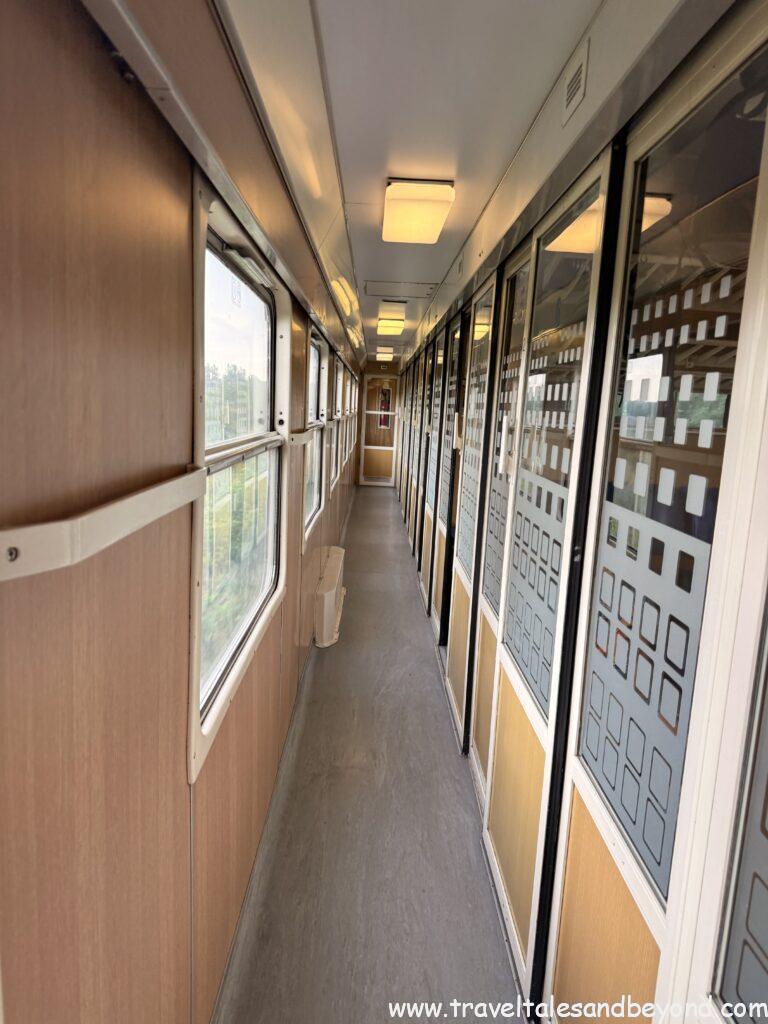
Get to the station at least 30 minutes before departure. Between finding your platform, locating your train car (compartments are numbered and can be spread out along a long platform), and settling into your seat before the conductor’s first check, you don’t want to be cutting it close.
One thing to expect: your ticket gets validated twice during the journey — once by the conductor shortly after departure in Budapest, and again after crossing into Slovenia. Keep your ticket (and reservation, if you paid for one) easily accessible rather than buried in a bag, since you’ll need to show it more than once.
What to Expect Onboard
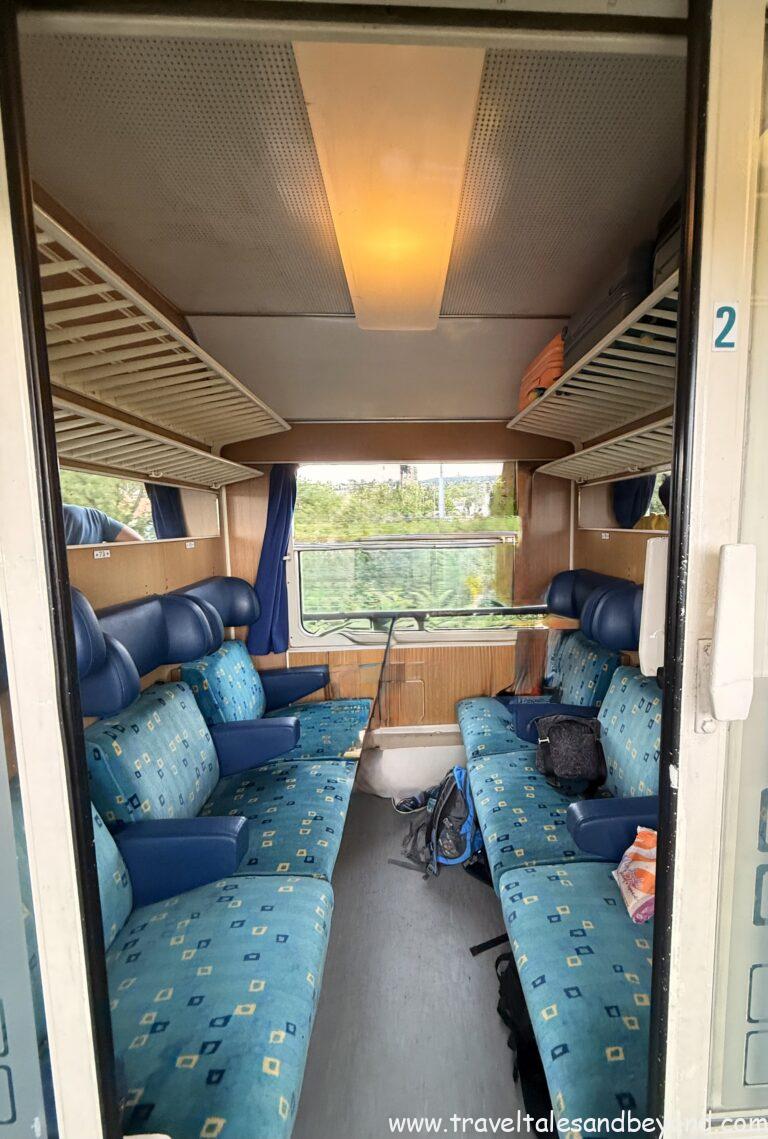
The seats were comfortable, with a recline function — though on a fully booked train, there wasn’t much room to actually recline. Still, having the option at all made the ride more comfortable than we expected.
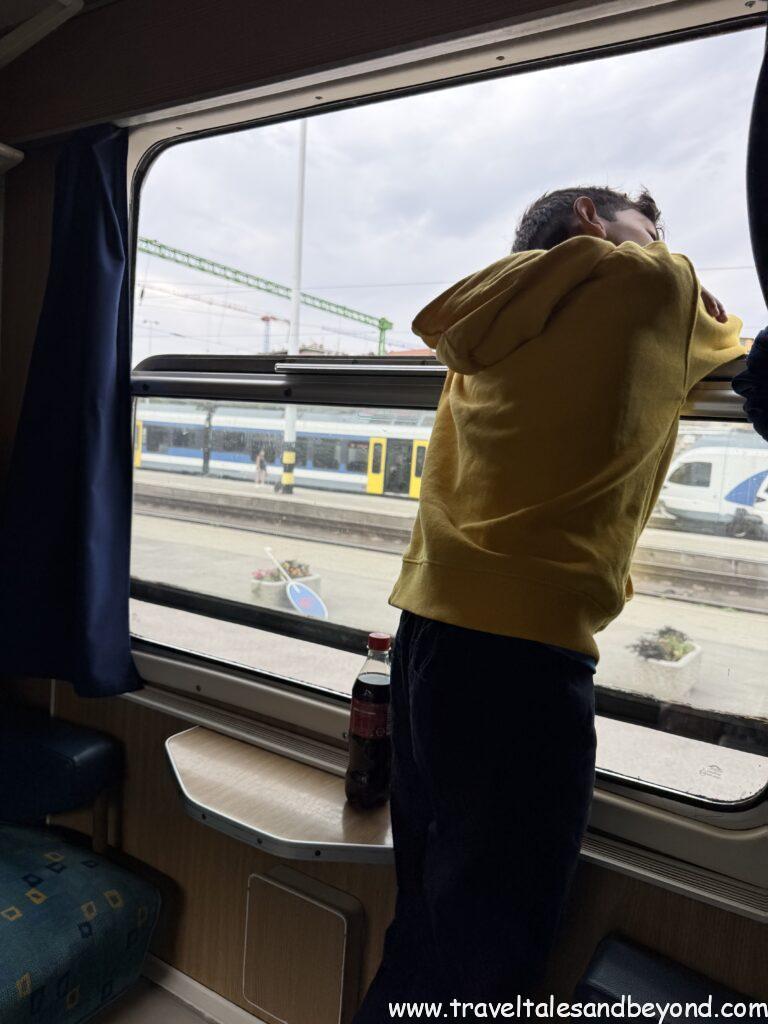
The train wasn’t air-conditioned, so comfort depended entirely on the weather outside. The upper windows can be opened for airflow, which helped, but only to a point — the morning departure felt pleasant, but by midday, the cabin got noticeably hot, and we ended up standing near the doors between cars for a while just to get more airflow than the open windows provided. If you’re traveling in summer, a small portable fan is worth packing.
There’s also no wifi on board, and no way to charge your devices either — so bring a fully charged phone and a power bank pack if you’re planning to take photos, use offline maps, or just want your phone alive by the time you arrive.
There’s no pantry car on this route either, and none of the station stops are long enough to hop off and grab food. Pack food and water before you board — this isn’t optional. We brought enough for the full ride, and were glad we did, since there was genuinely no other option once underway.
Why Is This Train So Basic?
If you’re used to Western European rail, the lack of wifi, AC, and charging ports on this route might come as a surprise. It comes down to infrastructure.
Both countries’ rail networks are dealing with aging, underfunded infrastructure. In Slovenia, most of the country’s rail lines were built in the 19th century and are considered out-of-date, struggling to compete with the newer motorway network, with modernization slowed by limited funding. On the Hungarian side, the picture is similar — a persistent lack of funding has left older rolling stock in place on many routes, and the national rail company has had to hire secondhand locomotives from abroad to keep services running.
Cross-border routes to the Balkans specifically tend to lag behind Hungary’s other international connections. Rail links from Hungary into Austria, Germany, and the Czech Republic are frequent and well-developed, but connections south into Slovenia and Croatia are comparatively limited. So the older equipment and no-frills setup on this route isn’t unusual — it’s fairly typical for this particular corridor.
The upshot: don’t expect this leg to feel like a high-speed train elsewhere in Europe. Pack accordingly (fan, snacks, backup battery), and treat the basic setup as part of the experience rather than a fluke.
The Journey Itself: Stops, Scenery, and Cabin Company
Even though we’d booked the “non-stop” train — meaning no change of trains required — that doesn’t mean the train doesn’t stop at all. There were two stops worth knowing about ahead of time, each lasting about 15 minutes.
The first came just before entering Slovenia — likely for an engine change or to detach/attach wagons, since Hungary and Slovenia’s rail lines can differ in infrastructure and not all rolling stock is compatible across both. The second was right at the border, where we could see the station master boarding to validate documents. Neither stop required anything from us as passengers, but if you’re timing connections on the other end or just wondering why the train has paused, this is why.
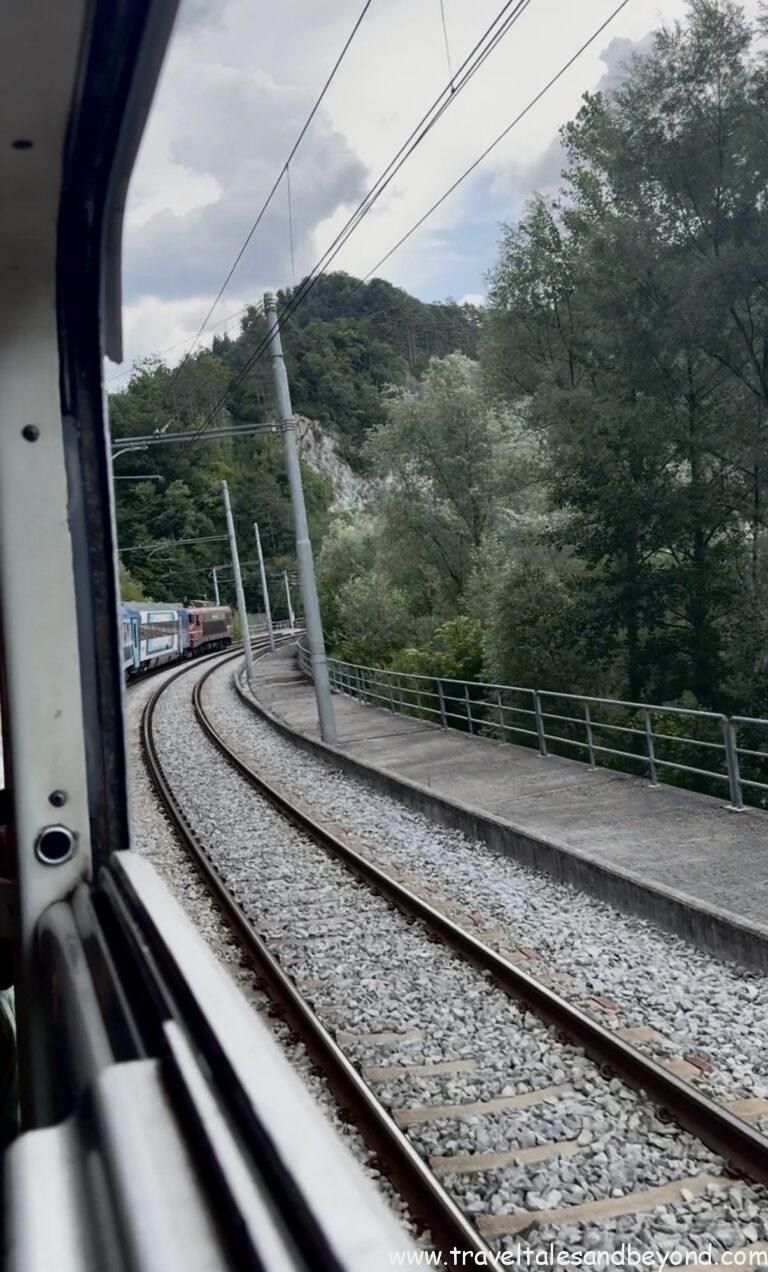
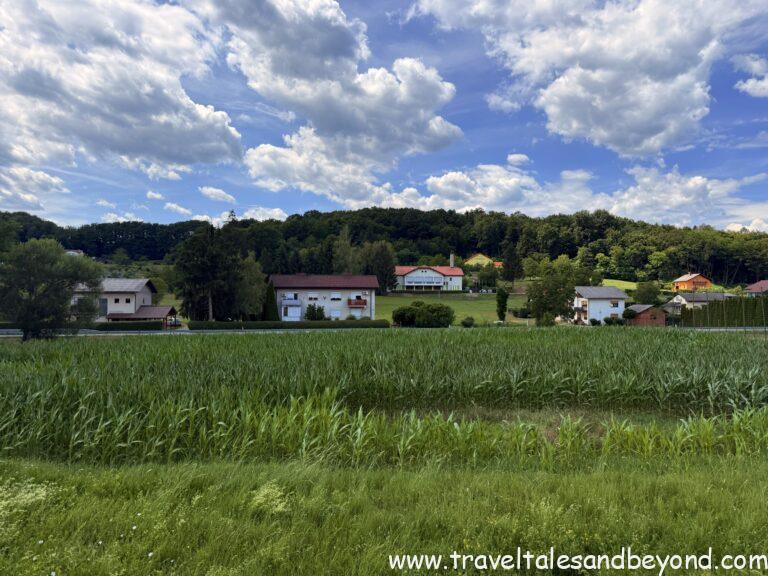
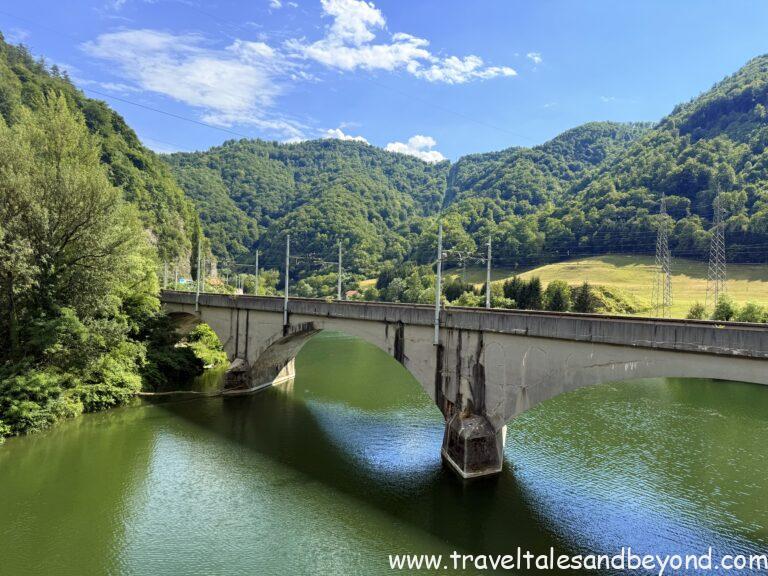
The scenery outside changes right along with those stops. For most of the Hungarian stretch, it’s rural and flat — farmland stretching out in every direction, pleasant enough but not the highlight of the ride. That changes once you cross into Slovenia: the landscape turns noticeably hillier and greener almost right away, and that stretch is genuinely scenic, worth keeping your eyes on the window for rather than dozing through.
Our train was set up in compartments seating six people per cabin. We shared ours with a group of young travelers, and ended up spending a good part of the ride listening to their stories — easily one of the more memorable, unplanned parts of the day. It’s one of the small upsides of train travel that you don’t get on a bus or in a car: the possibility of sharing a small space with strangers for a few hours and actually enjoying it.
Arriving in Ljubljana
One thing to be prepared for: at the time of our visit, Ljubljana’s train station was under renovation, and we couldn’t find any working elevators. That meant carrying our luggage up one flight of stairs to get out of the station. We were traveling with carry-on-sized bags, so it wasn’t a big deal for us — but if you’re traveling with large suitcases or have mobility concerns, it’s worth planning for.
Here’s our full 2-day Slovenia itinerary covering Ljubljana, Lake Bled, and Bohinj.
Would We Take the Train Again?
Yes — with a couple of adjustments. We’d still choose the train over the bus for the ability to move around, and we’d still book the non-stop route and reserve seats well ahead of time. But next time, we’d pack a portable fan and a backup charger, and set expectations for a warm, wifi-free, outlet-free ride rather than a plush, connected one. If you’re comfortable with that trade-off, the train is a genuinely enjoyable way to make the crossing from Hungary into Slovenia.
Outdated infrastructure, no wifi, no AC, no first class — on paper, none of it sounds like a great trip. But it was, genuinely, a pleasant one. Sometimes the lack of polish is what makes a journey memorable.
Frequently Asked Questions
Is the train from Budapest to Ljubljana direct?
Yes, a non-stop (direct) option exists and doesn't require changing trains.
Should I book the Budapest to Ljubljana train in advance?
Yes, especially in summer. Seats can sell out, and a paid seat reservation is the only way to guarantee you'll sit together with your travel companions.
How much does the Budapest to Ljubljana train cost?
We paid about $50 per person for the non-stop train, including the seat reservation fee. There's only one class of service on this route. Prices can vary by how far in advance you book and which service you use.
Is there food or wifi on the Budapest to Ljubljana train?
No pantry car, no wifi, and no charging outlets. Bring your own food and water, and pack a backup battery for your devices.
Is the train better than the bus from Budapest to Ljubljana?
The bus (e.g. FlixBus) is faster, at roughly 6 hours 45 minutes, but the train allows more freedom to move around during the journey, which made it the better fit for us.

Shaminee is a U.S.-based mom and family travel blogger who designs detailed itineraries for her own family and turns them into practical guides for others. Her goal is to make family travel simpler, more organized, and more enjoyable.
Read more →
Discover more from Travel Tales And Beyond
Subscribe to get the latest posts sent to your email.