
Travel Month – December
Most people who drive the Great Ocean Road turn around in Melbourne once they’ve seen the Twelve Apostles. We kept going. What started as one iconic coastal drive turned into a full Melbourne to Adelaide road trip — Bells Beach, the Twelve Apostles, Port Fairy, the Blue Lake at Mount Gambier, the seaside town of Robe, and finally Adelaide’s markets and wine country — and it ended up being one of the best stretches of our entire 14-day Australia itinerary.
This guide covers the whole route as we drove it with a kid in the back seat: how long it takes, where to stop, and what’s actually worth the detour.
Table of Content
- Route Overview: Melbourne to Adelaide by Road
- Day 1: Melbourne to Warrnambool via the Great Ocean Road
- Bells Beach and the Surf Coast
- Lorne to the Twelve Apostles
- Overnight in Warrnambool
- Day 2: Warrnambool to Robe — Blue Lake & the Limestone Coast
- Robe: A Coastal Stop Worth the Detour
- Day 3: Robe to Adelaide
- Adelaide: A Relaxed Afternoon Before Kangaroo Island
- Good to Know: Planning Your Drive
- FAQs
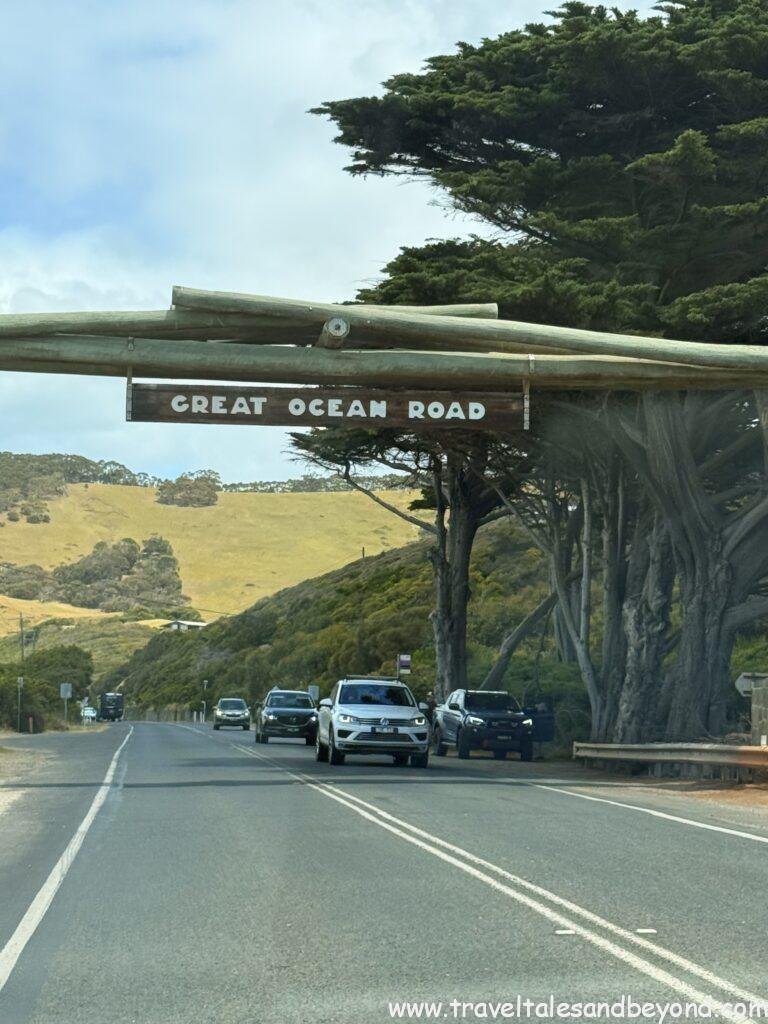
Route Overview: Melbourne to Adelaide by Road
The full drive from Melbourne to Adelaide via the coastal route — Great Ocean Road, then across the South Australian border through the Limestone Coast — covers roughly 900 km and is comfortably a 3-day drive, though you could stretch it to 4-5 if you want more time at each stop. We split it as:
- Day 1: Melbourne → Warrnambool (via the Great Ocean Road and Port Fairy)
- Day 2: Warrnambool → Robe (via Mount Gambier’s Blue Lake)
- Day 3: Robe → Adelaide
This is the same route we drove as Days 3-5 of our 14-day Australia itinerary, sandwiched between Phillip Island and Kangaroo Island.
Do you need a 4WD? No — a standard sedan handles the entire route comfortably, from the Great Ocean Road all the way to Adelaide. Just remember Australia drives on the left, and there are a lot of tight coastal bends on the Great Ocean Road section, so take it slower than you might expect.
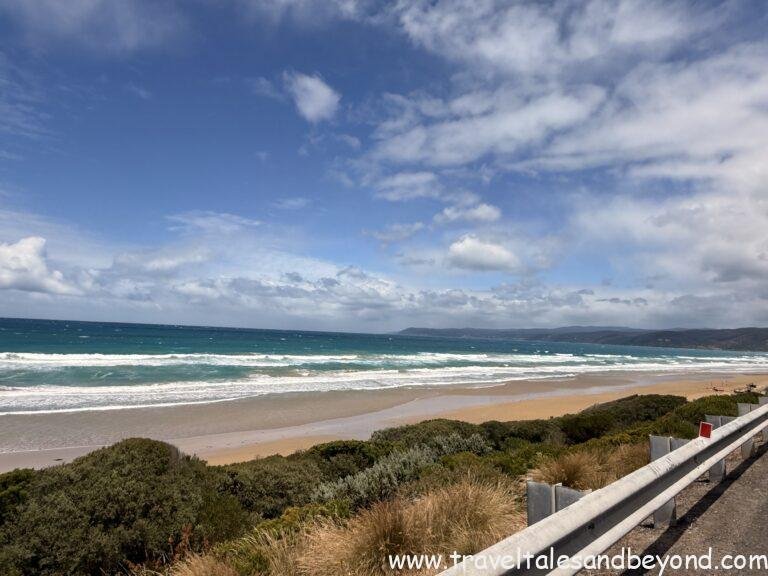
Day 1: Melbourne to Warrnambool via the Great Ocean Road
The Great Ocean Road itself runs about 240 kilometers along Victoria’s southwest coast, from Torquay to just past Port Campbell. Depending on how far you go and how many stops you make, budget anywhere from a full day to two or three days if you want a slower pace.
We picked up a rental car back in Melbourne and drove it as a single, stop-heavy day that carried us all the way to Warrnambool by nightfall, via Port Fairy — a longer day than most guides recommend, but it worked for us because we wanted to reach the coast for the night rather than double back to Melbourne.
Bells Beach and the Surf Coast
Heading out of Melbourne, the drive took us through Geelong and then along the coast, with Bells Beach as one of our first real stops. It’s a legendary surf break — famous in the surfing world for hosting a major professional competition for decades — and even if you’re not there for the surf, it’s a great first pull-over to stretch your legs and get a first look at the coastline you’re about to spend the day following.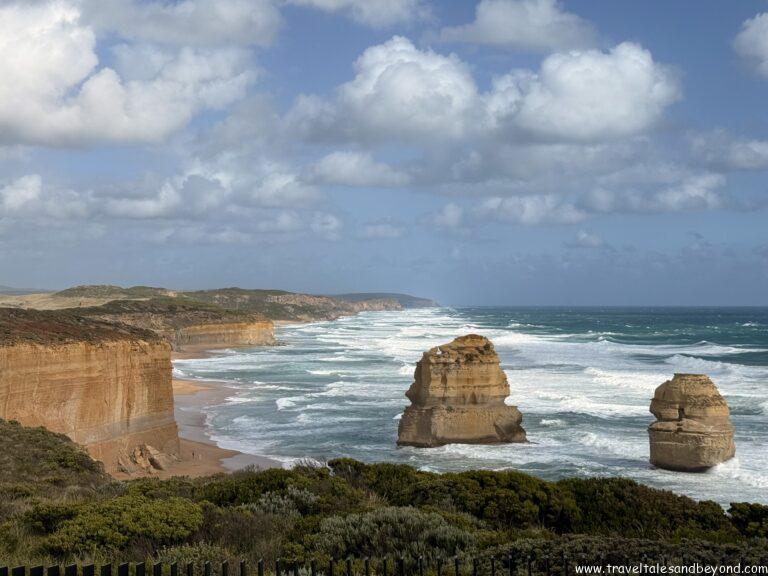
Lorne to the Twelve Apostles
From there, the road hugs the coast through Lorne, a genuinely pretty beach town that would be worth a longer stop if you have the extra day to spare. We kept moving, chasing the light, as the ocean stayed beside us practically the whole way.
The big payoff of the day was the Twelve Apostles — the limestone stacks the Great Ocean Road is best known for, rising straight out of the water and lit up gold as the sun dropped lower. It’s free to visit — just park and walk out to the viewing platforms. It’s windy out on the platforms, even on a warm day, so bring a light jacket. Photos genuinely don’t do it justice. Only about eight of the original stacks remain standing; the rest have collapsed to erosion over time, which somehow makes the ones still standing feel even more worth seeing while you can.
If you have time, the area around the Apostles has several other worthwhile stops within a short drive of each other, including Loch Ard Gorge and London Bridge — we didn’t manage all of them with an already-long driving day, but they’re worth building in if your schedule allows.
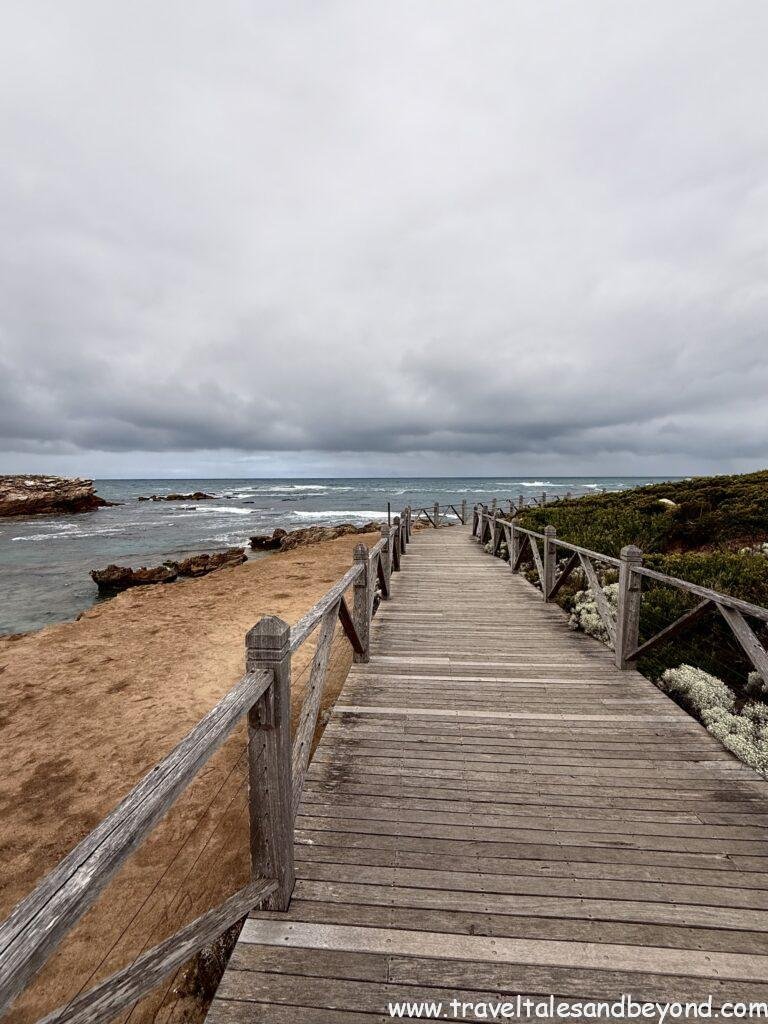
Overnight in Warrnambool
By late afternoon we’d reached Port Fairy, a quiet fishing town full of heritage cottages that felt like a real change of pace after a full day of driving and photo stops. A sunset walk to Griffiths Island Lighthouse came with wallabies hopping along the path — pure magic. Just up the coast in Warrnambool, we stayed at The Deep Blue Hotel and Hot Springs, a genuinely unique hotel with both hot spring pools and a cold bath. We saved the experience for the next morning, alternating between the hot springs and the cold plunge before heading off for Robe.
If you’re driving through around June to September, it’s also worth a short detour to Logans Beach in nearby Warrnambool, a free viewing platform where Southern Right Whales come close to shore to calve. We drove through in December, well outside that window, so we skipped it — but it’s a strong add-on for anyone timing their trip differently.
Day 2: Warrnambool to Robe — Blue Lake & the Limestone Coast
Leaving Warrnambool, we crossed the border from Victoria into South Australia — the drive to Robe covers around 310 km and takes about 3.5 hours without stops, so budget for closer to half a day with a break or two.
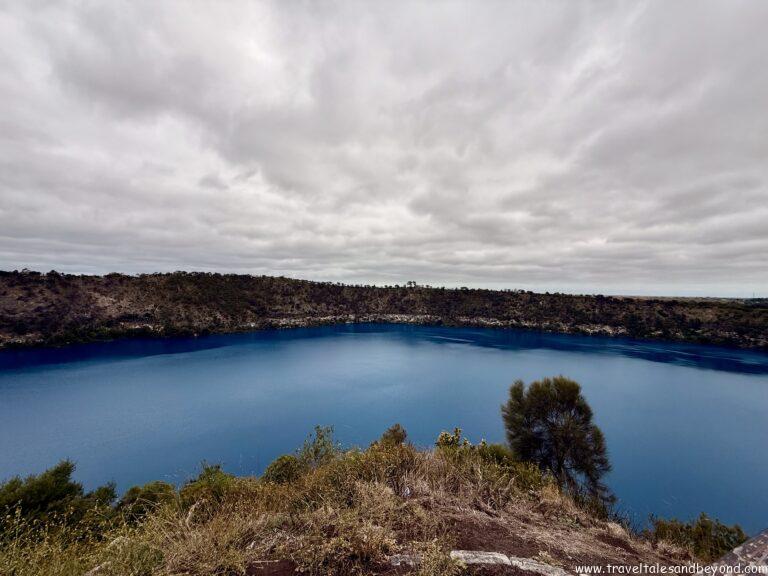
On the way, we took a detour into Mount Gambier to see the Blue Lake, a volcanic crater lake that turns a genuinely striking, saturated blue over the summer months (roughly December to March) when the water warms up — outside that window it’s a duller grey-blue. It’s an easy stop: a walking or driving track circles the rim, with lookouts along the way.

Robe: A Coastal Stop Worth the Detour
We arrived in Robe in the afternoon — a historic coastal town on South Australia’s Limestone Coast that’s easy to underestimate from the map but turned out to be one of our favorite low-key stops of the whole trip. We checked-in the Comfort Inn and spent the rest of the day at the Robe Obelisk, a navigation marker perched dramatically on the cliffs, and wound down with coffee at one of the local seaside cafés along the main street.
One thing worth knowing: we happened to be in Robe on Christmas Eve, and most shops closed early in the evening. We got lucky and managed to grab dinner in time, and stocked up on food for the next day’s drive before everything shut. Almost every restaurant was closed the next morning — the one reliable option for a hot breakfast turned out to be the food counter at the local gas station, which stayed open when nothing else was.
Day 3: Robe to Adelaide
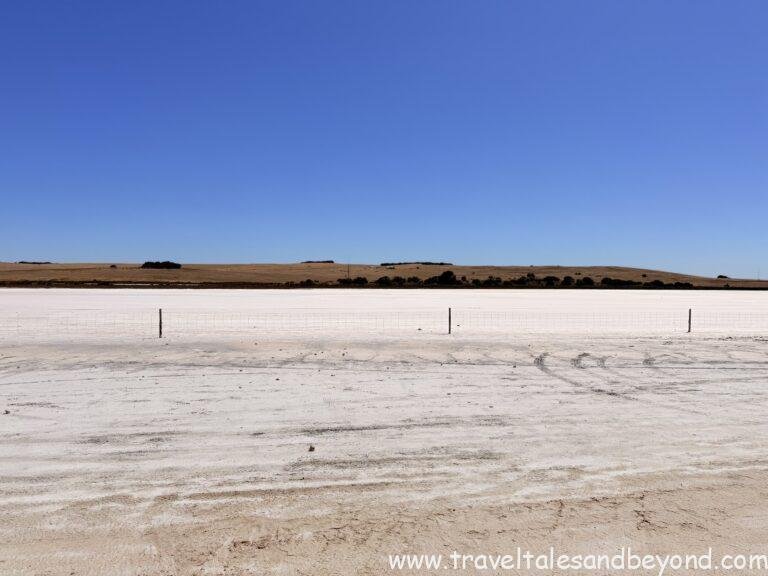
The final leg, Robe to Adelaide, is around 335 km and takes roughly 3.5 hours. We took the quickest route rather than following the coast, so this stretch is more inland highway than scenic ocean drive — a smooth drive with salt lakes and rolling farmland along the way. Much of the route skirts the edge of the Coorong, a long system of saline lagoons and salt flats, and we spotted plenty of birdlife on the swampy stretches along the way. We drove this leg on Christmas Day itself, and after the previous evening’s shop closures in Robe, we didn’t want to risk finding everything shut again along the way — so we drove straight through and had lunch once we reached Adelaide.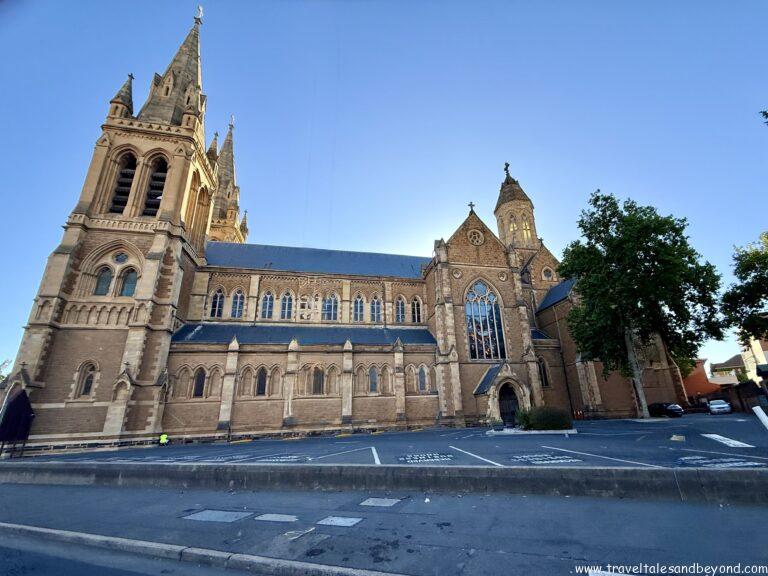
Adelaide: A Relaxed Afternoon Before Kangaroo Island
Rolling into Adelaide for lunch on Christmas Day, we spent the afternoon driving around the city, passing by St Peter’s Cathedral and the Adelaide Oval, before heading to the beach, where my son got to play in the ocean. After three days of driving, we mostly just relaxed for the rest of the day, ahead of our ferry trip to Kangaroo Island the next morning.Good to Know: Planning Your Drive
- Car type: A standard sedan or SUV handles this entire route comfortably — no 4WD needed at any point.
- How many days: 3 days covers it without feeling rushed; if you have more time, an extra night in Warrnambool or Robe lets you slow down further.
- Best time to see the Blue Lake at its brightest: roughly December to March, when the water is warmest.
- Whale watching near Warrnambool: if you’re driving between June and September, Logans Beach is a free platform where Southern Right Whales come close to shore to calve — worth building into Day 1 if your timing allows.
- Which side to drive: Australia has right-hand-drive cars and you drive on the left side of the road — worth a real reminder if you’re used to driving on the right. After one left turn, a moment of habit took over and I briefly ended up on the wrong side of the road — thankfully no other cars were around and I corrected immediately. It’s an easy mistake after a turn, so stay alert, especially early in the trip.
- Pack a light jacket: it’s windy out on the Twelve Apostles viewing platforms even on a warm day.
- Fuel and stops: towns thin out between Warrnambool and Robe, so fill up before you leave and don’t count on frequent servos along the way.
- Book accommodation early: Port Fairy, Warrnambool, and Robe are all small towns with limited accommodation options — this matters even more during peak holiday season (like December), when rooms can sell out well in advance.
- Traveling around Christmas/holidays: small towns like Robe close early on Christmas Eve and stay closed the next morning — restaurants included. Stock up on food before shops shut, and note that gas station food counters are often the only reliable option for a hot breakfast on public holidays. If you’re driving on Christmas Day itself, consider skipping stops along small-town routes and driving straight through to a bigger city like Adelaide for food, rather than risking closures along the way.
- Where this fits in a bigger trip: this route works well as the middle stretch of a longer Australia itinerary — we continued on to Kangaroo Island from Adelaide via the Cape Jervis ferry.
Frequently Asked Questions
How many days do you need for Melbourne to Adelaide via the Great Ocean Road?
Three days is a comfortable minimum covering Melbourne to Warrnambool, Warrnambool to Robe, and Robe to Adelaide. Four to five days gives you more breathing room, especially if you want a full day in Port Fairy or Robe rather than just an overnight, or extra stops around the Twelve Apostles like Loch Ard Gorge and London Bridge.
Do you need a 4WD for this route?
No — the entire drive, including the Great Ocean Road and the Limestone Coast stretch, is fully sealed road suitable for a standard rental car.
This route covers Days 3-5 of our 14-day Australia itinerary — see the full Australia itinerary guide for how we fit it in alongside Phillip Island, Kangaroo Island, and the Great Barrier Reef.
Shaminee is a U.S.-based mom and family travel blogger who designs detailed itineraries for her own family and turns them into practical guides for others. Her goal is to make family travel simpler, more organized, and more enjoyable.
Read more →