
Planning 2 days in Athens and wondering how to fit it all in, especially in the summer heat? We spent two days in Athens in July with our son, and this is exactly how we did it: the Acropolis first thing in the morning, the Roman Agora and Plaka in the evening, and a Cape Sounion sunset on the coast.
Travel Month: July
Two days gave us the highlights, but honestly, it wasn’t enough. If you’re working with a short stop like ours, this 2-day Athens itinerary shows what fits, what we skipped, and how we planned around the July heat.
A quick note on what kind of trip this really was: Athens was a short city stop at the start of a longer Greece trip. From here we continued on to Crete, where our son did his Junior Open Water dives, and then Santorini. We skipped museums and midday sightseeing, and planned everything around early mornings and evenings.
Our family trip to Athens: where we stayed and how we planned it
Our rule for Athens in July was simple: sightsee in the morning and evening, and take a break in the afternoon. That way, we explored the ancient sites while it was still cool, and saved the coast and the sea breeze for later in the day.
Our first look at Athens came before we even checked in. The taxi from the airport to our Airbnb took about 45 minutes, and on the way we drove past the Panathenaic Stadium, the marble stadium where the first modern Olympic Games were held in 1896. It was a great first glimpse of the city’s history, right from the car window.
Our base was an Airbnb near the Acropolis Museum, right at the foot of the Acropolis, and the location mattered more than we expected. The Acropolis, the Roman Agora and Plaka were all walking distance away, so Day 1 needed no transportation at all. Just good walking shoes and an early start.
Athens travel tip: If you only have two days, stay within walking distance of the Acropolis. It saves time in the morning and makes the walk home after dinner easy.
Day 1: The Acropolis, Roman Agora and Plaka
Our first morning in Athens started early. We walked from our Airbnb to the Athens Walks office on Porinou Street, close to the Acropolis Museum, and got there 15 minutes before our 8:00 am Acropolis and Parthenon guided walking tour, which we’d booked through Viator. With a guide leading the way, the next two hours felt less like a checklist of ruins and more like a story our son could follow.
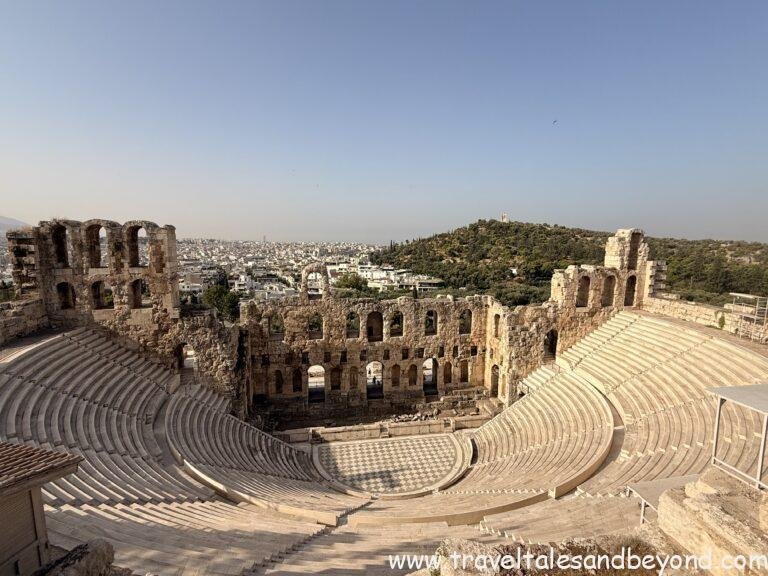
The air was still cool as we climbed, and the rocky path and worn stone steps were easy to manage before the heat set in. Near the top, we looked down into the Odeon of Herodes Atticus, a Roman-era stone theater built in AD 161. Its rows of marble seats were restored in the 1950s, and it still hosts concerts on summer nights. Behind it, Philopappos Hill rose green above the city.
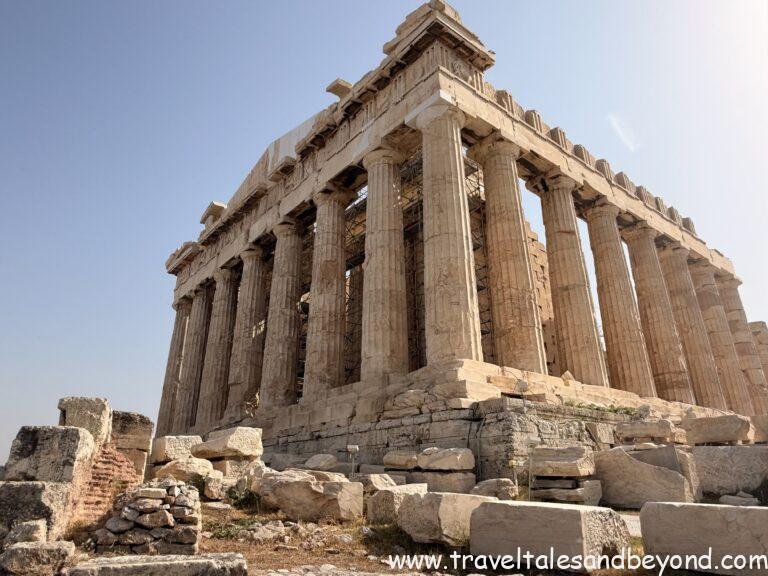
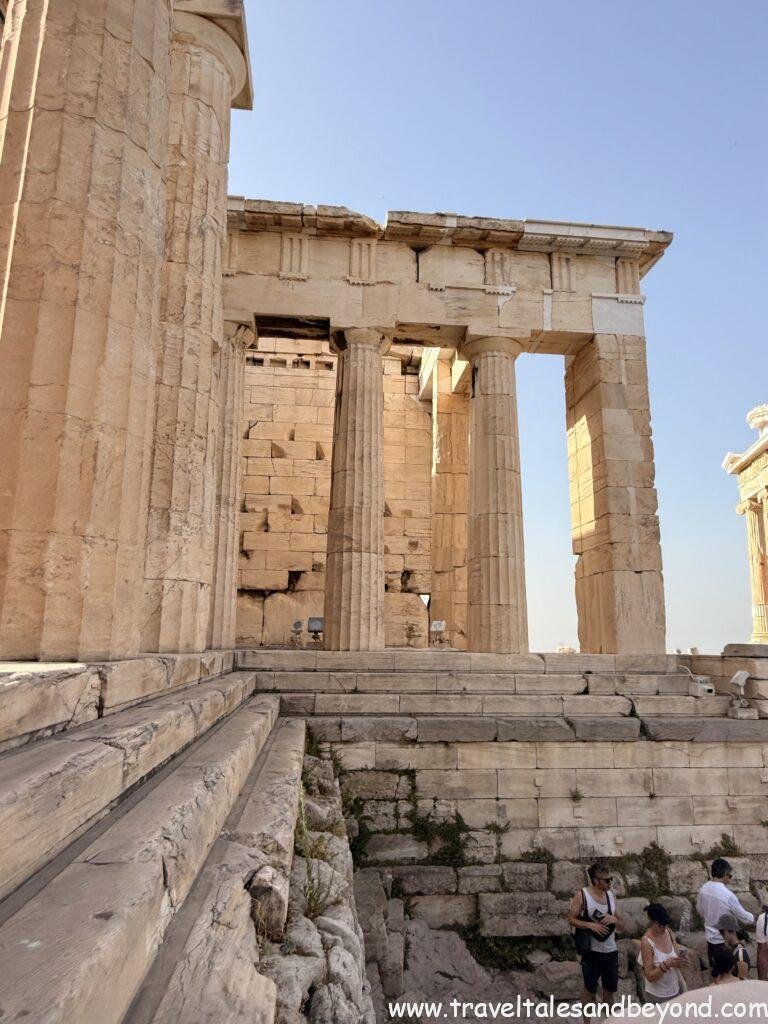
Then we walked through the Propylaea, the monumental gateway, and the whole site opened up in front of us. The Parthenon dominates it, as it should. It was huge, sunlit and already busy, with people photographing it from every side. Scaffolding from the ongoing restoration was visible, but standing next to it, that hardly mattered.
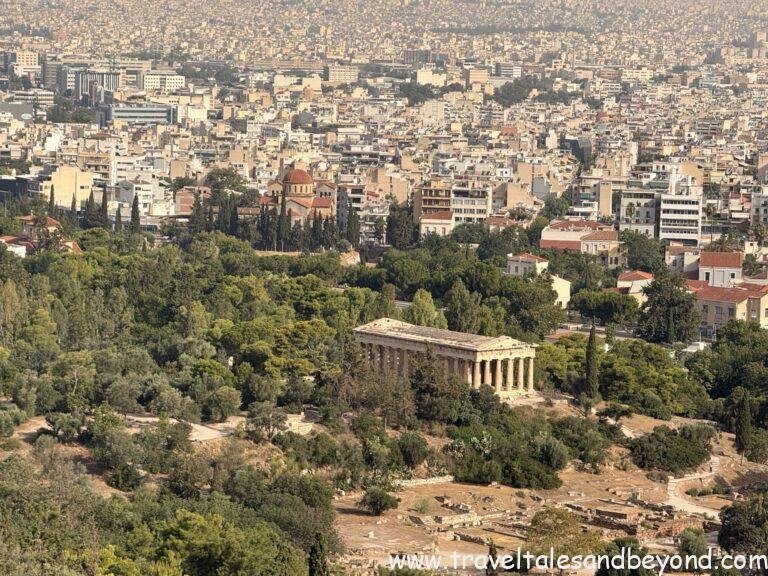
From the edge of the rock, we spotted something we hadn’t expected: the Temple of Hephaestus, down in the Ancient Agora, its roof and columns still standing among the trees. One ancient site looking down on another. That’s Athens in a nutshell.
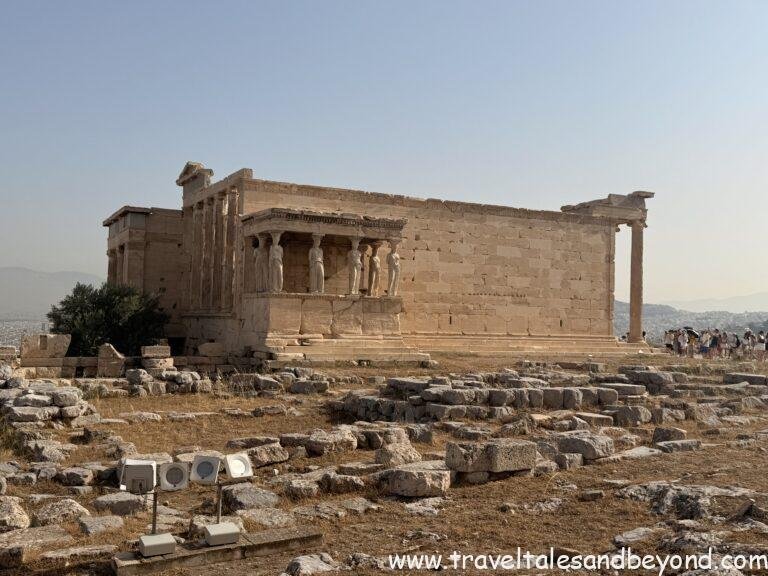
Next to the Parthenon stands the Erechtheion, a smaller and more delicate temple. Its best-known feature is the Caryatid Porch, where six sculpted women take the place of columns and hold up the roof, each one standing in a slightly different pose. The figures you see on site are copies: five of the originals are in the Acropolis Museum, and the sixth is in the British Museum in London.
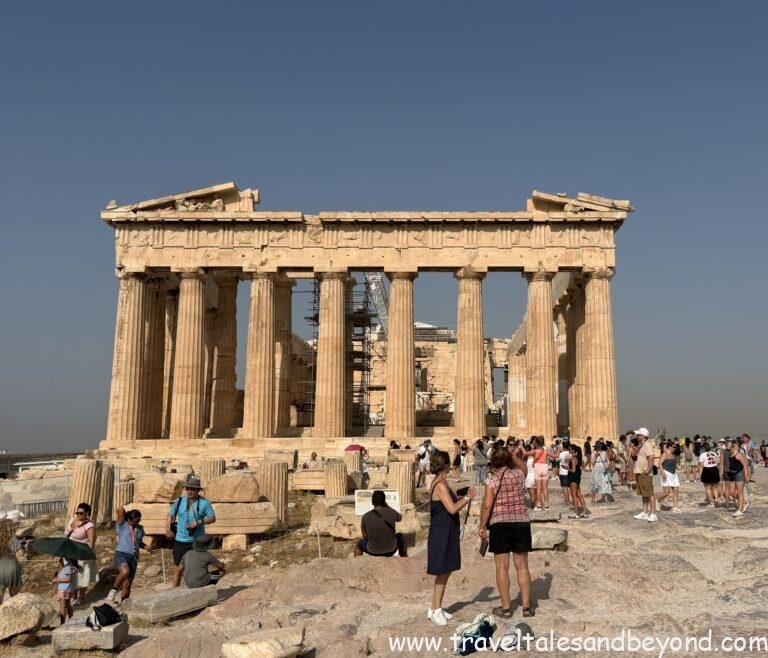
The tour wound down at Areopagus Hill. By then, our guide had mentioned that the Acropolis might close that afternoon because of the extreme heat, and we were glad we had gone first thing. The Acropolis Museum was right next to our Airbnb, but we skipped it this trip. We headed back for our afternoon break and saved the rest of Athens for the evening.
Acropolis travel tip: Go early, wear sneakers and bring water. The ground is uneven rock and worn stone steps, and there is little shade once you are out on the rock. Check whether your tour includes entry tickets, since ours offered them only as an add-on option. Kids under 18 enter free with a passport, so bring proof of age.
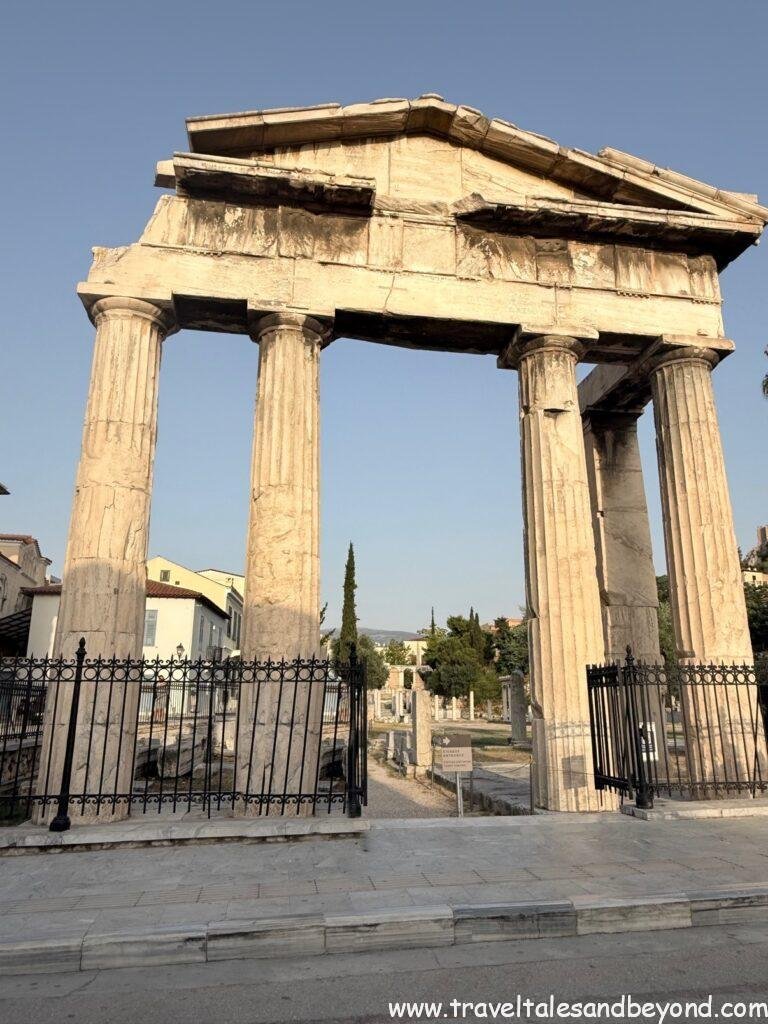
By evening we were back out in the streets below the Acropolis, at the Roman Agora, the city’s later Roman-era marketplace. Its entrance is hard to miss. The Gate of Athena Archegetis stands right on the street, four Doric columns holding up a pediment. Behind it is a wide, open ruin of low walls, column bases and a few standing columns, with the modern city rising directly behind. It is much quieter than the Acropolis, and in the evening light it felt like a place to wander rather than wait in line.
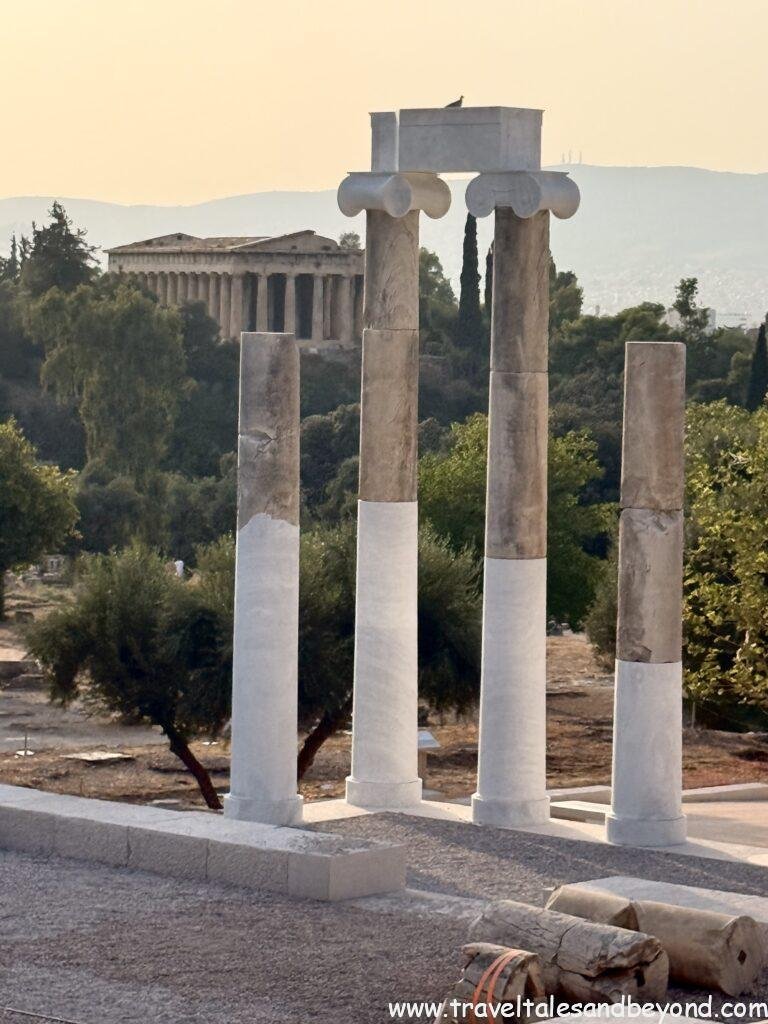
That evening we also looked out over the Ancient Agora, the original Greek heart of the city, from the slope at its southeast corner. In the golden light we could see the long, two-story Stoa of Attalos, rebuilt in the 1950s and now home to the Agora’s museum, and the Temple of Hephaestus on its hill. Right in front of us, the Ionic columns of the Agora’s Southeast Temple were being pieced back together with new white marble. Seeing both agoras in one evening made it easy to explain to our son that Athens had two: the older Greek one, and the later Roman marketplace.
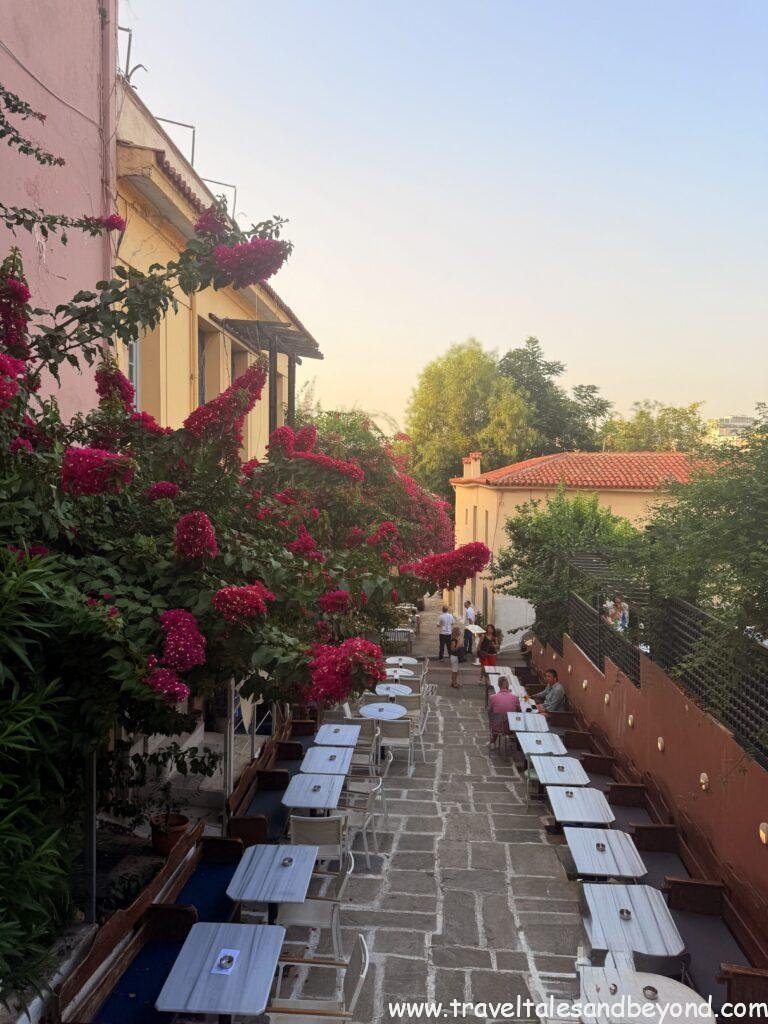
From there we walked into Plaka, the old neighborhood below the Acropolis, and roamed for the rest of the evening. The lane we remember most was narrow and stone-paved, with restaurant tables along both sides and bright pink bougainvillea spilling over the walls. After the sun and stone of the morning, it was the softest part of the day. We ended with dinner there, then simply walked back to the Airbnb. No taxis, no planning.
Day 2: Lake Vouliagmeni and sunset at Cape Sounion
After a full day on foot, we spent the Day 2 morning resting at the Airbnb. In the afternoon we joined a Cape Sounion and Temple of Poseidon half-day small-group tour, booked through Viator, which picked us up at 4:00 pm. The drive followed the coast south through Glyfada, Vouliagmeni and Varkiza, with views over the Saronic Gulf most of the way.
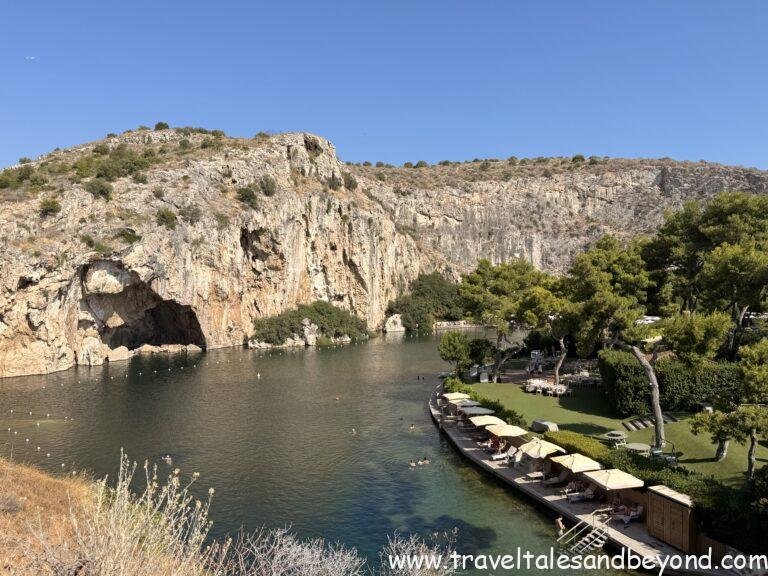
Our first stop was Lake Vouliagmeni, a short photo stop of about 15 minutes. The lake sits at the foot of a high, rocky cliff, with pine trees and a lawn on one side and a long wooden deck of lounge chairs and umbrellas along the water. People were swimming in the clear green-blue water, and others just sat in the shade.
It’s one of the most photographed spots around Athens, and the story behind it is a fun one for kids. The lake was once a cave, until its roof collapsed. Today it’s a natural thermal spa, fed by underground springs and the sea, with water around 22 to 29°C all year. An underwater cave starts at its edge and has been explored for more than 3 kilometers without anyone finding the end. Swimmers even get a free “fish pedicure” from the small fish that nibble at their skin.
From there it was about 50 minutes along the coast road to Anavyssos, where we had an hour at the beach by the deep blue Aegean. After a day of ancient sites, this was deliberately different: no columns, no climbing, just water and somewhere to sit. It’s a useful break in a short Athens trip, especially before a sunset stop when you don’t want tired legs.
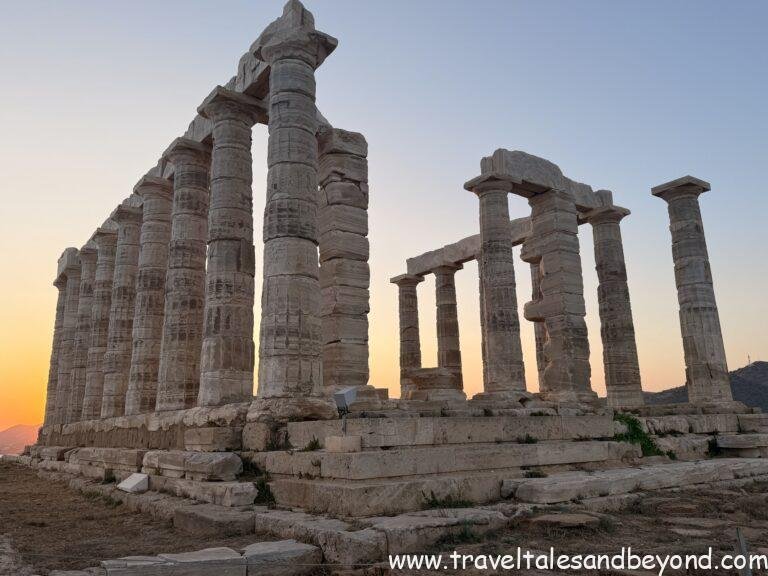
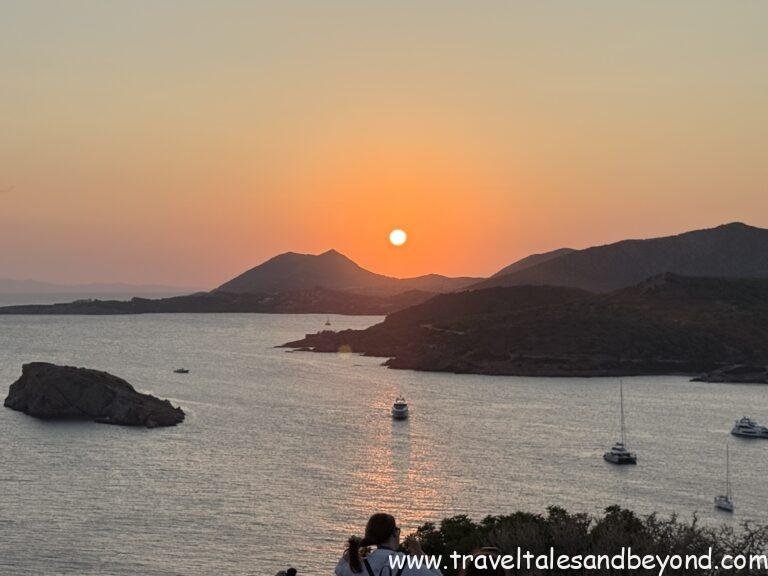
We ended Day 2, and our time in Athens, at Cape Sounion. The Temple of Poseidon stands on a cliff at the southern tip of Attica, and we arrived in time for sunset. The temple’s weathered columns stand against an orange sky, with the sea stretching out beyond. It’s far more ruined than the Parthenon, with fewer columns and more sky between them, and that openness is part of its beauty. You walk around it, look out to sea, and let the sunset do the rest.
Our guide also pointed out that Sounion was more than a temple. The bay just below the cape was an ancient naval harbor, where Athenian warships kept watch over the sea route into the Saronic Gulf and on to Athens.
Sounion travel tip: Time your visit for sunset. The temple is worth the trip on its own, but the columns against an orange sky are what we remember. Temple entry wasn’t included in our tour, so bring money for tickets. You’ll get back to Athens after dark, so a tour that handles the driving makes it much easier with kids.
It was a fitting end to two days in Athens: the city and its most famous hill on Day 1, the sea and a temple on a headland on Day 2.
What we skipped: Meteora
Meteora was on our list, but with only two days it didn’t fit.
We looked at a guided day tour from Athens, but it would have meant arriving around noon in July and spending the hottest part of the day outdoors. After our guide warned that even the Acropolis might close that afternoon because of the heat, a midday outdoor tour with our son didn’t sound like a good way to see Meteora.
So we’re saving it for another trip, when it can have its own day and a cooler start. If you only have two days, our honest take: do Athens well, and save Meteora for when you have more time.
Athens Travel Tips: Heat, Kids & What to Know Before You Go
Sightseeing in July: Get out in the morning and evening, and take a break in the afternoon. We did this both days, and it kept all of us going.
Where to stay: Near the Acropolis, if you can. Our Airbnb near the Acropolis Museum made Day 1 entirely walkable and the walk home from Plaka easy.
Getting around: We didn’t rent a car. We took a taxi from the airport to our Airbnb (about 45 minutes, passing the Panathenaic Stadium on the way), walked everywhere on Day 1, and our tour handled the driving to the coast on Day 2.
Do the Acropolis first thing: The air is cooler, the light is better, and the uneven ground is easier before the heat sets in.
Pair a big site with something slower: For us, that meant Plaka after the Acropolis, and the lake before Sounion.
What to wear: Good walking shoes throughout. Sneakers worked on the Acropolis rock, in the Agora ruins and on Plaka’s stone lanes.
Kids’ tickets: Bring proof of your child’s age. Kids get discounted prices on tours, and age is what they check. We kept photos of our passports on our phones.
Toilets in Greece: In many places, especially older buildings and the islands, toilet paper goes in the trash can beside the toilet, not in the bowl, because of the plumbing. Look for the sign, and tell kids in advance so it isn’t a surprise.
Frequently Asked Questions
Is 2 days enough for Athens?
It's enough for the highlights, but we left wishing we'd had more. Two days gave us the Acropolis and its neighborhood on Day 1, and the coast and a Sounion sunset on Day 2. With a third day we'd have added the Acropolis Museum or the Ancient Agora, and a fourth would have made room for Meteora. If you can, give Athens three or four days.
Where is the best area to stay in Athens with kids?
We'd stay near the Acropolis again. From our Airbnb near the Acropolis Museum, the Acropolis, Roman Agora and Plaka were all walkable, so we only needed transportation for the coast.
Can you do Meteora as a day trip from Athens?
You can, but we decided not to in July. A day tour would have meant arriving around noon and spending the hottest hours outdoors, which didn't suit a trip with our son. We're saving Meteora for a trip when it can have its own day.
Shaminee is a U.S.-based mom and family travel blogger who designs detailed itineraries for her own family and turns them into practical guides for others. Her goal is to make family travel simpler, more organized, and more enjoyable.
Read more →
Discover more from Travel Tales And Beyond
Subscribe to get the latest posts sent to your email.