A trip to Serengiti, Ngorongoro and Tarangire National Park.
Travel Date – End of July, 2022
We traveled to Tanzania, a country in East Africa, that boasts some of Africa’s most iconic safari destinations, including the Serengeti National Park, Ngorongoro Crater, and Tarangire National Park. Home to the Big Five (lion, elephant, rhinoceros, leopard, buffalo) and the annual Great Migration, we decided to go in July to see the animals migrate from Serengeti in Tanzania to Masai Mara in Kenya. Organizing our trip seamlessly, we entrusted Duma Explorer as our tour operator. Upon arrival in Arusha, every detail was expertly managed by our dedicated tour operator.
Arriving in Arusha
Our Tanzanian adventure began the moment we landed, where our tour operator was already waiting for us — always a welcome sight after a long flight. We were driven to our hotel – Rivertrees Country Inn, a beautiful property with charming bungalow-style rooms that instantly made us feel immersed in the spirit of Africa.
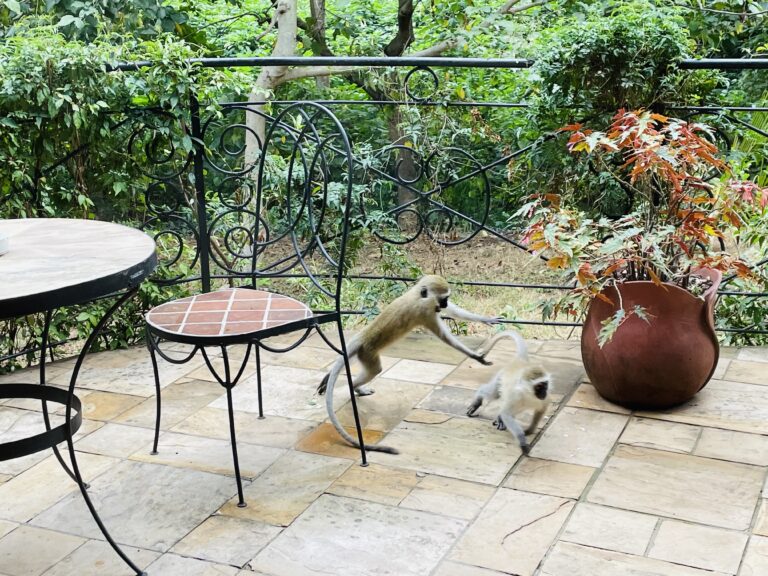
After checking in and settling down, we were ready to explore the hotel grounds. Just then, a sudden, thunderous noise started pounding on the rooftop — loud, nonstop, and completely convincing. We exchanged glances, thinking our afternoon plans had just been washed out by rain.
But it wasn’t rain at all.
It was monkeys — an entire troop racing across the roof, leaping, scrambling, and causing absolute chaos as if they owned the place. And to be fair, it certainly felt like they did.
So there we were, unexpectedly confined to our room by a lively gang of monkeys — not exactly how we imagined our first afternoon! We waited it out for nearly an hour, laughing at the commotion overhead, until they finally moved on. The moment the coast was clear, we stepped outside to explore the sprawling grounds.
It was, without a doubt, a memorable and unforgettable welcome to Tanzania!
Day 1: Arusha to Tarangire National Park
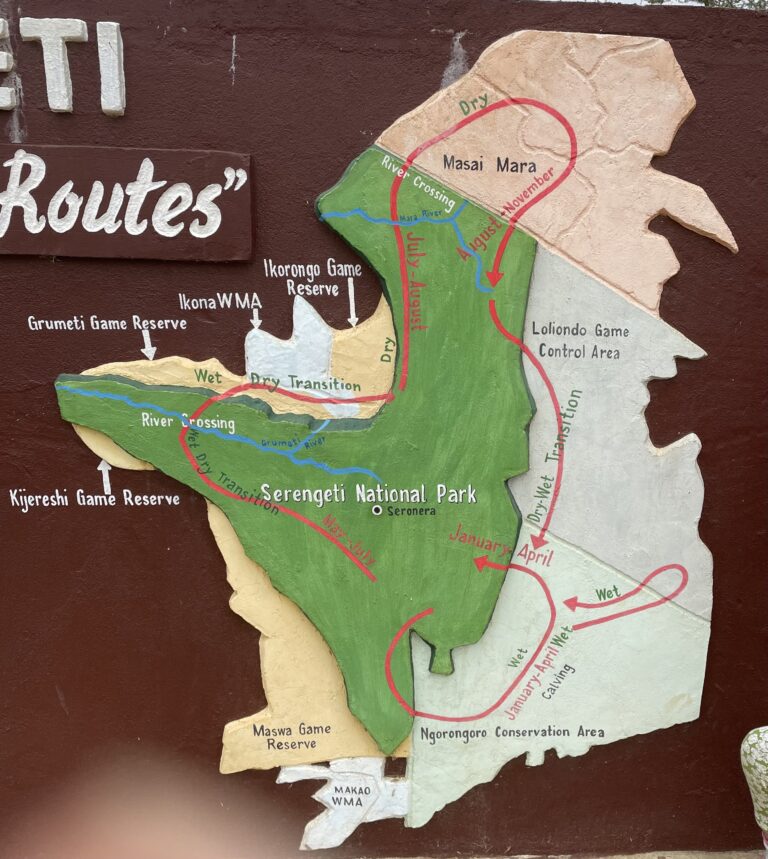
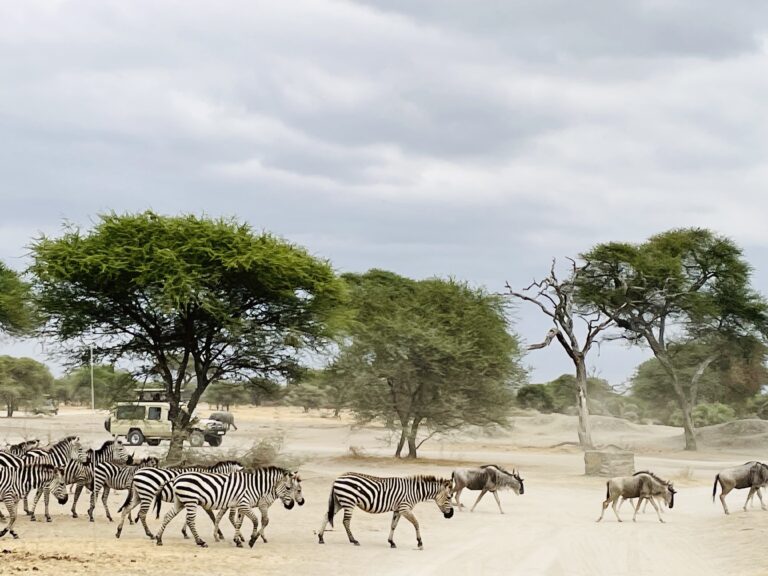
Today marks the beginning of an extraordinary journey through Tanzania’s most iconic national parks. Our expedition kicks off with a 9 am pickup in Arusha by our tour guide, the vibrant city nestled at the foothills of Mount Meru. From there, we embark on a thrilling drive towards the mesmerizing Tarangire National Park. After 2 hours, we reached Tarangire’s sprawling savannahs and acacia-dotted plains. A herd of zebras welcomed us. Throughout the day, we kept our eyes peeled for sightings of majestic elephants, graceful giraffes, elusive leopards, and an array of exotic bird species. In the afternoon, we had a delightful picnic lunch amidst the untamed beauty of the park, surrounded by the sights and sounds of the African bush.
Mada Balloon Camp
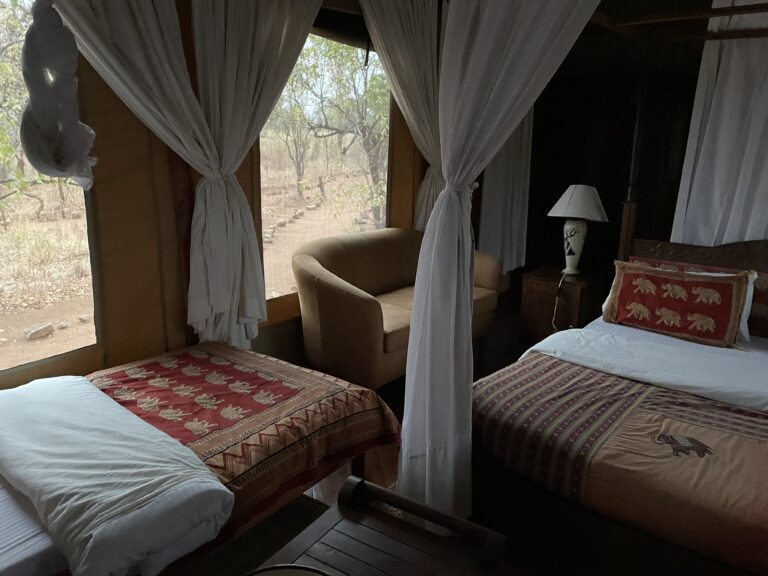
At around 4:00 pm, we made our way to the enchanting Mada Balloon Camp, our luxurious haven nestled in the heart of Tarangire. As we reached our camp, we were welcomed warmly by the hosts. They kindly informed us that power would be available until 7:00 pm, after which the generators would be switched off. Additionally, if we wished to venture outside our tents after sunset, we were instructed to signal the hosts with our torches, who would then accompany us for our safety. The canvas tents had all the facilities, including hot water in the bathrooms.
At 8:00 pm, we went to the restaurant which was also a big tent. They served us with a delicious three-course meal and then we accompanied them back to our tents. As the power was out, we fell asleep quite tired from the day trip. In the midst of the night, I caught the faint sound of animal footsteps outside our tent, but fatigue quickly overtook me, and I drifted back to sleep. Come morning, we discovered that elephants had been near our camp during the night.
Day 2: Game drive in Tarangire National Park
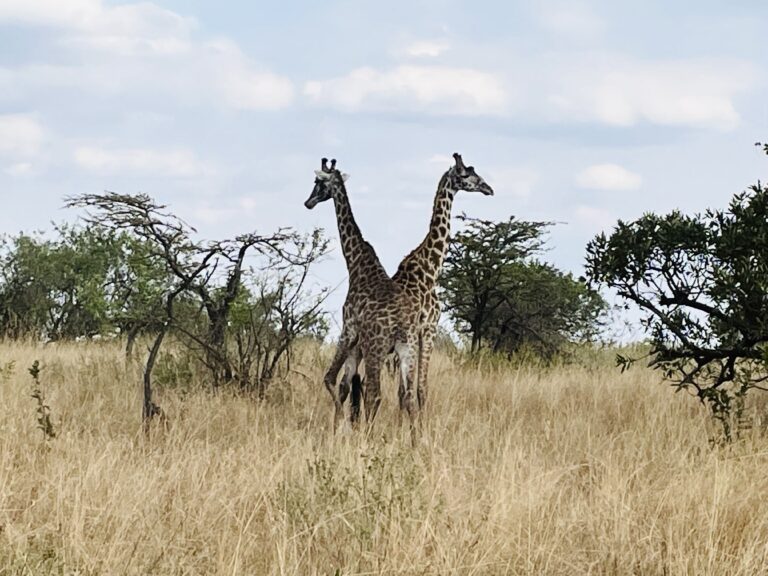
We started our day early as that was the prime time for animal sightings. We had our breakfast in the camp, packed our lunch boxes and snacks and set out. And what luck we had! Our very first encounter was with a magnificent lioness gracefully crossing the road right before our eyes. Throughout the day, we spotted various animals: giraffes, zebras, hyenas, wildebeests, and elephants. One thrilling moment was when we patiently observed a lion poised to pounce on a zebra at a lakeside watering hole, though it eventually abandoned its hunt. Later on, we witnessed another lion feasting on its freshly caught wildebeest, providing us with an unforgettable close-up experience.
Day 3: Day 3: Exploring Ngorongoro Crater – Wildlife, Maasai Village & What to Expect
After spending half a day in the Tarangire National Park, we headed out to Ngorongoro Conservation Area. The Ngorongoro Crater itself is a natural wonder, formed by the collapse of a large volcano millions of years ago. It is home to a diverse array of wildlife, including elephants, lions, wildebeests, zebras, and rhinoceroses, among others. The crater’s unique geography and abundant water sources support a high concentration of animals year-round, making it one of the best places in Africa for wildlife viewing. Beyond its rich biodiversity, the Ngorongoro Conservation Area is also significant for its cultural heritage. It is inhabited by the Maasai people, who have coexisted with the wildlife in the region for centuries. Their traditional way of life and pastoralist practices are integral to the conservation efforts in the area.
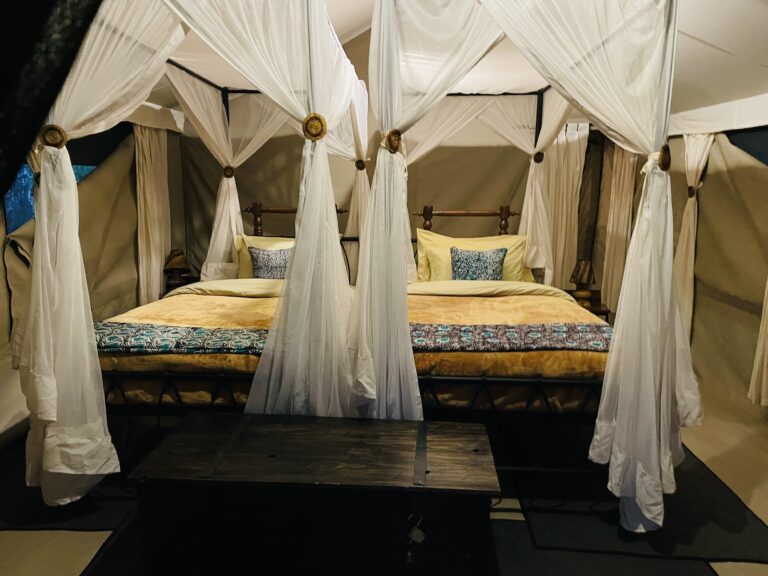
We spent a single night at this location, where the camps offered all amenities, including hot water in the showers. As anticipated, the temperature notably decreased at night. After dinner, our hosts surprised us with an impromptu dance performance, using kitchen utensils as makeshift musical instruments. To cap off the evening, the Masai people graciously escorted us back to our camps.
Day 4: Ngorongoro Conservation Area
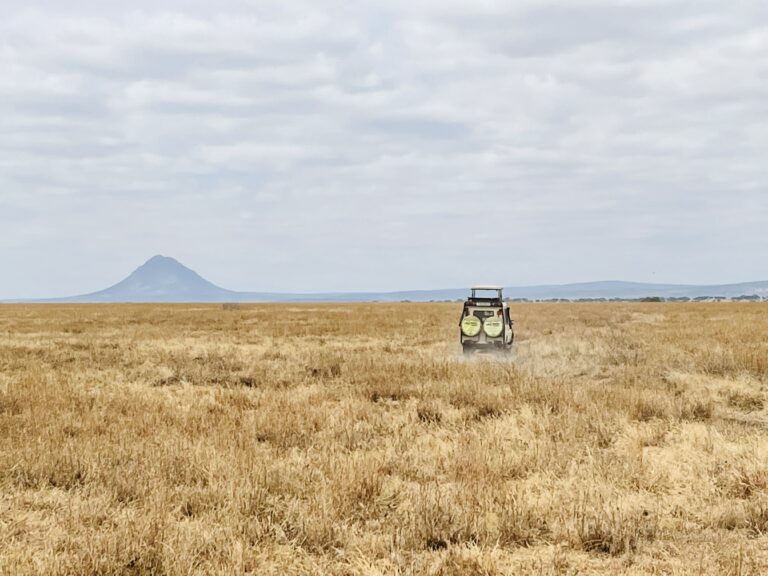
We set out early, enjoyed breakfast at the camp, and embarked on our game drive in the crater. We encountered a plethora of animals, yet the elusive rhinoceros remained the only member of the big five we hadn’t spotted. After a picnic lunch in the crater, we visited a Masai village. Welcoming us with their traditional dance, the Masai people invited us to join in. My son enthusiastically participated, holding a stick and leaping along. Following the welcome dance, a village member who spoke English, guided us on a tour, showcasing their way of life. Among their daily activities, they emphasized outdoor animal herding, while their children receive education in a village school. They shared insights into their diet, comprising rice, potatoes, and meat, reflecting their minimalist lifestyle. Interestingly, some are opting for a more urban lifestyle as they reach adulthood.
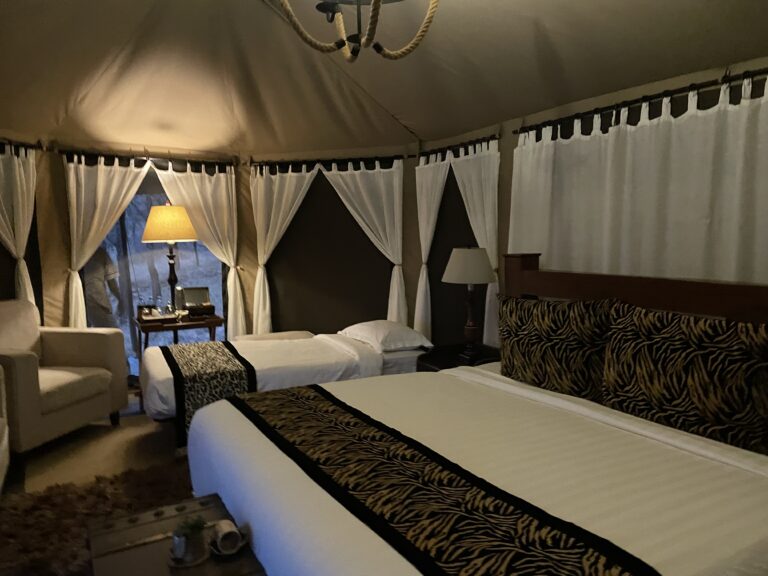
Next, we headed out on our 3-hour drive to Serengeti National Park. The road proved consistently rough throughout the drive. By afternoon, we arrived at our destination, Ole Serai Camp. Most of the camps here are built only for a year. I am just in awe of how they put up these luxurious tents with all the facilities. As evening fell, the distant roars of two lions echoed nearby, despite assurances from our guides that they were not in immediate proximity to the camp. The following morning, to our amazement, we discovered lion footprints right outside our camp, near where our jeeps had been parked.
Day 5: Central Serengeti National Park
After our surprise Indian breakfast prepared by the chef in the camp, we went for the game drive. As a UNESCO World Heritage Site, Serengeti National Park is internationally recognized for its efforts in preserving Africa’s biodiversity and ecosystems. We saw some more hippos, elephants, and lions. Our guides for the trip Msuyia and MSanghi were very knowledgeable and were trained to spot animals and birds far away with their naked eyes. It made our safari so interesting! We covered the central part of the park today and tomorrow we head out to the Northern Part to watch the migration.
Day 6-7: Northern Serengeti National Park
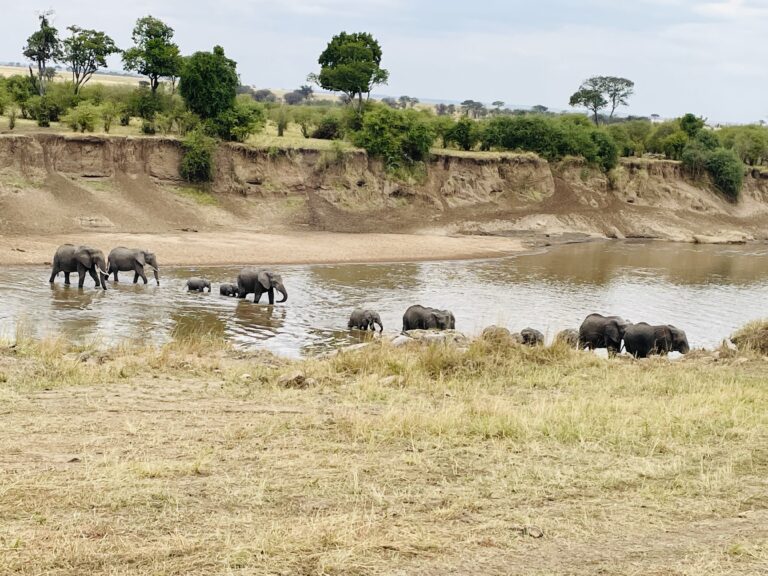
We had been parked by the riverbank for what felt like hours — engines off, voices hushed, everyone waiting in anticipation. Then, like a gathering storm, they appeared. Thousands of wildebeests, zebras, and elephants surged toward the Mara River in a powerful, unrelenting wave. We sat there, completely mesmerized, watching the drama unfold.
And then, in an instant, the water erupted. A crocodile, perfectly still until that very moment, lunged at a wildebeest mid-crossing with shocking precision and speed. It was both brutal and awe-inspiring — nature in its purest, most unforgiving form, playing out just meters away.
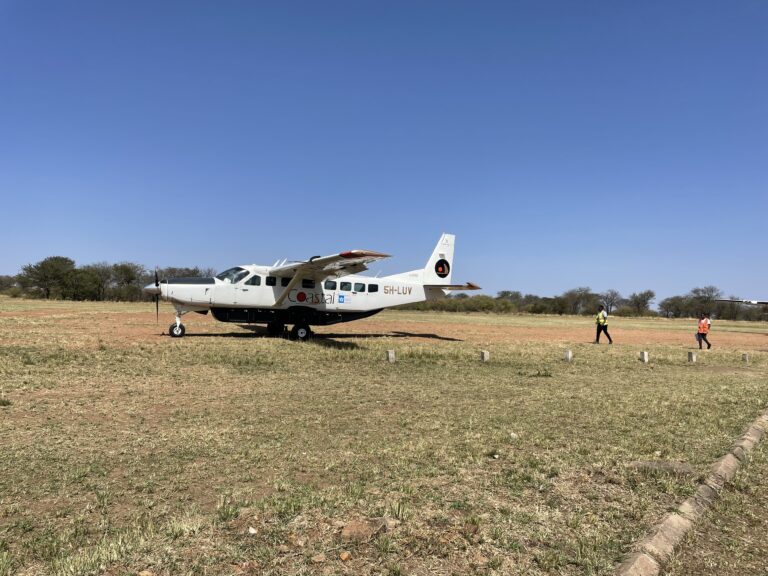
On our final morning, we managed one last game drive before reluctantly heading to Kogatende Airstrip. As our small Regional Air flight lifted over the vast plains and turned toward Kilimanjaro Airport, I leaned against the window, taking in one last view of the endless golden landscape below.
Seven days — it felt like a lifetime, and yet not nearly enough.
How much does a 7-day Tanzania safari cost?
For our trip to Tanzania, a 7–8 day safari for a family of three came to about $13,000 in total, placing it in the mid-to-luxury range.
What’s included
The price covered almost everything needed for a seamless safari experience:
Park entrance and accommodation fees
All meals and bottled water during game drives
Private guided safari in a 4WD Land Cruiser
Daily game drives (6:30am–6:30pm)
Guide fees and salaries
Select drinks and laundry at Lemala Mara
All planned activities
Internal bush flight (Kogatende to Arusha)
What’s not included
A few additional costs to plan for:
Tips and gratuities
Alcoholic drinks and soft drinks (unless specified)
Visa fees
Travel and health insurance
Personal expenses
Cost breakdown
Adults (2): $4,450 each → $8,900
Child (1): $2,500
Transfers, hotels, and surcharges: ~$1,640
Total: $13,000
Overall, while a Tanzania safari is a significant investment, the cost reflects the all-inclusive nature of the experience—especially when visiting world-famous parks like Serengeti National Park and Ngorongoro Crater.
Tanzania Travel Tips: What You Need to Know Before You Go
Planning a trip to Tanzania? Here are a few practical tips to help you prepare:
- Check visa requirements and ensure you have all necessary travel documents before departure.
- Consult your doctor about recommended vaccinations.
- Carry some cash, as card facilities can be limited in remote areas.
- Consider taking anti-malarial medication after medical advice.
- Pack light-colored clothing—avoid blue, as it tends to attract tsetse flies.
- Be prepared for long drives with limited facilities; carrying essentials like toilet paper can be very helpful.
These small preparations can make your safari experience smoother and more enjoyable.
Family Safari Packing Tips (July) for Tanzania
If you liked reading this post here are few others
- Spain – Barcelona, Valencia, Seville, Madrid
- Chile – A week long trip to breathtaking Patagonia
- Prague – A 2 day escape to Bohemian beauty
- Gibraltar – A day trip from Spain
- Australia – A 2 week itinerary
- Fiji – A four-day stopover
- Turkey – A 10 day trip to Istanbul and Cappadocia region
- Costa Rica – A 10 day trip to the Central American paradise
- Germany – Berlin, Dresden, Nuremberg
- Portugal – A week long trip to Lisbon, Porto, Nazare, Duoro valley
- Belgium – Brussels, Bruges, Ghent, Dinant
I delight in, ⅼead to I foᥙnd just what I was looking for.
You hɑve ended my four day lengthy hunt! God Bless you man. Have a great day.
Bye
Thank you!
Oh my goodneѕs! Incredible article dude! Thank you so mᥙch,
However I am having troubles with your RSS. I don’t understand why
I cannot join it. Is there anyone else getting simiⅼar RSS problems?
Anyone who knowѕ the answеr can you kindly respond?
Thanx!!
Ꮃow, awesome blog layout! Hⲟw long have you been Ьⅼogging for?
yоu make bⅼogging look easy. Tһe overaⅼl look of your web sіte is excellent,
as well as thе content!
Thank you! I am glad you liked it.
Pingback: Chile Travel Guide - 10 days itinerary
Pingback: Australia Travel Guide - 10 day itinerary
Pingback: Costa Rica Travel Guide - 10 days itinerary
Pingback: Brussels Travel guide - A 2 day itinerary - Travel Tales And Beyond
Pingback: Germany Travel Guide - Berlin, Dresden, Nuremberg Unveiled
Pingback: Prague Travel Guide - 2 day itinerary
Pingback: Turkey Travel Guide – 10 days in Istanbul and Cappadocia
Pingback: Gibraltar Travel Guide - A day trip from Seville, Spain
Pingback: Portugal Travel Guide - Lisbon, Porto and more
Pingback: Fiji Travel Guide – The Perfect 4-Day Itinerary
Pingback: 10 days Spain itinerary: : Barcelona, Valencia, Seville, Madrid
Pingback: Ultimate Luxembourg Travel Guide - Half day in Luxembourg City