
Germany in Three Cities: Exploring Berlin, Dresden & Nuremberg
Travel Month: August
This 8-day Germany itinerary takes you through three of the country’s most historically rich and visually stunning cities — Berlin, Dresden, and Nuremberg — and is based entirely on our own family trip in August.
We didn’t originally plan Germany as our main destination. Our family was headed to Prague, and since our flights routed through Frankfurt, we decided to turn the layover into a full East Germany exploration before crossing into the Czech Republic. What started as a detour turned into one of the most memorable trips we’ve ever taken.
In 8 days, we experienced:
- Berlin — WWII history, the Brandenburg Gate, the Berlin Wall, and Cold War landmarks
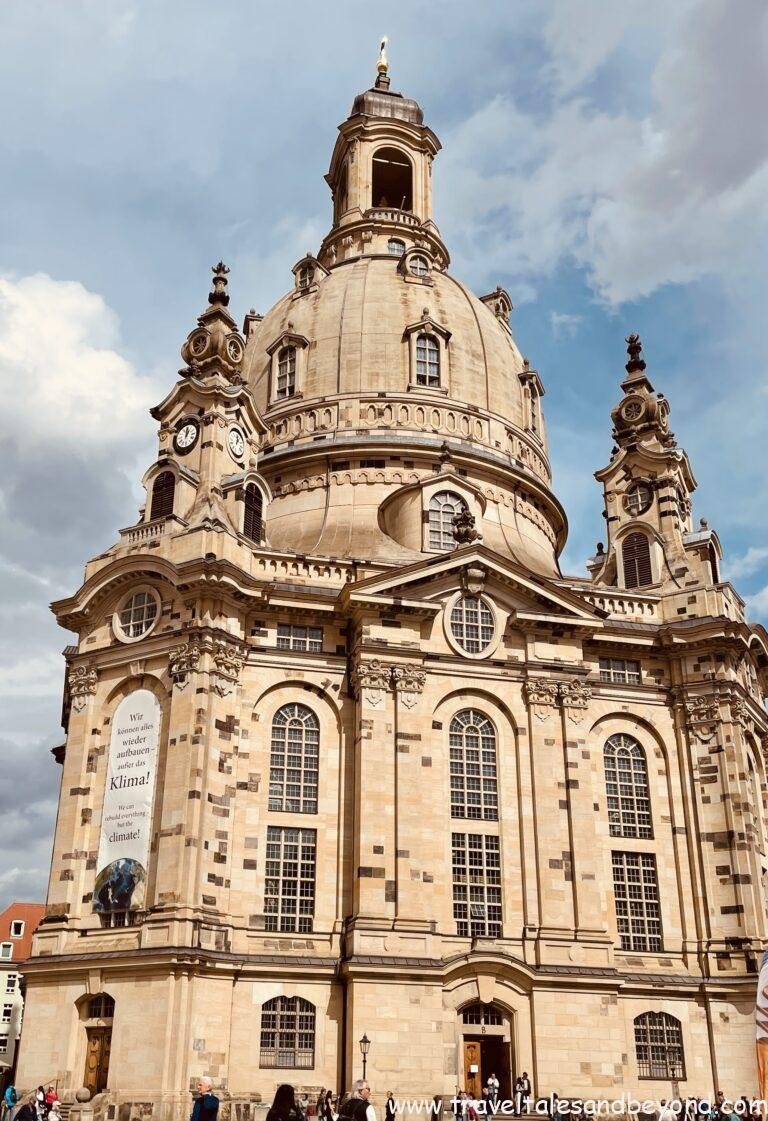
- Dresden — baroque architecture, the rebuilt Frauenkirche, and a stunning Elbe riverbank
- Nuremberg — medieval old town, Nazi history, and a 1,000-year-old imperial castle
This guide gives you the full route and trip logistics — for the day-by-day detail on each stop, we’ve linked out to our dedicated guides below.
Our 8-day route — flying in and out of Frankfurt, with Berlin (plus Dresden), Prague and Nuremberg in between. Tap a numbered stop for the highlights.
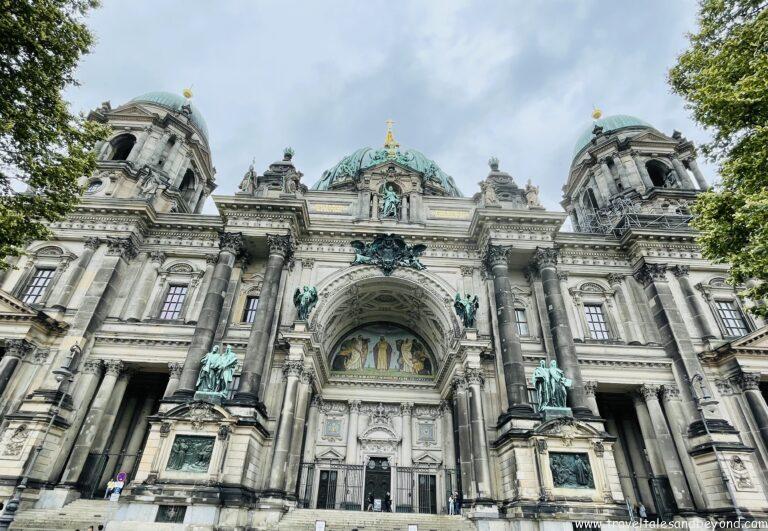
The Route at a Glance
- Day 1: Arrive in Berlin (Frankfurt to Berlin by train)
- Days 2–3: Berlin — WWII history, Brandenburg Gate, Berlin Wall, Checkpoint Charlie
- Day 4: Dresden day trip — Frauenkirche, Zwinger Palace, the Elbe
- Days 5–6: Prague, Czech Republic
- Day 7: Nuremberg — Nazi history
- Day 8: Nuremberg — medieval old town & castle
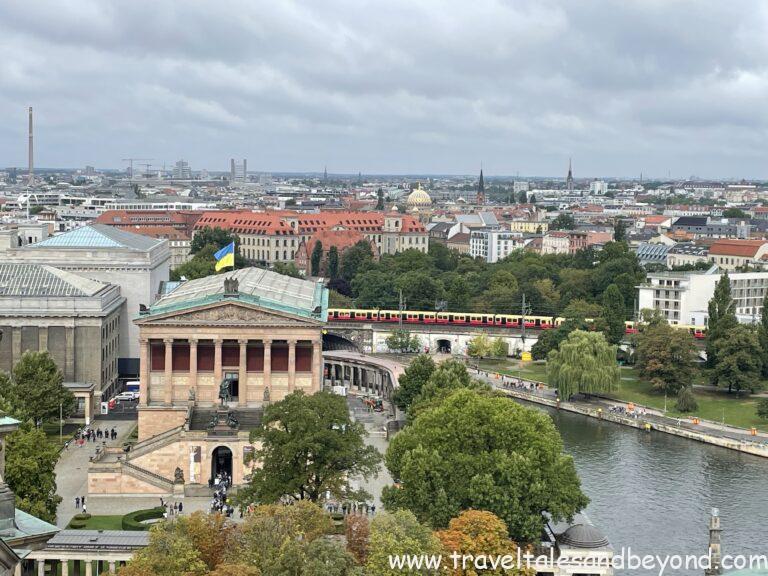
Day 1-4 : Berlin & Dresden
Our trip began in Berlin, where we spent three days working through the city’s WWII and Cold War history — the Brandenburg Gate, remnants of the Berlin Wall, Checkpoint Charlie, and a guided walking tour that tied it all together. From there, a quick morning train took us to Dresden for a day trip that ended up being one of the biggest surprises of the whole itinerary: the rebuilt Frauenkirche, the Fürstenzug porcelain mural, and a walk along the Elbe riverbank lined with baroque domes and spires.
For the full day-by-day breakdown — including museum tips, the Reichstag, and how to book the Dresden train — see our 3 Days in Berlin (Plus a Dresden Day Trip).

Day 5-6 : Prague, Czech Republic
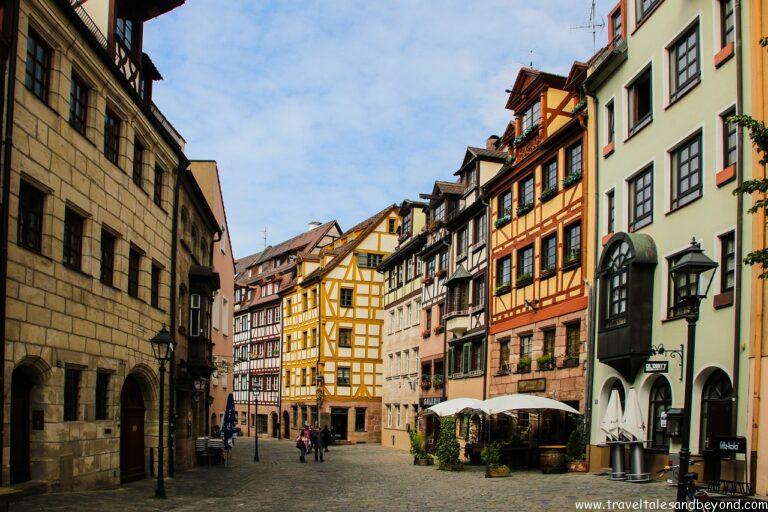
Day 7-8 : Nuremberg
We closed out the trip in Nuremberg, a city that holds two very different chapters of history side by side. One day was devoted to the Documentation Center at the Nazi Party Rally Grounds and the Nuremberg Trials Memorial — a sobering but important visit. The next was spent in the medieval old town, climbing up to Nuremberg Castle, admiring the Schöner Brunnen fountain, and stopping by Albrecht Dürer’s House, before boarding the train back to Frankfurt, closing out the loop that started with Berlin’s Cold War history.
For the full day-by-day breakdown — including the Documentation Center, Nuremberg Trials Memorial, and the medieval Old Town — see our 2-Day Nuremberg Itinerary.
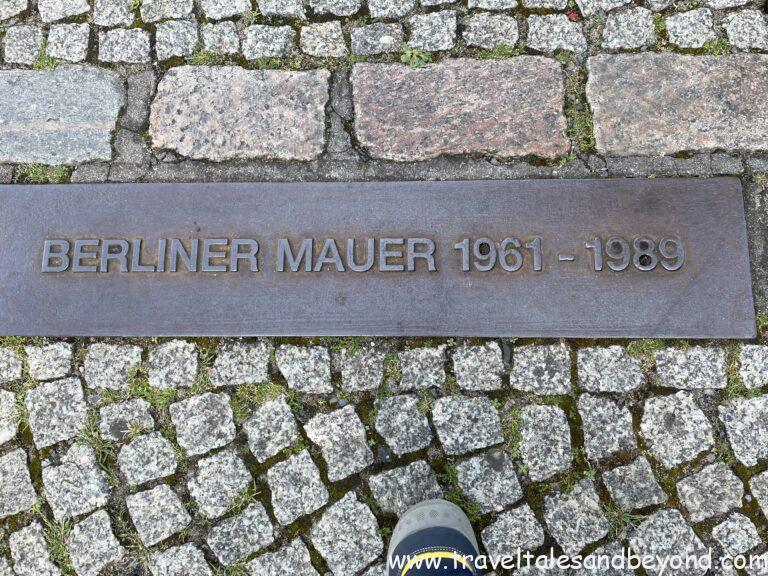
Final Thoughts
Germany turned out to be much more than just another stop on our Europe trip. Each city had its own personality—from the dynamic energy of Berlin to the elegance of Dresden and the historic charm of Nuremberg.
What stayed with us the most was the contrast between East and West Germany—how history still shapes the cities, yet everything comes together so seamlessly today.
It’s a destination that not only offers beautiful sights but also tells a powerful story at every step.
If this kind of history-meets-culture European travel appeals to you, Portugal was another trip that completely won us over. Our week-long Portugal itinerary covering Lisbon, Porto, Nazaré and the Douro Valley is a great next read.
Germany Travel Tips: What You Need to Know Before You Go.
Getting Around
- Germany has one of the best train networks in Europe. Use the DB Navigator app (Deutsche Bahn) to book trains in advance — you’ll get cheaper fares the earlier you book
- The Deutschland-Ticket (€49/month) covers all regional trains, buses, and trams — great value if you’re staying longer than a week
- Berlin has an excellent U-Bahn (subway) and S-Bahn (overground) system — buy a day ticket for unlimited travel
- Flix Bus is a cheap and comfortable option between cities, especially Prague to Nuremberg
Visa & Entry
- US, UK, Canada, and Australia citizens do not need a visa for stays under 90 days
- ETIAS travel authorization (for visa-exempt visitors like US, UK, Canada, and Australia citizens) has been delayed multiple times and is not yet in effect — check the official EU ETIAS site for the current status before you travel
Money
- Germany uses the Euro (€). Cards are widely accepted but carry some cash — smaller restaurants and markets are often cash only
- ATMs (called Geldautomat) are widely available in city centers
Best Time to Visit
- May to September is the best time — warm weather, long days, and outdoor festivals
- December is magical for Christmas markets in Nuremberg, Dresden, and Berlin
- Avoid July–August if you dislike crowds — popular sites get very busy
Accommodation
- Book hotels at least 2–3 months in advance for summer travel — Berlin especially fills up fast
- Stay in the city center (Mitte in Berlin, Old Town in Nuremberg) to be walking distance from major sights
Museum & Attraction Tips
- Pre-book tickets online for major Berlin museums — the Jewish Museum and DDR Museum both sell out. Note the main Pergamon Museum is closed for renovation until 2027; a temporary Panorama exhibition is open in the meantime
- The Berlin Museum Pass (3-day pass) gives access to 30+ museums — worth it if you’re a museum lover
- Most major sights in Nuremberg and Dresden can be explored on foot — comfortable walking shoes are a must
Food & Drink
- Try local specialties — Nuremberg is famous for its small Rostbratwurst sausages, Berlin for Currywurst, and Dresden for Eierschecke (a local cake)
- Beer gardens (Biergarten) are a staple in summer — a great way to relax after sightseeing.
Language
- Most people in tourist areas speak English, but learning a few basic German phrases goes a long way.
Safety
- Germany is very safe for tourists. Standard precautions apply — watch for pickpockets in crowded train stations and markets
- Emergency number: 112
Frequently Asked Questions
What is the best time of year to visit Germany?
May to September offers the best weather — warm temperatures, long daylight hours, and vibrant outdoor events. December is magical for Christmas markets, especially in Nuremberg and Dresden. Summer (July–August) is peak tourist season, so book accommodation well in advance.
What are the must-see attractions in Berlin for first-time visitors?
Top Berlin highlights include the Brandenburg Gate, remnants of the Berlin Wall, Checkpoint Charlie, the Holocaust Memorial, the Topography of Terror, and the Berlin Cathedral. A guided WWII walking tour is one of the most impactful ways to experience the city's history.
Do I need a visa to visit Germany?
Citizens of the US, UK, Canada, and Australia do not need a visa for stays under 90 days. However, from 2025, travelers will need ETIAS (European Travel Information and Authorization System) approval before entering Germany. Always check current requirements before you travel.
Is Dresden worth visiting as a day trip from Berlin?
Absolutely. Dresden is about 2 hours from Berlin by train and is one of Germany's most underrated cities. The Frauenkirche, Zwinger Palace, Fürstenzug porcelain mural, and a walk along the Elbe riverbank make for a full and memorable day. Budget extra time if you want to explore the Green Vault museum.
What is Nuremberg known for historically?
Nuremberg is significant for two contrasting chapters of history: its role as the site of massive Nazi Party rallies during the Third Reich, and later as the location of the Nuremberg Trials (1945–1949), where senior Nazi officials were prosecuted for war crimes. The Documentation Center Nazi Party Rally Grounds and the Nuremberg Trials Memorial are both essential visits.
How do you get around Berlin on public transport?
Berlin has an excellent U-Bahn (subway) and S-Bahn (overground rail) network. A day ticket gives unlimited travel across all zones and is the most cost-effective option for sightseeing. The hop-on-hop-off bus is a good alternative too.
Should you pre-book museum tickets in Berlin?
Yes — pre-booking is strongly recommended for popular Berlin museums like the Pergamon, the Jewish Museum, and the DDR Museum, as they frequently sell out. If you plan to visit multiple museums, consider the Berlin Museum Pass, which grants access to over 30 museums over 3 days.
More Firsthand Travel Guides From Our Family
Every itinerary on this site is built from our own trips — real routes, real costs, real experiences. If Germany is part of a bigger Europe plan, these guides connect naturally:
Europe
 3 Days in Belgium — Brussels, Bruges, Ghent & Dinant
- 1 Week in Portugal — Lisbon, Porto & the Douro Valley
- Amsterdam Family Guide — Canals, Zaanse Schans & Giethoorn
- 10 Days in Spain — Barcelona, Valencia, Seville & Madrid
- 2 Days in Prague — Complete First-Timer’s Itinerary


Beyond Europe
- 10 Days in Turkey — Istanbul & Cappadocia
- 2 Weeks in Australia — Complete Family Itinerary
- 7-Day Tanzania Safari — Serengeti & Ngorongoro
- 10 Days in Costa Rica — Central America Paradise
- Chile — Breathtaking Patagonia in 1 Week



Shaminee is a U.S.-based mom and family travel blogger who designs detailed itineraries for her own family and turns them into practical guides for others. Her goal is to make family travel simpler, more organized, and more enjoyable.
Read more →
Discover more from Travel Tales And Beyond
Subscribe to get the latest posts sent to your email.