
Four days in Iceland in November gave us the Golden Circle, the South Coast waterfalls, glacier lagoons, and Northern Lights — with almost no crowds. We spent about $7,500 for 4 adults and 2 kids plus our guide’s accommodation (excluding flights and meals), most of it on a private 3-day superjeep tour. Here’s the full day-by-day breakdown.
Iceland in 4 Days (November): The Perfect Winter Itinerary + Travel Guide
If you’re wondering whether Iceland in November is worth it—the answer is yes, but only if you plan it right. With limited daylight, unpredictable weather, and fewer crowds, this is the time to experience Iceland in its most raw and dramatic form.
There’s something truly otherworldly about Iceland in winter. The days are short, the skies are dramatic, and the landscapes feel as if they belong to another planet entirely. Wanting a more personal and immersive experience, we opted for a private tour. With a superjeep, a knowledgeable local guide, and a sense of adventure, we set out on a 4-day journey through South Iceland—one that turned out to be among the most breathtaking trips we’ve ever taken. For more adventure travel, see my Tanzania Safari and Patagonia Chile guides.
This 4-day Iceland itinerary is designed to help you see the best highlights without rushing, while accounting for winter conditions.
Our 4-day November Iceland route — the dashed line loops back to Reykjavik, where we spent the final day. Tap a numbered stop for the highlights from each day.
Day 1 – The Golden Circle & Beyond
Our local guide Eric picked us up from Reykjavík Airport in the early hours of the morning. After a quick stop to grab breakfast from a nearby store, we climbed into our superjeep and set off toward one of Iceland’s most iconic routes—the Golden Circle. The cold hit us instantly; without time to properly layer up, we could feel the sharp Icelandic chill the moment we stepped outside.
Thingvellir National Park
Our first stop was Thingvellir National Park, where the North American and Eurasian tectonic plates slowly drift apart. Standing in the rift valley, you can quite literally walk between two continents. In November, the park was wrapped in a quiet, almost moody stillness—no summer crowds, just the raw beauty of Icelandic nature. It was still dark (sunrise was at 10:00 am) when we arrived, and we relied on flashlights to find our way through the landscape.
Geysir Geothermal Area
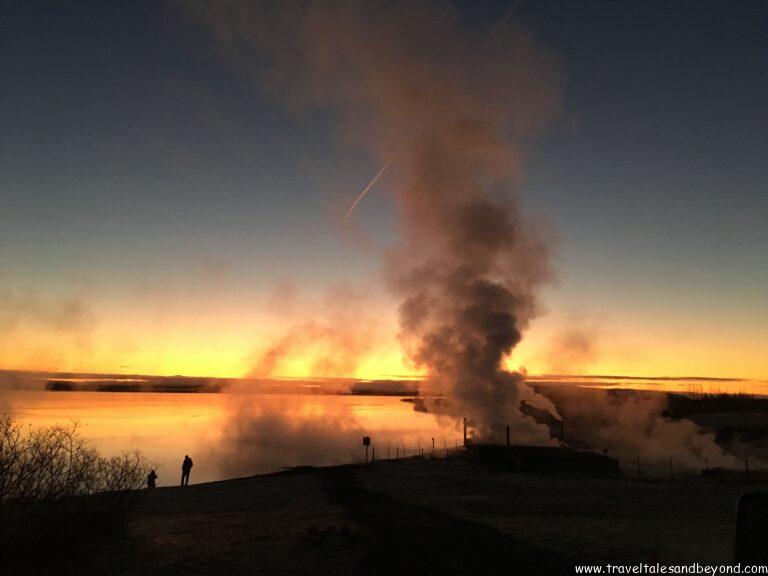
Next stop was Geysir Geothermal area , where the earth puts on its own show. The area gets its name from the original geyser, Great Geysir, which gave the English language the word “geyser.” While it’s mostly dormant today, it can still erupt occasionally after seismic activity.The real star now is Strokkur, which erupts every 5–10 minutes, shooting boiling water up to 20–30 meters (65–100 feet) into the air. The contrast of the steam against the early morning sky was dramatic and spectacular.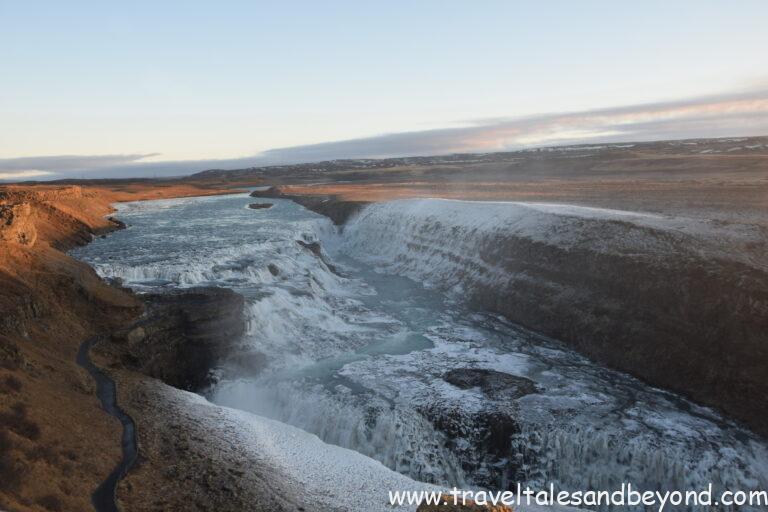
Gullfoss
It’s located in the southwest, along the popular Golden Circle route. What makes it unique is the way the river drops in two stages into a deep canyon, creating that dramatic “disappearing” effect you see in your photo—especially striking in winter when parts of it freeze.
If you visit:
- You can walk along that path on the left for different viewpoints
- On sunny days, you often see rainbows in the mist
- In winter, it looks icy and powerful like this; in summer, it’s greener and fuller
Langjökull Glacier
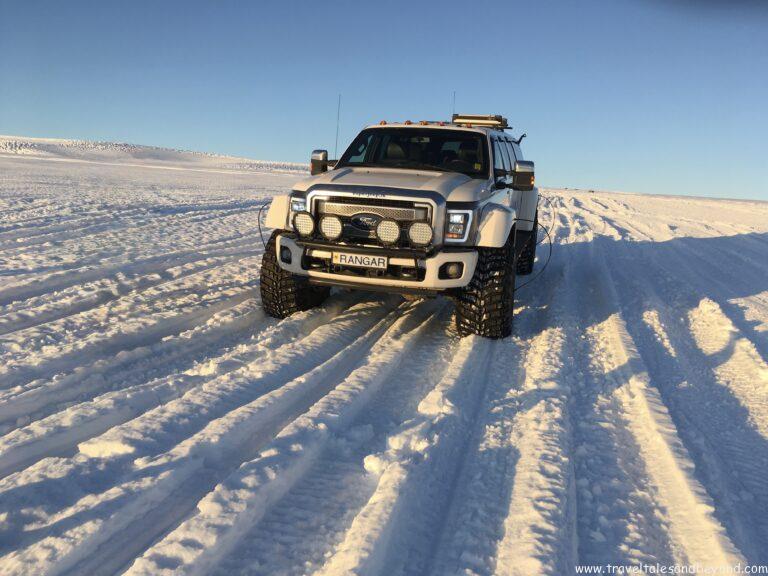
To cap off an already incredible day, we drove our superjeep up to Langjökull, Iceland’s second-largest glacier. This is where having a superjeep made all the difference — the terrain leading up to the glacier is no place for an ordinary car. The vast white expanse stretching into the horizon was humbling.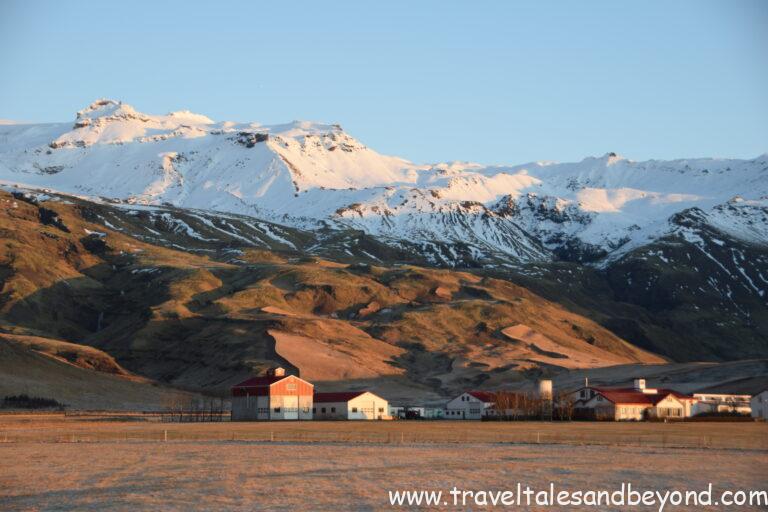
Seljalandsfoss waterfall
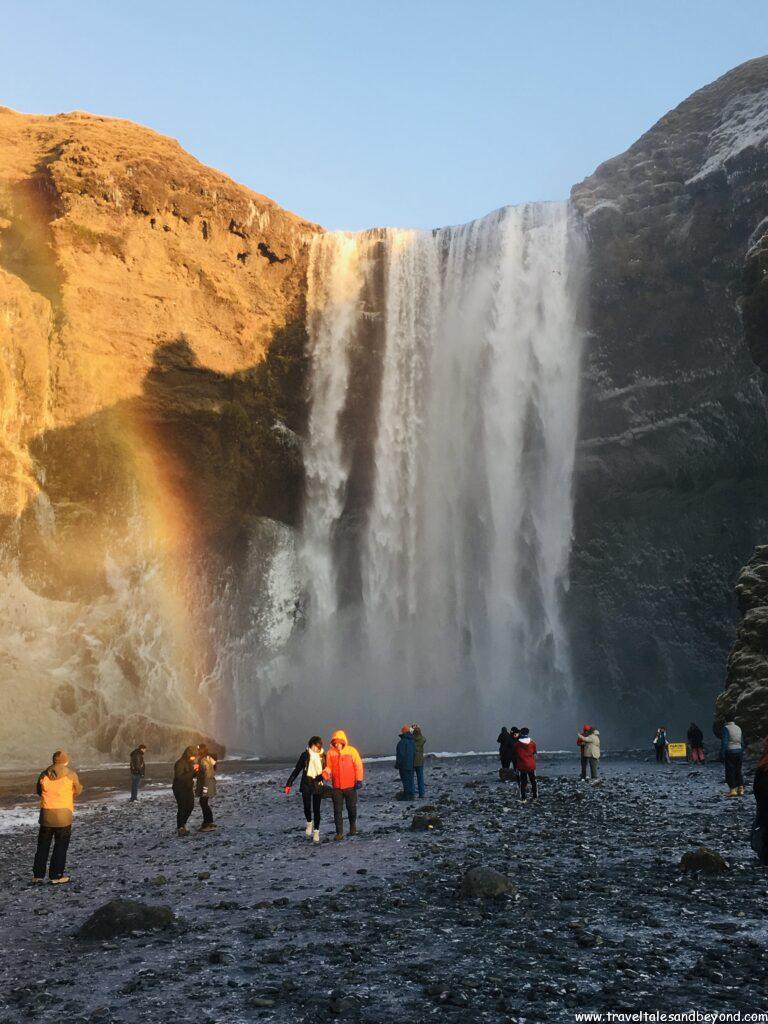
Our last stop before checking into Stracta Hotel was one for the books. Seljalandsfoss isn’t just a waterfall you admire from a distance — you can walk directly behind it through a cave-like passage. Even in November, the path behind the curtain of water is accessible (with care — it gets icy!). The feeling of standing behind a thundering waterfall with the Icelandic plains stretching out in front of you is genuinely hard to put into words.
Gljúfrabúi — the Hidden Waterfall
Just a short walk from Seljalandsfoss lies Gljúfrabúi, a secret waterfall tucked inside a narrow canyon. You have to wade slightly into a stream and squeeze through a crack in the rock to see it — but the reward is a towering hidden cascade in a cathedral-like cave. One of Iceland’s best-kept secrets.
Day 2 : Waterfalls & the Black Sand Beach
Skógafoss Waterfall
Our first stop on the second day was the Skógafoss — the “Golden Falls” — roared with particular ferocity in late November. Skógafoss is a massive, iconic 60-meter (197-foot) high and 25-meter (82-foot) wide waterfall on Iceland’s South Coast, located near Skógar village. Known for its immense spray and frequent, often double, rainbows on sunny days, it is easily accessible from the Ring Road, roughly two hours from Reykjavík.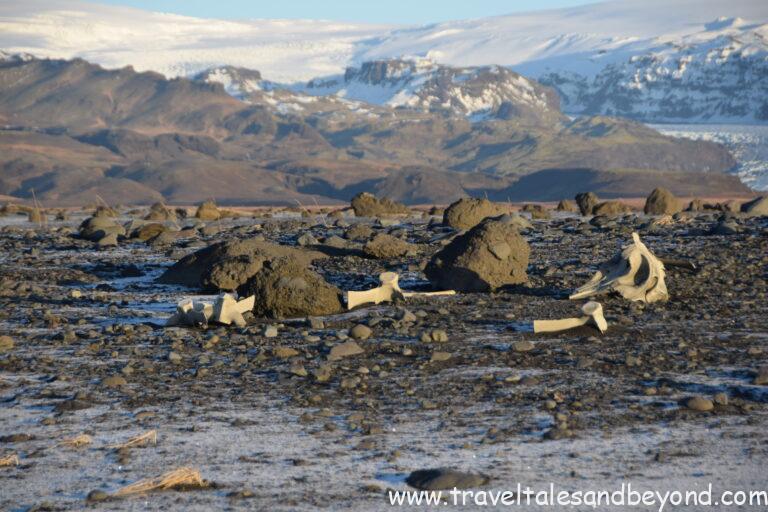
Black Sand Beach
Our guide had one more surprise up his sleeve. With a mischievous grin, he steered us off the beaten path and onto the vast expanse of black sand — the kind of dark, volcanic shore that feels like the edge of the world. As we stepped out, the landscape revealed its secrets slowly. Scattered across the beach, bleached white against the jet-black sand, lay enormous skeletons — the ancient remains of what were almost certainly whales. Silent, haunting, and utterly mesmerizing, they felt like monuments left behind by the ocean itself.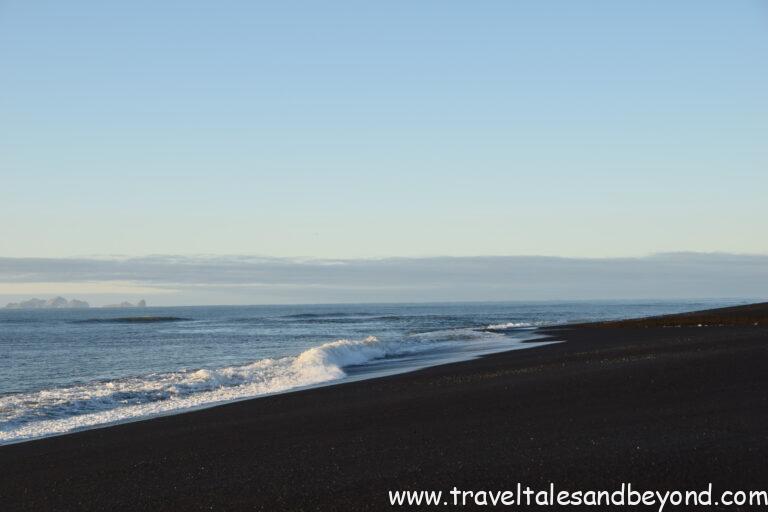
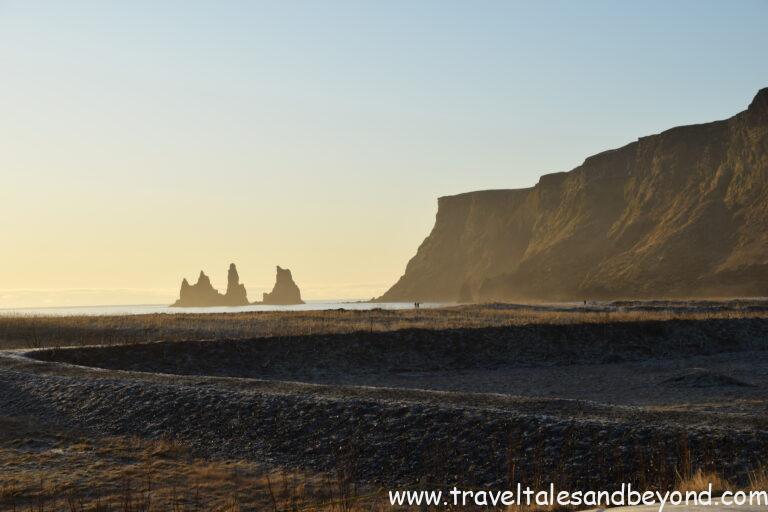
Reynisfjara
Next stop was at Reynisfjara, the famous black sand beach near Vík. The contrast of jet-black volcanic sand, crashing North Atlantic waves, and the towering Reynisdrangar basalt sea stacks is one of the most striking visual experiences Iceland has to offer. A word of caution: the sneaker waves here are notoriously dangerous — we kept a very safe distance from the water’s edge.
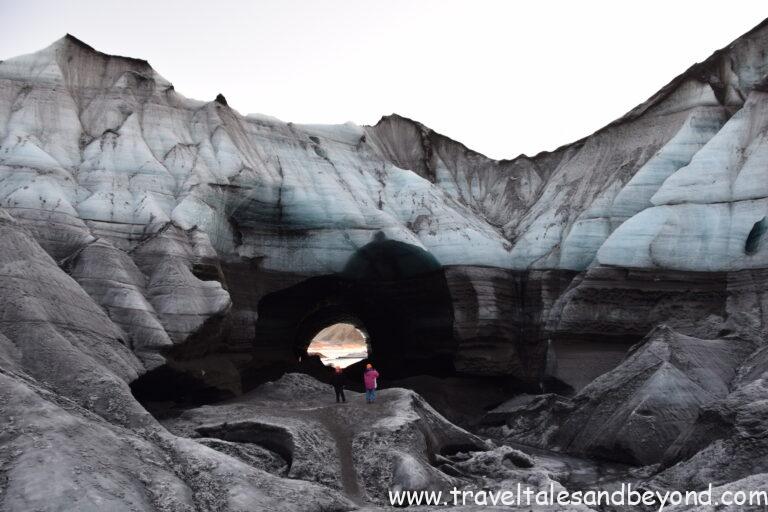
Katla Ice Cave
Katla Ice Cave is nestled inside Mýrdalsjökull glacier in South Iceland, sitting directly above the infamous Katla volcano. It lies about 180km from Reykjavik, roughly a 2.5 hour drive along the Ring Road.
The Gateway Village — Vík í Mýrdal Almost all tours depart from the charming little village of Vík, Iceland’s southernmost village and the same area as Reynisfjara black sand beach — so you likely visited both on the same day! From Vík, guides load visitors into super jeeps for a thrilling 40-45 minute ride up onto the glacier.
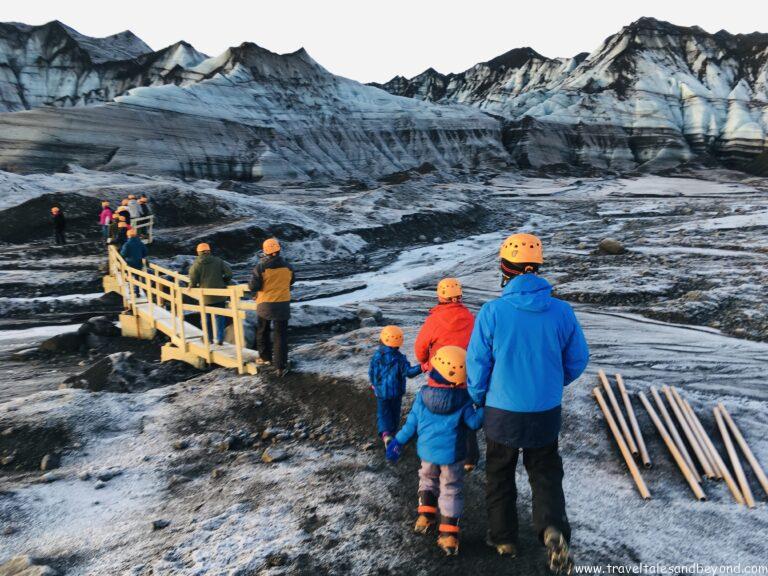
Getting There The cave is completely inaccessible without a guided tour — and for good reason. The terrain involves crossing active glacial landscape above a live volcano.
Once we stepped out and put on our crampons, the cold felt sharper and more intense. Our guide handed us helmets, a quiet reminder that this environment demanded respect.
Walking into the Katla Ice Cave felt like entering another world. The glacier walls shimmered in deep blues and blacks, streaked with volcanic ash—layers of history frozen in time.
Inside, everything went still. The wind outside vanished, replaced only by the faint drip of water and the hushed silence of our group, completely in awe.
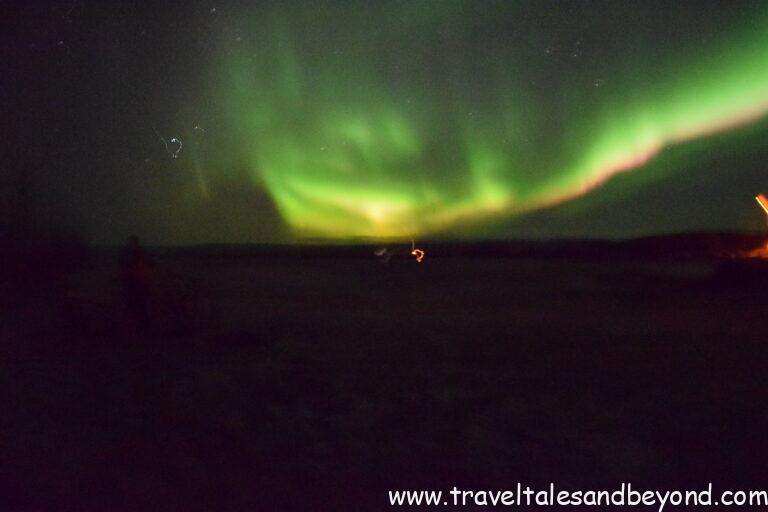
Northern lights
We had barely finished dinner at Hotel Laki when our guide appeared at the door — the Northern Lights were showing. We grabbed our jackets and headed outside.
For the first few minutes there was nothing obvious. Just a dark sky and cold air. Then a faint wash of green appeared low on the horizon, grew steadily brighter, and began to move — a slow, shifting band that spread across the northern sky. At its peak, the edges turned a pale pink. It lasted about an hour, fading and returning a couple of times before disappearing completely.
It was our first time seeing the Northern Lights, and it’s fair to say none of us were quite prepared for how quietly beautiful it is in person. The kids were unusually still. We stayed outside far longer than was sensible given the temperature.
Northern Lights Tips
November is a great time to catch the Aurora Borealis.
How to increase your chances:
Stay at least 3–4 nights. The more nights you have, the better your odds. We saw them on night two, but our guide mentioned some groups wait until the last evening.
Check the forecast daily. The Icelandic Met Office at en.vedur.is shows the KP index and cloud cover predictions. A KP of 3 or above with clear skies is what you’re looking for. Check it after dinner when the day’s conditions have settled.
Get away from Reykjavík. City light pollution drowns out weaker displays. Being out in the South Iceland countryside made a noticeable difference for us. If you’re based in the city, a guided aurora tour will take you somewhere dark — worth it even if you have your own car.
Let your eyes adjust. Give it 15–20 minutes away from phone screens before deciding nothing is happening. The early faint glow is easy to dismiss if your eyes haven’t adapted.
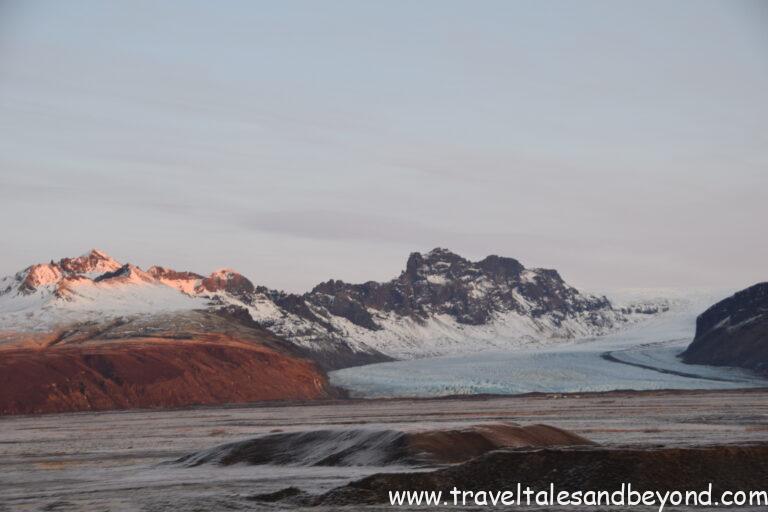
Day 3: Glaciers, Ice Lagoons & More
Vatnajökull National Park
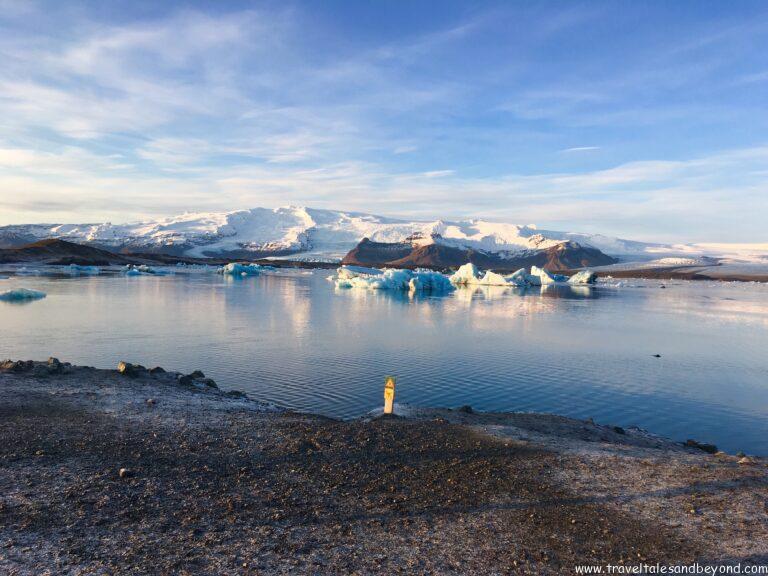
Jökulsárlón Glacier Lagoon
Jökulsárlón is unlike anything else on earth. A vast lagoon filled with icebergs calved from the Breiðamerkurjökull glacier, floating silently toward the sea. In November, the lagoon was quiet and the light was extraordinary — when the sun briefly appeared low on the horizon, the blue and white icebergs glowed as if lit from within. We spent a long time here, just watching.
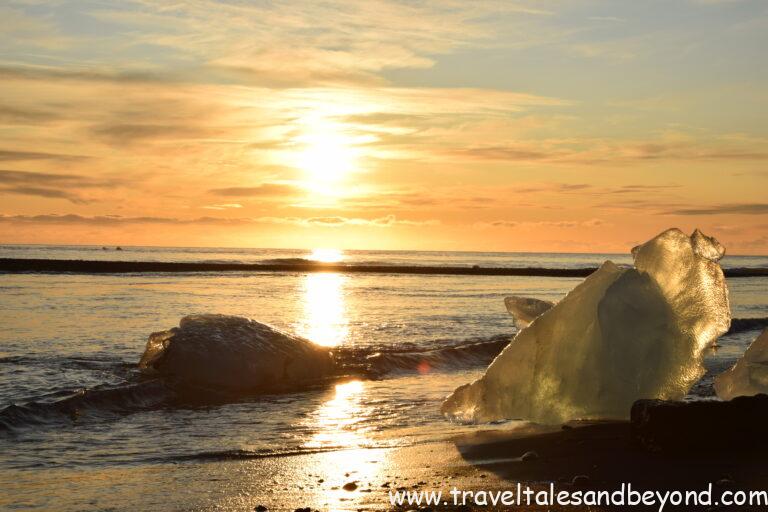
Diamond Beach
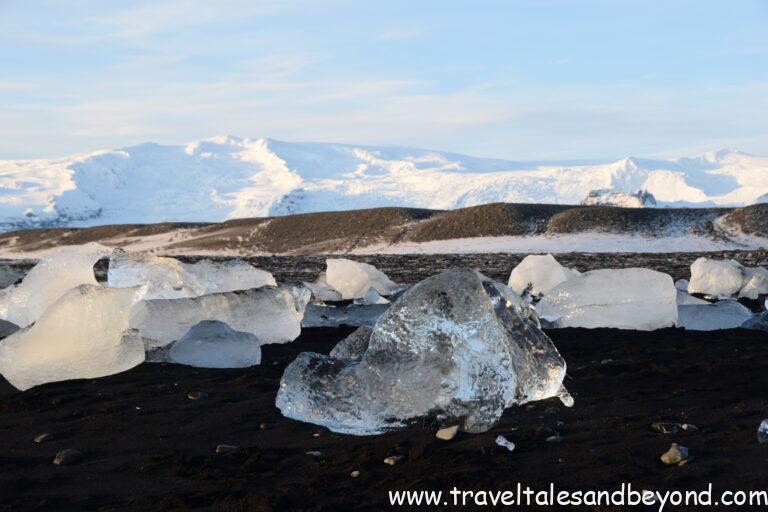
Just across the road from Jökulsárlón, where icebergs wash up on jet black volcanic sand, glittering like diamonds in any light.
It’s a simple thing, really — chunks of ice on a black beach. But the contrast is striking. The ice ranges from completely clear to milky white to pale blue, and against the dark sand it catches the light beautifully no matter where you stand. Every piece is a different shape, a different size.
We wandered along slowly, and every few steps there was something new to look at. We took way too many photos. It’s one of those spots that’s hard to leave.
Skaftafell
Within Vatnajökull National Park, Skaftafell is a nature reserve with dramatic scenery at every turn. The walking trails here lead to glacier tongues, waterfalls, and viewpoints that frame the glacier against black lava plains. Even a short walk here is deeply rewarding.
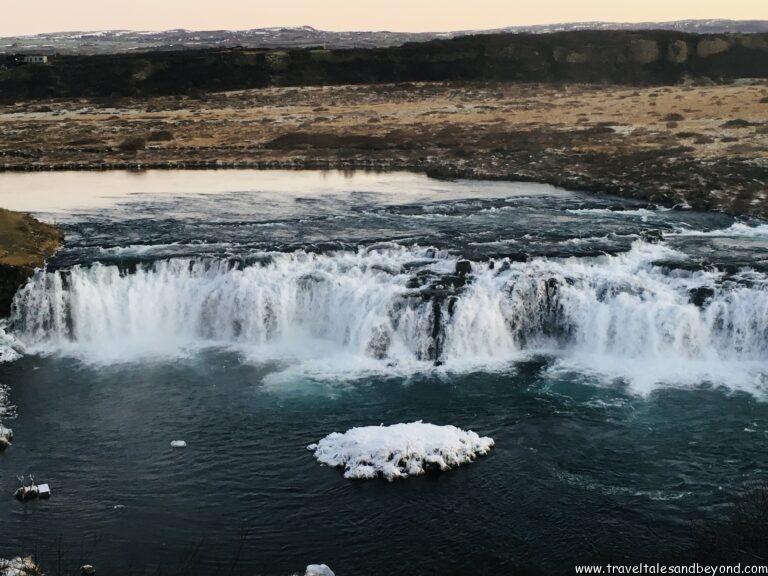
Faxifoss , Golden Circle, Iceland
Before driving to Reykjavik, we paused at our last stop—the charming Faxifoss waterfall, a peaceful end to the day.
Day 4 : Reykjavik
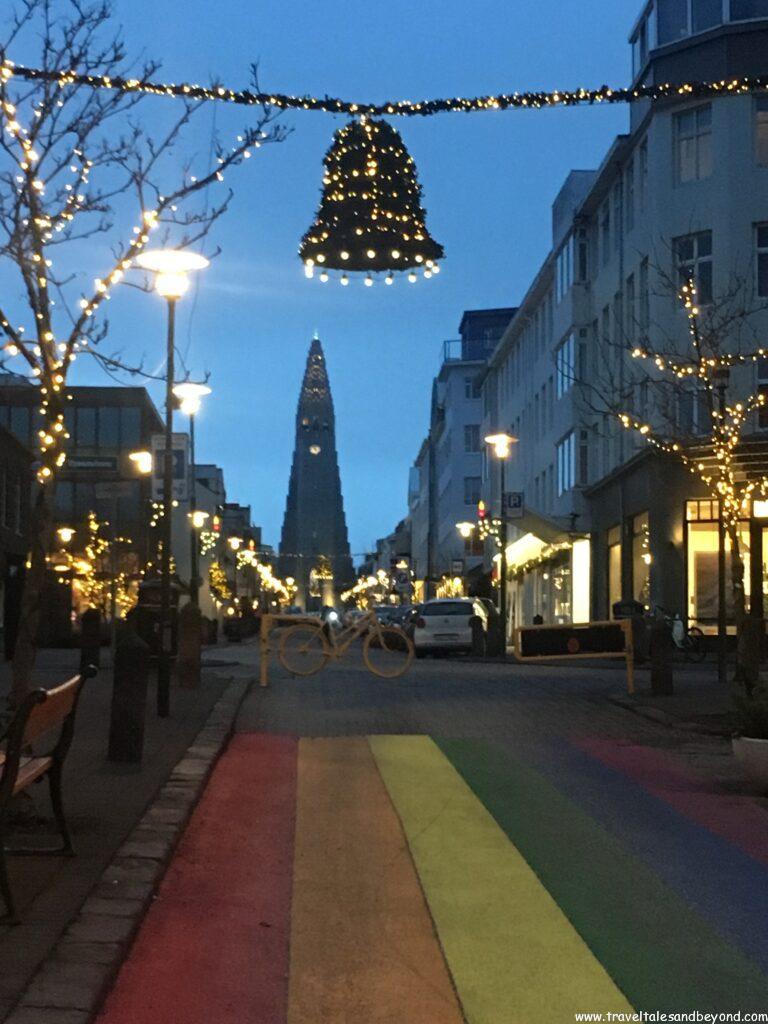
After three days of glaciers, waterfalls, and open highland roads, arriving in Reykjavík felt like a different kind of adventure entirely. The City at a Glance Reykjavik is one of the world’s most unique capital cities — small enough to explore on foot yet bursting with personality, culture, and charm. Home to around two thirds of Iceland’s entire population, it sits on the southwestern coast and serves as the gateway to almost every Icelandic adventure. The name literally translates to “Smoky Bay” — named by the first Norse settlers who saw steam rising from the geothermal hot springs.
Hallgrímskirkja Church
Reykjavík’s most recognizable landmark is impossible to miss — the concrete tower rises above the city’s low rooftops like something from another era. Up close, the facade makes more sense: the stepped columns flanking the tower are modeled directly on Iceland’s basalt rock formations, the same hexagonal columns you see at places like Reynisfjara. It is, in that way, a very Icelandic piece of architecture — dramatic, geometric, and completely at home in the landscape. Take the elevator up the tower for breathtaking panoramic views across the city and surrounding mountains. Open daily 10am–5pm.
Sun Voyager
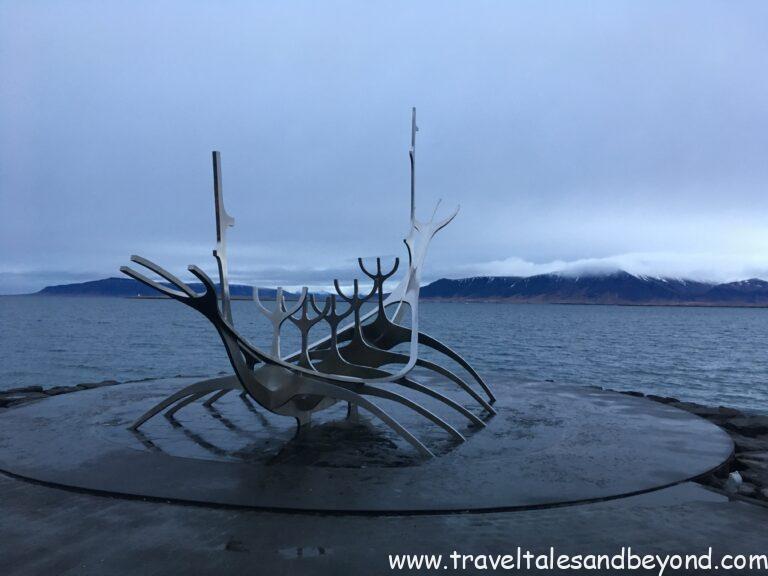
A short walk along the waterfront from the city centre brings you to the Sun Voyager — a gleaming steel sculpture of a Viking longship that sits right at the water’s edge. It’s one of those landmarks that photographs beautifully but is somehow even better in person, particularly on a clear day when the mountains across the bay sit sharp on the horizon behind it.
We arrived in the late afternoon as the light was dropping, and the steel caught the last of the sun in a way that made it glow. A few other visitors were there, but it never felt crowded. The waterfront promenade around it is lovely for a quiet walk — easy to spend half an hour just looking out at the bay.
It’s also, according to our guide, one of the best spots in the city to catch the Northern Lights on a clear night. We’d already had our display out in the countryside, but if you’re based in Reykjavík and hoping to see them, this is where to start.
- Reykjavik is very walkable — most major sights are within easy strolling distance
- Taxis and ride shares are expensive — the city is best explored on foot
- The weather can change four times in one day — always carry layers
- Most Icelanders speak excellent English
Geo Thermal Spa
Book in advance — the Blue Lagoon sells out regularly, particularly in peak season and on days when cruise ships are in port. If you’re visiting in November, slots are easier to come by, but it’s still worth reserving your spot a few days ahead. Towel and robe rental is available on site if you don’t want to pack your own.
Total Trip Cost:
We spent approximately $7,500 for 4 adults, 2 kids and the guide’s accommodation — excluding flights and meals. This covered three nights of accommodation plus a private 3-day superjeep tour with a local guide. Breakfast was included at both hotels.
| What | Details | Cost (USD) |
|---|---|---|
| Day 1 — Golden Circle superjeep tour | Þingvellir, Gullfoss, Geysir, Langjökull | ~$2,008 |
| Day 2 — South Coast superjeep tour | Seljalandsfoss, Skógafoss, Black sand beach | ~$2,006 |
| Day 3 — Glaciers & lagoons superjeep tour | Jökulsárlón, Vatnajökull, Skaftafell | ~$2,008 |
| Stracta Hotel (3 rooms, 1 night) | Breakfast included | ~$675 |
| Hotel Laki (3 rooms, 1 night) | Breakfast included | ~$796 |
| Total | ~$7,495 |
A few things worth knowing if you’re planning your own trip:
The private superjeep tour accounts for most of the cost. At around $6,000 for three days, it isn’t cheap — but it’s what gave us access to the glacier, highland routes, and the flexibility to chase the Northern Lights at night. Group tours are significantly cheaper if budget is a priority, though you’ll have less flexibility and access.
Tips for Travelling South Iceland in November
- A superjeep is worth every króna November road conditions in the Icelandic highlands are not for ordinary vehicles. A superjeep gives you access to terrain and glacier approaches that are simply off-limits otherwise — and the elevated vantage point makes the views even better.
- Pack for real cold — and waterproofsNovember temperatures hover around 0–5°C, but wind chill can make it feel much colder. Waterproof everything — jacket, trousers, boots. You will get wet at the waterfalls.
- Embrace the short daysIn late November, Iceland has only 4–5 hours of usable daylight. Rather than fighting it, lean into it — the golden hour light lasts for hours, and the dramatic low-angle light makes every landscape look incredible.
- Book accommodation earlyNovember is shoulder season but popular hotels likeStracta and Hotel Laki still fill up for weekend dates. Book 2–3 months in advance for the best rates.
- Carry cash (IcelandicKróna)While Iceland is largely card-friendly, some remote stops and smaller vendors appreciate cash. ISK is essential for flexibility on the road.
- Watch the weather — and the Northern LightsNovember gives you a real shot at seeing the Northern Lights. Check the aurora forecast (en.vedur.is) every evening and get away from light pollution. Oursuperjeep guide knew exactly where to go.
Frequently Asked Questions
1. Is Iceland worth visiting in November?
Yes — November is one of the best times to visit if you want fewer crowds, dramatic winter landscapes, and strong Northern Lights chances. Daylight is limited (4–5 hours), but the golden-hour light lasts for hours and is stunning for photography.
2. What is the weather like in Iceland in November?
Temperatures hover around 0–5°C (32–41°F), but wind chill can make it feel much colder. Expect rain, wind, and occasional snow. Waterproof layers are essential.
3. Is Iceland safe for families in November?
Yes, with the right preparation. Sneaker waves at Reynisfjara are a real danger — keep a safe distance from the water. Road conditions can be unpredictable; always check road.is before driving.
4. What are the best things to do in Iceland in November?
Top experiences include visiting the Golden Circle, exploring Katla Ice Cave, seeing Jökulsárlón Glacier Lagoon, watching for Northern Lights, and relaxing at the Blue Lagoon.
5. Do you need a 4WD or superjeep in Iceland in November?
For South Iceland's main road (Ring Road), a regular car is fine. But for glacier drives (like Langjökull) or highland routes, a superjeep is essential — and worth the cost for the access it gives you.
6. Can you see the Northern Lights in Iceland in November?
Yes. November offers long, dark nights and is within Iceland's Northern Lights season. But seeing them is never guaranteed—you need darkness, sufficient auroral activity and, importantly, clear or partly clear skies. Check the Icelandic Meteorological Office's aurora and cloud forecasts during your trip.
Final Thoughts
South Iceland in November is raw, dramatic, and deeply beautiful. The lack of summer crowds means you often have Iceland’s most spectacular landscapes entirely to yourself. The superjeep unlocked parts of the country that most visitors never see — glacier edges, highland routes, and remote viewpoints that made this trip feel genuinely adventurous.
If you’re considering Iceland in winter, don’t hesitate. Just pack warm, hire a superjeep, and let the country do the rest.
If you loved reading this post, please check out my other posts here.
Recent posts :
- Spain – Barcelona, Valencia, Seville, Madrid
- Tanzania – A 7-day trip to African safari
- Chile – A week long trip to breathtaking Patagonia
- Prague – A 2 day escape to Bohemian beauty
- Gibraltar – A day trip from Spain
- Australia – A 2 week itinerary
- Fiji – A four-day stopover
- Costa Rica – A 10 day trip to the Central American paradise
- Germany – Berlin, Dresden, Nuremberg
- Portugal – A week long trip to Lisbon, Porto, Nazare, Duorro valley
Shaminee is a U.S.-based mom and family travel blogger who designs detailed itineraries for her own family and turns them into practical guides for others. Her goal is to make family travel simpler, more organized, and more enjoyable.
Read more →
Discover more from Travel Tales And Beyond
Subscribe to get the latest posts sent to your email.