
Travel Month: August
Planning a trip to Nuremberg and wondering how to balance its heavy history with its charming old town? This 2-day Nuremberg itinerary covers both sides of the city — the sobering Nazi Party Rally Grounds and Nuremberg Trials Memorial, and the medieval old town with its thousand-year-old imperial castle — based on our own family trip in August.
Nuremberg was the final stop on our East Germany exploration before circling back to Frankfurt, and it turned out to be one of the most layered cities we visited — a place that holds two very different chapters of history side by side.
In these 2 days, we experienced:
- Nazi history — the Documentation Center at the Nazi Party Rally Grounds and the Nuremberg Trials Memorial
- Medieval old town — Nuremberg Castle, St. Sebaldus Church, the Schöner Brunnen fountain, and Albrecht Dürer’s House
Whether you’re a first-time visitor to Nuremberg, a history enthusiast, or a family looking for a meaningful stop in Bavaria, this guide covers everything you need — including how to get there, what to see, and how to make the most of two days in the city.

Day 1: Nuremberg — Nazi History
We arrived in Nuremberg from Prague and faced a tight train connection with just a 10-minute layover, prompting us to opt for the Flix bus instead. To our surprise, the bus proved to be a comfortable mode of travel, though it’s advisable to carry some snacks for the 3-hour ride. It was on time and a very smooth ride.
Tip: If your train connection has a tight layover, check Flix Bus as an alternative — it’s often more comfortable than it sounds, just bring food and water for longer rides.
We arrived around noon and leisurely explored the Old Town area. In the evening, we took a taxi to the Documentation Center Nazi Party Rally Ground and the Nuremberg Trials Memorial. The Documentation Center is built right inside one of the unfinished Congress Hall buildings from the Third Reich era — which is striking in itself. The permanent exhibition inside walks you through the rise of the Nazi party, the propaganda machinery, and the rally grounds that were designed to project power and intimidate on a massive scale. Standing in that space and seeing the actual grounds where those rallies took place is a sobering experience — photographs and documentaries don’t quite prepare you for the scale of it. It’s one of those places that is difficult to visit but important to see.
The Nuremberg Trials Memorial, where high-ranking figures from the Third Reich faced justice between 1945 and 1949, adds another layer to the visit — a reminder that the world did, eventually, respond.
Day 2: Nuremberg — Medieval Old Town & Castle
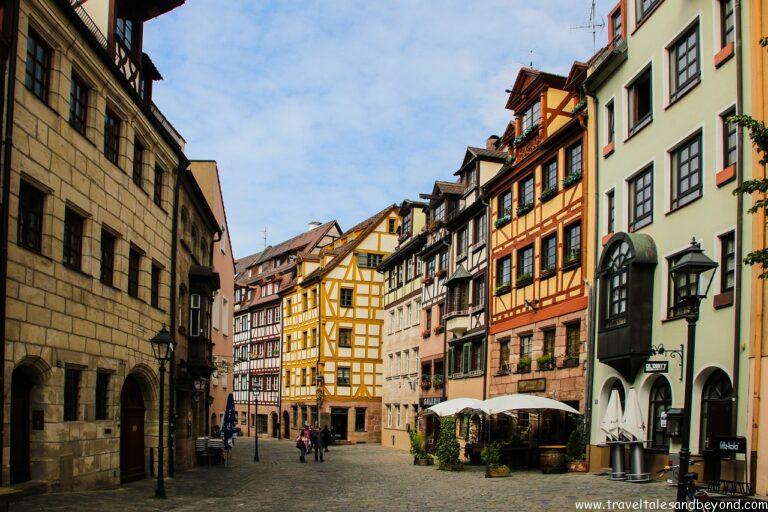
On our final day, we joined a walking tour through Nuremberg’s Old Town, and it turned out to be a wonderful way to wrap up the trip. What makes Nuremberg’s old town special is how intact it feels — the cobbled streets, the medieval walls, the half-timbered houses. It doesn’t feel like a reconstruction. It feels lived in.
Nuremberg Castle
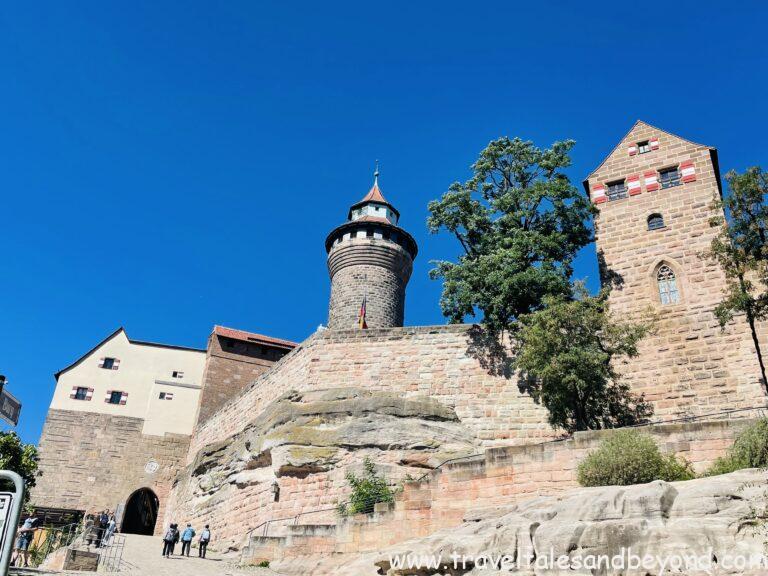
Our first stop was Nuremberg Castle, which sits high above the city and has watched over it for nearly a thousand years. The views from up there over the rooftops of the old town are worth the climb alone. Our guide gave us a great sense of how the castle shaped the city around it — for centuries, whoever controlled the castle controlled the region.
St. Sebaldus Church
From there we walked down to St. Sebaldus Church, one of Nuremberg’s oldest churches and a beautiful example of Gothic architecture. It’s quieter and less visited than some of the bigger attractions, which made it feel like a bit of a hidden gem. Inside, the craftsmanship is extraordinary — particularly the bronze shrine of St. Sebaldus, which took the sculptor over ten years to complete.
Schöner Brunnen
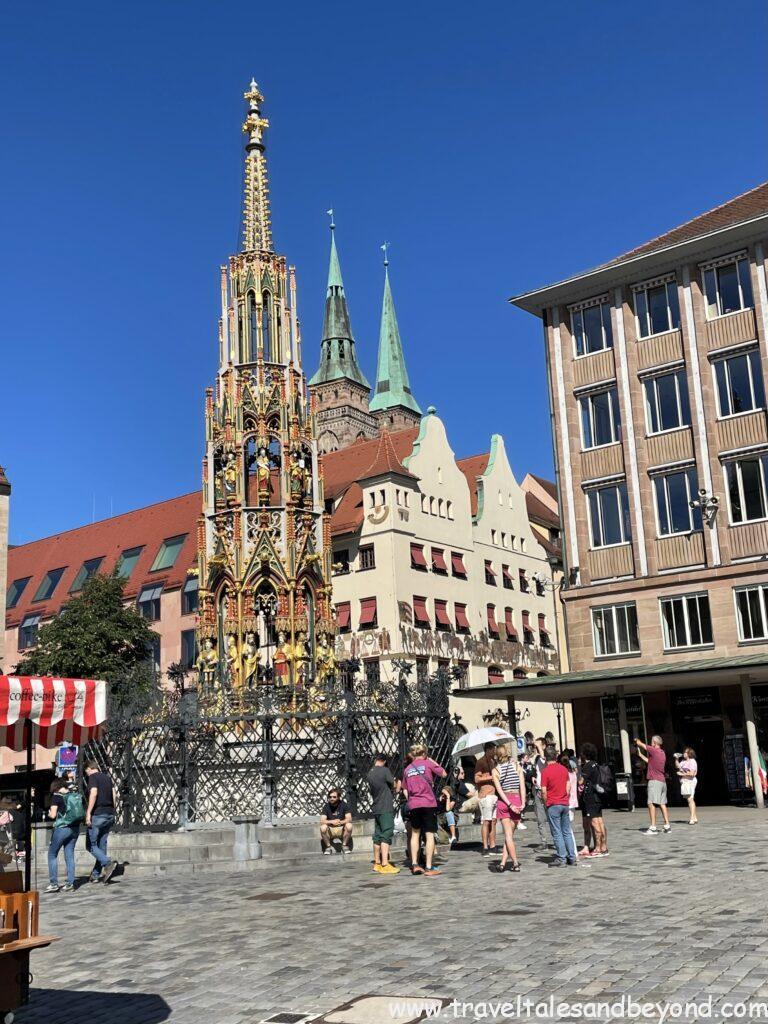
The Schöner Brunnen — the ornate Gothic fountain in the main market square — was another highlight. It dates back to the 14th century and is decorated with 40 figures arranged in tiers, representing everything from prophets and princes to craftsmen. There’s a tradition of spinning the golden ring embedded in the ironwork grille around the fountain — legend has it that it grants a wish.
Tip: Look for the golden ring in the ironwork grille around the Schöner Brunnen and give it a spin — legend says it grants a wish.
Albrecht Dürer’s House
We also stopped at Albrecht Dürer’s House, the home of one of Germany’s most celebrated Renaissance artists. Dürer lived and worked here for most of his life, and the house has been preserved beautifully. Even if you’re not an art enthusiast, it’s a fascinating glimpse into what daily life looked like in 15th century Nuremberg.
What made the whole tour exceptional was our guide, Anthony. His grandfather started this very walking tour, and the family has been leading it ever since. That kind of continuity is rare, and you could feel it in the way Anthony spoke about the city — not just as a guide reciting facts, but as someone who genuinely loves where he comes from. He had a story for every corner, and a way of connecting the medieval history with the more recent past that made everything feel whole. If you’re visiting Nuremberg, don’t skip the walking tour — and if Anthony is guiding, you’re in for a treat.
Later in the day, we made our way to the station and boarded the train back to Frankfurt. There’s something about a train journey at the end of a trip that naturally slows you down. We watched the countryside roll by — small towns, green fields, the occasional church spire — and found ourselves talking about everything we’d seen over the past week.
Final Thoughts
Nuremberg turned out to be one of the most complex stops of our whole Germany trip — a city that holds the weight of the Nazi Party Rally Grounds and the Trials Memorial alongside a medieval old town that feels genuinely lived in rather than reconstructed. It’s a place that rewards sitting with both sides of its history rather than rushing through.
If Nuremberg is part of a bigger Germany trip for you, our 8-day Germany itinerary covers Berlin, Dresden, and Nuremberg together, and our 3 Days in Berlin (Plus a Dresden Day Trip) guide picks up the earlier legs of the same route.
Nuremberg Travel Tips: What You Need to Know
Getting Around
- Germany has one of the best train networks in Europe. Use the DB Navigator app (Deutsche Bahn) to book trains in advance — you’ll get cheaper fares the earlier you book
- Flix Bus is a cheap and comfortable option between cities, especially if your train connection has a tight layover
- Most major sights in Nuremberg can be explored on foot — comfortable walking shoes are a must
Visa & Entry
- If you’re coming from the US, UK, Canada, or Australia, you can stay up to 90 days without applying for a visa
- The EU’s planned ETIAS pre-travel screening keeps getting postponed and isn’t in force yet — worth a quick check on the official ETIAS site as your trip gets closer, in case that changes
Money
- Cash still matters here — several stalls near the Hauptmarkt and smaller cafés don’t take cards, so carry some Euros alongside your usual card
- Geldautomat is the German word for ATM, and you’ll find them scattered around the Old Town if you need to top up
Best Time to Visit
- Late spring through early autumn brings the warmest weather and the longest days for sightseeing
- The city’s Christmas market (Christkindlesmarkt) is one of Germany’s most famous — a great reason to visit in December
- July and August draw the biggest crowds, so plan around that if you’d rather avoid the busiest stretch
Accommodation
- Base yourself in the Old Town — it puts the castle, market square, and most major sights within walking distance
Language
- Nuremberg’s tourist spots are used to English speakers, but a few German words go over well with locals
Safety
- Nuremberg is a safe city to explore on foot, even in the evening. The usual travel precautions apply — keep an eye on your belongings around the train station and busy market areas.
Frequently Asked Questions
What is Nuremberg known for historically?
Nuremberg is significant for two contrasting chapters of history: its role as the site of massive Nazi Party rallies during the Third Reich, and later as the location of the Nuremberg Trials (1945–1949), where senior Nazi officials were prosecuted for war crimes. The Documentation Center Nazi Party Rally Grounds and the Nuremberg Trials Memorial are both essential visits.
Is one day enough to see Nuremberg?
You can hit the highlights of the old town in a single day, but two days lets you properly split the Nazi history sites from the medieval old town, rather than rushing both into one afternoon. Given how different the two experiences are, we'd recommend giving each its own day if you can.
What are the must-see attractions in Nuremberg's old town?
Top highlights include Nuremberg Castle, St. Sebaldus Church, the Schöner Brunnen fountain in the Hauptmarkt, and Albrecht Dürer's House. A guided walking tour is a great way to connect the medieval history with the city's more recent past.
How do you get to Nuremberg from Prague?
Direct trains run between Prague and Nuremberg, though connections can involve tight layovers. Flix Bus is a comfortable and reliable alternative if train timing doesn't work out — the ride is about 3 hours.
Is Nuremberg suitable for kids or families?
es, though the Nazi history sites are heavier content best suited to older kids or teens who can process that material. The medieval old town, castle, and fountain-spinning tradition at the Schöner Brunnen tend to be a hit with younger children too.

Shaminee is a U.S.-based mom and family travel blogger who designs detailed itineraries for her own family and turns them into practical guides for others. Her goal is to make family travel simpler, more organized, and more enjoyable.
Read more →
Discover more from Travel Tales And Beyond
Subscribe to get the latest posts sent to your email.