
Travel Month: August
Planning a trip to Berlin and wondering if Dresden is worth the extra day? This 3-day Berlin itinerary covers WWII and Cold War history, the Brandenburg Gate, the Berlin Wall, and Checkpoint Charlie — plus a full day trip to Dresden, whose baroque old town and rebuilt Frauenkirche ended up being one of the biggest surprises of our entire Germany trip.
We didn’t originally plan Germany as our main destination. Our family was headed to Prague, and since our flights routed through Frankfurt, we decided to turn the layover into a full East Germany exploration before crossing into the Czech Republic. Berlin and Dresden ended up being some of the most memorable stops of the trip.
In these 3 days, we experienced:
- Berlin — WWII history, the Brandenburg Gate, the Berlin Wall, and Cold War landmarks
- Dresden — baroque architecture, the rebuilt Frauenkirche, and a stunning Elbe riverbank
Whether you’re a first-time visitor to Berlin, a history enthusiast, or a family looking for a meaningful European city break, this guide covers everything you need — including how to get around, what to eat, and whether Dresden is worth adding as a day trip.
Table of contents
- Day 1 — Arriving in Berlin: Frankfurt to Berlin by train
- Day 2 — Berlin: WWII history, Brandenburg Gate & the Berlin Wall
- Day 3 — Berlin: WWII walking tour & Checkpoint Charlie
- Day 4 — Dresden day trip: Frauenkirche, Zwinger Palace & the Elbe
- Final thoughts
- Berlin & Dresden travel tips: what you need to know
- FAQ
Day 1: Arriving in Berlin — Frankfurt to Berlin by Train
Our European journey began the moment we landed at Frankfurt Airport. We hopped into a taxi for a swift 15-minute ride to Berlin Hauptbahnhof, bypassing the available train alternatives. With a couple of hours to spare before our train to Berlin, we strolled around the neighborhood near the station and enjoyed a leisurely lunch.
We had booked our train tickets from Rail Ninja. We usually pay extra to reserve the seats. The train journey to Berlin unfolded as an approximately four-hour visual feast through the heart of Germany, unveiling charming countryside views and glimpses of quaint villages. By the time we arrived in Berlin, evening had set in. Our hotel was a mere 20-minute walk from the station by the river Spree.
Tip: Book your Frankfurt–Berlin train in advance — fares climb the closer you get to travel day.
Day 2: Exploring Berlin — WWII History, Brandenburg Gate & the Berlin Wall
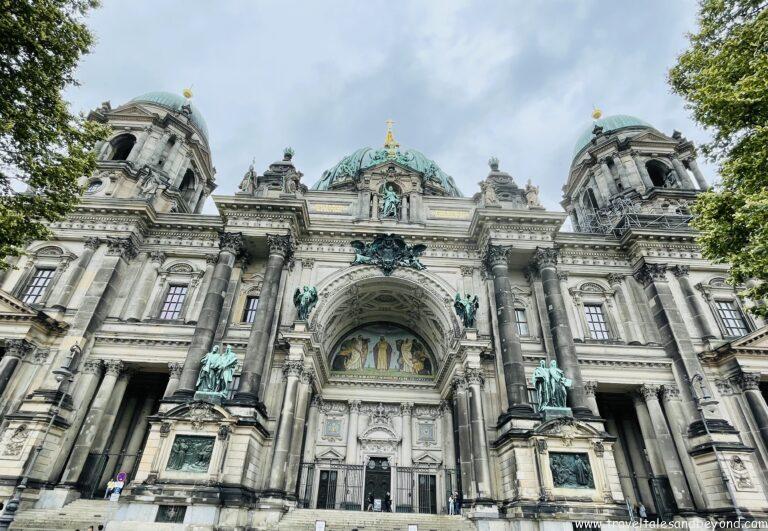
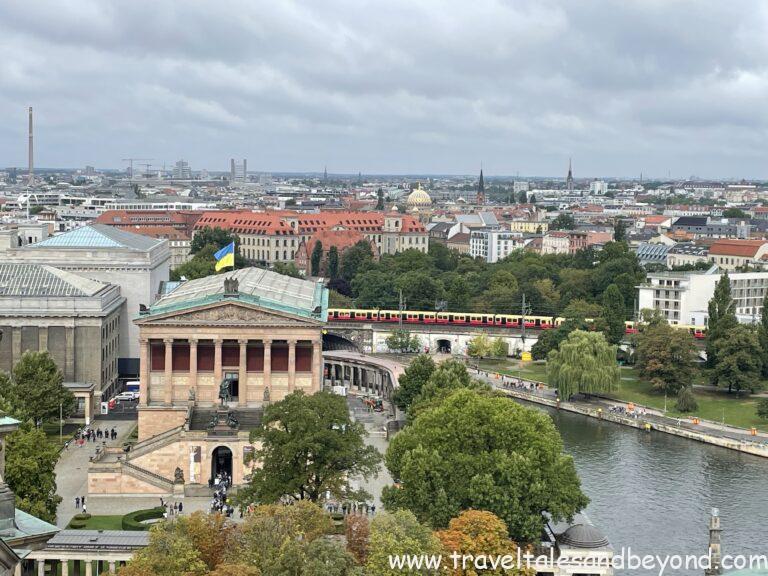
The next day, we opted to use a hop-on-hop-off bus to explore Berlin, given the overcast and chilly weather. Berlin, situated along the river Spree, holds a significant historical connection to World War II and the Cold War. We climbed to the top of the Berlin Cathedral (270 steps) to get a panoramic view of the city.
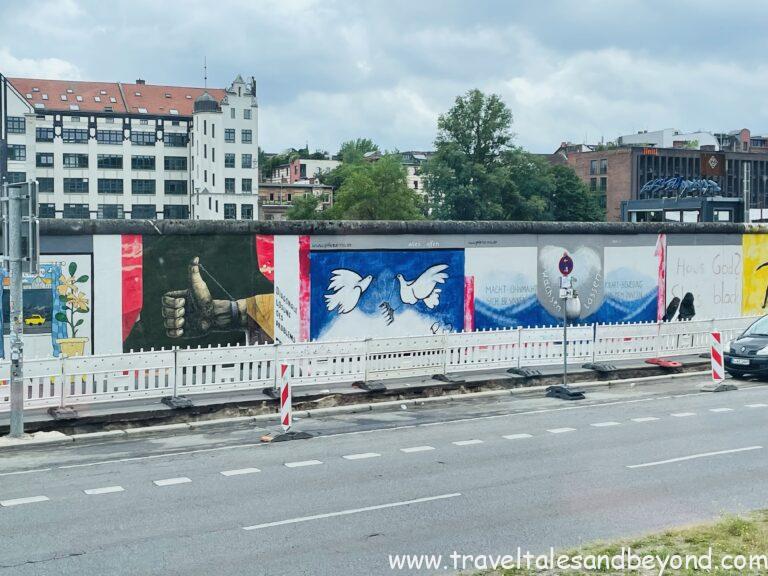
Later in the afternoon, we visited several key attractions that were once part of East Germany, and this is where the trip became truly eye-opening.
Standing in these spaces, it’s hard not to reflect on how different life once was when Germany was divided into two separate states after World War II: the German Democratic Republic (East Germany) and the Federal Republic of Germany (West Germany). Even though reunification happened in 1990, you can still feel subtle differences in architecture, atmosphere, and urban development as you move through the former East.
During the Cold War, East Germany was influenced by a socialist system, while West Germany developed under a capitalist democracy. This division wasn’t just political — it shaped everyday life.
In the East, cities often reflect:
- More uniform, functional architecture built during the socialist era
- Large apartment blocks designed for efficiency over aesthetics
- Wider open public spaces meant for collective living
In contrast, West German cities developed:
- More modern, commercial infrastructure
- Faster economic growth and redevelopment
- Stronger influence from Western Europe and global culture
Walking through former East Berlin areas, especially around remnants of the Berlin Wall, you can still sense that contrast between two very different worlds that once stood side by side.
Day 3: Exploring Berlin with a Walking Tour
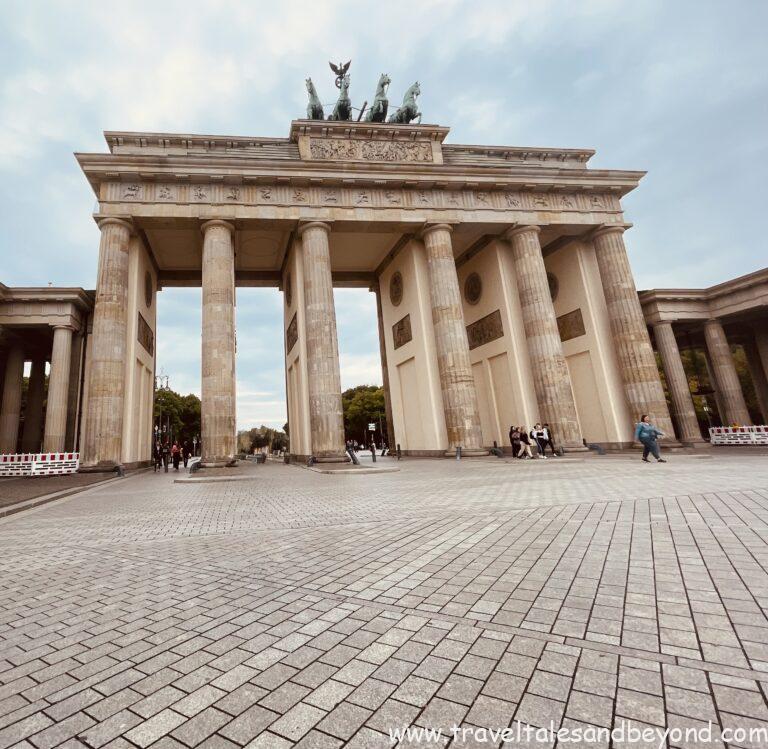
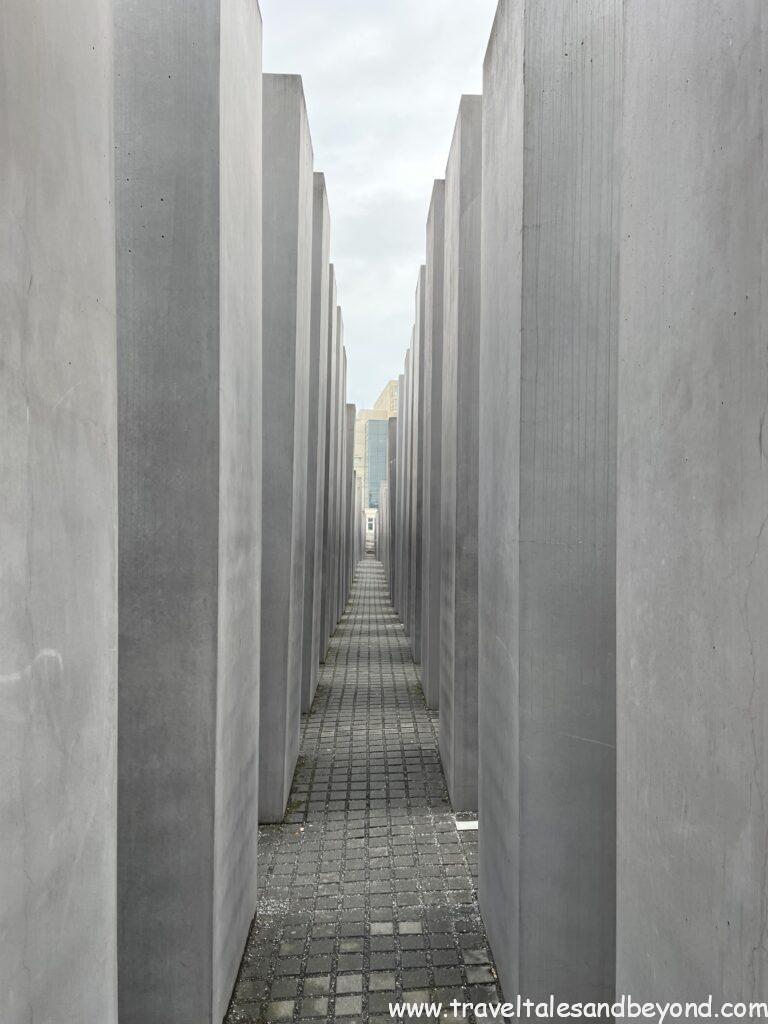
Our second day in Berlin included a 2-hour World War II walking tour, during which our guide led us through historical sites, offering valuable insights. We met our tour guide at the Brandenburg Gate. The gate stands as a symbol of peace and unity, attracting visitors from around the world. We walked through key locations associated with World War II, shedding light on the significant events and their impact on Berlin. We visited iconic landmarks such as remnants of the Berlin Wall, Checkpoint Charlie, the Holocaust Memorial, and the Topography of Terror exhibition center.
Reichstag Dome
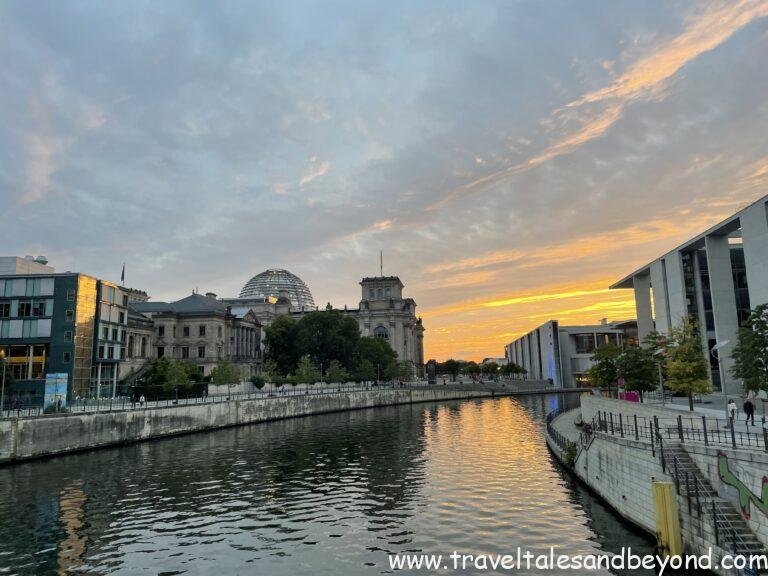
Just a short walk from the Brandenburg Gate sits the Reichstag, Germany’s parliament building, with its striking glass dome on the roof. Sadly, we didn’t get to go inside — we hadn’t realized you need to register for a time slot in advance, and by the time we thought to check, nothing was available. It was a bit of a letdown standing outside looking up at that dome knowing we’d missed it.
Learn from our mistake: entry is completely free, but you must book a time slot online through the official Bundestag visitor service well ahead of your trip — ideally 10-12 weeks out if you’re visiting in peak summer, since slots fill up fast. Walk-ins aren’t accepted, though a same-day standby option exists at the visitors’ service centre if you’re willing to gamble on cancellations. Climb the spiral ramps inside for 360° views over Berlin and a look down into the parliamentary chamber below.
Tip: Book your Reichstag dome slot the moment your Berlin dates are confirmed — don’t wait until you’re closer to the trip like we did.
In the evening, we had plans to visit the city’s museums. Nowadays, it’s crucial to pre-book tickets for these attractions. If time is scarce, consider starting with the Pergamon Museum. Despite having our tickets secured, jet-lag took a toll on us, forcing us to reluctantly abandon our museum plans.
Tip: Pre-book museum tickets at least a few days ahead — the Pergamon, Jewish Museum, and DDR Museum all sell out regularly.
Top 3 Museums in Berlin
Jet-lag got the better of us on our own trip, so we didn’t make it inside as many museums as we’d hoped — but between research beforehand and recommendations from locals, these are the three worth prioritizing if you only have time for a few.
1. Pergamon Museum
Home to some of the most significant archaeological collections in the world, including the Ishtar Gate of Babylon and the Market Gate of Miletus. Important: the main Pergamon building is closed for major renovation until it reopens in July 2027. In the meantime, a selection of original artifacts is on view at the temporary exhibition building, Pergamonmuseum: Das Panorama, located right across from Museum Island. Tickets for the Panorama exhibition can be booked directly through the Staatliche Museen zu Berlin ticket shop.
2. DDR Museum
An interactive, hands-on look at daily life in East Germany during the Cold War — think stepping inside a recreated East German apartment, sitting in a Trabant car, and flipping through old propaganda. It’s a great counterpart to the more solemn WWII sites, giving a fuller, more human picture of what life was actually like on the other side of the Wall. Book tickets directly through the DDR Museum’s official site.
3. Jewish Museum Berlin
Housed in a striking, angular building by architect Daniel Libeskind, this museum traces the history of Jewish life in Germany across two millennia — including the devastating impact of the Holocaust. Reserve a time-slot ticket through the Jewish Museum Berlin’s official ticket shop — walk-in tickets are available too, but booking ahead cuts down wait time.
Day 4: Dresden Day Trip
We jumped on a morning train to Dresden and honestly, this city totally surprised us. We hadn’t planned to spend much time here, but Dresden turned out to be one of those unexpected highlights of the trip.
Getting there: Dresden is about a 2-hour train ride from Berlin, making it an easy and worthwhile day trip if you don’t have time for an overnight stay.
How to book:
Direct trains run frequently throughout the day — mostly ICE (high-speed) and EC/IC (intercity) services from Berlin Hauptbahnhof to Dresden Hauptbahnhof, with a handful of RE (regional) options too
Book through the DB Navigator app or bahn.com, Deutsche Bahn’s official site
Frauenkirche
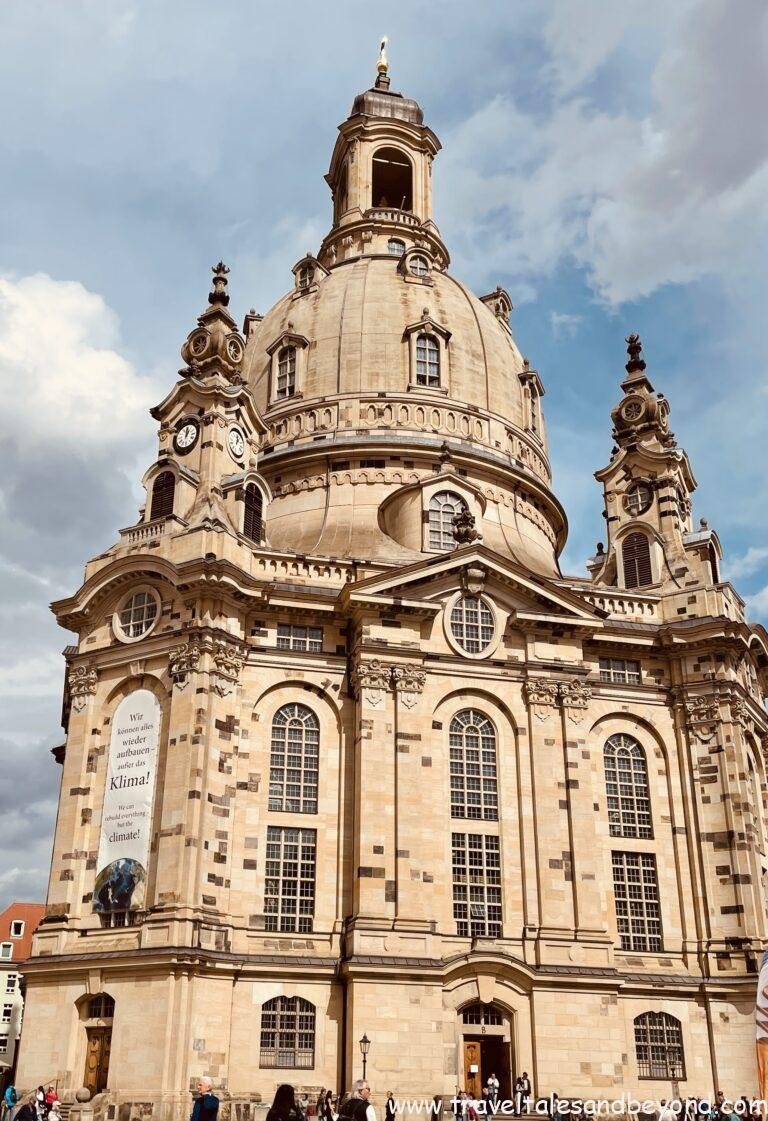
The Frauenkirche was our first stop and wow — what a story this church has. It was completely flattened during the WWII bombing of Dresden in 1945 and sat as a pile of ruins for almost 50 years. The East German government actually left it that way on purpose, as a reminder of the devastation of war. It wasn’t until 1994 that reconstruction finally began, and the result is breathtaking. Standing inside, it’s hard to believe this was rubble not so long ago. If you have a bit of extra time, you can climb up to the dome.
Fürstenzug (Procession of Princes)
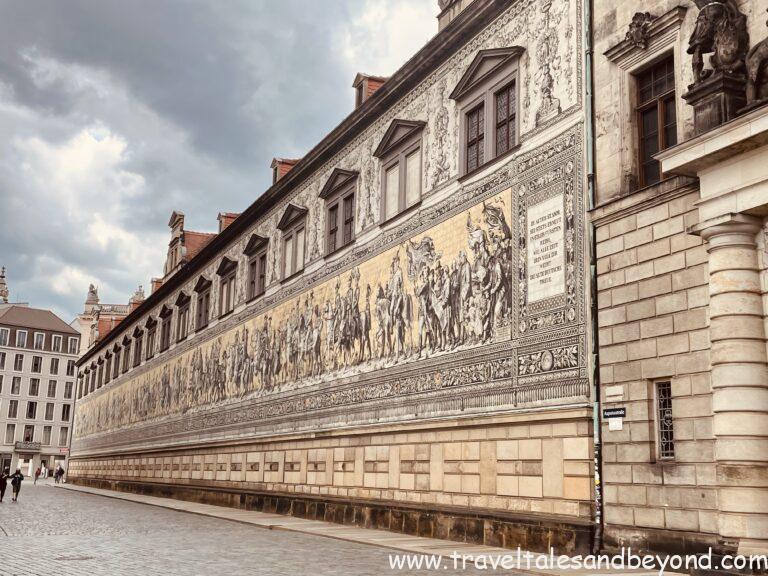
One of Dresden’s most iconic landmarks, this massive mural stretches about 102 meters (335 feet) along the outer wall of the Stallhof (Royal Stables) on Augustusstraße.
What it depicts: A procession of 35 rulers of the House of Wettin (the ruling dynasty of Saxony) spanning from 1123 to 1904, along with various attendants, soldiers, scientists, and artists — nearly 100 figures in total.
The material: Originally painted in 1876, it was later recreated between 1904–1907 using around 25,000 Meissen porcelain tiles to protect it from weathering — essentially a giant porcelain painting on a building exterior.
Survival of WWII: Remarkably, despite the devastating Allied bombing of Dresden in February 1945 that destroyed much of the city, the Fürstenzug survived almost completely intact — only a small number of tiles were damaged.
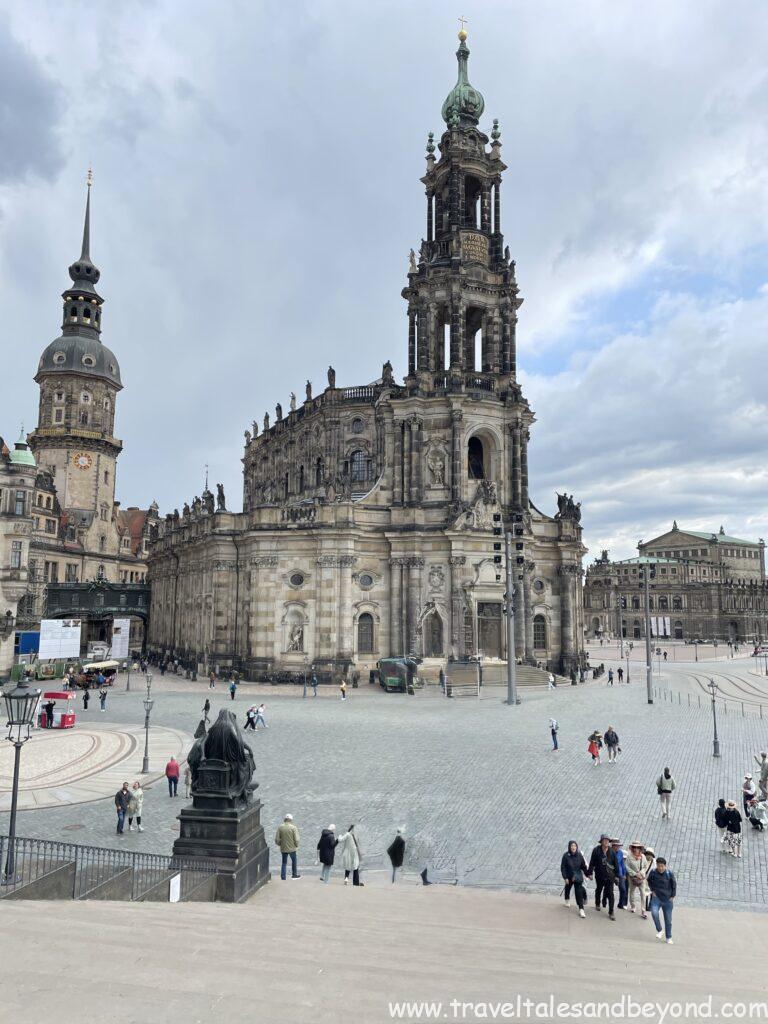
Old Town & Zwinger Palace
From there we wandered over to the Zwinger Palace, which is basically baroque architecture at its finest. The courtyard alone had us stopping every few steps to take photos — think grand archways, ornate fountains, and perfectly manicured gardens. It also houses some seriously impressive museums including the Old Masters Picture Gallery. Right next door, Dresden Castle is home to the famous Green Vault, one of Europe’s most extraordinary treasure collections. We didn’t have enough time to go inside properly — if we were doing this trip again, we’d easily give Dresden a full extra day just for these two.
Tip: If you want to go inside the Zwinger’s museums or the Green Vault, budget a full day (or an overnight) in Dresden rather than a same-day trip from Berlin.
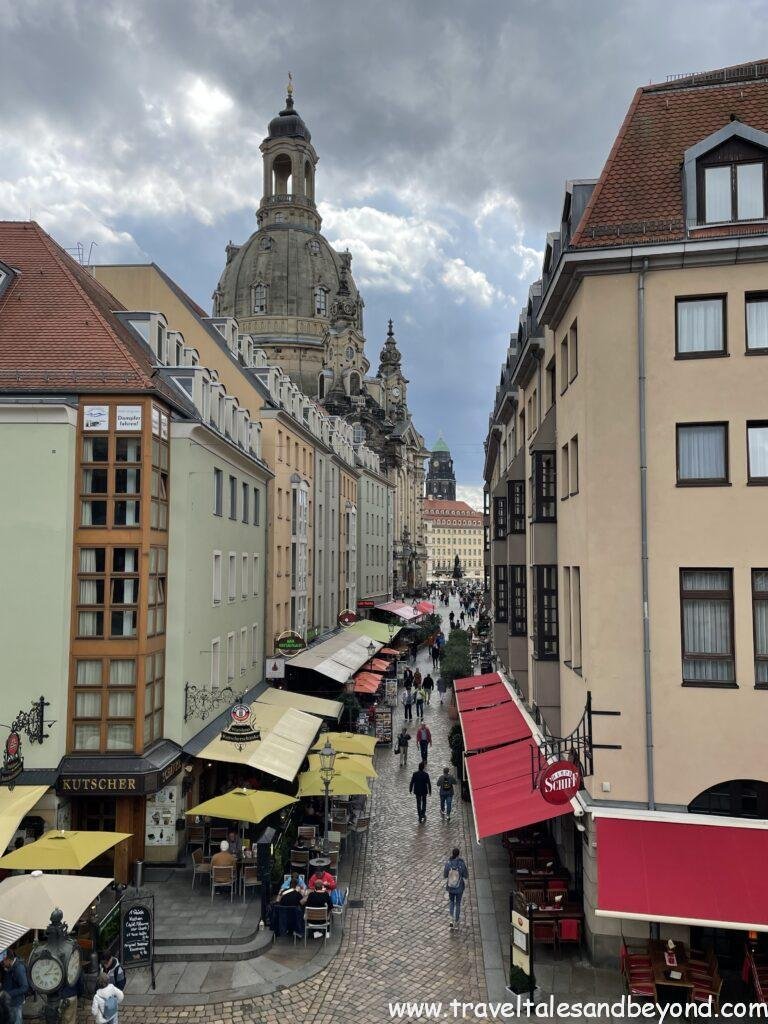
Elbe Riverbank
Our favorite part of Dresden though? Just walking along the Elbe riverbank. The views of the old town skyline from across the water are stunning — all those baroque domes and spires lined up perfectly. It’s the kind of view you stop and just stare at for a while. After all that walking, we were ready to eat and headed into the Innere Altstadt area which has loads of great little cafés and restaurants. Do yourself a favor and order a slice of Eierschecke — it’s a traditional Dresden custard cake and it’s absolutely delicious. We’d never heard of it before this trip but it was one of those little food discoveries that makes travel so special. Highly recommend!
If Dresden’s baroque beauty has you wanting more of that old-world European charm, our 3-day Belgium itinerary covering Brussels, Bruges, Ghent and Dinant is worth adding to your trip — Bruges especially feels like it’s from the same era.
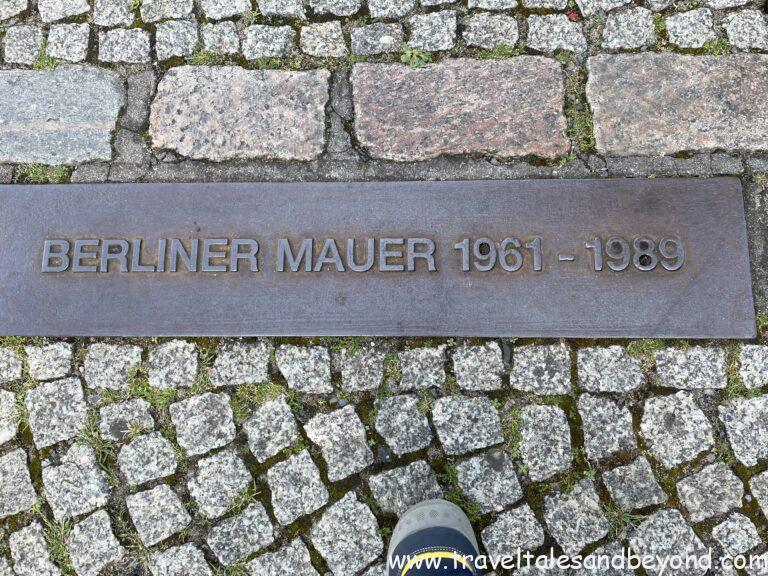
Final Thoughts
Berlin and Dresden turned out to be so much more than a layover detour. Berlin’s weight and history sit in sharp contrast with Dresden’s quiet, rebuilt beauty — and together they made for one of the most meaningful stretches of our whole Germany trip.
If you’re continuing on to Prague, check out our 2-day Prague itinerary for the next leg. If Nuremberg’s on your route too, our 2-Day Nuremberg Itinerary covers the Nazi history sites and medieval old town in detail. And if you’re building out a longer Germany trip, our 8-day Germany itinerary covers Berlin, Dresden, and Nuremberg together.
Berlin & Dresden Travel Tips: What You Need to Know
Getting Around
- Germany has one of the best train networks in Europe. Use the DB Navigator app (Deutsche Bahn) to book trains in advance — you’ll get cheaper fares the earlier you book
- The Deutschland-Ticket (€49/month) covers all regional trains, buses, and trams — great value if you’re staying longer than a week
- Berlin has an excellent U-Bahn (subway) and S-Bahn (overground) system — buy a day ticket for unlimited travel
- Dresden is about 2 hours from Berlin by train — an easy day trip or short overnight
Visa & Entry
- US, UK, Canadian, and Australian passport holders can visit for up to 90 days without a visa
- ETIAS, the EU’s pre-arrival screening system, has missed several planned launch dates and still isn’t up and running — the official ETIAS site is the best place to check before you fly, since the timeline keeps shifting
Money
- You’ll be paying in Euros (€). Cards are the norm, but Berlin’s smaller cafés and Dresden’s old-town shops sometimes only take cash, so it’s worth having some on you
- ATMs are easy to find in both city centers if you need to withdraw
Best Time to Visit
- The warmest, longest days fall between May and September, which also lines up with most of the outdoor festivals
- Berlin and Dresden both put on lovely Christmas markets if you’re visiting in December
- Peak summer (July–August) brings the heaviest crowds, so factor that in if crowds aren’t your thing
Accommodation
- Berlin hotels get booked up fast for summer — aim to reserve 2–3 months ahead
- Mitte is a solid home base in Berlin, close to most of what’s covered in this itinerary
- Thinking of turning Dresden into an overnight? The Innere Altstadt neighborhood keeps you close to everything
Museum & Attraction Tips
- Pre-book tickets online for major Berlin museums — the Jewish Museum and DDR Museum both sell out. Note the main Pergamon Museum is closed for renovation until 2027; a temporary Panorama exhibition is open in the meantime
- The Berlin Museum Pass (3-day pass) gives access to 30+ museums — worth it if you’re a museum lover
- In Dresden, the Zwinger Palace museums and the Green Vault are worth pre-booking if you plan to go inside
Language
- You’ll get by fine on English in Berlin and Dresden’s tourist areas, though a bit of German is always appreciated.
Frequently Asked Questions
Is Dresden worth visiting as a day trip from Berlin?
Absolutely. Dresden is about 2 hours from Berlin by train and is one of Germany's most underrated cities. The Frauenkirche, Zwinger Palace, Fürstenzug porcelain mural, and a walk along the Elbe riverbank make for a full and memorable day. Budget extra time if you want to explore the Green Vault museum.
What are the must-see attractions in Berlin for first-time visitors?
Top Berlin highlights include the Brandenburg Gate, remnants of the Berlin Wall, Checkpoint Charlie, the Holocaust Memorial, the Topography of Terror, and the Berlin Cathedral. A guided WWII walking tour is one of the most impactful ways to experience the city's history.
Do I need a visa to visit Germany?
Citizens of the US, UK, Canada, and Australia do not need a visa for stays under 90 days. However, from 2025, travelers will need ETIAS (European Travel Information and Authorization System) approval before entering Germany. Always check current requirements before you travel.
How do you get around Berlin on public transport?
Berlin has an excellent U-Bahn (subway) and S-Bahn (overground rail) network. A day ticket gives unlimited travel across all zones and is the most cost-effective option for sightseeing. The hop-on-hop-off bus is a good alternative too.
Should you pre-book museum tickets in Berlin?
Yes — pre-booking is strongly recommended for popular Berlin museums like the Pergamon, the Jewish Museum, and the DDR Museum, as they frequently sell out. If you plan to visit multiple museums, consider the Berlin Museum Pass, which grants access to over 30 museums over 3 days.
Should I do Dresden as a day trip or stay overnight?
A day trip works well if you mainly want to see the Frauenkirche, Fürstenzug, and Elbe riverbank. If you want to go inside the Zwinger's museums or the Green Vault, an overnight gives you the extra time those attractions deserve.

Shaminee is a U.S.-based mom and family travel blogger who designs detailed itineraries for her own family and turns them into practical guides for others. Her goal is to make family travel simpler, more organized, and more enjoyable.
Read more →
Discover more from Travel Tales And Beyond
Subscribe to get the latest posts sent to your email.