
Travel Month – December
Kangaroo Island sits off the coast of South Australia, just a short ferry ride from the mainland at Cape Jervis — Australia’s third-largest island, and one of its best for wildlife. Of everywhere we went on our 14-day Australia itinerary, it’s the stop that surprised us the most. We’d already had one incredible wildlife moment on the trip at the Phillip Island Penguin Parade, and Kangaroo Island gave us a completely different kind — we went in expecting wildlife and came away thinking it might be the best wildlife destination we’ve ever visited as a family — sea lions close enough to watch breathe, koalas draped over branches like they own the place, and some of the rawest coastal scenery of the whole trip.
This guide covers exactly how we got there, what we did, and what we’d tell any family planning a Kangaroo Island trip with kids.
Getting to Kangaroo Island: The Ferry
After driving down from Adelaide — the final stop on our Great Ocean Road road trip — we continued on to Cape Jervis and caught the SeaLink ferry across to Penneshaw on the island — a crossing of about 45 minutes across the Backstairs Passage. It’s a genuinely pleasant ride, and worth keeping the kids by the windows or out on deck; dolphins are a common sighting along the way.
Once you’re off the ferry, know this going in: you need a rental car. There’s no practical public transport network on the island, and the attractions are spread out enough that a car is essential, not optional.
We stayed at the Ozone Hotel in Kingscote, right by the water — a genuinely great base and one we’d happily recommend to other families.
Seal Bay Conservation Park: Sea Lions Up Close
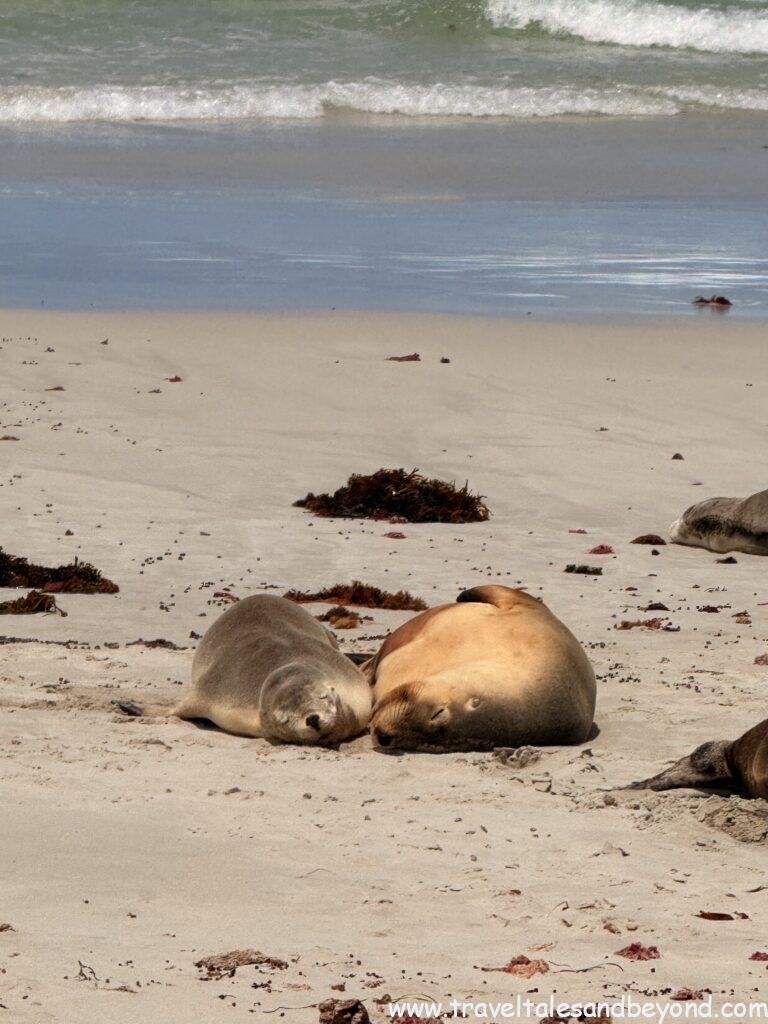
Our first stop once we’d settled in was Seal Bay Conservation Park, and it might have been the single best wildlife experience of our entire Australia trip. This is one of the few places in the world where you can walk right alongside wild Australian sea lions in their natural dune and beach habitat.
There are two ways to experience it: a self-guided boardwalk that lets you look down over the dunes and beach at your own pace, no ranger required, or a guided beach tour, where a ranger walks you right down onto the beach itself for a much closer look, sharing information about the sea lions’ behavior and habits along the way. We did the guided option and it was worth every extra minute — budget more than an hour for the full visit once you factor in the walk down, the tour itself, and time to just stand and watch.
The sea lions were completely unbothered by our presence — lounging, play-fighting, and (if you’re lucky, like we were) a pup or two waiting around for its mother to return from a fishing trip. It’s a genuinely special, once-in-a-lifetime kind of encounter, and one that photos never quite capture the scale of.
Flinders Chase National Park: Remarkable Rocks & Admirals Arch
From there we made our way to Flinders Chase National Park, home to two of the island’s most photographed landmarks: Remarkable Rocks and Admirals Arch.
Remarkable Rocks are exactly what they sound like — huge, wind-sculpted granite boulders perched dramatically on a headland above the ocean. Kids loved clambering around (carefully) and finding the shapes in the rocks.
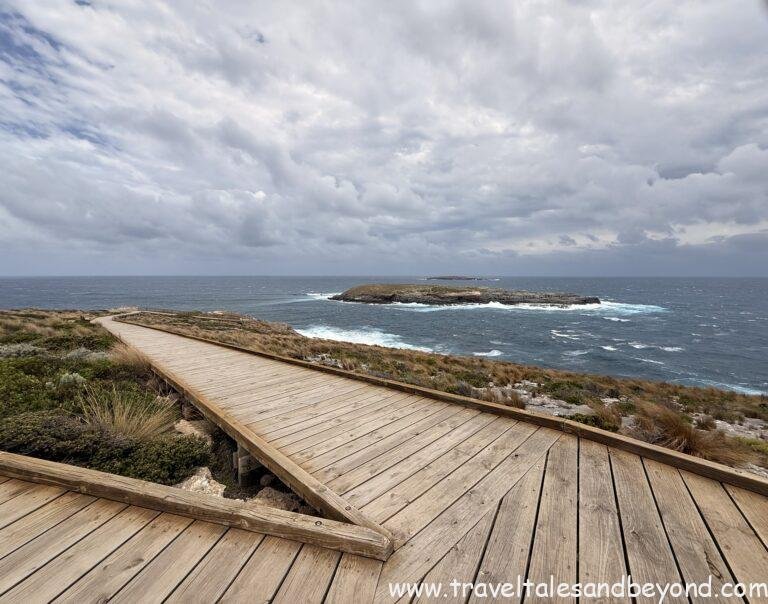
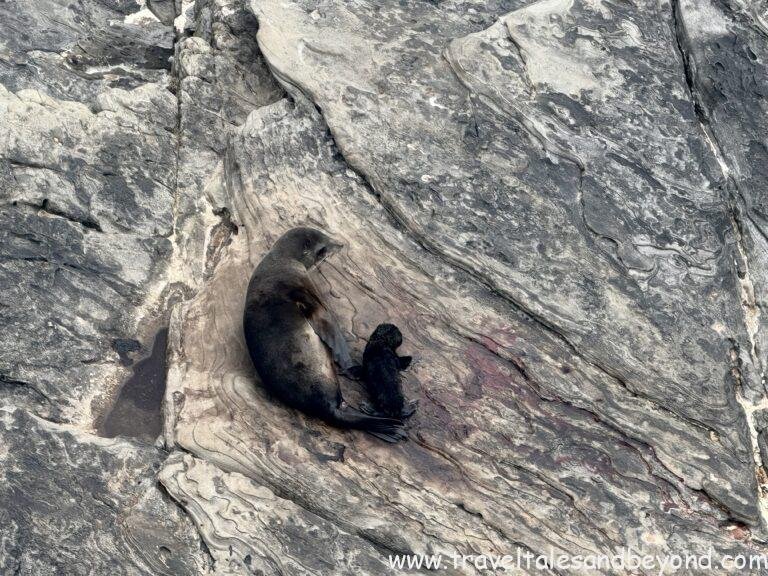
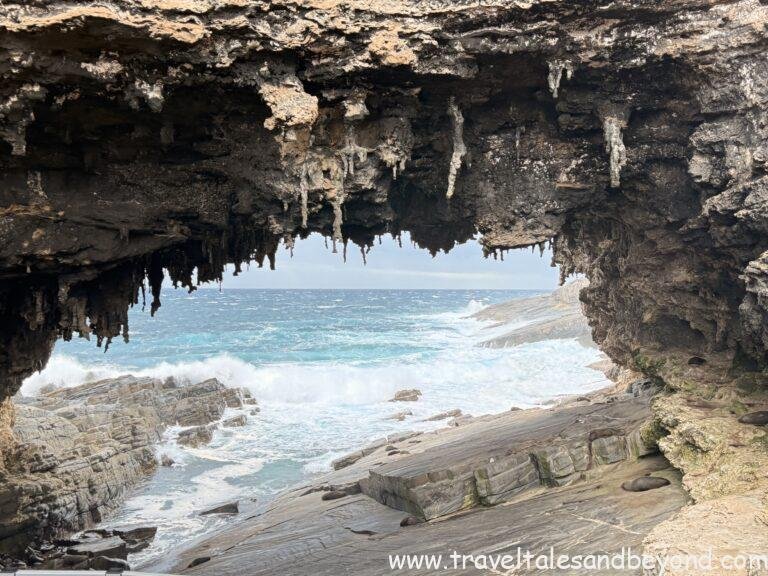
Admirals Arch was the wilder of the two — a natural rock archway with a boardwalk that winds down the cliff face to reach it. Along the way, we spotted long-nosed fur seals lying all over the rocks below, completely unbothered by the small crowd watching from above. The wind out here is no joke; this stretch of the Southern Ocean is famous for some of the strongest, most consistent winds on Earth (the “Roaring Forties” that sailors have talked about for centuries), and standing on that headland, you completely understand why. Hold onto hats and loose kids’ jackets.
Spotting Koalas and Kangaroos
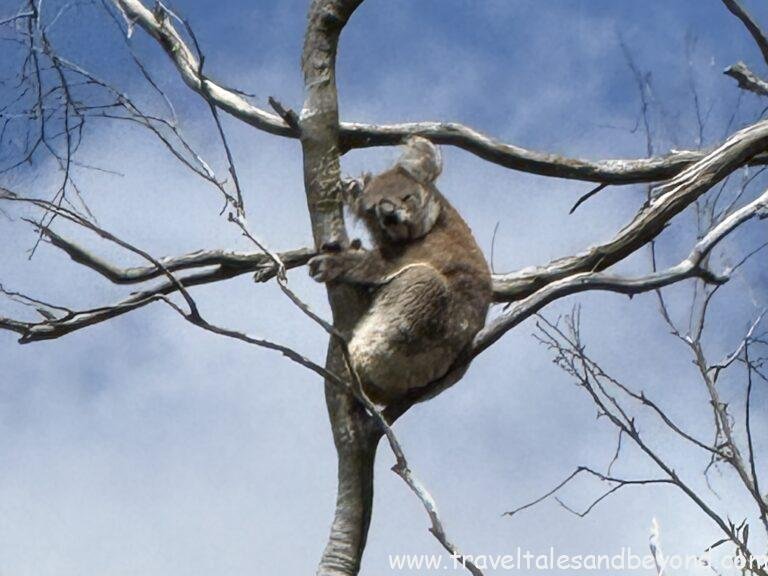
Koalas turned out to be everywhere on Kangaroo Island — genuinely one of the easiest places we’ve been to spot them in the wild, usually dozing in the branches right along the roadside.
Kangaroos were a bit shyer. Early morning and dusk are your best windows to see them out and active — we headed out at dusk hoping for a good sighting, but didn’t actually spot any live ones ourselves. What we did see, unfortunately, was a lot of roadkill along the way — a sobering reminder of just how real the kangaroo-strike risk on the island’s roads is. One important safety note if you’re driving at those times: kangaroo strikes are a real and common hazard on the island’s roads, so slow down and stay alert, especially around dawn and dusk.
We also drove past Raptor Domain, a bird-of-prey show that’s a popular stop for a lot of families visiting the island — we ended up skipping it to keep our schedule tighter, but it’s worth knowing about if you have more time to spare than we did.
Good to Know: Planning Your Trip
Quick Tip: Book your ferry crossing well in advance if you’re traveling in the Australian summer (December–February) — peak-season sailings can sell out weeks ahead.
Getting there: Cape Jervis is about a 90-minute to 2-hour drive south of Adelaide. The SeaLink ferry crossing itself takes around 45 minutes. Allow extra time for check-in — SeaLink recommends arriving at least 30 minutes before departure, on top of the drive down. We booked our tickets online well ahead of time rather than risk it — with a family in tow, we didn’t want to gamble on availability on the day.
Alternative: If you’d rather skip the drive and ferry, there’s also a short flight (around 30 minutes) from Adelaide to Kingscote Airport — though without a car waiting on the other end, you’ll still need to arrange one on the island.
How many days do you need? We spent two full days on the island and felt that was enough to comfortably cover the highlights (Seal Bay and Flinders Chase) without feeling rushed. If you want to add extra stops — Vivonne Bay, Little Sahara’s sand dunes, or Kelly Hill Caves — three days gives more breathing room.
Car rental: Book this in advance, especially in peak season — availability on the island is more limited than on the mainland.
Seal Bay ticket options: There’s a self-guided boardwalk option — no ranger needed, you look down over the dunes and beach at your own pace — and a guided beach tour where a ranger takes you right down onto the beach itself and shares information about the sea lions as you go. Guided tours run on a set timetable throughout the day (departures roughly every 45–60 minutes) rather than whenever you show up, so check the official Seal Bay tour times before you plan your day and try to arrive a little early. We did the guided tour and it was worth it; plan for more than an hour once you include the walk, the tour, and time to linger. A combined Kangaroo Island Tour Pass is also available, bundling Seal Bay and Flinders Chase entry together, which can work out cheaper if you’re visiting both.
Driving safely: Watch for kangaroos on the roads, particularly around dawn and dusk — collisions are unfortunately common, so keep your speed down during those hours.
Food and meals: Dining options on Kangaroo Island are limited compared to the mainland, especially once you’re away from Kingscote. Plan your meals ahead rather than assuming you’ll find something along the way — book dinner reservations in advance where possible, and pack snacks and water for the day, especially if you’re spending a full day out at Flinders Chase, which is a fair drive from the main towns and has minimal food options nearby.
What to pack: Wind-resistant layers for Flinders Chase (the coastal headlands get genuinely blustery even on a sunny day) and comfortable walking shoes for the boardwalks. Kangaroo Island’s weather is generally cool and changeable year-round, so layers are a safer bet than committing to one forecast. We visited in summer and still needed jackets — the wind out at Flinders Chase and Admirals Arch was strong enough that we were glad we’d packed them, so don’t assume a warm season means you can leave the layers behind.
Mobile reception: Coverage is patchy across much of the island outside the main towns. Don’t rely on constant signal for maps or checking in with anyone — download offline maps before you set out, and let someone know your rough plan for the day.
A note on the island’s wildlife recovery: Kangaroo Island was significantly affected by bushfires in early 2020, particularly across the western half of the island, including parts of Flinders Chase National Park. The park and its wildlife have been recovering steadily since, and seeing koalas and other wildlife thriving there again added an extra layer of meaning to our visit.
Was It Worth It?
Without question — Kangaroo Island ended up being one of our family’s favorite stops of the entire Australia trip. If you’re building an Australia itinerary with kids and wondering whether to include it, our answer is an easy yes.
This was Days 6–7 of our 14-day Australia itinerary — see the full Australia itinerary guide for how it all fit together, or read the Great Ocean Road to Adelaide road trip guide for the leg that got us here.
Frequently Asked Questions
Is Kangaroo Island good for families with young kids?
Yes — the wildlife encounters are the kind of thing that captivates kids in a way few other destinations do. Seal Bay in particular is a hit with children since it's close-up, real, and not staged.
How many days should we spend on Kangaroo Island?
Two full days is enough to comfortably see Seal Bay and Flinders Chase National Park without rushing. Add a third day if you want to slow down or add extra stops.
Do you need a car on Kangaroo Island?
Yes — public transport is very limited, and the island's main attractions are spread far enough apart that a rental car is essential.
How do you get to Kangaroo Island from Adelaide?
Drive to Cape Jervis (about 90 minutes to 2 hours from Adelaide) and take the SeaLink ferry, a 45-minute crossing to Penneshaw. A short flight from Adelaide to Kingscote is also available if you'd rather skip the drive.
Shaminee is a U.S.-based mom and family travel blogger who designs detailed itineraries for her own family and turns them into practical guides for others. Her goal is to make family travel simpler, more organized, and more enjoyable.
Read more →