Travel Date : April 2023
Spain Travel Guide : Our 10-Day Family Itinerary, Tips & Best Places to Visit
Spain had been on our travel list for years. With so many incredible cities, rich history, and diverse landscapes, narrowing it down into a single itinerary felt like a challenge.
From the vibrant streets of Barcelona to the cultural heart of Madrid and the soulful charm of Andalusia, this trip turned into one of our most memorable family adventures. Spain offered the perfect mix of iconic landmarks, relaxed moments, and experiences that worked beautifully with a child in tow.
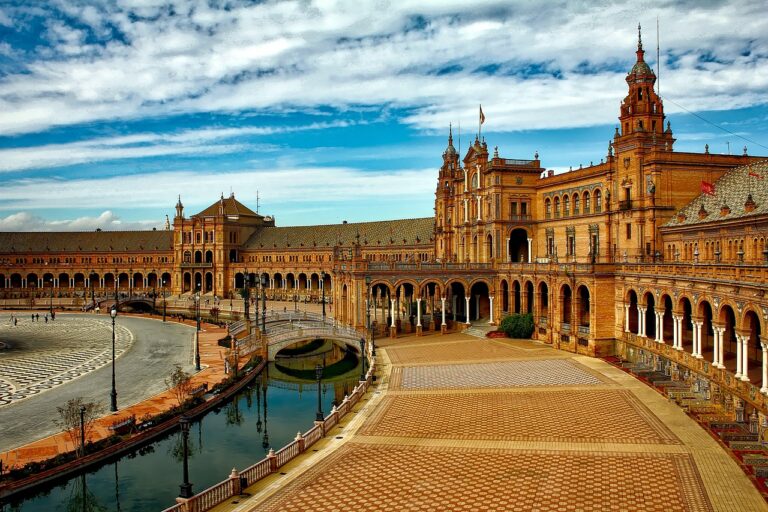
Why We Chose Spain for Our Family Trip
Spain checked all the boxes for us—history, food, culture, and ease of travel. What stood out the most was how diverse yet connected everything felt. Each city had its own personality, yet traveling between them was surprisingly easy.
When We Visited Spain (And the Best Time to Go)
We traveled during the shoulder season, and it turned out to be one of the best decisions.
The weather was pleasant, crowds were manageable, and we could explore comfortably without the intense summer heat. If we had to plan again, we’d still choose spring or early fall—ideal for sightseeing and family travel.
Our 10-Day Spain Itinerary
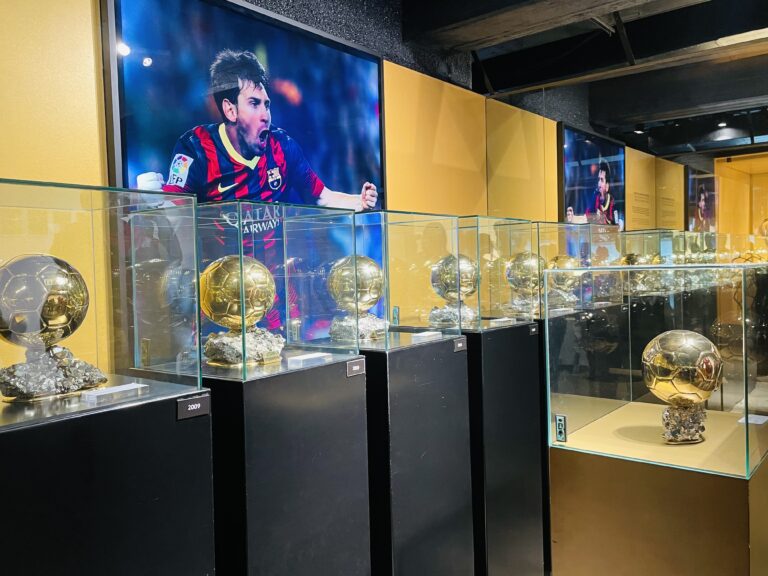
Day 1: Exploring Barcelona
Our adventure began in Barcelona, a city brimming with art, history, and architectural marvels. After a long flight from the US, we arrived in Barcelona, ready to immerse ourselves in the Mediterranean charm. We checked-in to our Hotel Olivia Plaza and from the receptionist, we came to know that there was a soccer match scheduled at Camp Nou that evening. Although initially unsure about attending a match at night, we eventually decided to purchase tickets. My son, a passionate soccer enthusiast, was beyond thrilled, and even I, who had never witnessed a live soccer match in a stadium, couldn’t have asked for a better experience. Watching Barcelona FC in action was nothing short of amazing!
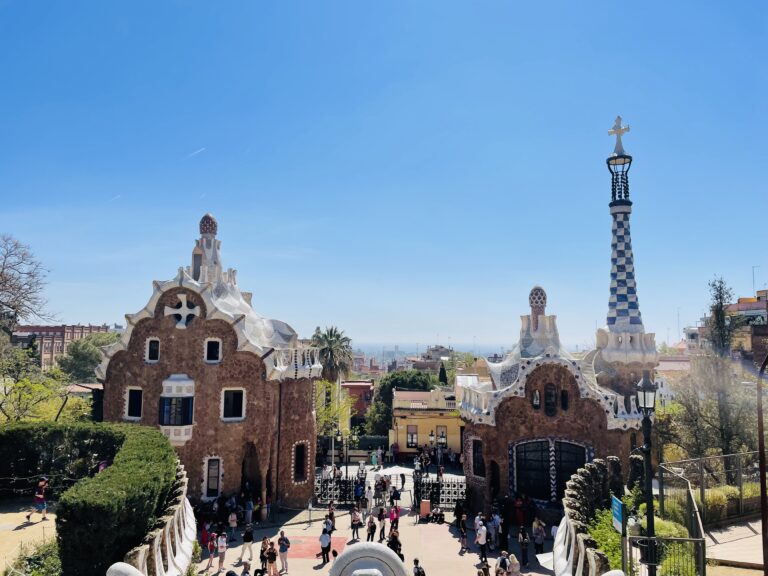
Day 2 : Visit to Camp Nou and Park Guell
The next day, we kicked off our Barcelona exploration by hopping on the convenient hop-on-hop-off bus, which allowed us to explore the city’s key attractions at our own pace.
Our first stop was Camp Nou. Yes, Camp Nou once again! This was our first tour of a soccer stadium. It was huge and there was a museum where we spent almost half the day. If you are a soccer fan, I am sure you won’t want to leave that place anytime soon! Neither did we :-). The next stop was the famous Park Guell, where a guided tour helped us appreciate the genius of Gaudi’s architectural masterpieces. We had to book the tickets in advance as this was the new rule post covid.
Tips : It could take a couple of hours to see the park.
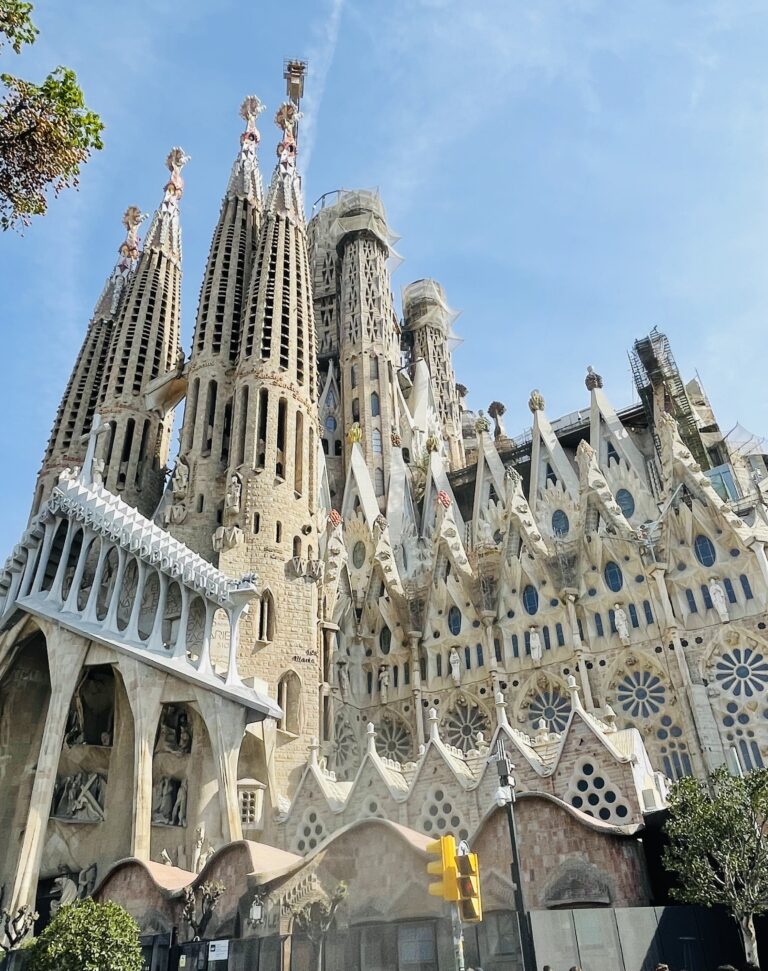
Day 3 : Visited Sagrada Familia, Casa Mila, Casa Batllo and explored the Gothic Quarter
Sagrada Familia
Rising above the city with its intricate towers and almost dreamlike design, it’s one of those places that instantly makes you stop in your tracks. No photo quite prepares you for it—the scale, the detail, and the sheer imagination behind it are something you have to experience in person.
Designed by Antoni Gaudí, this basilica has been under construction for over a century, and somehow that only adds to its magic. It feels like a living, evolving piece of art rather than just a monument.
But what surprised us most wasn’t the exterior—it was stepping inside.
As sunlight filtered through the stained glass windows, the entire space lit up in shifting colors, creating a calm, almost surreal atmosphere.
Tips for Visiting Sagrada Familia
- Book tickets in advance – they sell out quickly
- Go early or late in the day for fewer crowds
Casa Mila, Casa Batllo
Gaudi’s iconic Casa Mila and Casa Batllo showcase the whimsical modernist architecture that defines Barcelona’s character.
If you have time, visit both—they’re very different experiences.
- Casa Milà → Best for rooftop views and unique architecture
- Casa Batlló → Best for colorful interiors and immersive design
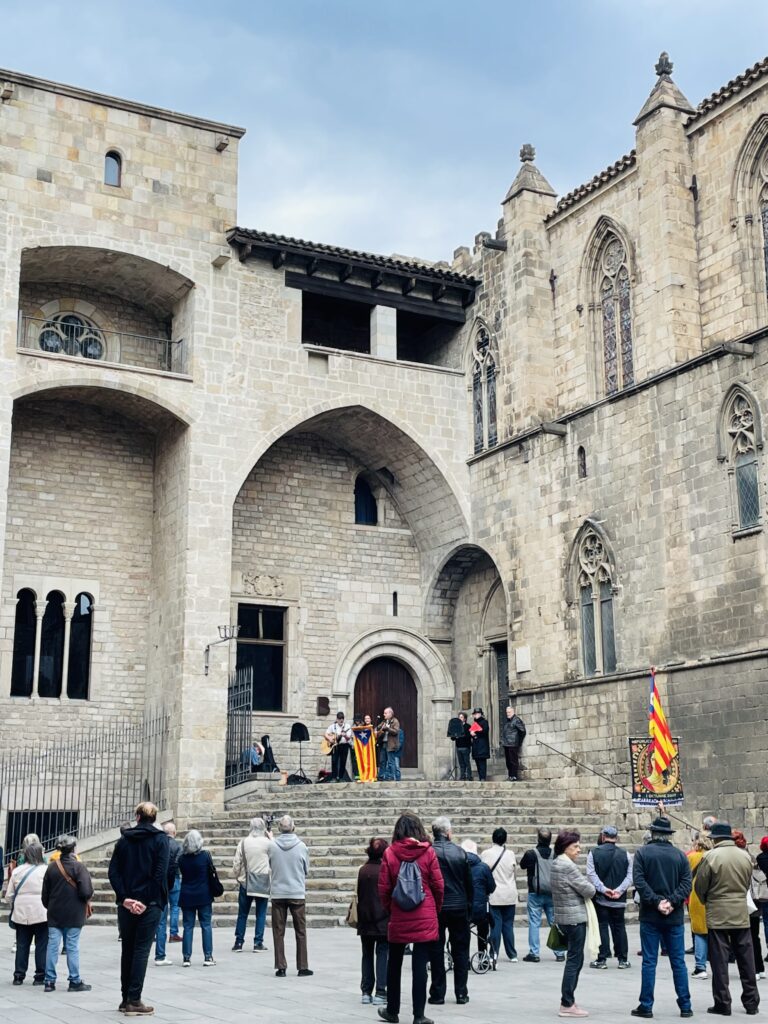
In the evening, we strolled down the lively Las Ramblas, absorbed the vibrant street life, and made our way to the historic Gothic Quarter, with its narrow streets and ancient buildings.
Although we had planned to go to some beaches here, we had to skip it because we were all jet-lagged.
Day 4: Journey to Valencia
Leaving Barcelona behind, we headed to Valencia, a city blending history with modernity and boasting a unique architectural fusion. We rented a car and drove to Valencia. It was a 4-hour drive, but we took a detour along the Mediterranean coast to make a few stops near the beaches. The coastal towns were mostly empty during this time as the ocean water was still cold. Not much activity in these beach towns. It felt more like a haunted town. But there were a lot of hotels, and I am sure once summer sets in these towns will be bustling with life and activities.
We reached Valencia in the afternoon and our hotel was near the city center. We just roamed around for a few hours. The streets were crowded, and it felt so lively.
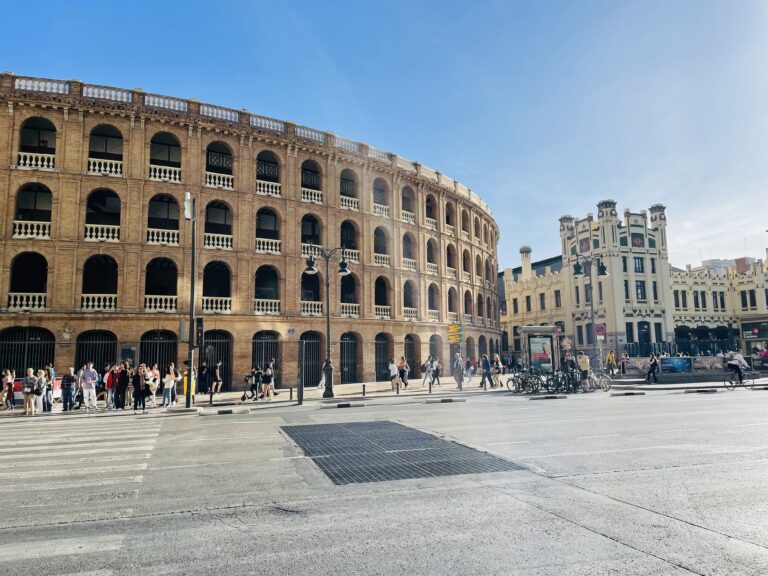
Our first stop in Valencia is the stunning Valencia Cathedral, an architectural masterpiece that reflects various styles, including Romanesque, Gothic, and Baroque. Next, we went to La Lonja de la Seda, a UNESCO World Heritage site, that enchants us with its intricate medieval design. Valencia City Hall showcases the city’s civic pride, and we admire its striking architecture. The Plaza de Toros de Valencia, a bullring, offers an insight into the country’s traditional bullfighting culture. Porta de la Mar, a historical gate, reminds us of the city’s storied past.
Day 5 : Seville, The soul of Andalusia – Flamenco dance performance
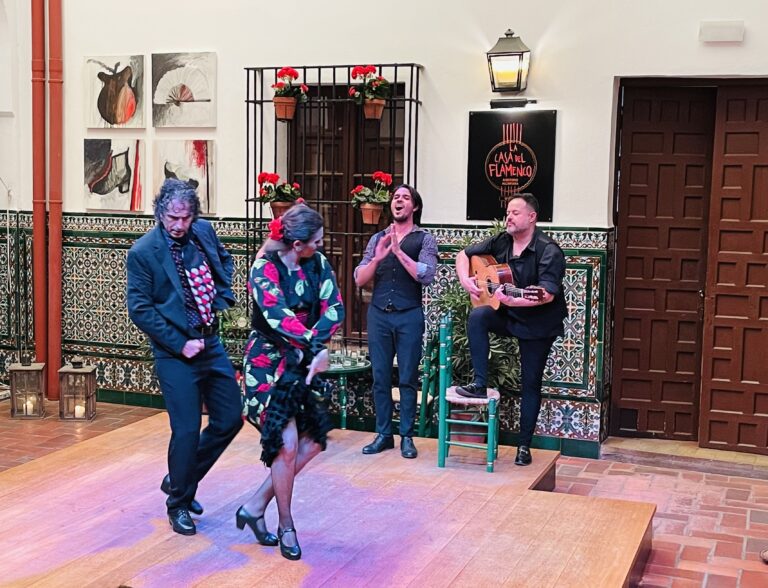
We left Valencia behind and embarked on a train journey to the heart of Andalusia, Seville, a city renowned for its flamenco music, vibrant festivals, and enchanting architecture. We arrived in the evening and checked in at the charming Hotel Amadeus. In the evening, we booked a ticket for a live Flamenco performance from our hotel reception, an authentic Andalusian experience. I recommend not to miss it!
Day 6 : Seville, The soul of Andalusia – Royal Alcazar, Giralda Tower
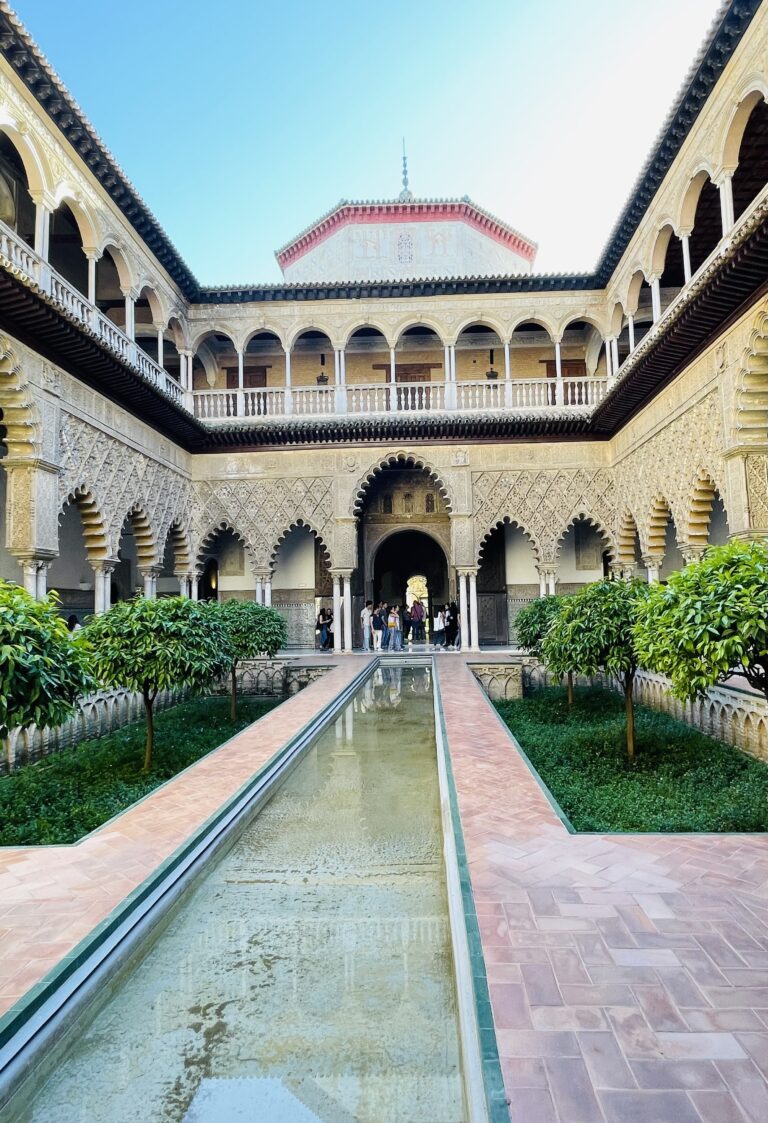
The next morning, we went sightseeing into the city’s rich heritage with visits to the Royal Alcazar, the Cathedral, and the iconic Giralda Tower. It was getting hotter during the day, so we took the hop-on hop-off bus to see around. We tried the local Tapas and loved the experience of being able to try new dishes in small portions. The food was delicious, and the street music added to the liveliness of the place.
Last day in Seville, we were thinking of visiting the historic Alhambra in Granada or exploring the unique destination of Gibraltar. Since we went to the Royal Alcazar (we thought that it would be a smaller version of Alhambra but we were not sure), we decided to go to a new country Gibraltar instead. Gibraltar is a British territory and about 2-hour drive from Seville. We tried to book a day tour, but there were hardly any on Sundays. The one that was there was charging double the regular price. We decided to rent a car instead and then drove to Gibraltar.
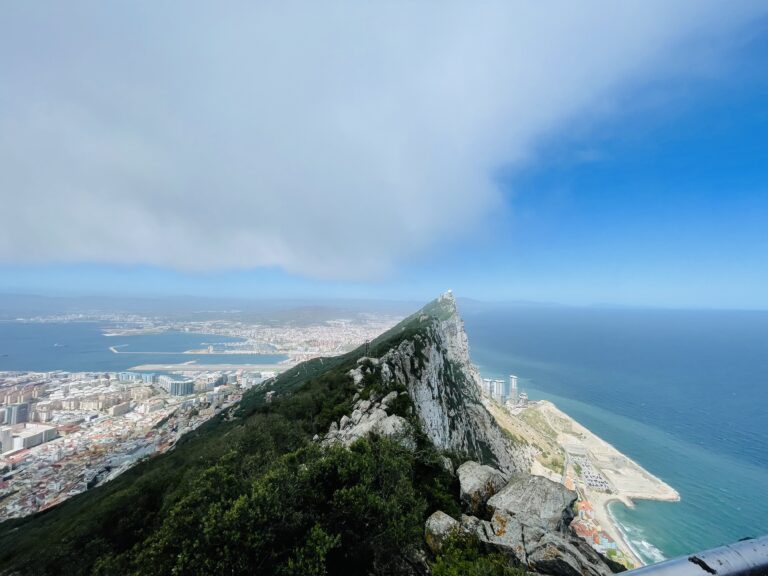
Day 7: Gibraltar
It was an approximately 2-hour drive from Seville to Gibraltar. Upon reaching our destination, we opted to park our car on the Spain side. Having read a blog suggesting that walking across the border might be easier, we decided to try it. A short 10-minute walk brought us to the border, and once we crossed over, we hopped on a public bus heading towards the Rock. After another 10-minute walk, we arrived at the cable car station, which provided a swift 6-minute ride to the top of the Rock. The view from the summit was simply breathtaking, with the azure Mediterranean Sea and a clear sky adding to the magic of the moment. We attempted to catch a glimpse of the African continent from there, but unfortunately, we couldn’t. More on Gibraltar in my Gibraltar post.
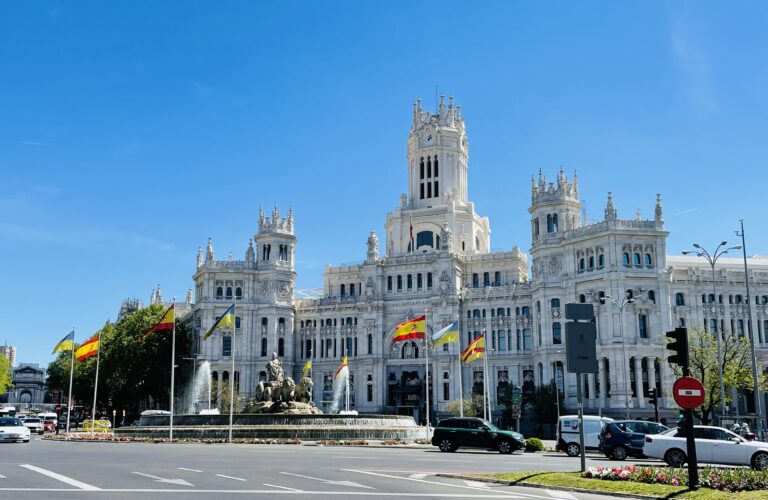
Day 8 -10: Madrid – The Spanish Capital
A train ride takes us to our final stop, Madrid. Our stay at the Hyatt Centric Gran Via Madrid sets the tone for our exploration of the heart of the city. This time also, we took the hop-on and hop-off bus in Madrid for city viewing.
Day 8: Getting the Lay of the Land
We started easy — a stroll down Gran Vía itself, which really does earn its “Spanish Broadway” nickname. The wide boulevard is lined with early 20th-century buildings, theatres, and every shop you could want. After the narrow medieval streets of Seville, it felt almost cinematic in scale.
From there we wandered down to the Plaza Mayor, Madrid’s grand central square. It’s one of those places that hits differently depending on the time of day — quiet and atmospheric in the morning, buzzing with outdoor cafés by afternoon. We grabbed lunch at one of the terraces and watched the city go by. The nearby Mercado de San Miguel, a beautiful iron-and-glass market just steps from the plaza, was perfect for grazing on jamón, fresh seafood, and local wine.
In the evening, we explored the La Latina neighborhood — cobblestone streets, tapas bars spilling onto the pavement, and a relaxed local crowd that made us want to slow everything down.
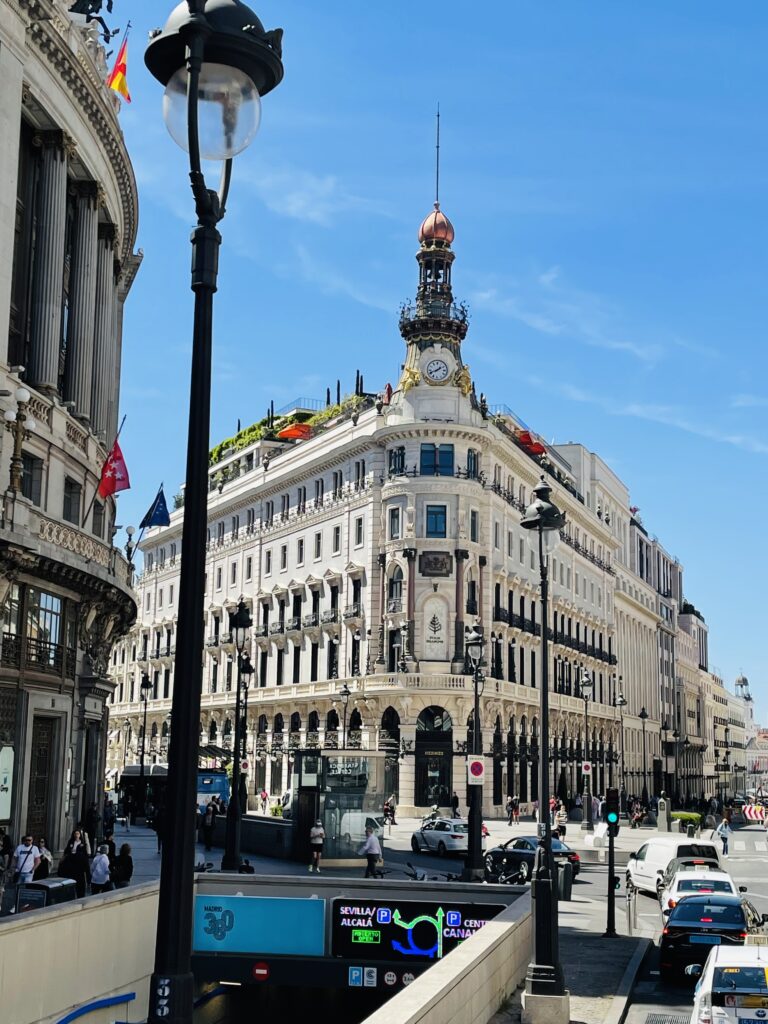
Day 9: Art, Royalty & a Royal Park
Madrid is home to one of the greatest concentrations of art in the world, and we made the most of it. The Museo del Prado is the undisputed centerpiece — Velázquez, Goya, El Greco, and Bosch under one roof. We spent a good three hours here and still felt like we’d only scratched the surface. If you’re visiting with kids, the scale can be overwhelming, so we picked a handful of rooms rather than trying to see everything. Just down the road, the Reina Sofía is worth a visit for Picasso’s Guernica alone.
After so much art, we needed air. El Retiro Park was the perfect antidote — locals rowing on the lake, street performers, and wide shaded paths that felt worlds away from the city bustle just outside its gates. The glass-and-iron Palacio de Cristal inside the park is a lovely surprise, and free to enter.
We ended the day at the Palacio Real, the official residence of the Spanish Royal Family. The exterior alone is worth the walk. We didn’t have time to see the interior.
Tips for Madrid:
- Book Prado tickets online to skip the queue — the museum gets busy by mid-morning
- The Madrid Card can be worth it if you plan to visit multiple museums
After an unforgettable journey through the artistic, historical, and cultural treasures of Barcelona, Valencia, Seville, and Madrid, we reluctantly bid adieu to Spain, taking back with us cherished memories and a deeper appreciation for this beautiful country’s rich heritage. Adios, Spain! Until we come again.
Spain Travel Guide: Essential Tips for First-Time Visitors
Visa & Entry Requirements
Most visitors from the US, UK, Canada, and Australia can enter Spain visa-free for up to 90 days under the Schengen Agreement. Note: Starting in 2025, travelers from these countries will need to register under the new ETIAS (European Travel Information and Authorization System) before visiting. Check the official Spanish government website for the latest entry requirements before booking.
Best Time to Visit Spain
Spain is a year-round destination, but the best time to visit depends on which cities you’re planning to explore:
- Spring (March–May): Ideal for Seville and Andalusia — warm, blooming, and less crowded before the summer heat sets in. April is particularly beautiful.
- Summer (June–August): Peak season for Barcelona’s beaches, but Seville can exceed 40°C (104°F) — uncomfortably hot for sightseeing. Book accommodation well in advance.
- Autumn (September–October): Arguably the best overall time — pleasant temperatures across all cities, fewer crowds, and lower prices.
- Winter (November–February): Madrid and Barcelona remain lively year-round. Seville is mild and very manageable in winter.
We visited in April and found it near-perfect — warm enough for light layers, not yet crowded, and the cities were buzzing with spring energy.
Getting Around Spain
Spain has one of Europe’s best train networks, making it easy to travel between cities without a car.
- AVE high-speed trains connect Madrid, Barcelona, Seville, and Valencia in as little as 2.5–3 hours. Book via Renfe — tickets are significantly cheaper when booked in advance.
- Barcelona to Madrid: ~2.5 hours by AVE
- Madrid to Seville: ~2.5 hours by AVE
- Seville to Valencia: Best done by train via Madrid, or consider flying
- Renting a car is useful if you want to explore the Mediterranean coastline between Barcelona and Valencia, as we did — but is not necessary for city-to-city travel.
Where to Stay in Spain
- Barcelona: Stay near the Gothic Quarter or Eixample for easy access to Gaudí’s landmarks and Las Ramblas
- Valencia: The city center puts you within walking distance of the Cathedral and La Lonja
- Seville: The Santa Cruz neighborhood is the most atmospheric — Hotel Amadeus (where we stayed) is a gem
- Madrid: Gran Vía is a great base — Hyatt Centric Gran Via Madrid (our choice) is central and well-priced for the location
Booking Tickets in Advance
Several of Spain’s top attractions now require pre-booked timed entry tickets — don’t leave these to the day:
- Sagrada Família, Barcelona — sells out weeks ahead; book online before your trip
- Park Güell, Barcelona — timed entry required for the monumental zone
- Real Alcázar, Seville — popular and sells out fast, especially on weekends
- Alhambra, Granada — if you add a day trip, book months ahead; this is one of the hardest tickets to get in Spain
Language & Communication
Spanish (Castilian) is the official language. In Barcelona, Catalan is widely spoken alongside Spanish. English is well understood at hotels, major tourist sites, and restaurants in all four cities we visited. Outside tourist areas, a few basic Spanish phrases go a long way — locals genuinely appreciate the effort.
Currency & Payments
Spain uses the Euro (€). Credit and debit cards are accepted almost everywhere in cities and tourist areas. Carry some cash for smaller cafés, markets, and tips, particularly in smaller towns. ATMs are widely available — use your bank’s network to avoid fees.
Food & Dining Tips
- Spanish mealtimes run late — lunch is the main meal (2–4pm) and dinner rarely starts before 9pm
- Tapas are small dishes meant for sharing — order several between the table rather than one each
- Look for the Menú del Día (set lunch menu) — typically 3 courses with a drink for €12–15, even at good restaurants
- Must-try dishes: patatas bravas, jamón ibérico, gazpacho (Seville), paella (Valencia — the home of the real thing), and churros con chocolate
Safety & General Tips
- Spain is generally very safe for tourists. As with any major European city, watch for pickpockets in crowded areas like Las Ramblas in Barcelona and busy metro stations in Madrid
- Tap water is safe to drink across Spain
- Power adapters: Spain uses Type C/F plugs (two round pins) — bring a universal adapter if traveling from the US or UK
- Emergency number: 112 (works across all of Spain and the EU)
If you liked reading this post here are few other
- Gibraltar – A day trip from Spain
- Belgium – Brussels, Bruges, Ghent, Dinant
- Tanzania – A 7-day trip to African safari
- Chile – A week long trip to breathtaking Patagonia
- Prague – A 2 day escape to Bohemian beauty
- Australia – A 2 week itinerary
- Fiji – A four-day stopover
- Turkey – A 10 day trip to Istanbul and Cappadocia region
- Costa Rica – A 10 day trip to the Central American paradise
- Germany – Berlin, Dresden, Nuremberg
- Portugal – A week long trip to Lisbon, Porto, Nazare, Duorro valley
For complete list check out here!
Very well presented. Every quote was awesome and thanks for sharing the content. Keep sharing and keep motivating others.
Thanks Leslie. I love traveling and have just started blogging and I am glad you liked it!
Nice post. I learn something totally new and challenging on websites
I was curious if you ever thought off changing the page layout of your site?
Its very well written; I lobe what youve got to say. But maybe you could a
lttle more in the way of content so people could connect with it better.
Youve got ann awful lot of tdxt for only having one or 2 images.
Maybe you could space it out better? https://www.waste-ndc.pro/community/profile/tressa79906983/