
How should you spend 14 days in Australia with kids? Our route covers Melbourne, Phillip Island’s Penguin Parade, the Great Ocean Road, Adelaide, Kangaroo Island, the Whitsundays and Great Barrier Reef, and Sydney. We went in December — summer and peak season — drove on the left, and booked reef tours and the Kangaroo Island ferry well ahead.
Travel Month – December
Melbourne, Sydney, Adelaide, Kangaroo Island, Great Barrier Reef and more
Planning a 14-day Australia itinerary is one of the best decisions you can make for a family vacation — and we say that as a family who has traveled to over 20 countries. No other destination packs in this much variety in 2 weeks in Australia: wildlife encounters, coastal drives, coral reefs, and world-class cities all in one trip.
This Australia travel guide is based on our real family trip in December 2024, and covers the best places to visit in Australia across six incredible stops — Melbourne, Phillip Island, Great Ocean Road, Adelaide, Kangaroo Island, the Great Barrier Reef, and Sydney. Whether you’re planning Australia with kids or as a couple, this route gives you the perfect mix of adventure and relaxation.
Australia is the world’s sixth-largest country and the only place on Earth that is both a continent and a country — entirely surrounded by ocean with no land borders. Over 80% of its wildlife — including kangaroos, koalas, and wallabies — exists nowhere else on Earth. For a family wildlife trip, it rivals even an African safari.
We stopped over in Fiji for 4 days on our way (check out our Fiji — 4 Days in Nadi and the Yasawa Islands guide) before landing in Melbourne. Here’s exactly how we did 14 days in Australia — with practical tips, hotel recommendations, and everything you need to plan your own trip.
Our 14-day Australia route — from Melbourne’s laneways to the Great Barrier Reef and Sydney. Tap a numbered stop for the highlights.
Table of contents
- Day 1 — Things to do in Melbourne
- Day 2 — Phillip Island
- Day 3 — Great Ocean Road self-drive
- Day 4 — Warrnambool to Robe
- Day 5 — Adelaide
- Day 6 — Kangaroo Island arrival
- Day 7 — Kangaroo Island
- Day 8 — Arriving at Hamilton Island
- Day 9 — Great Barrier Reef & Whitsundays
- Day 10 — Hardy Reef – Another day of snorkeling
- Days 11–13 — Sydney
- Australia travel tips: what you need to know
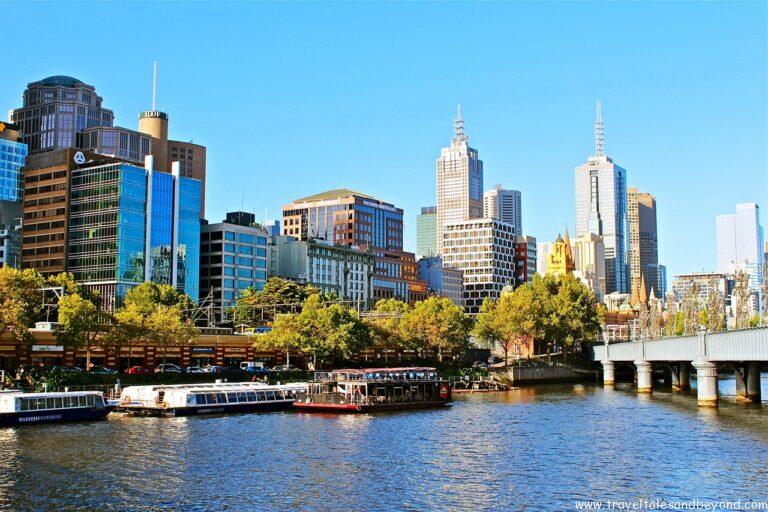
Day 1: Things to Do in Melbourne — Flinders Street, Queen Victoria Market & Southbank
We stayed in Grand Hyatt which was centrally located. We started our morning at Flinders Street Station, the perfect spot to feel Melbourne’s rhythm as trams glide past and commuters rush by. Shops and restaurants flocked both side of the street. With Christmas decoration and live music, the city felt vibrant.
We walked around the area to get a feel of the city. For lunch, we made our way to the Queen Victoria Market, a lively hub filled with local produce, street food, and souvenirs. A few stalls later, we couldn’t resist trying the freshly made hot jam doughnuts — a local favorite.
In the afternoon, we strolled along the Yarra River, stopping by Southbank Promenade for stunning city views. The Eureka Skydeck offered a panoramic perspective of Melbourne’s skyline — especially magical as the sun began to set.
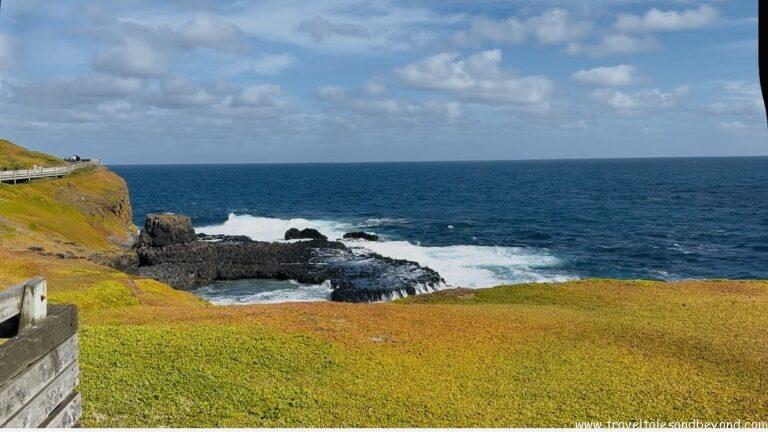
Day 2: Phillip Island – Tour Tips & What to Expect
Seals from Nobbies Boardwalk
Our first stop on Phillip Island was the Nobbies Boardwalk, and honestly, it felt like stepping into a completely different world. The views were just incredible—endless stretches of deep blue ocean crashing against rugged cliffs, with strong winds adding to that wild, untamed coastal vibe. It’s one of those places where you just pause for a moment and take it all in.
As we walked along the boardwalk, we looked down toward the rocks below and spotted fur seals lounging around, completely at ease in their natural habitat. Some were stretched out basking in the sun, while others were playfully moving around the water—it was fascinating to watch them from a distance.
Want more on the Nobbies plus everything you need for the Penguin Parade — tickets, pricing, and tips for visiting with kids? Read our complete Phillip Island guide.
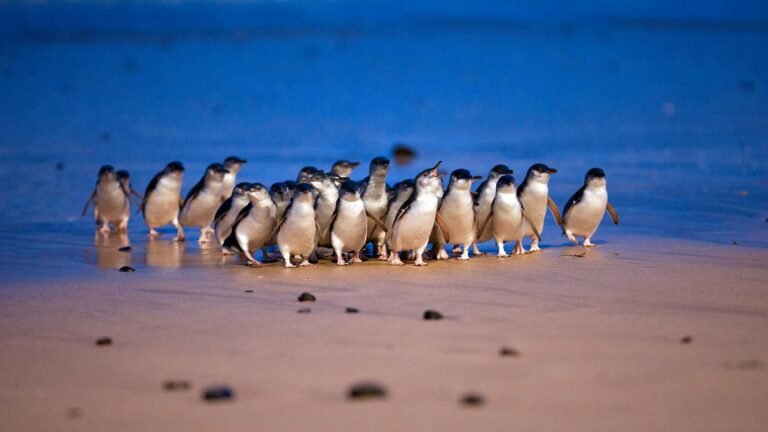
Penguin Parade
Our last stop was for the penguin parade. When we got there, everything was really well organized. We were asked to grab a spot on the benches facing the beach and wait quietly. At first, it was hard to see anything. Then suddenly, we spotted a few little penguins popping out of the water. They stood there for a bit, almost like they were checking if it was safe, and then started waddling across the sand. And once a few started, more and more followed—it was the cutest thing ever watching them hurry along in tiny groups.
After the main viewing, we walked along the boardwalks and saw even more penguins up close as they made their way home. It’s such a simple experience, but there’s something really special about it—quiet, a little surreal, and definitely one of those moments you don’t forget.
Want the full details — tickets, pricing, and tips for visiting with kids? Read our complete Penguin Parade guide.
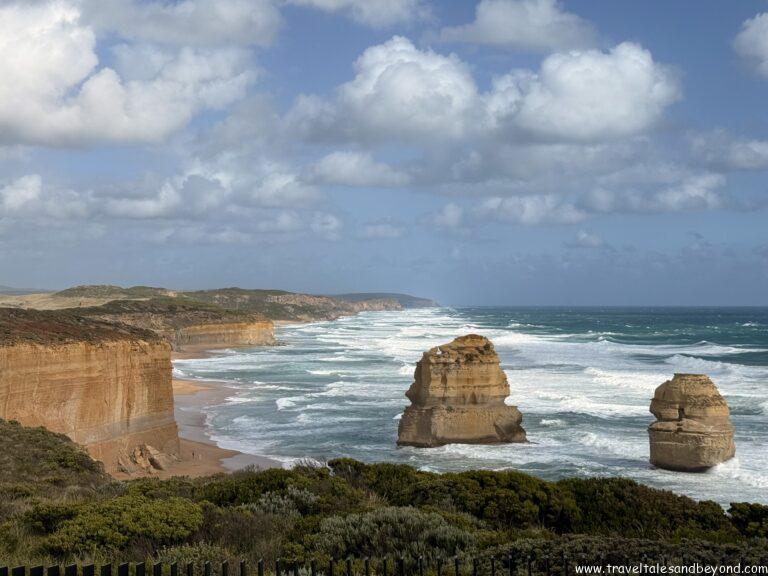
Day 3 : Great Ocean Road Self-Drive Guide — Twelve Apostles, Bells Beach & Port Fairy
Back in Melbourne, we rented a car and began the Great Ocean Road drive — one of the world’s most breathtaking coastal routes. The ocean shimmered beside us as we passed Bells Beach, Lorne, and the iconic Twelve Apostles, limestone rocks standing tall in the golden evening light.
By later afternoon, we reached Port Fairy, a quaint fishing town full of heritage cottages and a peaceful seaside atmosphere. A walk to Griffiths Island Lighthouse at sunset, with wallabies hopping along the path, was pure magic. We stayed in a hotel in Warrnambool – The Deep Blue hotel and hot springs, an amazing hotel where we got refreshed in the hot springs and ice cold water.
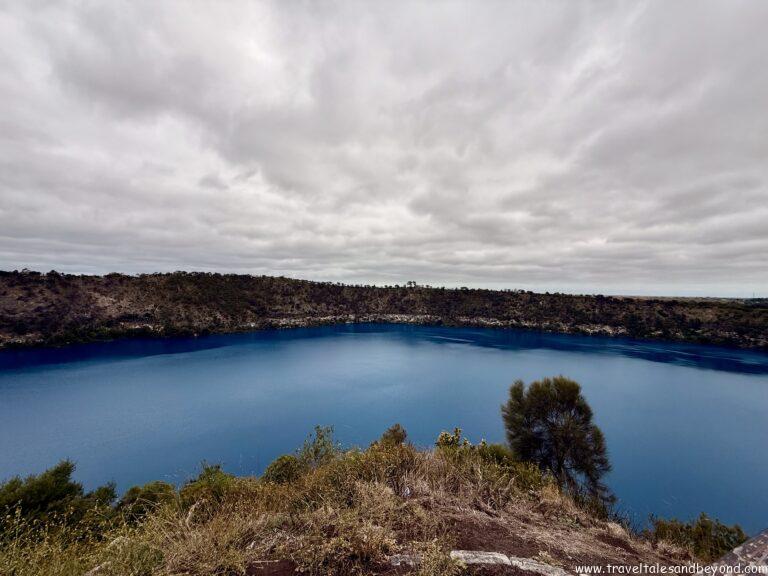
Day 4: Warrnambool to Robe — Blue Lake Mount Gambier & South Australia’s Limestone Coast
Leaving Victoria, we crossed into South Australia and arrived in Robe, a historic coastal gem. On our way we took a slight detour and saw the Blue Lake, a volcanic crater lake in the Mount Gambier area
We spent the afternoon exploring the Robe Obelisk, perched dramatically on the cliffs, and enjoying coffee at one of the local seaside cafés.
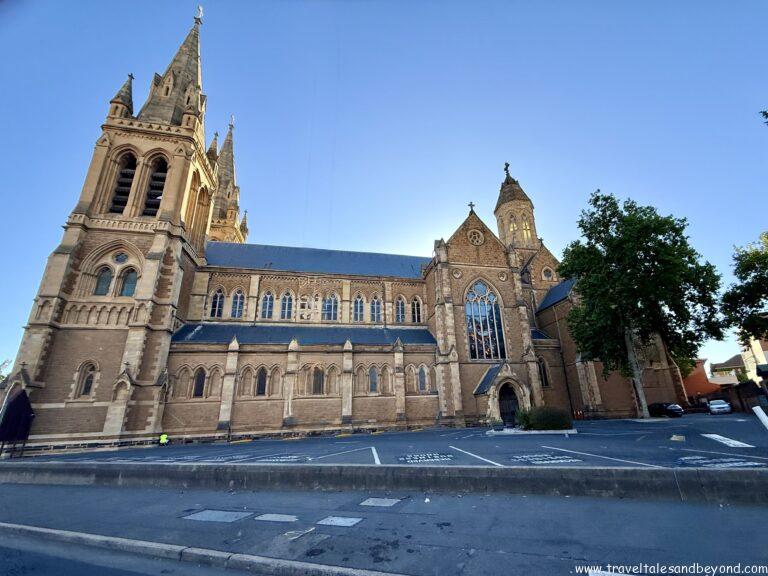
Day 5 : Adelaide — A Relaxed Christmas Day Before Kangaroo Island
We took the quickest inland route to Adelaide rather than following the coast, driving along the edge of the Coorong — a long stretch of saline lagoons and salt flats where we spotted plenty of birdlife along the way. It was Christmas Day, and after the shop closures we’d run into the evening before in Robe, we didn’t want to risk finding everything shut again, so we drove straight through and had lunch once we reached Adelaide.
Once in the city, we spent the afternoon driving around, passing St Peter’s Cathedral and Adelaide Oval, before heading to the beach, where my son got to play in the ocean. After three days of driving, we mostly just relaxed for the rest of the day, ahead of our ferry trip to Kangaroo Island the next morning.
Want the full breakdown of this stretch — Bells Beach, the Twelve Apostles, Robe, the Coorong, and everything in between? Read our complete Great Ocean Road to Adelaide guide.
Day 6: Kangaroo Island Itinerary — Wildlife, Remarkable Rocks & Flinders Chase National Park
From Cape Jervis, we hopped on the ferry over to Kangaroo Island — and what a place it is! Rugged coastlines, incredible wildlife, and kangaroos, koalas, and sea lions pretty much everywhere you look. We stayed at the Ozone Hotel, a gorgeous spot right by the ocean — highly recommend it. One thing worth knowing before you go: definitely rent a car. There’s no other practical way to get around. A couple of days is plenty to see the best of what the island has to offer.
Day 7: Kangaroo Island Itinerary — Wildlife, Remarkable Rocks & Flinders Chase National Park
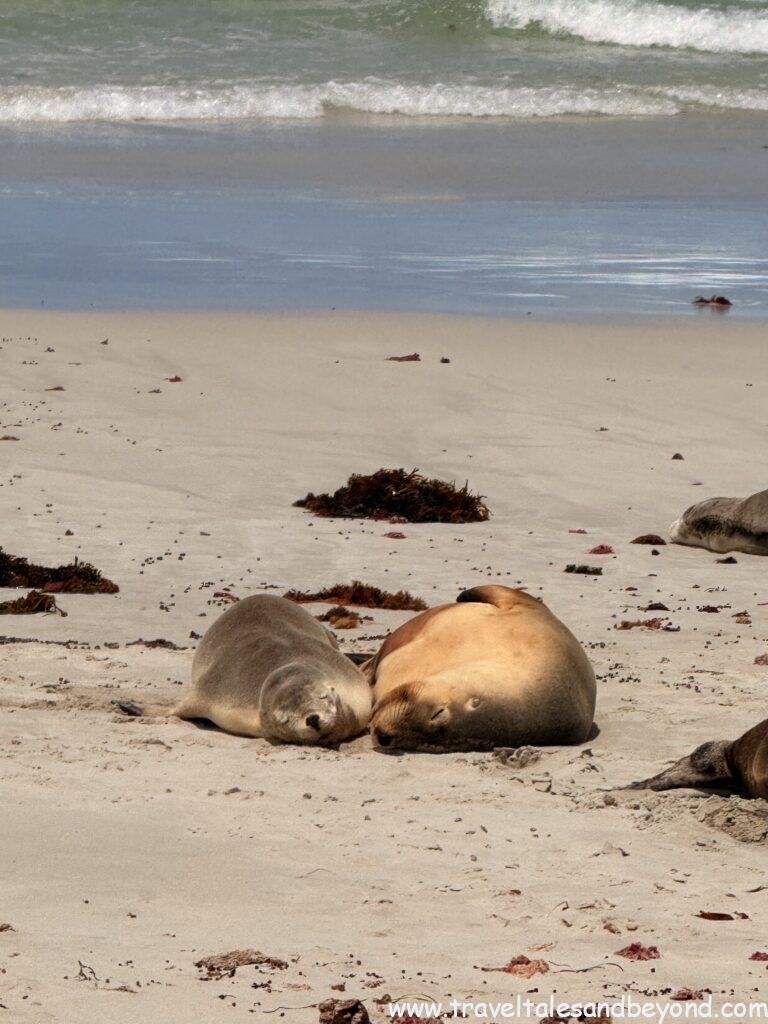
Our first stop was Seal Bay conservation park. It is home to the Australian Sea lions. Don’t miss out this experience! The guides will take you very close to the Sea lions.
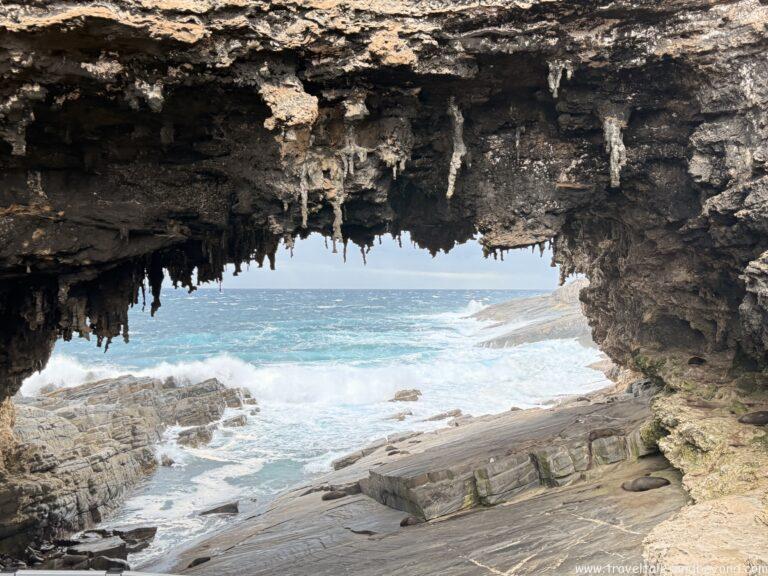
Next, we made our way through Flinders Chase National Park, checked out the jaw-dropping Remarkable Rocks, and watched massive waves thunder in at Admirals Arch. Oh, and the wind? Absolutely wild. We got a real taste of the Southern Ocean winds out there — apparently some of the strongest and most persistent on Earth, with nothing but open ocean to let them build up speed. Sailors have had some pretty dramatic names for them over the years — the “Roaring Forties,” the “Furious Fifties,” and the “Shrieking Sixties” — and honestly, standing there, you totally get why. The island just felt so raw and untouched, it ended up being one of our favorite parts of the whole trip.
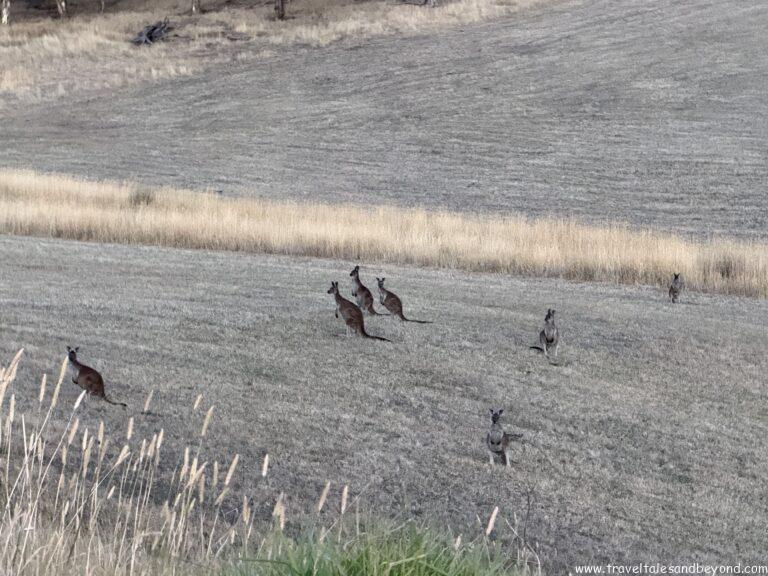
Koalas were everywhere — just chilling up in the trees like they owned the place. If you’re hoping to spot kangaroos, your best bet is early morning or around dusk when they’re most active and out in the open. The roads, though, were a different story — sadly quite a few kangaroos don’t make it across. So if you’re driving, stay sharp, especially during those times. They really do come out of nowhere!
Want the full details — ferry tips, Seal Bay tour options, and what to know before you go? Read the complete Kangaroo Island guide.
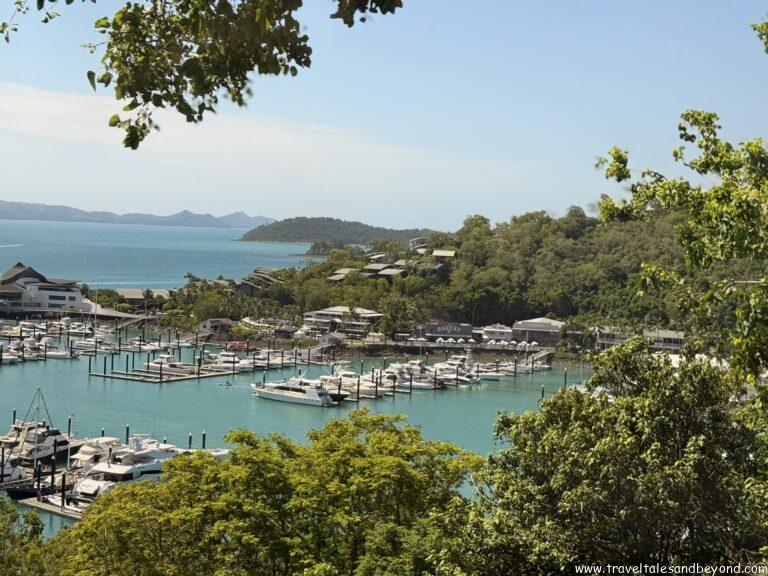
Day 8 : Arriving at Hamilton Island for Great Barrier Reef
After returning by ferry to Cape Jervis, we dropped off the car and caught a flight to Sydney — the gateway to the next adventure. From Sydney, a connecting flight whisked us to Hamilton Island, the heart of the Whitsundays.
And wow—the Whitsundays are every bit as dreamy as they look in photos. Think turquoise water, powdery white sand, and sunshine that just doesn’t quit. We stayed in this ReefView Hotel.
Day 9: Great Barrier Reef & Whitsundays — Snorkeling, Scuba & Hamilton Island Guide
We signed up with Cruise Whitsundays for a full-day trip out to the Great Barrier Reef, and it absolutely lived up to the hype. Fun fact: it’s so massive it can actually be seen from space, stretching over 2,300 km along Queensland’s coast!
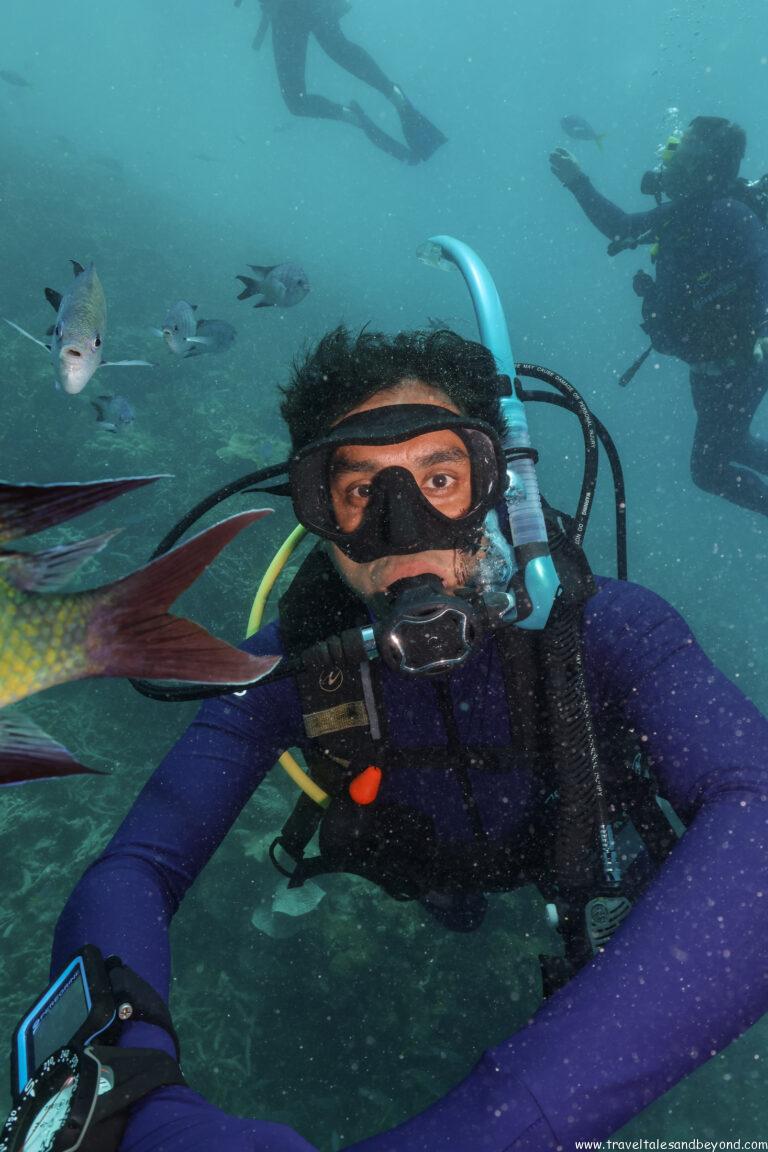
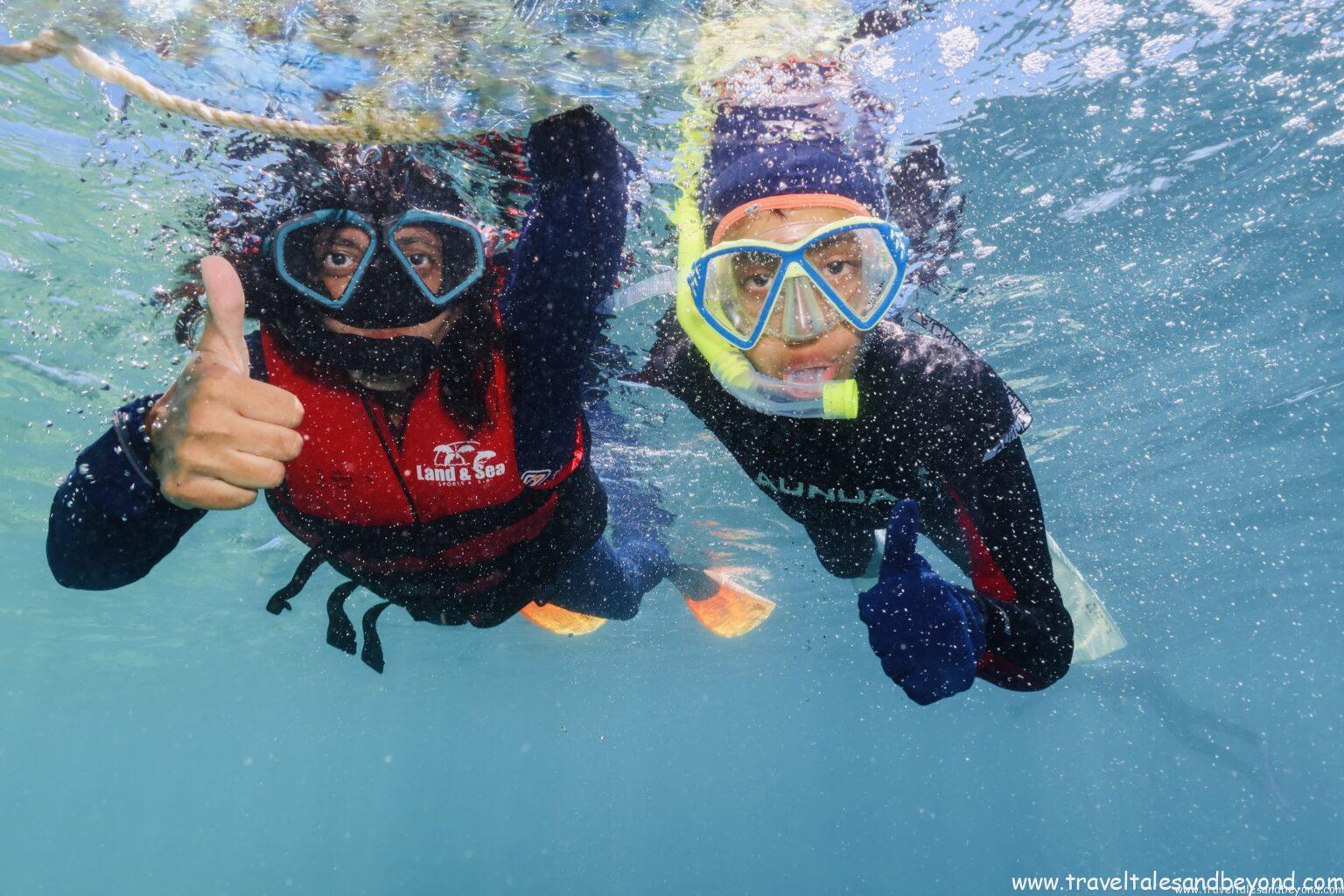
While my husband went for scuba diving (he’s certified), my son and I started with snorkeling. Floating over coral gardens surrounded by vibrant fish felt surreal — one of those “is this real life?” moments. Once my son and I had our fill of snorkeling, I decided to try scuba diving myself for the first time.
Before getting in the water, the instructor gave us about 15 minutes of quick instructions along with a few basic skill tests to make sure we were comfortable with the gear. Each instructor takes just two people (minimum age 12), and they handle all the gear and weights, so you can just focus on breathing and soaking it all in — a reassuring setup for a first-timer.
If getting into the water isn’t your thing, there’s even a submarine option to experience the reef.
Day 10: Hardy Reef – Another day of snorkeling
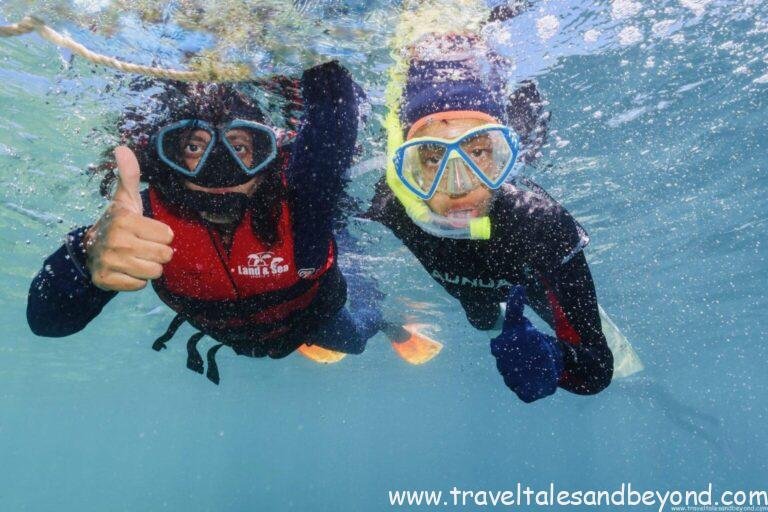
Next day, we headed out again — this time to Hardy Reef for more snorkeling. We booked the activity from our hotel, and this trip was in a much smaller group than the previous day, which made it feel more relaxed from the start. It was about a couple of hours out to the reef, and the water was even clearer than the day before — visibility that let us take in colorful coral and swarms of fish right below us. We snorkeled for about an hour, and afterward the crew handed out snacks before we made our way back. The smaller group and better visibility made this our favorite of the two reef days.
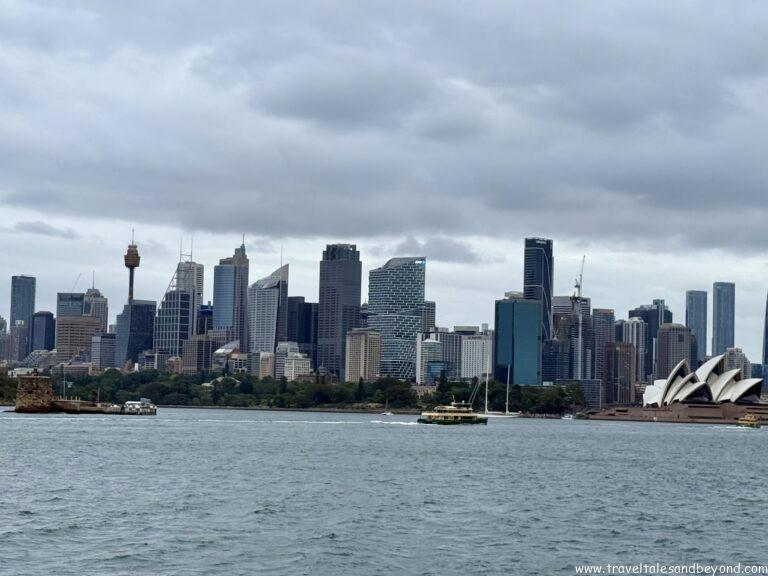
Day 11 – 13: Sydney Itinerary — Bondi Beach, Bondi to Coogee Walk & Sydney Opera House
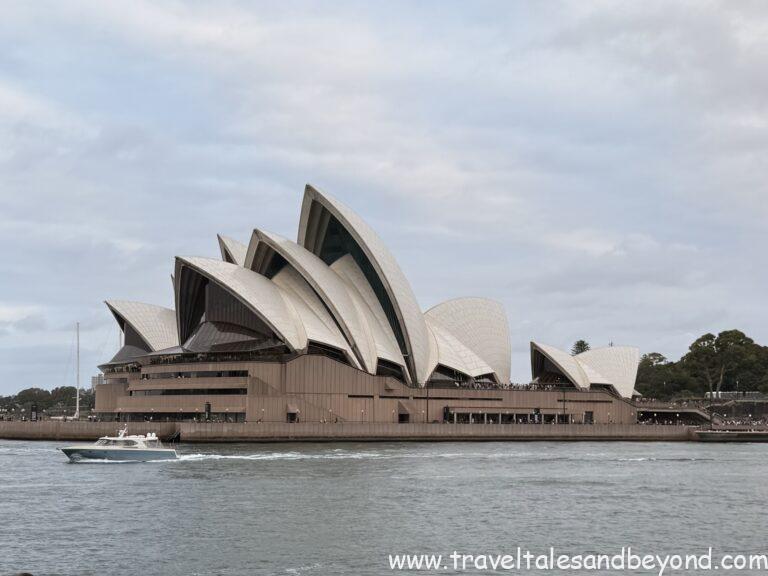
Our final stop was Sydney, Australia’s most iconic city. After days of road trips and reef adventures, the skyline felt both familiar and refreshing. We stayed in the Hotel Ravesis near Bondi Beach to enjoy more time by the ocean, and the Bondi to Coogee Coastal Walk was a highlight—an incredibly scenic clifftop path connecting beautiful beaches.
For our last evening, we took a sunset cruise on Sydney Harbour, watching the sky glow as we passed the Sydney Opera House and Circular Quay. It was the perfect way to reflect on an unforgettable journey across coastlines, cities, and coral reefs.
Final Thoughts
From Melbourne’s laneways to Kangaroo Island’s wild coast, from Whitsundays’ reefs to Sydney, this trip showcased the best of Australia’s landscapes and lifestyles. It’s a route that blends adventure with relaxation — a perfect way to experience the soul of Australia, one breathtaking stop at a time.
Australia Travel Tips: What You Need to Know Before You Go.
Visa & Entry Most international visitors need an ETA (Electronic Travel Authority) or eVisitor visa, applied for online before travel. Both are typically approved within minutes. Check the Australian Department of Home Affairs website for your specific nationality.
Getting Around Australia drives on the left side of the road — important to remember if you’re renting a car, especially coming from the US or Europe. A 4WD is not necessary for this itinerary but a standard sedan handles all the routes comfortably. Book your rental car early during December as demand is high.
Best Time to Visit September to November and March to May are the sweet spots for most of Australia. December is summer and can be very hot in Adelaide and inland areas. The Great Barrier Reef is best visited June to October for clearest visibility.
Connectivity Australia uses Type I power outlets (the angled three-pin plug) — bring a universal adapter. Local SIM cards from Telstra or Optus are affordable and offer good coverage in cities and along major highways. Pick one up at the airport on arrival.
Packing Essentials
- Reef-safe sunscreen (required at the Great Barrier Reef)
- Insect repellent for Kangaroo Island and national parks
- Warm layers for Phillip Island (it gets cold and windy at dusk)
- Light jacket for evenings in Melbourne and Sydney
- Reusable water bottle — tap water is safe to drink everywhere
- Comfortable walking shoes for coastal walks
Money & Payments The local currency is the Australian Dollar (AUD). Cards are accepted almost everywhere, including small cafés and market stalls. Tipping is not expected in Australia but is appreciated for exceptional service — rounding up the bill is common.
Hamilton Island Tip Golf carts are the main mode of transport on Hamilton Island and they book out very quickly, especially in peak season. Reserve yours as soon as your accommodation is confirmed. The island does offer a free shuttle bus service as a backup.
Great Barrier Reef Tips
- Book your reef tour in advance — Cruise Whitsundays fills up fast in December
- Hardy Reef tends to be less crowded than the main reef sites — worth the extra trip
- First-time scuba divers are welcome — instructors handle all equipment and take a maximum of 2 people at a time
- A submarine viewing option is available if you prefer to stay dry
Kangaroo Island Tips Book the ferry from Cape Jervis in advance during peak season. A rental car on the island is essential — public transport is very limited. Allow at least 2 full days to do the island justice.
Frequently Asked Questions
Is 14 days enough to see Australia?
Yes, 14 days gives you a brilliant introduction to Australia's highlights — enough to cover Melbourne, Phillip Island, the Great Ocean Road, Adelaide, Kangaroo Island, the Great Barrier Reef, and Sydney. Australia is a vast continent so you won't see everything in two weeks, but this route delivers the perfect mix of wildlife, coastal scenery, reef, and city experiences without feeling rushed.
What is the best time of year to visit Australia?
December is a great time to visit — it's summer in Australia, the days are long, and the Great Barrier Reef and Whitsundays are in superb condition for snorkelling. Keep in mind that December is also peak season, so book flights, hotels, and tours well in advance. If you prefer fewer crowds and milder temperatures, March to May (autumn) and September to November (spring) are excellent alternatives.
Is Australia a good destination for a family trip with kids?
Absolutely — Australia is one of the best family destinations in the world. Kids love the Penguin Parade on Phillip Island, seeing sea lions at Seal Bay on Kangaroo Island, snorkelling the Great Barrier Reef, and spotting kangaroos and koalas in the wild. The country is safe, well-organised, and English-speaking, making it easy to navigate with children of all ages.
What is the Penguin Parade on Phillip Island and is it worth it?
The Penguin Parade is one of Australia's most beloved wildlife experiences — every evening at sunset, hundreds of little penguins waddle ashore to their burrows. It's family-friendly and genuinely magical. See the full Penguin Parade guide for tickets, pricing, and tips on visiting with kids.
Do you need a car to travel around Australia?
For parts of this itinerary — particularly the Great Ocean Road, Robe, and Kangaroo Island — a rental car is essential. There is simply no other practical way to explore these areas at your own pace. Within Melbourne and Sydney, public transport is excellent. For Kangaroo Island specifically, renting a car on the island is strongly recommended as there are no public transport options between attractions.
What are the top practical travel tips for visiting Australia?
Book domestic flights early — distances between cities are huge and last-minute fares are expensive. An ETA (Electronic Travel Authority) visa is required for most international visitors and can be applied for online before departure. Drive on the left. Slather on sunscreen — the Australian sun is intense, even on cloudy days. Tipping is not expected or mandatory. And if you're stopping over on the way, Fiji makes a superb add-on — a 4-day stay in the Yasawa Islands pairs beautifully with this Australia itinerary.
If you liked reading this post here are few others
- Spain – Barcelona, Valencia, Seville, Madrid
- Tanzania – A 7-day trip to African safari
- Chile – A week long trip to breathtaking Patagonia
- Prague – A 2 day escape to Bohemian beauty
- Gibraltar – A day trip from Spain
- Fiji – A four-day stopover
- Turkey – A 10 day trip to Istanbul and Cappadocia region
- Costa Rica – A 10 day trip to the Central American paradise
- Germany – Berlin, Dresden, Nuremberg
- Portugal – A week long trip to Lisbon, Porto, Nazare, Duorro valley
- Belgium – Brussels, Bruges, Ghent, Dinant
Shaminee is a U.S.-based mom and family travel blogger who designs detailed itineraries for her own family and turns them into practical guides for others. Her goal is to make family travel simpler, more organized, and more enjoyable.
Read more →
Discover more from Travel Tales And Beyond
Subscribe to get the latest posts sent to your email.