
Travel Month – August
Amsterdam wasn’t originally on our radar, but we are so glad it made the list. We were a family of three — my husband, our 10-year-old son, and me — and we spent a few days taking in the city at our own pace. We did a canal boat ride, took the bus out to Zaanse Schans to watch clog-making up close, drove through the Dutch countryside past dykes and windmills to Giethoorn, and on the way back stopped outside the Johan Cruyff Arena — which made one member of our family very happy indeed.
No complicated itinerary, no rushing between museums. Just a family doing what felt right on the day. Here is how it all went.
Table of Contents
- Our Amsterdam Base & Getting Around
- Canal Boat Ride — Seeing Amsterdam from the Water
- Day Trip: Zaanse Schans — Windmills & Clog Making
- Day Trip: Giethoorn — The Village with No Roads
- The Johan Cruyff Arena — A Football Fan’s Dream Stop
- If You Have More Time in Amsterdam
- Practical Tips for Families
- Final Thoughts
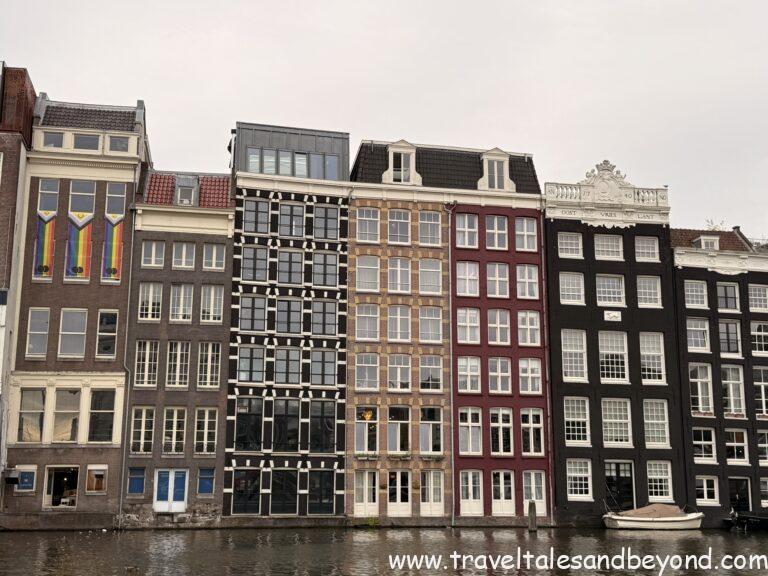
Our Amsterdam Base & Getting Around
We took a train from Brussels, Belgium and checked-in at the Park Plaza Victoria Amsterdam, which turned out to be a fantastic base for everything we wanted to do. If you are planning a broader Europe trip, our 2-day Belgium itinerary pairs perfectly with Amsterdam — it is just a short train ride away.
The hotel is located right in the city centre, just steps from Amsterdam Central station — which made catching buses for our day trips to Zaanse Schans incredibly easy, and meant we could reach almost anywhere in the city without any fuss. Amsterdam’s public transport system — trams, buses, and the metro — is genuinely excellent, and we relied on it almost entirely.
The GVB app (Amsterdam’s public transport app) made planning bus and tram routes simple, and we used the OV-chipkaart (a rechargeable travel card) to tap in and out of buses and trams. You can buy one at Schiphol Airport or at any GVB service point.
Our honest tip: The buses run frequently, the routes are logical, and many of the best experiences — including our Zaanse Schans day trip — are completely accessible by public bus.
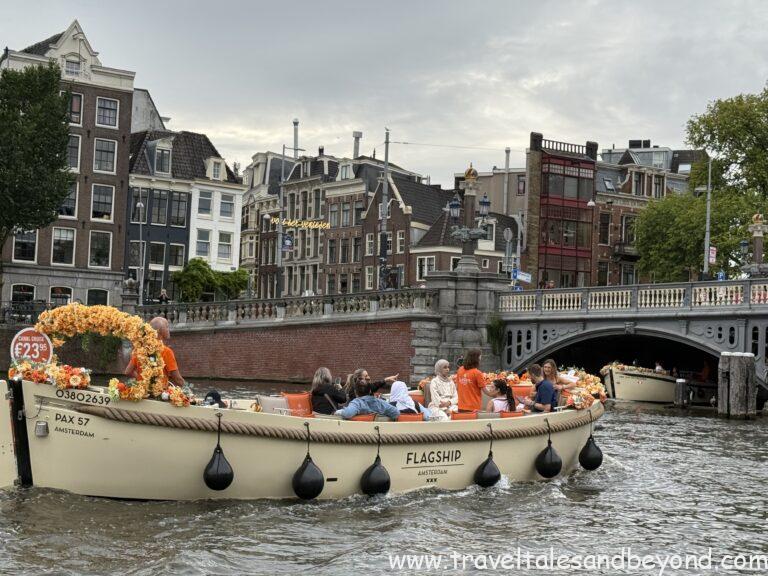
Canal Boat Ride — Seeing Amsterdam from the Water
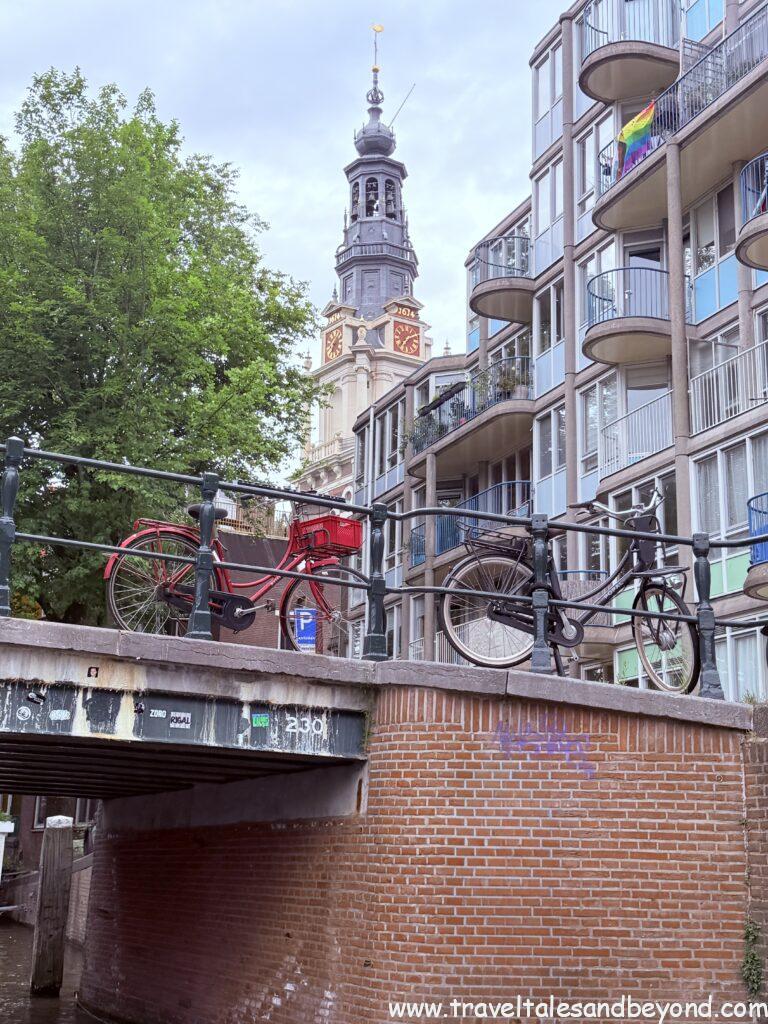
If there is one thing you simply cannot skip in Amsterdam, it is a canal boat ride. Amsterdam has over 100 kilometres of canals, more than 1,500 bridges, and rows of narrow 17th-century canal houses leaning gently over the water — and seeing all of this from a boat is a completely different experience from walking the streets.
We booked a guided canal boat tour from our hotel reception that wound through the historic Grachtengordal (canal ring), past the famous Anne Frank House waterfront, and through the quieter, more residential western canals. Our son was absolutely enchanted — watching the houseboats, the cyclists crossing the bridges above us, and the ducks keeping pace alongside the boat.
What we loved:
- The commentary pointed out buildings and history we would have completely missed on foot
- It was relaxing — a lovely change of pace after busy city streets
- Kids find the low perspective of being on the water genuinely exciting
- Many boats are fully covered, so weather isn’t a worry
Practical tips:
- Book your canal boat in advance, especially in summer — they do sell out
- Several operators run from Central Station, Damrak, and Leidseplein
- Look for hop-on hop-off options if you want flexibility
- The guided tours typically last 60–75 minutes
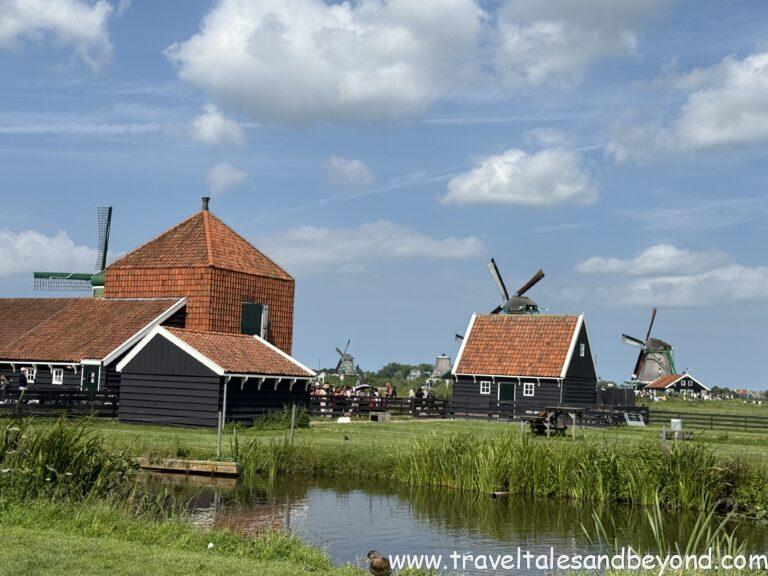
Day Trip: Zaanse Schans — Windmills, Clogs & Living History
Of all the day trips we made from Amsterdam, Zaanse Schans was the one that surprised us the most. I had seen the pictures — the row of dark green windmills reflected in the river, the wooden houses, the countryside — but nothing quite prepared us for how charming and alive this place actually felt.
Getting there by public bus: We took the bus directly from Amsterdam Central — the 391 bus goes straight to Zaanse Schans and the journey takes around 20–25 minutes. It is completely straightforward. If you are comfortable with Google Maps and a local bus, you can absolutely do this independently.
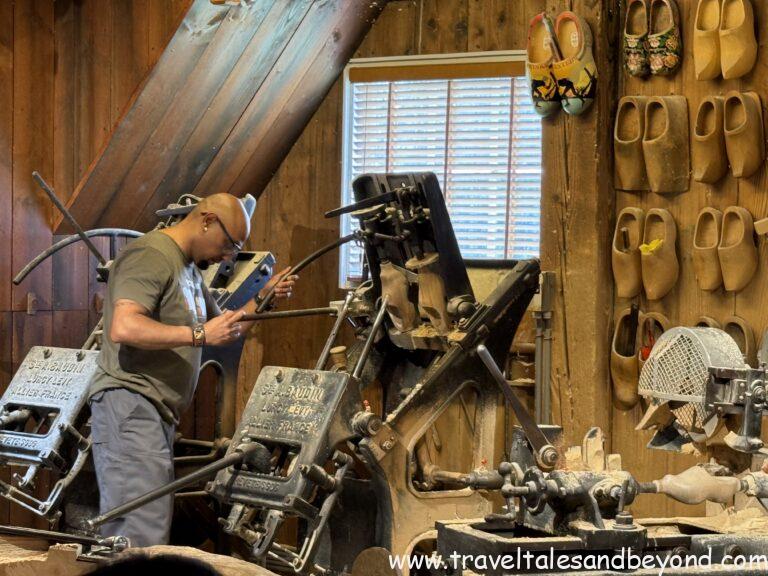
The Clog-Making Workshop — Our Highlight
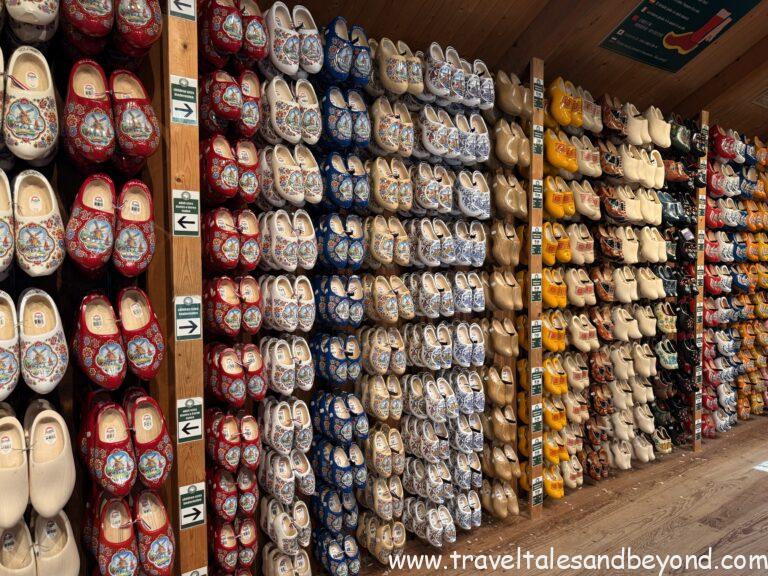
The absolute highlight of our Zaanse Schans visit was watching traditional Dutch clog-making at the clogs workshop. A craftsman demonstrated, step by step, how a pair of wooden klompen (clogs) is carved from a single block of poplar wood using a specialised machine — a process that takes just a few minutes but has barely changed in centuries.
Our son watched with wide eyes as the wood shavings flew and the shape of a clog gradually appeared. There were clogs in every colour, size, and style — from tiny baby-sized ones to enormous decorative pieces painted with tulips and windmills. We bought a small pair as a souvenir and they remain one of my favourite things we brought home from the entire trip.
What else to see at Zaanse Schans:
- The windmills — you can climb inside some of them and see the grinding machinery in action; truly impressive
- The historic village — walk along the river Zaan and take in the wooden houses, painted in the traditional dark green
- Cheese tasting — a nearby cheese shop offers free tastings of Dutch cheeses
- The bakery museum — small but genuinely interesting, especially the smell of freshly baked stroopwafels!
Tips for visiting Zaanse Schans with kids:
- Arrive early — by 11am the tour coaches begin arriving and it gets crowded
- Entry to the village itself is free; individual windmills and workshops charge a small fee
- Wear comfortable shoes — the ground is uneven in places
- Allocate at least 3 hours to see it properly
- The bus back to Amsterdam Centraal runs regularly — check the timetable before you go
Day Trip: Giethoorn — The Village with No Roads
I had seen Giethoorn described as the “Venice of the Netherlands” and the “most beautiful village in the world” — both of which, I am pleased to report, are entirely warranted. Nothing prepared me for just how breathtakingly peaceful and surreal this place actually is.
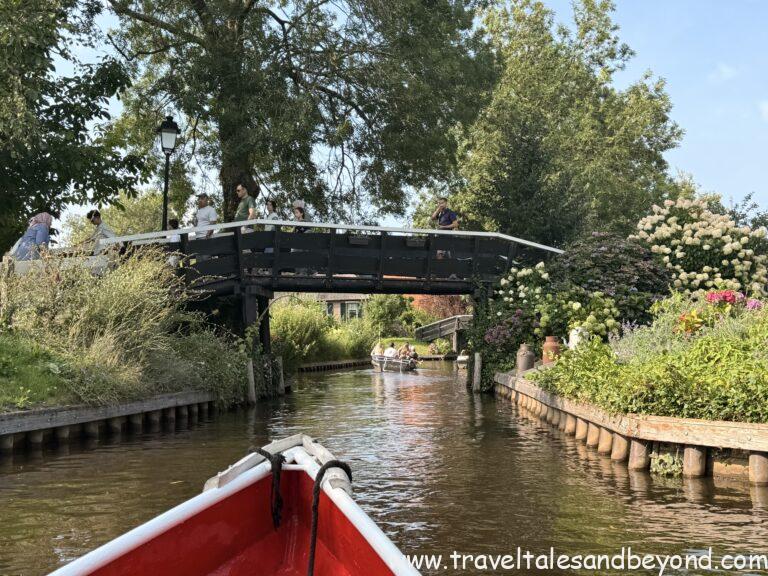
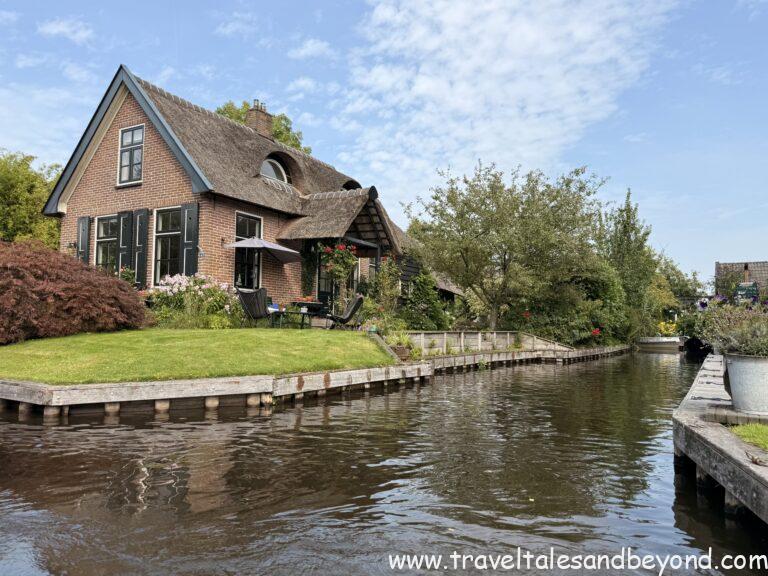
Giethoorn is a village with no roads. The only way to move between the thatched-roof farmhouses, flower-filled gardens, and arching wooden bridges is by boat, by bicycle along the narrow footpaths, or on foot. Cars don’t go in here. The loudest sound you hear is birdsong and the gentle lap of water against the boat hulls.
The Drive There — Dykes, Windmills & Flat Dutch Countryside
Getting there: For this day trip, we went there with another friend who has car. Booking a rental car is the other option to see this place or you could take tours.
The drive from Amsterdam to Giethoorn takes roughly 1.5 hours, and the Dutch countryside unfolds in the most extraordinary way. The roads cut straight across the flat, open landscape, and for stretches it felt like we were driving on top of the world — the land barely visible above the water on either side.
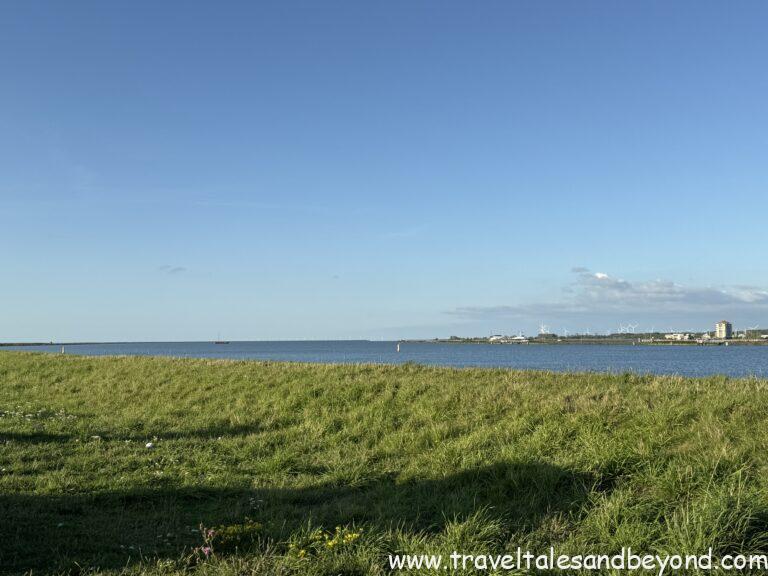
The dykes were genuinely jaw-dropping — and once you understand what they represent, they become even more extraordinary.
Roughly two thirds of the Netherlands lies below sea level. Without this system, much of the country — including large parts of Amsterdam — would simply be underwater. The Dutch have been building and maintaining dykes for over 2,000 years, and Amsterdam itself is built on eleven million wooden poles because the ground is too soft to build on directly. Following the devastating North Sea flood of 1953, the Dutch built the Delta Works — a vast system of dams, sluices, and storm surge barriers that the American Society of Civil Engineers named one of the Seven Wonders of the Modern World.
We pulled over to get out and look, and you feel it immediately — open water on one side, green farmland sitting noticeably lower on the other. The water is being held back. It is one of those moments where geography becomes something you can actually feel.

And the windmills — they appeared along the roadside almost without warning, rising up above the flat fields in that way that is so distinctly, quintessentially Dutch. We spotted several on the drive, their sails turning slowly in the breeze, perfectly reflected in the water of the canals running alongside the road. It was one of those moments where you look at each other and silently agree that this is exactly why you travel.
Arriving in Giethoorn — Lunch First
We arrived at lunchtime, parked the car at one of the designated car parks on the edge of the village (there is good signage, and parking is paid but straightforward), and then walked into the village to find somewhere to eat before doing anything else. This was a very good decision — Giethoorn fills up quickly, and having lunch early meant we avoided the worst of the afternoon crowds.
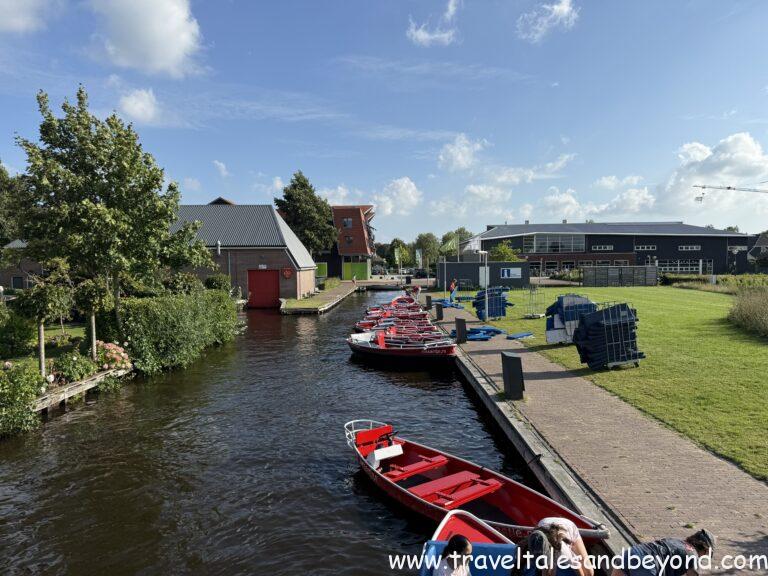
After lunch we were ready for the main event.
The Boat Ride — Our Absolute Favourite Part
We hired a row boat and set off into the canals. And this is where Giethoorn truly comes alive.
Rowing through the narrow waterways at a gentle pace, passing under the little wooden bridges, drifting alongside gardens bursting with flowers, peering up at thatched farmhouses from the water — it was simply magical. The canals weave through the village in every direction, and there is no real wrong turn to take; everywhere you go is beautiful.
Now, I should be honest: we were not entirely graceful on the oars.
The canals in Giethoorn are narrow in places, and there are rather a lot of other boats doing exactly the same thing as you. We bumped into another boat at a canal junction — to great amusement all around — and at one point found ourselves completely stuck under a bridge while a family on the bank watched with polite encouragement. Our son found all of this absolutely hilarious and talked about the “bumping boat” for the rest of the trip.
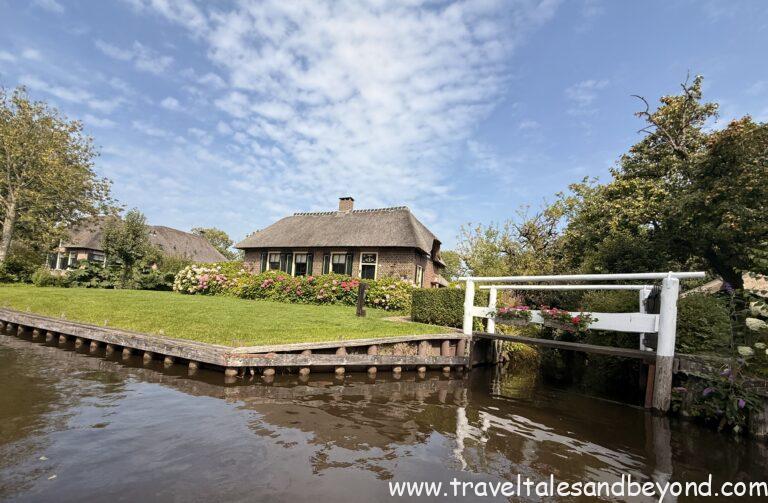
It didn’t matter at all. That’s the beauty of a self-drive boat in Giethoorn — there is no pressure, no schedule, and everyone is in exactly the same boat (literally). The whole thing felt wonderfully playful and spontaneous, and it remains one of our favourite family memories from the entire trip.
Tips for the Giethoorn boat ride:
- Book your boat hire in advance in summer — they do sell out, especially on weekends
- Prefer to sit back and enjoy the ride? There are guided boat tours available where a local captain does all the work — a great option if rowing isn’t your thing
- The hire period is usually 1–2 hours — we found 2 hours to be the sweet spot
- The canals are narrow; go slowly, and don’t worry about bumping — everyone does it!
- Bring a jacket — being on the water can feel cooler than standing on land
Tips for visiting Giethoorn with kids:
- Park at the designated car parks on the edge of the village — do not try to drive further in
- Arrive at or before noon to get lunch before the afternoon rush
- The footpaths alongside the canals are lovely for walking if you want a break from the boat
- Allow a full half-day minimum — 4 to 5 hours feels just right
- Wear layers; the flat Dutch countryside can be breezy even on sunny days
Giethoorn is the kind of place that stays with you long after you’ve left — and the drive there, through the dykes and past the windmills, is half the magic. If you can hire a car for just one day of your Amsterdam trip, make it this one.
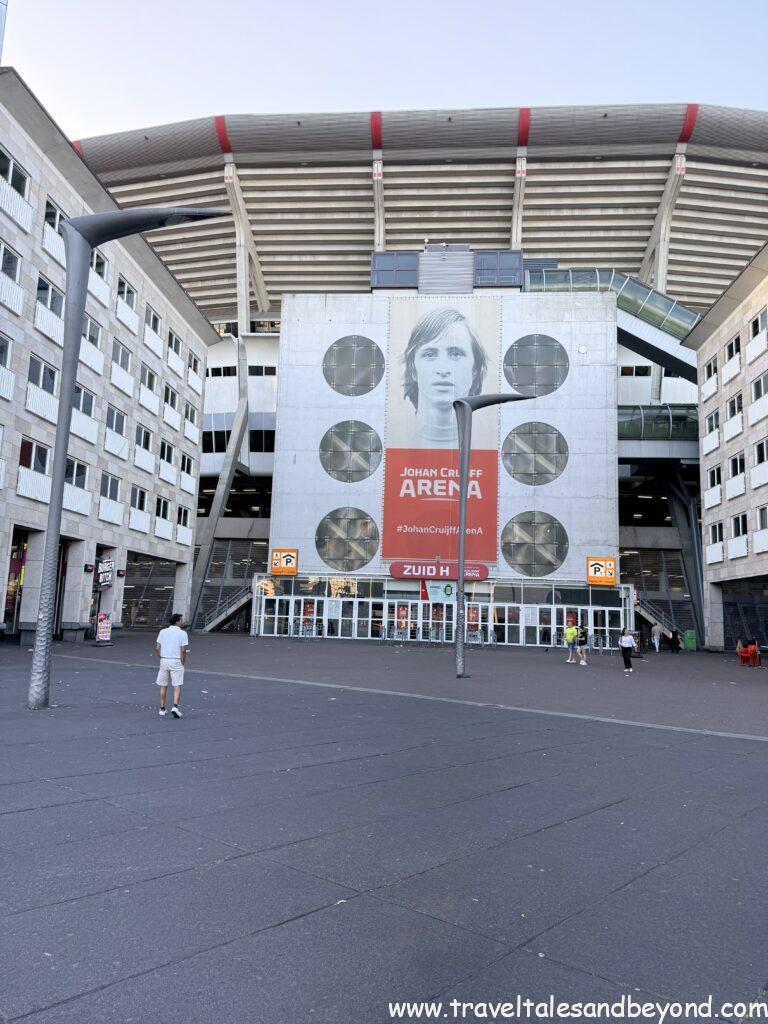
The Johan Cruyff Arena — A Football Fan’s Dream Stop
On our drive back from Giethoorn, we made one unplanned stop that turned out to be the highlight of the entire trip for one very important member of our family — our 10-year-old son.
We spotted signs for the Johan Cruyff Arena, home of AFC Ajax, and pulled over. We didn’t go inside, didn’t book a tour like we did for Camp Nou in Spain— we simply got out of the car and stood there, taking in this iconic stadium from the outside. Named after the legendary Dutch footballer Johan Cruyff, the arena holds over 54,000 supporters and has hosted Champions League finals, international matches, and decades of Dutch football history. Even from the outside, it is an impressive sight.
More to explore in the city
Our trip was focused on the canal boat and our two day trips, and honestly that felt just right for travelling with a 10-year-old — enough to see and do without anyone getting overwhelmed or exhausted. But if you have extra days, here are a few things that came highly recommended by other travellers we met along the way and that are on our list for next time:
More to explore in the city:
- The Jordaan neighbourhood — consistently described as Amsterdam’s most charming area, with canal-side cafés, independent shops, and beautiful old streets
- Dam Square and the Royal Palace — the historic heart of the city. We could manage to spend an hour there in the evening.
- The Anne Frank House — deeply moving and important; book tickets well in advance online as queues are very long. We were unable to get tickets there as they were all sold out.
- The Rijksmuseum — the Netherlands’ national museum, home to Rembrandt, Vermeer and one of the greatest art collections in the world; book tickets well in advance at rijksmuseum.nl — under 18s enter free
- The Van Gogh Museum — one of the most visited museums in the world and a must for art lovers; entirely dedicated to Van Gogh’s life and work; book ahead at tickets.vangoghmuseum.com as it sells out fast — under 18s also enter free.
Practical Tips
Transport:
- Buy an OV-chipkaart on arrival at Schiphol or Amsterdam Centraal — it works on all buses, trams, and the metro
- Children under 4 travel free on public transport in the Netherlands
- Download the 9292 app for planning all public transport routes, including day trips by bus
- Google Maps works reliably for Amsterdam tram and bus routing
Practical things:
- Amsterdam is extremely cycle-heavy — always look both ways for bikes before stepping off a kerb; cyclists do not stop
- The cobblestones in the historic centre are beautiful but uneven — pushchairs with large wheels cope much better than small-wheeled travel strollers
- Most museums offer family tickets; always check the website before you go as online prices are often significantly cheaper than at the door
- The weather in Amsterdam is famously changeable — always pack a light rain jacket, even in summer
- Tap water is safe to drink everywhere in the Netherlands
Money:
- Many places in Amsterdam are now cashless or prefer cards — contactless payment is widely accepted
- Tipping is appreciated but not as expected as in the US; rounding up the bill is perfectly fine

Final thoughts
Amsterdam is one of those cities that gives you more than you expect. The canals, the countryside, the windmills, the quiet waterways of Giethoorn — it all adds up to something that feels genuinely special, especially when you take the time to explore beyond the city itself.
If you are planning a family trip here, I hope this post helps you make the most of it.
If you loved reading this post, here are some other posts
- Spain – Barcelona, Valencia, Seville, Madrid
- Prague – A 2-day escape to Bohemian beauty
- Gibraltar – A day trip from Spain
- Belgium – Brussels, Bruges, Ghent, Dinant
- Germany – Berlin, Dresden, Nuremberg
- Portugal – A week long trip to Lisbon, Porto, Nazare, Duorro valley
- Tanzania – A 7-day trip to African safari
- Chile – A week long trip to breathtaking Patagonia
- Turkey – A 10-day trip to Istanbul and Cappadocia region
- Costa Rica – A 10-day trip to the Central American paradise
- Australia – A 2-week itinerary
Over to you
Have you been to Amsterdam with your family? Did you make it to Zaanse Schans or Giethoorn — and did you manage the boat without bumping into anyone? Drop a comment below — I’d love to hear!

Shaminee is a U.S.-based mom and family travel blogger who designs detailed itineraries for her own family and turns them into practical guides for others. Her goal is to make family travel simpler, more organized, and more enjoyable.
Read more →
Discover more from Travel Tales And Beyond
Subscribe to get the latest posts sent to your email.