
Travel Month – July
We had two nights in Kotor booked, a rental car for flexibility, and a plan that looked easy on paper. Then we hit the Dubrovnik–Kotor border, sat for 2.5 hours without moving, watched reported wait times climb past 6 hours, and turned back. Here’s what happened, why it happens, and what we’d do differently.
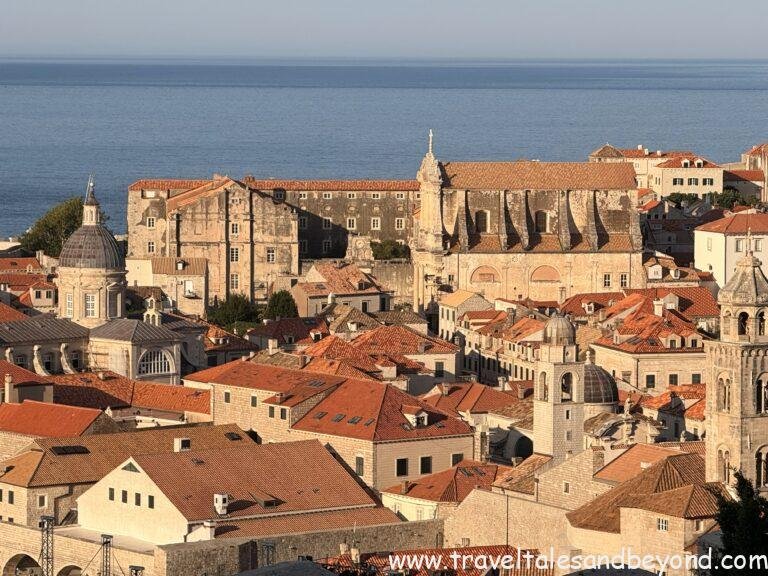
The Plan
We planned two nights in Kotor as a base to explore Montenegro at our own pace — driving along the coast and into the bay — rather than squeezing it into a rushed day trip from Dubrovnik.
The first option we looked at was Flixbus, and the schedule actually worked for our dates. But before booking, we came across a few posts mentioning that the border crossing could take a while, and that starting our return trip at 10:00 AM might be cutting it close. Our flight out of Dubrovnik to Athens was at 5:00 PM, and the drive back was only supposed to take 2.5 hours — on paper, even a 10:00 AM departure gave us plenty of buffer.
To be extra safe, we booked a rental car instead of the bus, and planned to leave Kotor at 8:00 AM on our return day. The car also meant we could explore more of the Montenegrin coast on our own schedule rather than being tied to a bus timetable.
Honestly, we didn’t research this specific crossing as closely as we normally would. We’d crossed plenty of borders on past trips without much trouble, so we assumed this one would be similar — a bit of a wait, maybe, but nothing that would actually derail the day. This was the first time a border queue was long enough to force us to change our plans entirely. Most of the actual research — the webcams, the wait-time trackers, the decision-making — happened over lunch in Cavtat, in real time, not before we left.
Quick take: Renting a car for the flexibility felt like the smart, safety-margin decision. It turned out to matter for a completely different reason than we expected.
What Actually Happened
On the day we were heading to Kotor, we’d been optimizing our Airbnb checkout time in Dubrovnik and left around 11:00 AM. We picked up our rental car near the airport and started driving toward Montenegro. We’d had a light brunch and figured we’d have a proper lunch once we arrived — the drive was only supposed to be 2.5 hours, after all.
About 15 minutes in, we stopped moving. Traffic was backed up on a two-lane road, and our first thought was that there’d been an accident. We asked people in nearby cars what was going on. It wasn’t an accident — it was the border.
Nobody around us could tell us how long the wait would actually be. We sat in that line for 2.5 hours and barely moved.
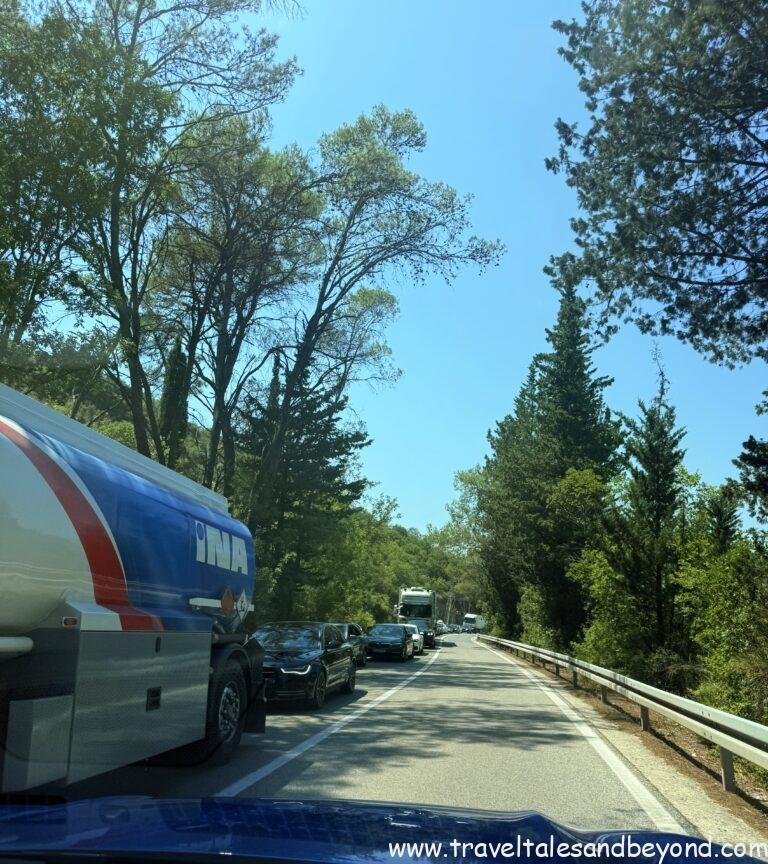
The Decision to Turn Back
It was a Sunday, which we’d later learn matters a lot for this crossing. Sitting in a line that wasn’t moving, with no idea how much longer it would take, we started doing the math on our return trip instead. If the wait was this unpredictable going in, what would it look like coming back out — on the day we had a flight to catch?
We called our Dubrovnik Airbnb host to talk through options. She suggested we go have lunch in Cavtat, a small coastal town just before the border, and reassess.
At the restaurant, the owner showed us a couple of resources that changed how we thought about the whole crossing:
Callout — Border wait tools: Look for live border webcam feeds that show the actual line of cars, plus crowdsourced border-wait-time sites where recent travelers report how long they waited. For the actual video feed, Montenegro’s Ministry of Interior runs an official live camera at kamere.mup.gov.me showing the Debeli Brijeg/Karasovići crossing, refreshing every 40 seconds. For reported wait times, check BorderAlarm.com, which relies on traveler-submitted reports and live cameras across the Balkans, or Nakordoni.eu, which shows real-time queue data updated every few minutes. Together, seeing the actual line and a recent reported wait time gives a far more reliable picture than guessing from Google Maps traffic data.
Checking one of these, we saw the wait was now sitting at over 6 hours. Earlier that same morning, apparently, it had been about 5 minutes. That gap — 5 minutes at dawn versus 6+ hours by midday on a summer Sunday — was the moment we decided Kotor wasn’t happening.
The restaurant owner’s advice, in short: Montenegro isn’t part of the Schengen Area, so border checks are heavier and slower than crossing between two Schengen countries — and with beautiful Croatia right there, was it really worth the risk? We weren’t ready to bet our Athens flight on an evening retry, so we took his advice.
Car vs. Bus: Why We Were Glad We Drove
While we were stuck in that line, there was a tour bus ahead of us. The people on it had zero flexibility. No pulling off for lunch in Cavtat, no turning around, no rebooking a hotel. We watched passengers taking bathroom breaks in the bushes along the road because there was simply nowhere else to go.
That was the moment the rental car decision — originally made just for a bit of extra buffer time — turned out to be the thing that actually saved the trip.
Takeaway: If there’s any real chance of a long border wait, a car gives you the option to turn back, wait it out somewhere comfortable, or reroute entirely. A bus commits you to the line, whatever happens.
Why the Wait Happens
The crossing we hit is called Karasovići on the Croatian side, Debeli Brijeg on the Montenegrin side — it’s the main crossing on the Adriatic Highway, so it handles the bulk of cars, buses, and trucks moving between the two countries. A few contributing factors, based on what we saw, were told locally, and later read up on:
- It was a Sunday — a common changeover day for both tourists and regional traffic, and by several accounts one of the worst days of the week to cross.
- It’s peak summer. July and August routinely bring multi-hour waits at this crossing, compared to 15–30 minutes in the off-season.
- Montenegro is outside the Schengen Area, so every vehicle gets checked rather than waved through, which slows things down significantly compared to intra-Schengen borders.
- It’s a two-lane road at the crossing point, and it’s the single main crossing absorbing all traffic — cars, buses, and trucks alike — with no real capacity to handle a surge.
- Wait times swing wildly by time of day — we saw it go from 5 minutes at dawn to 6+ hours by midday, which lines up with general advice to cross before 7:30 AM or after the evening rush.
- We also came across the theory, from what locals and other travelers mentioned, that upgrading this crossing simply hasn’t been a funding priority given how much traffic it already handles. We can’t verify that ourselves, but it would explain why a route this heavily used still runs through a two-lane road.
We also found out afterward that there’s a smaller, alternate border checkpoint nearby — Vitaljina (Kobila) — that our GPS never suggested as a route. It’s a car-only crossing and is reportedly less congested than Karasovići/Debeli Brijeg, though we can’t say firsthand whether it was facing the same delays that day. Still, it’s worth knowing it exists — don’t assume the route your maps app gives you is the only option.
Worth noting: Being outside Schengen doesn’t automatically mean a slow crossing. We later crossed from Bosnia into Croatia near Dubrovnik — also a non-Schengen border, on the popular Mostar day-trip route — and it was practically empty. So this isn’t a blanket “non-Schengen borders are slow” rule; the Dubrovnik–Kotor crossing specifically seems prone to heavy delays, likely from the combination of tourist volume, the two-lane road, and timing.
What We’d Do Differently
- Don’t assume past border experience applies here. We’d crossed plenty of borders without issue before, which is partly why we didn’t research this specific crossing closely beforehand. This one turned out to be different — research it on its own terms, not based on how easy other crossings have been.
- Cross at dawn, not mid-morning. The 5-minute wait we heard about was in the very early morning. If we tried this again, we’d aim to be at the border by 6:00–7:00 AM at the latest.
- Check a live border camera and a crowdsourced wait-time site before leaving, not after you’re already stuck in line.
- Avoid crossing on a Sunday if your schedule allows any flexibility.
- Rent a car over taking a bus for this specific route — the flexibility to pause, reroute, or turn back is worth it.
- Build in a full buffer day if you have a flight or onward plan on the same day as your return crossing. We had a 2.5-hour drive and a 7-hour flight buffer, and it still wasn’t enough peace of mind once we saw how unpredictable the wait was.
- Look into the smaller border checkpoint as a backup option and check current conditions there too.
- Consider a ferry option — if you don’t need a car. Adriatic Lines runs a seasonal fast ferry directly from Dubrovnik to Kotor (roughly June–September, 2–3 sailings a week, about 3 hours), which bypasses the border crossing entirely. You can book directly at adriatic-lines.com, or compare it with other routes on Ferryhopper.com. The catch: it’s foot passengers and bicycles only — no cars — so it only works if you’re not bringing a rental vehicle into Montenegro.
Should You Still Try It?
Yes — Kotor is genuinely worth visiting, and plenty of travelers do cross successfully. But go in with realistic expectations: this isn’t a guaranteed 2.5-hour drive, it’s a 2.5-hour drive plus an unpredictable border wait that can range from minutes to most of a day. If you have any hard deadline on the other side — a flight, a ferry, a tour booking — treat the crossing time as unknown, not fixed.
If your schedule has zero flexibility, it may be worth considering an organized day tour from Dubrovnik instead, where any border delay becomes the tour operator’s problem to manage rather than yours.
About the Non-Refundable Kotor Hotel
Our Kotor hotel booking was non-refundable, so before we fully committed to staying in Croatia, we called the hotel reception to see what our options were. They couldn’t offer a refund since the rate was already paid, but they offered to hold the room for the next day in case we managed to cross later or the next morning. In the end, we didn’t make it over at all and simply lost that booking — a cost worth factoring in if you’re weighing whether to push through a long border wait or cut your losses.
Takeaway: If you’re booking non-refundable rates in Montenegro for a trip that involves this crossing, know that a bad border day could mean forfeiting the cost. It’s worth asking about flexible or free-cancellation rates specifically for this leg of the trip, even if you use non-refundable rates elsewhere.
What We Did Instead
We finished lunch in Cavtat, cancelled our Kotor plans, and quickly found a hotel in Croatia instead. Korčula Island hadn’t fit into our original itinerary, so we used the two extra nights to drive north to Orebić, where we bought car ferry tickets on the spot for the short crossing to Korčula. In summer, the ferries run frequently enough that we didn’t need to book ahead — we just showed up, bought tickets, and drove on. Korčula Island hadn’t fit into our original itinerary, so we used the two extra nights to drive north and catch the ferry over — which ended up being a highlight of the trip in its own right.
Frequently Asked Questions
How long is the Dubrovnik to Kotor border wait usually?
It varies enormously — we saw reports ranging from about 5 minutes in the early morning to over 6 hours by midday on a summer Sunday. There's no reliable fixed wait time, especially in peak season.
How can I avoid the Dubrovnik to Kotor border wait?
Cross as early as possible — ideally before 7:30 AM — and avoid weekends, especially Fridays through Sundays in July and August. There's no way to skip the line itself, but checking a live border camera or crowdsourced wait-time site before you leave can help you time it better than we did.
Should I take a bus or drive myself?
If there's a real flight or schedule risk, drive. A rental car lets you turn back, wait it out, or reroute. A bus stuck in the same line leaves you with no options at all.
Is there a ferry from Dubrovnik to Kotor?
There are ferry options that bypass the land border crossing entirely. If the road crossing feels too unpredictable for your schedule, it's worth researching as an alternative to driving or bus.
Is there another border crossing between Dubrovnik and Kotor — Karasovići vs. Vitaljina?
Yes. Karasovići/Debeli Brijeg is the main crossing on the Adriatic Highway and handles the bulk of car, bus, and truck traffic. Vitaljina (Kobila) is a smaller, car-only crossing nearby that's reportedly less congested — our GPS never suggested it, and we only learned about it afterward, so we can't confirm firsthand how it compares on a bad day.
Do I need a visa to cross from Croatia into Montenegro?
Most Western passport holders — including EU, US, UK, Canadian, and Australian citizens — can enter Montenegro visa-free for short stays. Montenegro isn't part of the Schengen Area, though, so expect a passport check at the border regardless.

Shaminee is a U.S.-based mom and family travel blogger who designs detailed itineraries for her own family and turns them into practical guides for others. Her goal is to make family travel simpler, more organized, and more enjoyable.
Read more →
Discover more from Travel Tales And Beyond
Subscribe to get the latest posts sent to your email.