
An Egypt desert safari across Fayoum Oasis, the White Desert, and the Black Desert is one of the most rewarding — and least crowded — ways to experience Egypt beyond Cairo and Luxor. Over three days, we covered ancient whale fossils, wind-carved chalk formations, sandboarding dunes, a night camping under the stars, and a volcanic crater dusted in black jasper.
This itinerary works well for groups with a range of ages and energy levels — ours included kids and grandparents in their 60s — and this guide covers exactly what to expect at each stop, what to pack, what it costs, and a few things we wish we’d known in advance.
Planning a bigger Egypt trip? We did this desert safari right before our 9-day Egypt itinerary with kids, covering Cairo, Aswan, Abu Simbel and Luxor, then finished on the Red Sea, for about two weeks in Egypt in total. One highlight worth its own story: our sunrise hot air balloon ride over Luxor’s Valley of the Kings.
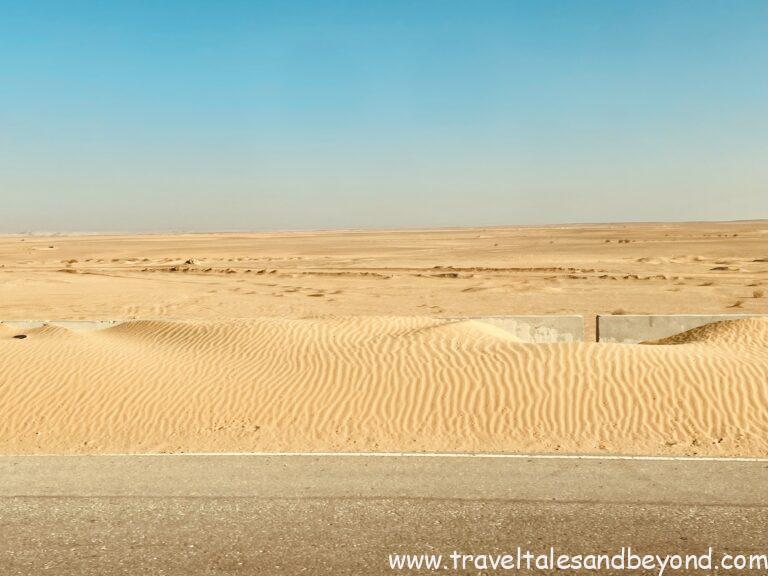
Day 1: Fayoum Oasis — Whale Valley & Desert Safari
Our journey started with a five-hour delay out of Seattle, which meant we missed our connecting flight in Heathrow. By the time we’d been rebooked and finally landed in Cairo, it was 11pm — almost a day later than planned. Our tour operator was there to meet us, helping us move smoothly through immigration, and had a car arranged and waiting. Instead of a night near the airport, we drove straight out toward the Fayoum desert to join the rest of the family, arriving at the bungalow around 2am. Tired but grateful for how seamless the handoff was, given how late and how far we still had to go.
We arrived at the desert bungalow at 2am, hours after the rest of the group had already settled in. By the time we woke up, our parents and the friends traveling with us had already spent the entire day out in the Fayoum desert without us. Here’s what they experienced, and what we’d strongly recommend you don’t skip.
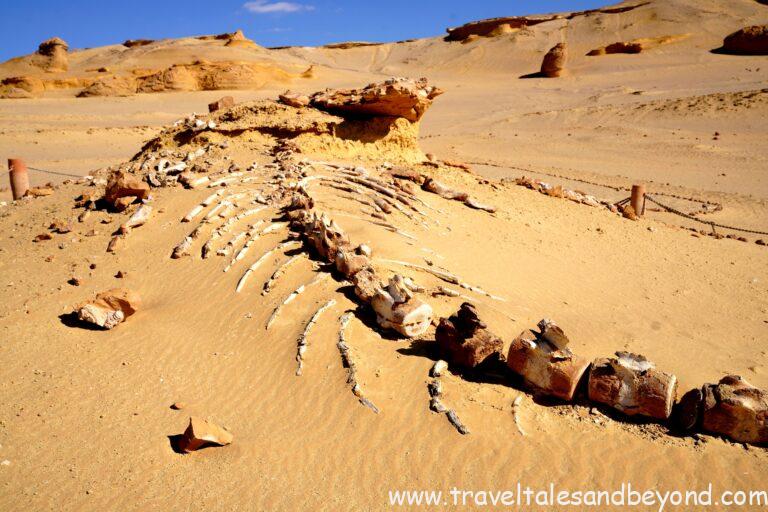
They made the long drive out to Wadi Al-Hitan — Whale Valley — a UNESCO World Heritage Site deep in the Fayoum desert. It contains hundreds of fossilized ancient whale skeletons, some up to 18 meters long, from a time roughly 40 million years ago when this entire region was covered by a prehistoric sea. The whales found here — Basilosaurus and Dorudon — are considered among the most important fossil discoveries in the world for understanding whale evolution. Some still had remnants of hind legs. Our families came back from it genuinely speechless. This is an absolute must-see, and we’re still disappointed to have missed it entirely.
The itinerary also included a waterfall swim and a boat ride on the lakes of Wadi El Rayan on the way back — both of which the group decided to skip in favor of keeping the pace comfortable for everyone. They remain on the itinerary as optional stops and are worth building in if your group has the energy.
The afternoon moved into full desert mode. The group boarded 4x4s for a safari through the surrounding Fayoum dunes as the sun began to drop.
As the temperature fell sharply that evening, our tour operator made a call we were grateful for, even from a distance: rather than keeping the group in open camp overnight, they moved everyone to the small desert bungalow — the same one we eventually arrived at ourselves at 2am. It was their suggestion, not a request from the family, made with our elderly parents in mind, and it made a real difference to everyone’s comfort heading into the bigger days ahead.
Fayoum tip: Do not skip Wadi Al-Hitan. Build it into your Fayoum day and give it proper time — it’s one of the most remarkable sites in all of Egypt and gets overlooked in favor of more famous landmarks.
Day 2: White Desert National Park — Sandboarding, Bonfire & Camping Under the Stars
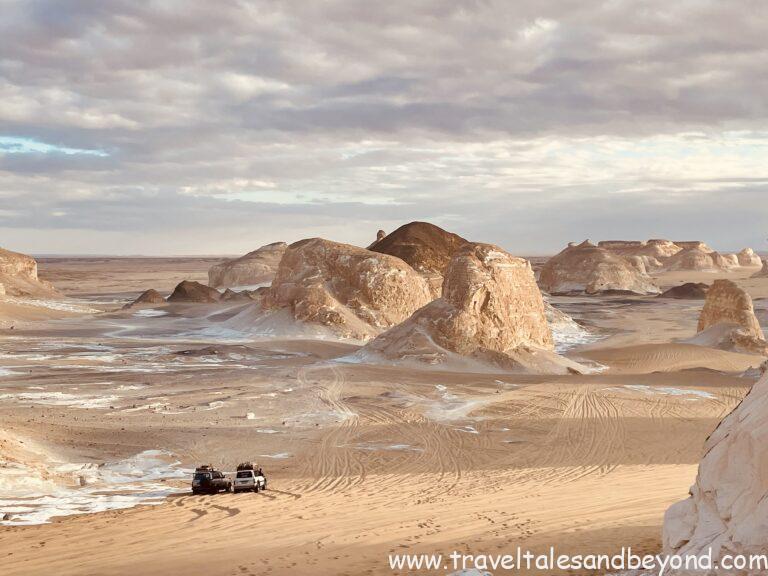
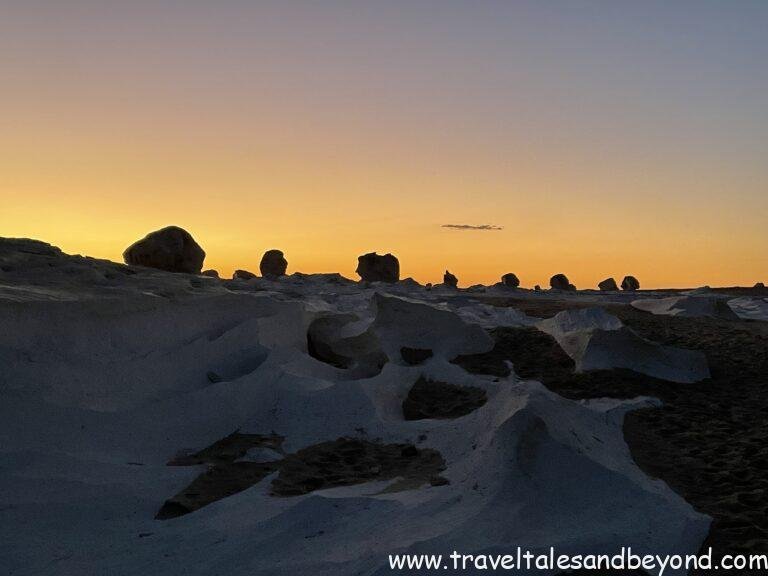
This was the day the trip became unforgettable.We drove north to Bahariya Oasis, transferred into 4x4s, and pushed into the desert. The White Desert National Park is Egypt’s most celebrated desert destination — and nothing prepares you for it. Wind-carved chalk formations rise from the flat desert floor in every direction: enormous sculptures shaped by millions of years of erosion into mushrooms, towers, chickens, rabbits, and shapes that resist naming entirely. The scale in person is something photographs simply cannot convey.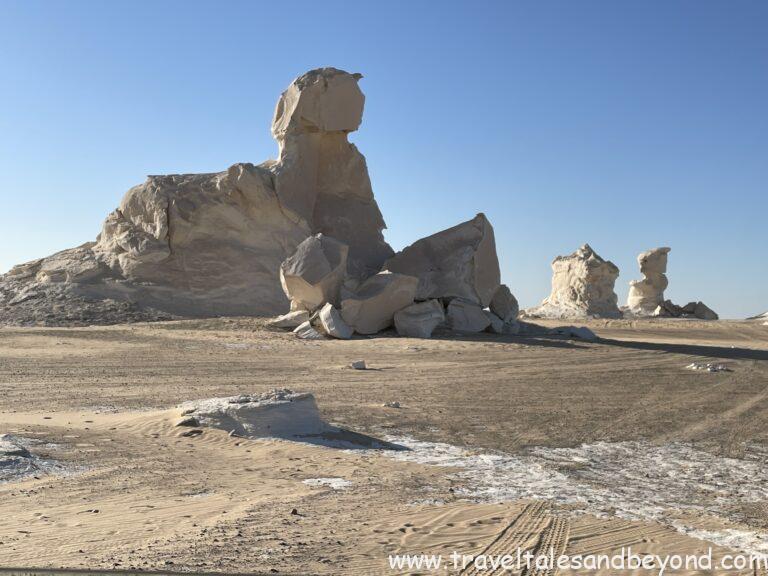
We spread out naturally across the formations. Some of the adults just stood quietly with it. The kids launched immediately into a naming game — a mushroom became a bear, a pebble became a sleeping elephant, one particular rock triggered a debate that lasted twenty minutes and ended in a draw.
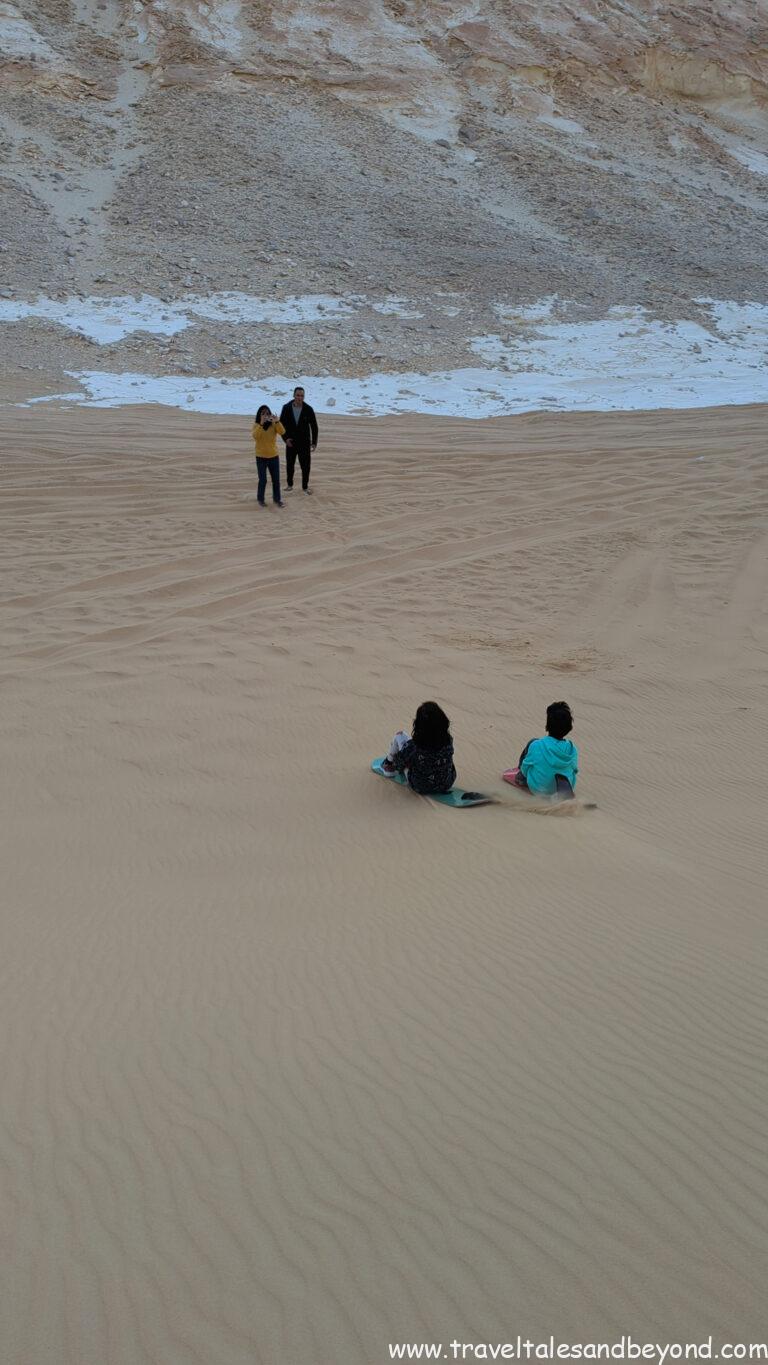
Sandboarding came next. The dunes here are among the best in the world — smooth, steep, and fast. Boards were provided. Our parents watched from the top with great amusement as the rest of us worked up our courage. The kids needed no such warm-up. By the third run, nobody was being careful anymore.
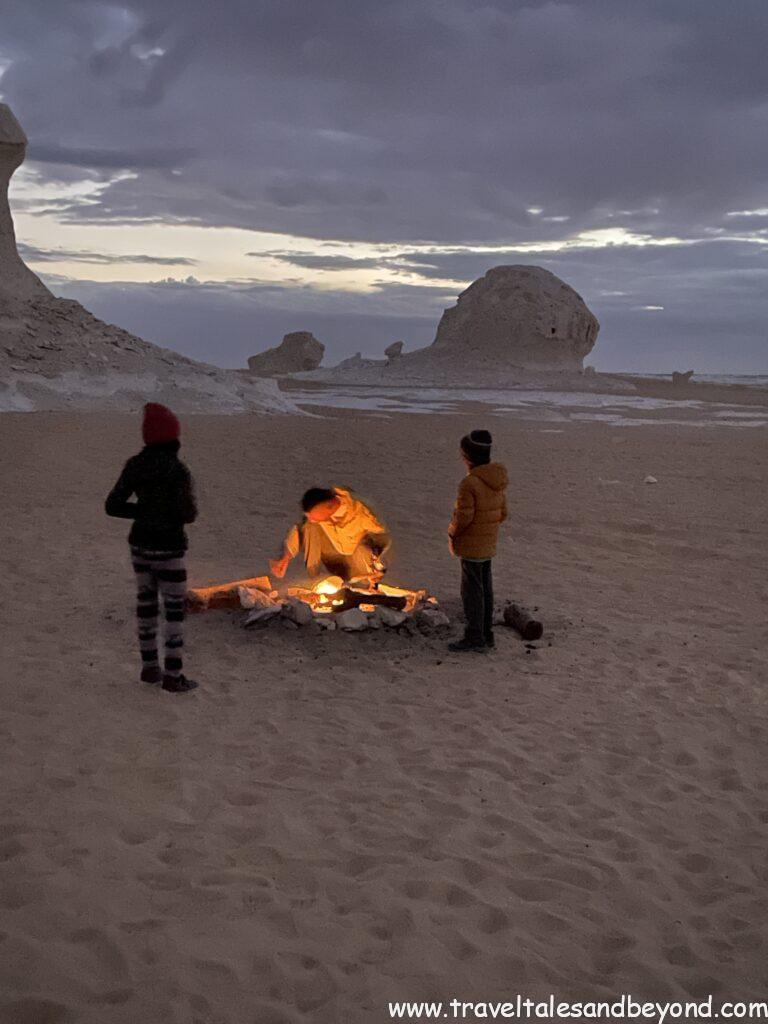
As the sun dropped toward the horizon, our guides got to work. While we watched the desert turn gold, then copper, then a deep burnt orange, they set up camp and cooked dinner over open fire. The smell of food drifting across the sand, the last light fading, traditional Egyptian music starting up around the bonfire — it was one of those evenings that earns its place on a list of best travel memories.
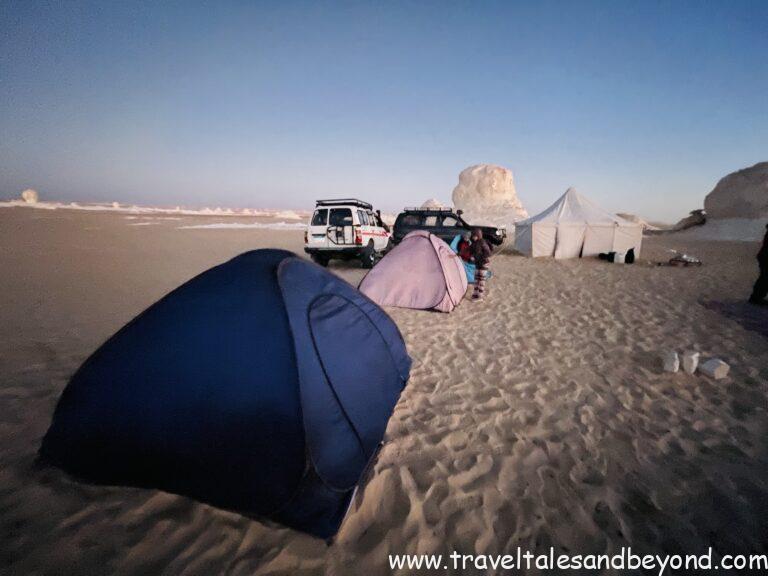
We should mention something our guide did not: there are no bathroom facilities in the White Desert. None. It is entirely open desert. For a group with kids and elderly grandparents, this was an unexpected surprise — and not a comfortable one. It did not ruin the experience, but we wish we had known in advance so we could have prepared better.
Day 3: Black Desert, Crystal Mountain & the Drive Back to Cairo
We left the camp in the morning and began the long drive back toward Cairo — but the day had two more remarkable stops in it before the city reappeared.
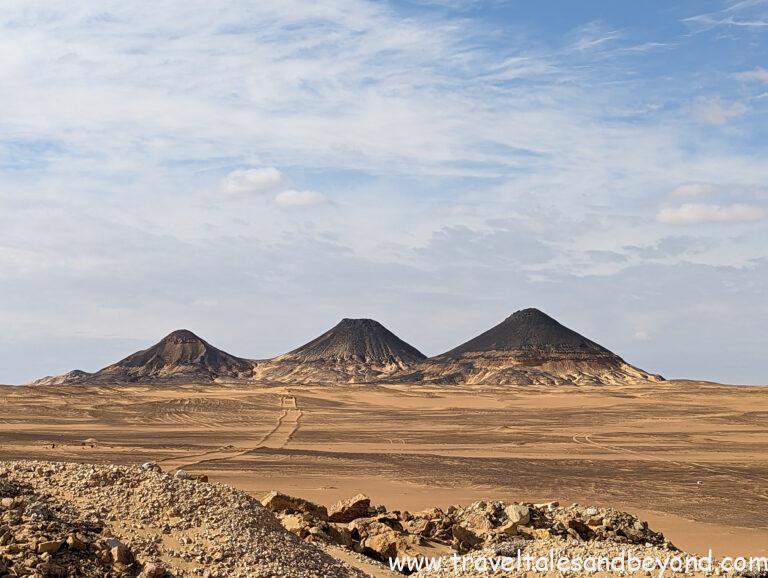
The first was Al-Marsous Mountain in the Black Desert. The contrast with the White Desert could not have been sharper. Where the White Desert is pale and alien, the Black Desert is dark and volcanic — every surface dusted in black jasper from ancient eruptions. Al-Marsous is a volcanic crater, completely covered in the stuff. It is dramatic in a quiet way. Our parents walked slowly around the base, picking up fragments. The kids climbed. Everyone found their own pace with it.
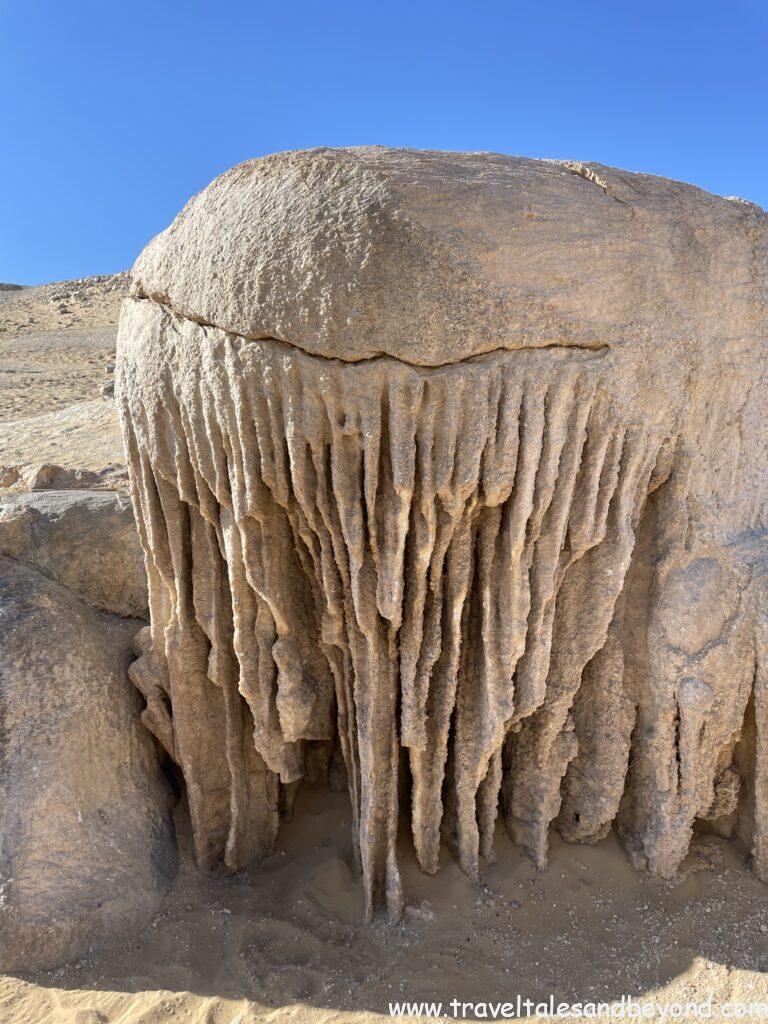
Crystal Mountain in the Valley of Agabat came next, and this was the stop that slowed everyone down completely. One of the rarest geological formations in the world, it is a mountain embedded with more than twelve types of crystal that catch and scatter light in every direction. In the sharp desert sun it genuinely glitters. Our kids spent a long time here trying to identify each type. So did the adults.
Then the long drive back to Cairo. The desert gave way slowly — to road, then small towns, then the unmistakable sprawl of the city. By the time the skyline appeared, everyone was quiet. The good kind of quiet, the kind that comes after something genuinely memorable.
And this was just the beginning. The bigger Egypt adventure was about to start. After three days in the desert, we drove back to Cairo (about 5–6 hours) to meet the rest of our group. The pyramids, temples and tombs were next. Here’s how the rest of our trip unfolded: Egypt with Kids: 9-Day Cairo, Aswan & Luxor Itinerary.
How Much Did It Cost?
The listed price from Luster Egypt Tours is approximately $285 per adult for the full private desert itinerary — Fayoum, White Desert, and Black Desert — inclusive of all transfers, guide, meals, camping, and entrance fees.| Description | Travelers | Approx. cost per person | Approx. total |
|---|---|---|---|
| Full desert safari — adult (private tour) | 6 | $285 | $1,710 |
| Full desert safari — child (confirm with operator) | 2 | TBC | TBC |
| Cairo airport hotel — Day 1 (separate) | — | Varies | — |
| Total (adults only) | 6 | ~$1,710 |
Egypt Desert Travel Tips
Best time to visit
October through April is ideal for Egypt’s Western Desert. Summers are brutally hot. December offers cool nights, comfortable daytime temperatures, and exceptional stargazing conditions.
What to pack
Layers are everything. Days can be warm; nights turn cold very quickly. Pack a proper jacket, sunscreen, a hat, closed-toe shoes for the dunes, and a dry bag for electronics. And if you are camping in the White Desert — wet wipes, a portable travel toilet or privacy tent, and hand sanitiser. You’ll thank yourself.
Is it suitable for kids and elderly travelers?
Yes — with the right preparation. The itinerary is primarily vehicle-based with short walks at each site. Our parents in their 60s managed everything comfortably. The key is communicating with your operator in advance: flag elderly travelers, ask about bathroom facilities at every overnight stop, and confirm whether backup accommodation is available if the desert gets too cold.
Private vs. group tour
We chose a private tour and it made a significant difference — particularly for a multi-generational group with a staggered arrival and varying energy levels. Our operator proactively moved us to a desert hotel when the temperature dropped too sharply for our elderly parents. That kind of flexibility doesn’t happen on a shared tour.
What if your flight is delayed?
It happens. Share your flight number with your operator so they can track it in real time. Ours was still at the hotel at 2am when we finally arrived. A good operator adapts without you having to ask.
Booking
We used Luster Egypt Tours and would recommend them for multi-generational groups or families with young children. All logistics for eight people across the three desert days (plus our Cairo arrival night) were handled seamlessly
Frequently Asked Questions
Do I need a visa for Egypt?
Most nationalities do. The good news: it's easy to get. Eligible travelers can choose a 30-day visa on arrival at Cairo Airport (currently $30), the new digital visa-on-arrival QR system ($36 total), or an eVisa applied for online before departure ($30 single-entry / $65 multiple-entry). Every traveler needs their own visa, including children, and your passport must be valid for at least 6 months beyond your entry date. Check that your nationality qualifies for eVisa or visa on arrival on Egypt's official visa portal before you go — and double-check fees, since Egypt raised them twice in 2026.
How cold does it get at night in December?
Temperatures can drop to around 5–10°C (40–50°F) after dark. If you are camping, bring a warm layer to sleep in. If you are traveling with elderly family members, ask your operator about backup accommodation options — a good one will have them.
Are there bathrooms in the White Desert?
No. There are no toilet facilities when camping in the White Desert — it is open desert. Our guide did not mention this in advance, which caught us off guard as a group with kids and elderly grandparents. Ask your operator explicitly before you go and pack accordingly.
Is Wadi Al-Hitan (Whale Valley) worth visiting?
Absolutely — it is one of the most extraordinary sites in Egypt and deserves far more attention than it gets. Hundreds of ancient whale fossils, some 18 meters long, preserved in open desert. We missed it due to our flight delay and genuinely regret it. Don't skip it.
Is this itinerary suitable for elderly travelers?
Yes, with preparation. The touring is vehicle-based and walking at each site is minimal. Flag any mobility concerns or cold sensitivity to your operator upfront — ours proactively arranged a desert hotel when the temperature dropped too low for our parents overnight.
Can kids do sandboarding in the White Desert?
Yes — it was one of the trip highlights for our children. Equipment is provided, the guides help everyone get started, and the dunes are beginner-friendly. Our kids took to it immediately and needed no encouragement whatsoever.
If you’d like to see more of our Egypt photos, head over to our Travel Photo Gallery for more images from our adventures.
More Firsthand Travel Guides From Our Family
Every itinerary on this site is built from our own trips — real routes, real costs, real experiences.
Europe
 3 Days in Belgium — Brussels, Bruges, Ghent & Dinant
- 1 Week in Portugal — Lisbon, Porto & the Douro Valley
- Amsterdam Family Guide — Canals, Zaanse Schans & Giethoorn
- 10 Days in Spain — Barcelona, Valencia, Seville & Madrid
- 2 Days in Prague — Complete First-Timer’s Itinerary


Beyond Europe


Shaminee is a U.S.-based mom and family travel blogger who designs detailed itineraries for her own family and turns them into practical guides for others. Her goal is to make family travel simpler, more organized, and more enjoyable.
Read more →
Discover more from Travel Tales And Beyond
Subscribe to get the latest posts sent to your email.