
207 miles. Two days. One unforgettable July. Here is how a 10-year-old boy rode from Seattle to Portland — and what it took to get him there.
Travel Month: July 2025
Can a 10-year-old do the STP? Yes. Ours did.
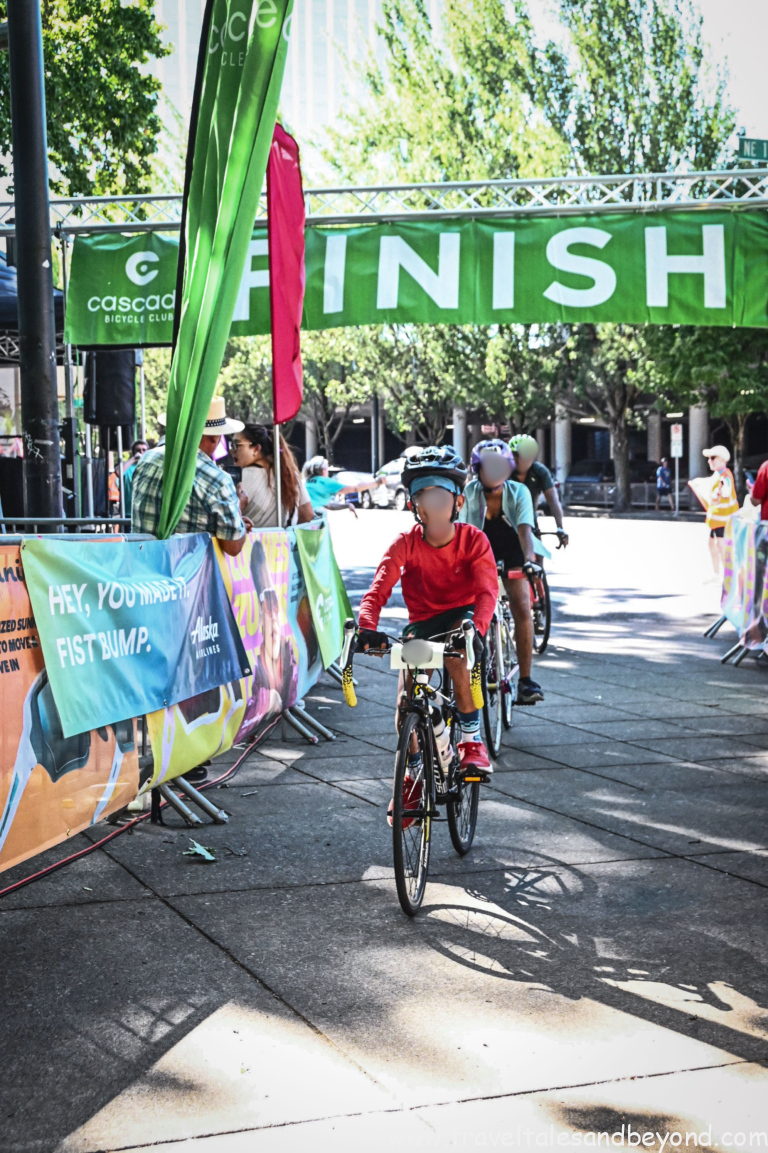
On July 12–13, 2025, our son crossed the finish line in Portland after 207 miles on a bike — the Seattle to Portland Bicycle Classic, completed at age 10 alongside two teenagers and three experienced dads. It started as a birthday gift: his dad’s idea of something he couldn’t unwrap but would carry for the rest of his life.
This is the full story of how we planned it, trained for it, and what it really takes to do the STP with a child — from registration and gear to pacing in July heat and finding accommodation in Centralia.
Table of Contents
Part One: The Story
- What Is the STP?
- Where It All Began: A Boy and His Bike
- The Idea: Three Kids, Three Dads, 207 Miles
- Training: April to July
- The Night Before the STP — Preparation and Logistics
- Day 1: Seattle to Centralia — 100 Miles
- Day 2: Centralia to Portland — 106 Miles
- Final Thoughts
Part Two: The Guide

PART ONE: THE STORY
What Is the STP?
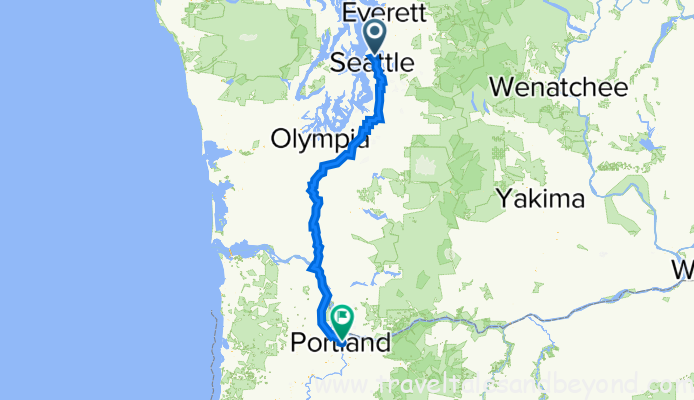
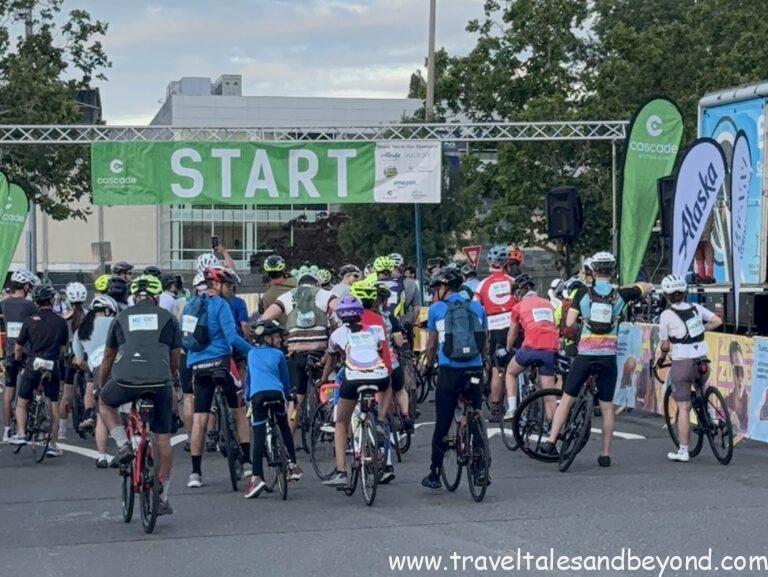
The Seattle to Portland Bicycle Classic (STP) is a 207-mile ride from Seattle to Portland organised by the Cascade Bicycle Club, and one of the largest cycling events in the United States. Riders can complete it in one day or two. In July 2025, our 10-year-old son chose the two-day version.
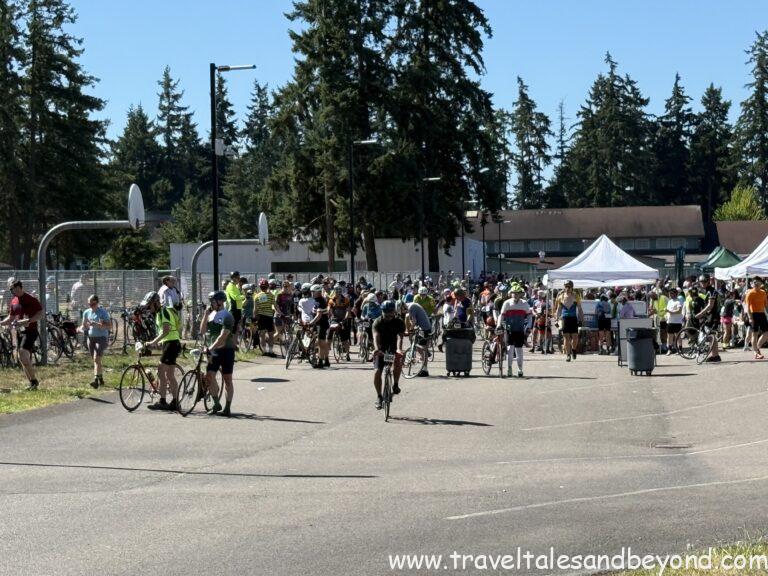
The route starts at the University of Washington campus in Seattle, heads south through city streets and rural roads across western Washington, crosses into Oregon, and finishes at Holladay Park near Lloyd Center in Portland. It is not a race. It is a community event — supported with five official food stops every 20–25 miles, medical teams, bike mechanics on the route, and SAG (support and gear) vehicles for anyone who needs assistance.

The Route and Terrain
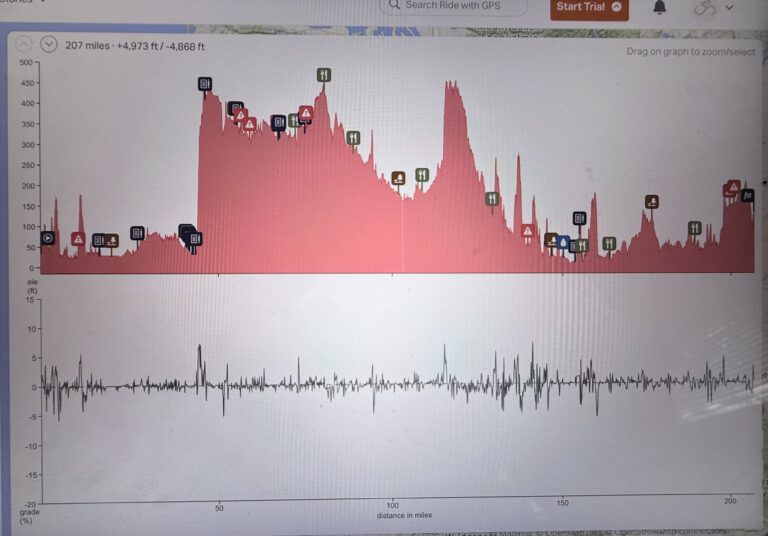
The terrain is manageable but never to be underestimated. Around 5,100 feet of elevation gain across two days — mostly gradual and rolling — but 207 miles has a way of making gentle hills feel steep by the second day.
The route heads south from Seattle through the suburbs of Renton, Kent, and Puyallup into wide agricultural plains. The first real climb comes around mile 45 near Puyallup. The toughest section is JBLM — long, open, no shade, brutal in July. Day 2 rolls through Chehalis and Napavine before crossing the Columbia River into Oregon and on to Portland.
What makes the STP hard is not the terrain. It is the cumulative weight of 207 miles in the July sun.

Where It All Began: A Boy and His Bike
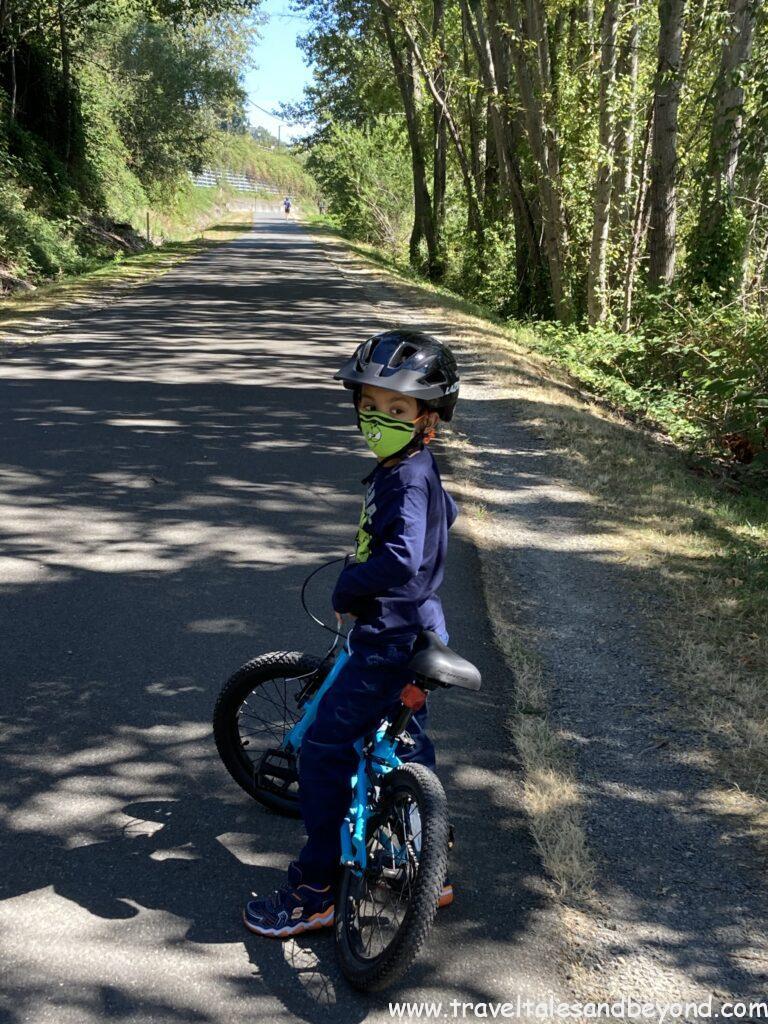
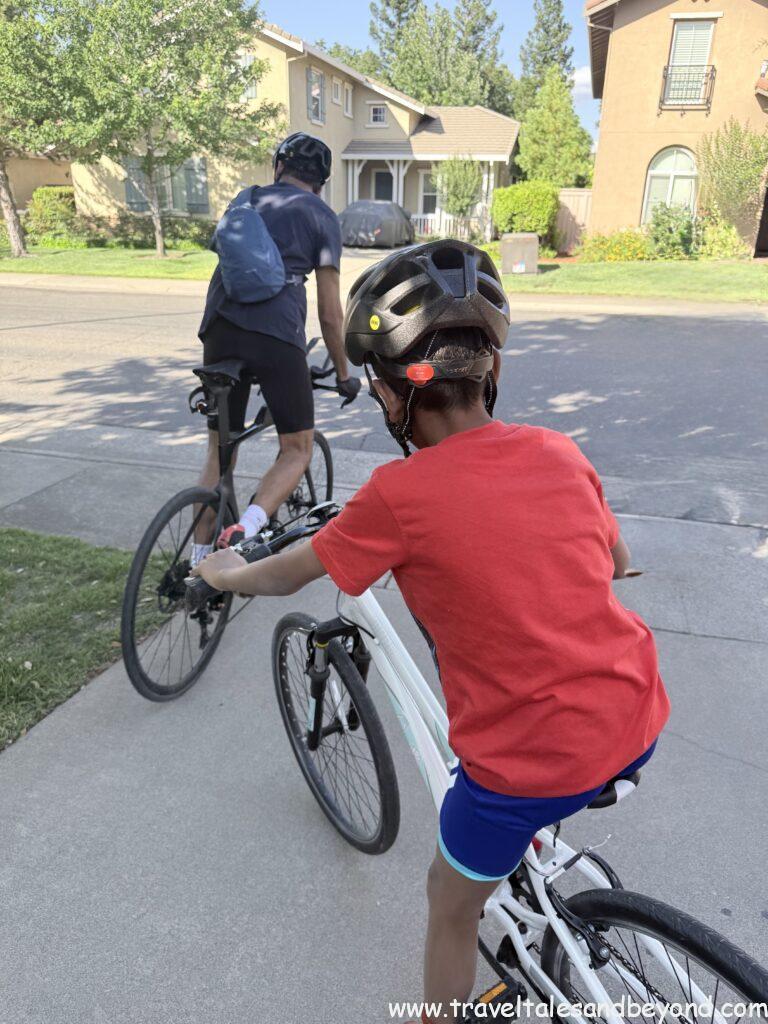
Our son got on his first bike at age four. What followed was the kind of thing that happens to cycling families without any grand design — you ride together because it’s fun, because it gets you outside.
Then COVID happened. While the world went quiet, our neighborhood trails became our world. We logged miles we didn’t count, and somewhere in all of that, our son built a stamina and confidence that most adults would envy.
By the time he was approaching 10, it was obvious he needed a bigger challenge.

The Idea: Three Kids, Three Dads, 207 Miles
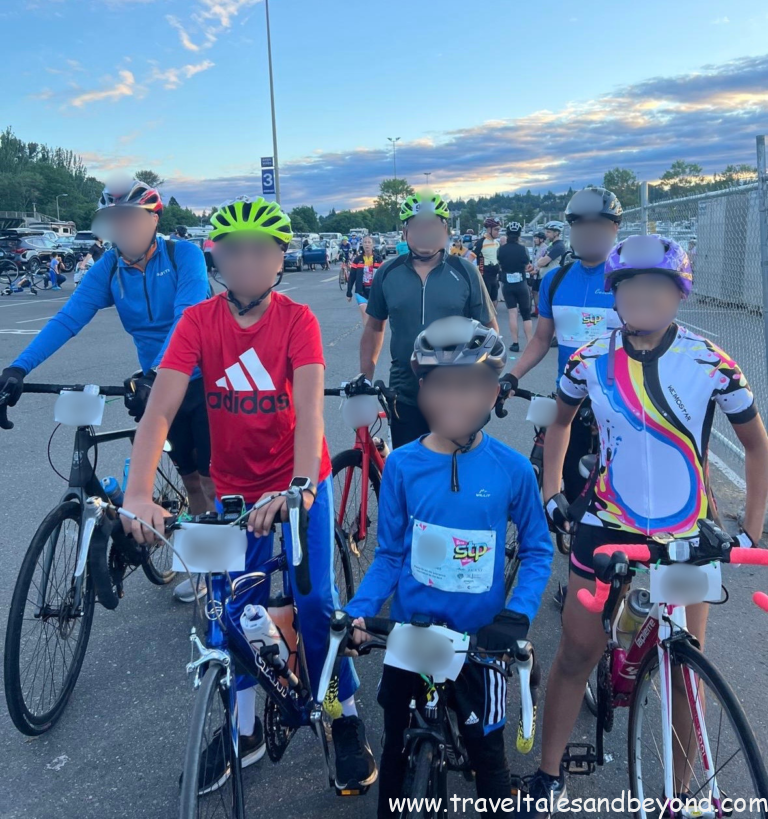
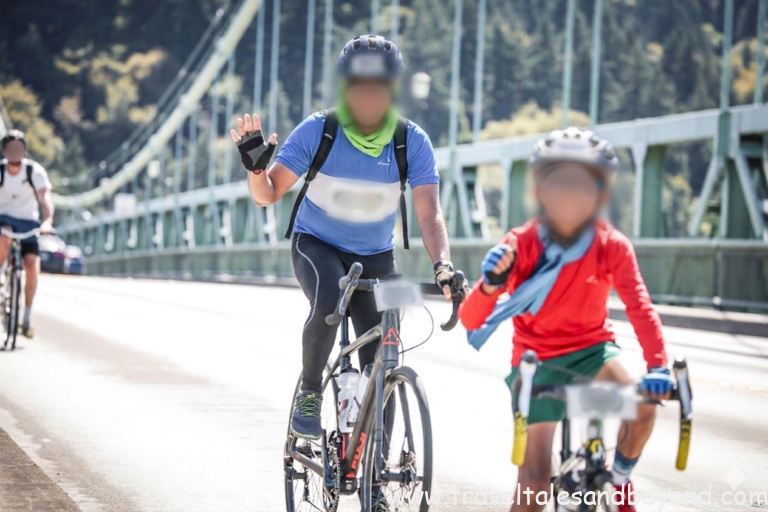
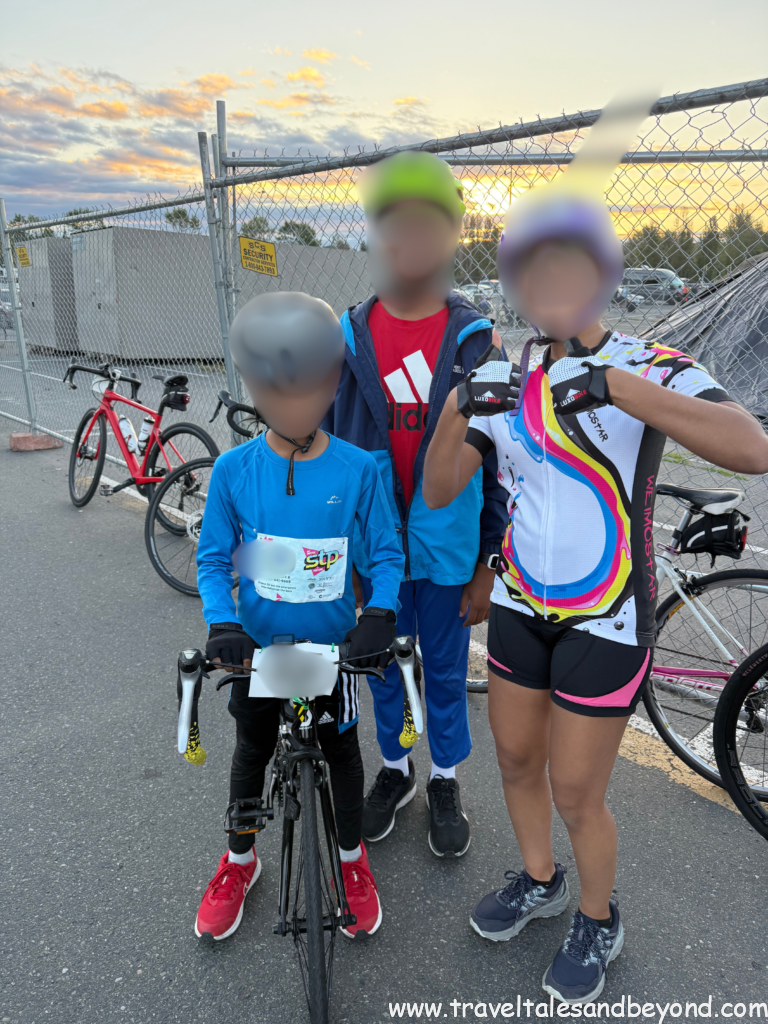
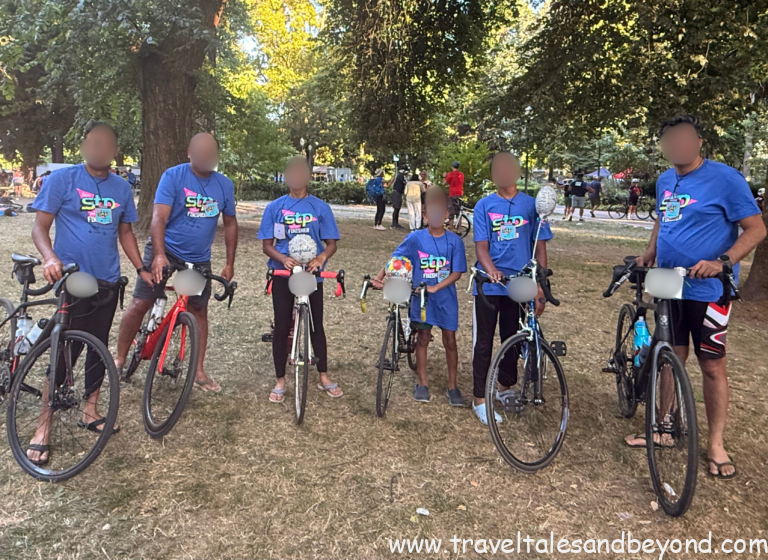
Our friend’s daughter — the one who had completed the STP at 10 — was now 14 and ready to go again. Our son rode her old bike, which felt fitting: a torch passed from one young rider to the next. A 14-year-old boy from the same circle also signed up, and each child would ride alongside their own dad — all three of whom had completed the STP before.
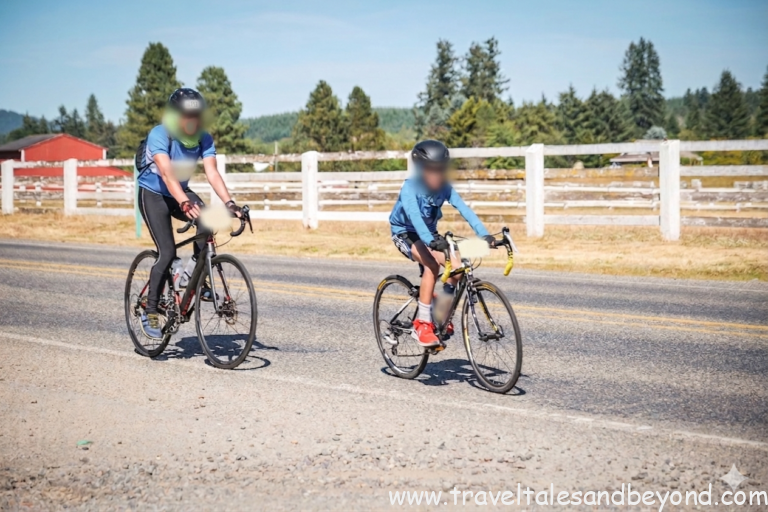
The group mostly rode together, but pace is personal on a 207-mile ride. When one pair needed to push or pull back, they rode as their own unit — dad and child, their own rhythm, their own decisions. It kept things simple and meant each kid had their parent’s full attention when it mattered most.

Training: April to July
Training began in April — the earliest practical start for outdoor riding in the Pacific Northwest. Weekends became ride days, building progressively toward the longest training ride of 65 miles — proof that Day 1’s 100 miles was within reach.
Living in the Pacific Northwest turned out to be a genuine training advantage. The rolling hills, the long open roads, and the variable weather of the region mirror the STP route almost exactly. Every weekend training ride in the area was, in effect, a rehearsal for what the route would demand — the same terrain underfoot, the same kind of sky overhead. The kids were not just building fitness. They were building familiarity with exactly the conditions they would face on race day.
It Takes a Village
A couple of weeks before the event, the family visited the boy’s uncle in California. He had done the STP himself — so instead of a week off the bike, he took his nephew out for a local ride and kept the routine intact. That kind of quiet support, from someone who didn’t have to do anything, is what makes something like this possible.
It ran through the whole story: parents who said yes, dads who trained every weekend, moms who showed up mid-route with food, a friend’s daughter who passed on her bike and her confidence. Three families, one shared goal. None of it was one person’s doing. All of it mattered.

The Night Before the STP — Preparation and Logistics
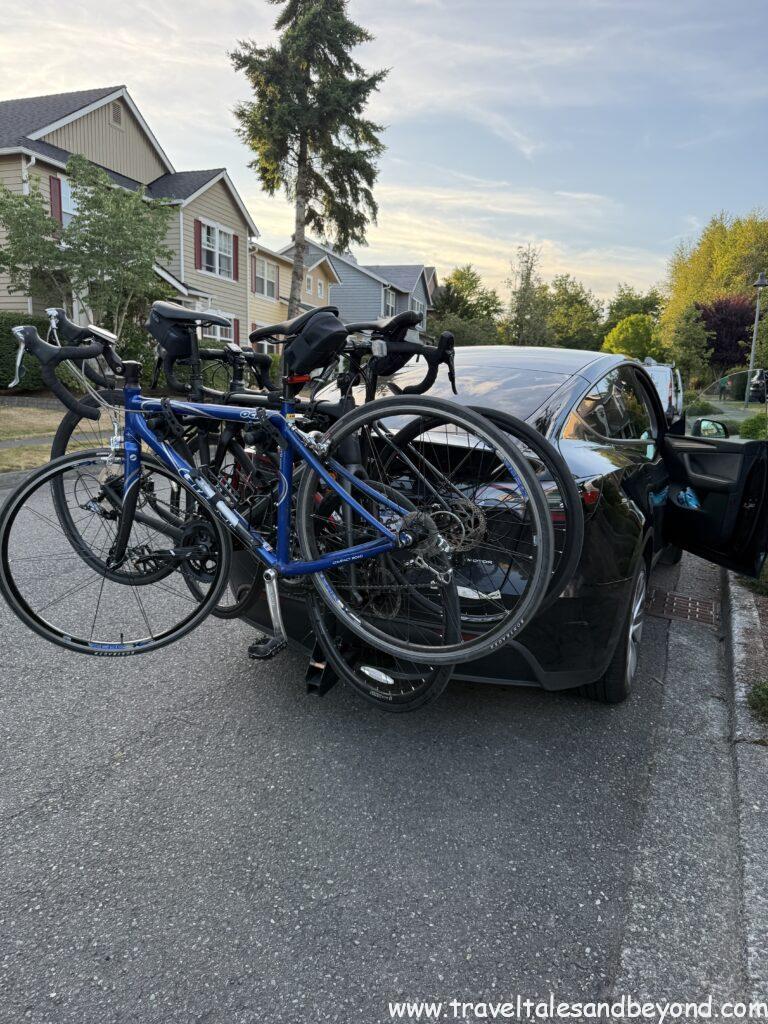
The evening before the STP, the bikes were loaded onto the bike rack and double-checked. Everyone sat down for a proper carbohydrate-heavy dinner — pasta, rice, the kind of meal that fuels a big effort. The bags were packed and the STP bib numbers were attached and ready.
One of the most rider-friendly features of the STP is the official baggage drop truck service. You pack your overnight bag, tag it, and drop it at the start line. The STP’s baggage trucks transport it directly to Centralia, where it is waiting when you arrive. On Day 2 morning, it travels to Portland. No riding with luggage strapped to the bike. Every rider covers 207 miles carrying only what fits in their jersey pockets.
The moms drove the route in the car — via I-5, which is fast, direct, and completely separate from the cycling route, reconnecting with the riders at agreed meeting points along the way. This gave the group a safety net: if any rider needed to stop, there was a ride home waiting. And it gave flexibility that the STP’s own return bus could not — leaving Portland on their own timeline, at the end of two very long days.

Day 1: Seattle to Centralia — 100 Miles
July 12, 2025. The group left home at 4:45 AM, aiming for the 5:30 AM two-day rider wave at the University of Washington start line.
But the STP had one last test before the pedalling even began. On the way to the University, one of the bikes fell from the bike rack. Fortunately the damage wasn’t catastrophic — but it was enough to need attention. A quick fix, a collective exhale, and by the time the group was rolling it was 6:15 AM — 45 minutes later than planned.
The STP does not wait for perfect conditions. You deal with what comes and keep moving. The kids learned that before they had turned a single pedal stroke.

The JBLM Stretch
Ask any STP veteran about the section through Joint Base Lewis-McChord and you will get the same look. Long, exposed, minimal shade, and in July the tarmac radiates heat from below while the sun pushes down from above. Our group made a decision: stop at a gas station and cool off in air conditioning for ten minutes. Not in the plan. Exactly the right call.
Ten minutes of air conditioning at mile 60 is worth an hour of struggling at mile 80.
The Slow Puncture
One of the other dads had a tire problem that could not be fully fixed on the road. He and his son spent much of Day 1 stopping every few miles to pump it up — stop, pump, ride — until the route passed a bike store and they could get it properly fixed. Not enough to stop them. Enough to make everything considerably harder.

The Moms Show Up at Lunch
The moms drove out to meet the riders at their lunch stop with food from home on Day 1 and from a restaurant on Day 2 — packed and ready both times. No queuing, no waiting — the riders pulled in, ate, and were back on the bike quickly. Having food ready meant the breaks were short and efficient, which across 206 miles makes a real difference.

Arriving in Centralia
By 4:00 PM, the group rolled into Centralia — mile 100. Done.
The midpoint at Centralia College is a world in itself. Some riders were staying in tents on the grounds. Our group had arranged rooms at the Collegiate Housing International — a real bed and a proper rest before Day 2. The first order of business: massage. After 100 miles, not a luxury — maintenance.
After resting, all six riders and the moms went out for dinner together. Tired but not broken. Proud but not finished. One hundred miles behind them. One hundred and seven still to go.

Day 2: Centralia to Portland — 107 Miles
July 13, 2025. Day 2 began early at 5:00 am with a quick breakfast, stiff legs, and the quiet knowledge that there are still 107 miles between you and Portland.
Psychologically, Day 2 was different. The riders knew what they were doing now. The uncertainty of Day 1 was gone. What replaces it was something more honest — the awareness of exactly how far 107 miles is, and the decision to ride it anyway.
What nobody had fully prepared for was the heat.
Managing the Heat
The July sun over western Washington and Oregon was relentless. The group adopted a strict rhythm: water every 5 to 10 minutes, without waiting to feel thirsty. Bottles were drained and refilled at every stop.
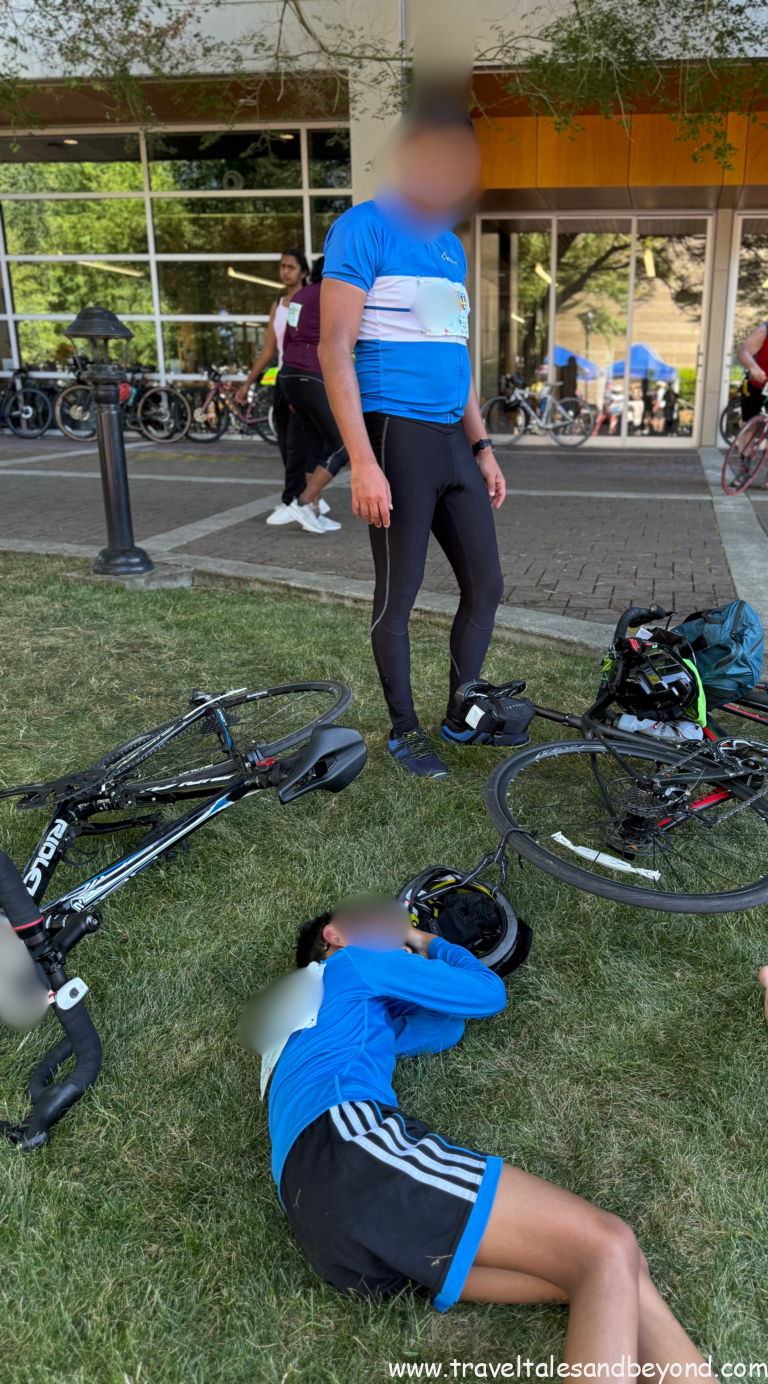
At rest stops, the kids soaked towels in cold water and wrapped them around their helmets — a simple, effective way to keep the head cool when the sun is directly overhead and there is no shade for miles. Stop, refill, soak the towel, back on the bike.
A Flat Tire and the Kindness of Strangers
On Day 2, my husband got a flat tire in the afternoon heat and needed help fixing it. A fellow rider stopped and gave up thirty minutes of his own ride to help. He had his own Portland to reach. He stopped anyway.That is the STP community in a single moment.

Three Kids, One Finish Line
Day 2 was hard. The afternoon heat, the rolling hills, the miles that accumulate in tired legs — there were stretches where Portland still felt very far away.
What kept them going was each other. They crossed paths at rest stops, heard about each other’s progress through their parents, and knew the others were out there on the same road in the same heat. When a child sees another child choose not to stop, it removes the option. All three of them were strong-willed and stubborn in the best possible way — and they pushed each other through without making much of it.

The Finish Line
The route crosses from Washington into Oregon at Longview, and as Portland begins to appear, something shifts. Three children who had trained since April, who had ridden through a fallen bike and a delayed start, through 100 miles in one day and punishing heat in the next, could finally see the end.
The STP finish line is at Holladay Park in Portland. And waiting at the finish line — the moms.
The moment each rider crossed the line, the cheer went up. Not just from the volunteers and the crowd — but from the people who had packed the bags, driven the food to the lunch stop, waited at Centralia, and tracked every mile of the last two days. The finish line at the STP is always loud. For our group, it was something more than that.

Final Thoughts: Was It Worth It?
Some things you cannot plan for — the look on a child’s face when they do something they were not sure they could. We saw it in Portland on July 13, 2025. Two days. 207 miles. Three families, three dads, three kids. Every mile earned.
He spent the rest of the summer not touching his bike. Fully done with cycling — until he held up his finisher’s shirt. Smallest size available, still swamping his ten-year-old frame. He looked at it and announced he would do the STP again.
When the shirt gets shorter.
We will be ready when he is.
PART TWO: THE GUIDE
Everything you need to plan the STP with a child — gear, training, pacing, accommodation, and the tips that come only from having done it.
The Numbers
| Stat | Detail |
|---|---|
| Event | Seattle to Portland Bicycle Classic (STP) 2025 |
| Date | July 12–13, 2025 |
| Total Distance | 207 miles |
| Day 1 | ~100 miles, Seattle to Centralia |
| Day 2 | ~107 miles, Centralia to Portland |
| Our son’s age | 10 years old |
| Other young riders | 14-year-old girl (2nd STP), 14-year-old boy |
| Adult riders | 3 dads, all prior STP finishers |
| Total group | 6 riders |
| Longest training ride | 65 miles |
| Training start | April 2025 |
Registration and Accommodation
STP registration for 2025 opened for Cascade members in January and public registration in February, staying open until July 6. Registration is not the bottleneck.
The accommodation is. The STP includes overnight options as part of registration — hostel beds, dorm rooms, and pre-assembled tent packages available directly through Cascade’s booking system. These fill up fast. The moment you register, check availability and book immediately.
For larger groups wanting a proper hotel room — book hotels in Centralia or Chehalis independently, and book them early. Limited hotels, 6,000 riders, one July night. Do not leave it to summer.
Accommodation options at Centralia, in order of comfort:
- STP hostel and dorm rooms — book through Cascade registration; fills first
- STP pre-assembled tent packages — through registration
- Hotels in Centralia and Chehalis — book independently, as early as possible
- Free tent camping on college grounds — no reservation, bring your own tent
- Community overflow venues in Chehalis — check the STP website
How to Pace the STP With a Child — Speed, Breaks and Strategy
To complete Day 1 in approximately 8 hours including breaks, riders need to maintain around 14 miles per hour on flat and downhill sections. For a child on a smaller bike, this requires genuine, sustained effort — particularly in the heat of the afternoon.
The Break Rhythm
- Every mile — sip water. Do not wait to feel thirsty
- Every 5 miles — a 2-minute stop. A cube of cheese, a handful of nuts, an energy blok. Two minutes is enough; ten minutes stiffens the legs
- Every 25 miles — the official STP rest stop. Stop, refuel, refill, reset. Do not skip these even when riders feel strong
Make sure your child can reach and drink from their water bottle without stopping. Practise this during training rides. If the bike geometry makes it difficult, a hydration pack with a drinking tube is a practical alternative.
Watch the Child, Not the Clock
Watch for the signs a child is working too hard: going quieter than usual, a change in pedalling rhythm, shoulders dropping. Those signals come before they say anything. When you see them, stop — regardless of where you are in the segment.
A bike computer on every bike, including the child’s, makes this significantly easier. Seeing speed, distance, and the countdown to the next stop gives the child something to focus on and gives the accompanying parent the data to pace correctly. A basic Garmin or Wahoo costs under $100 and is one of the best investments for the ride.
Managing Heat and Morale
Heat
- Wet towels at every rest stop — soak in cold water and wrap around the helmet or neck. Simple. Works.
- Sip water every mile — internal cooling as much as hydration
- Electrolytes in the bottle — water alone doesn’t replace sodium and minerals lost through sweat. Add electrolyte tablets to at least one bottle
- Know the JBLM stretch — the most exposed section of the route. Plan rest stops around it. Our group stopped at a gas station to cool off. Not in the plan. Exactly right
Morale
Having other children in the group is the single most powerful morale tool available. What they give each other — peer motivation, the refusal to be the one who stops — cannot be replicated by a parent.
Additional strategies that worked:
- Count down, not up — “10 miles to the next stop” beats “you’ve done 70 miles”
- Acknowledge the hard moments honestly — “Yes, this is hard. And you are doing it” is more powerful than “you are nearly there” when nearly there is 30 miles away
- Small, frequent rewards — the 5-mile snack stop is as much morale as fuel
- Remind them who else is out there — the other kids are on the same road, in the same heat
STP Gear List – What to Buy Before the STP
A Properly Fitted Road Bike
Fit matters more than price. A professional bike fit takes an hour and costs far less than a new bike. Get the bike fully serviced — brakes, gears, chain, tires — the week before the event.
Long Sleeves and Smart Layering
Mornings start cool; afternoons get serious. Start in removable layers that pack into a jersey pocket. Strip back as the day heats up. Never cotton — it holds sweat and chills you when temperatures drop.
Cycling Glasses
UV protection, wind, road debris, insects. Wraparound lenses with UV400 protection. Photochromic lenses handle both the shaded morning miles and blazing afternoon sun without needing to swap.
Padded Cycling Shorts (Bibs)
The single clothing item that separates a comfortable ride from an unbearable one. Bib shorts over waistband shorts for long days. Buy the best you can afford — this is not where to cut costs.
Bum Cream (Chamois Cream)
Apply to skin before riding each morning. Reduces friction, prevents saddle sores. First-time riders always wish someone had told them about this before the ride, not after.
Cycling Gloves
Padded gloves reduce vibration and prevent hand numbness over long hours on the bars. For children especially — smaller hands tire faster.
A Well-Fitted Helmet
Fit as important as quality. Good ventilation matters for 8–10 hours in July heat.
A Bike Computer — Including for the Child
Speed, distance, and countdown to the next stop keeps a child motivated and gives the accompanying parent real-time pacing data. Basic models cost under $100.
Small Wet Towels
Two or three microfibre towels. Soak at every rest stop, wrap around the helmet or neck. One of the most effective heat management tools on a hot day.
Sunscreen
High-SPF, water-resistant. Apply before setting off each morning. Reapply at rest stops, especially on Day 2. Two full days in the July sun is serious cumulative exposure.
Also Bring:
- Water bottles — at least two per rider, refilled at every stop
- Electrolyte tablets — in at least one bottle at all times
- Energy bloks (Clif Bloks, Skratch chews) — fast-acting carbohydrates in a pocket-sized format
- Snacks — bananas, salted nuts, cheese cubes, pretzels, a favourite from home
- Small dollar bills — for gas station stops, roadside vendors, and tips at the Centralia massage tables
- Bike repair kit — spare inner tube, tire levers, CO2 inflator, multi-tool, chain lube. Practise a full tire change at home before the event
- First aid kit — blister plasters, antiseptic wipes, bandages, medical tape, elastic bandage, any prescription medication
- Pain relief — ibuprofen and paracetamol. Take at Centralia before sleeping to manage the soreness before it peaks. Always follow correct dosing guidelines
What We Learned: 10 Tips for Families
- Ride it yourself first, or bring someone who has. All three dads were experienced STP finishers. That knowledge was the group’s biggest asset.
- Book Centralia accommodation early. Not when you register — as soon as you decide you are doing it. Hotels near the route fill fast.
- Use the STP baggage truck. Drop your overnight bag at the start, collect it in Centralia. Ride 207 miles without carrying a bag.
- Bring a support car — drive via I-5. The riders use internal back roads. The STP asks personal support vehicles to stay off the cycling route. I-5 is the right, fast, and courteous choice.
- Check every tire the week before. A slow puncture found in a shop costs nothing. Found at mile 30 on a 100-mile day, it costs hours.
- Carry a full flat repair kit and know how to use it. Practise at home. A 30-minute roadside repair in afternoon heat is not the moment to learn.
- Hydration is a discipline. Sip every mile. Add electrolytes. By the time thirst kicks in, you are already behind.
- The wet towel trick works. Cold, wet microfibre towel around the helmet. Simple. Effective. Use it.
- Stop at the JBLM stretch if needed. Experienced riders know this section. Plan for it. A gas station stop is smart management, not failure.
- The STP community will look out for you. A stranger stopped to help fix our flat in serious afternoon heat. Pay it forward when you can.
FAQs: Kids and the STP
What is the minimum age for the STP?
The Cascade Bicycle Club does not set a formal minimum age. Children ride under adult supervision. Check current guidelines at cascade.org.
How long does the two-day STP take?
Day 1 is approximately 100 miles to Centralia, Day 2 is 107 miles to Portland. Budget around 8 hours per day in the saddle including breaks, depending on pace.
What is the overnight stop at Centralia like?
Centralia hosts the official midpoint with options from free tent camping to hostel dorm rooms. Showers, food, bike storage, massage, and medical support are all available.
How should I train a child for the STP?
Start at least three to four months in advance. Build progressively to at least one 60–75 mile day. Include back-to-back riding days. Ride with an experienced adult or group who has done the STP before.
What bike do you need?
Any well-maintained, properly fitted road or hybrid bike. Fit matters far more than price. Get it serviced the week before — brakes, gears, chain, tires.
Is the STP safe for children?
Yes, with proper preparation. The event has medical teams, mechanics, and SAG vehicles along the entire route. Riding with an experienced adult significantly reduces risk.
Can a 10-year-old complete the STP?
Our son did, at 10, alongside two teenage riders and three experienced dads. With the right training, the right support, and the right temperament — closer to yes than you think.

Shaminee is a U.S.-based mom and family travel blogger who designs detailed itineraries for her own family and turns them into practical guides for others. Her goal is to make family travel simpler, more organized, and more enjoyable.
Read more →