Germany in Three Cities: Exploring Berlin, Dresden & Nuremberg
Travel Date: August 2024
As our summer break was drawing to a close, we opted for a brief 8-day vacation in Europe. Our destination of choice was Prague, the capital of the Czech Republic. However, since our preferred flight choices all involved layovers in Frankfurt, Germany, we decided to explore some cities in the East of Germany, namely Berlin, Nuremberg, and Dresden, before making our way to Prague, instead of taking a direct flight from Frankfurt, Germany.
Day 1 : Arriving in Berlin – Frankfurt to Berlin by train
Our European journey began the moment we landed at Frankfurt Airport. We hopped into a taxi for a swift 15-minute ride to the train station, bypassing the available train alternatives. With a couple of hours to spare before our train to Berlin, we strolled around the neighborhood near the station and enjoyed a leisurely lunch.
The train journey to Berlin unfolded as an approximately three-hour visual feast through the heart of Germany, unveiling charming countryside views and glimpses of quaint villages. By the time we arrived in Berlin, evening had set in. Our hotel was a mere 20-minute walk from the station by the river Spree.
Days 2–3: Exploring Berlin — WWII History, Brandenburg Gate & the Berlin Wall
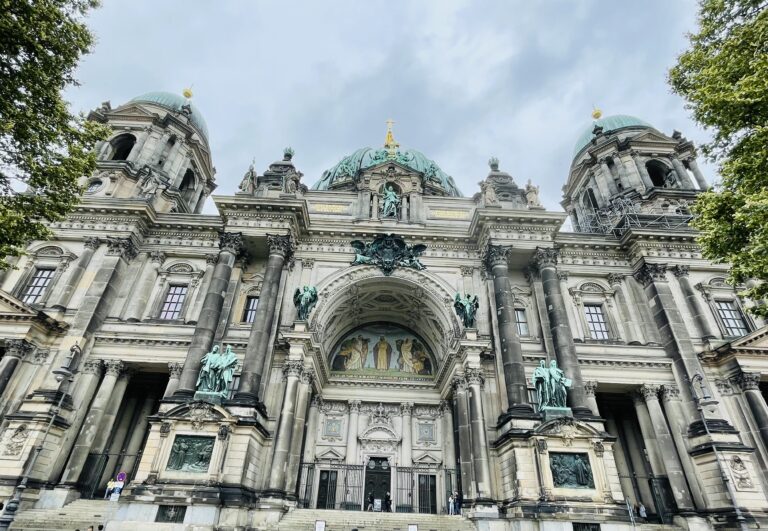
The next day, we opted to use a hop-on-hop-off bus to explore Berlin, given the overcast and chilly weather. Berlin, situated along the river Spree, holds a significant historical connection to World War II and the Cold War. We climbed to the top of the Berlin Cathedral (270 steps) to get a panoramic view of the city. Later in the afternoon, we visited key attractions that were once part of East Germany.
Our second day in Berlin included a 2-hour World War II walking tour, during which our guide led us through historical sites, offering valuable insights. We met our tour guide at the Brandenburg Gate. The gate stands as a symbol of peace and unity, attracting visitors from around the world. We walked through key locations associated with World War II, shedding light on the significant events and their impact on Berlin. We visited iconic landmarks such as remnants of the Berlin Wall, Checkpoint Charlie, the Holocaust Memorial, and the Topography of Terror exhibition center. In the evening, we had plans to visit the city’s museums. Nowadays, it’s crucial to pre-book tickets for these attractions. If time is scarce, consider starting with the Pergamon Museum. Despite having our tickets secured, jet-lag took a toll on us, forcing us to reluctantly abandon our museum plans.
Day 4: Dresden Day Trip — Frauenkirche, Old Town & the Elbe River
We jumped on a morning train to Dresden and honestly, this city totally surprised us. We hadn’t planned to spend much time here, but Dresden turned out to be one of those unexpected highlights of the trip. After dropping our bags in the station lockers, we grabbed tram day tickets and headed straight for the old town.
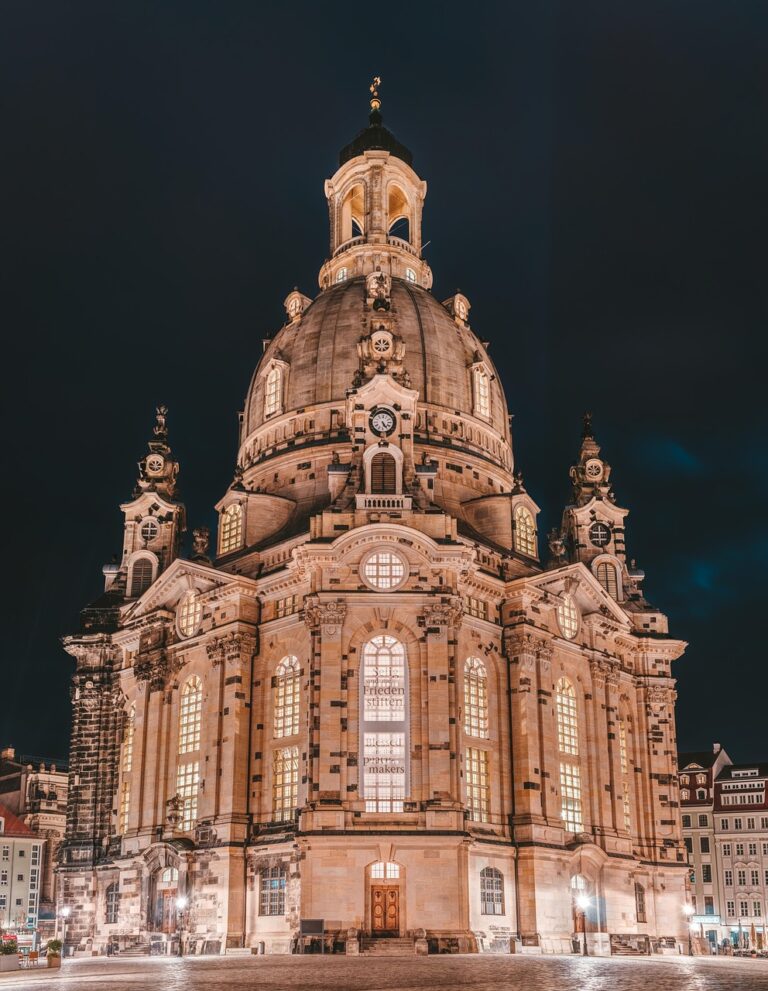
Frauenkirche
The Frauenkirche was our first stop and wow — what a story this church has. It was completely flattened during the WWII bombing of Dresden in 1945 and sat as a pile of ruins for almost 50 years. The East German government actually left it that way on purpose, as a reminder of the devastation of war. It wasn’t until 1994 that reconstruction finally began, and the result is breathtaking. Standing inside, it’s hard to believe this was rubble not so long ago. If you have a bit of extra time, climb up to the dome — the views over Dresden are absolutely worth it.
Old Town
From there we wandered over to the Zwinger Palace, which is basically baroque architecture at its finest. The courtyard alone had us stopping every few steps to take photos — think grand archways, ornate fountains, and perfectly manicured gardens. It also houses some seriously impressive museums including the Old Masters Picture Gallery. Right next door, Dresden Castle is home to the famous Green Vault, one of Europe’s most extraordinary treasure collections. We didn’t have enough time to go inside properly — if we were doing this trip again, we’d easily give Dresden a full extra day just for these two.
Elbe Riverbank
Our favorite part of Dresden though? Just walking along the Elbe riverbank. The views of the old town skyline from across the water are stunning — all those baroque domes and spires lined up perfectly. It’s the kind of view you stop and just stare at for a while. After all that walking, we were ready to eat and headed into the Innere Altstadt area which has loads of great little cafés and restaurants. Do yourself a favor and order a slice of Eierschecke — it’s a traditional Dresden custard cake and it’s absolutely delicious. We’d never heard of it before this trip but it was one of those little food discoveries that makes travel so special. Highly recommend!
Day 5 – 6: Prague, Czech Republic
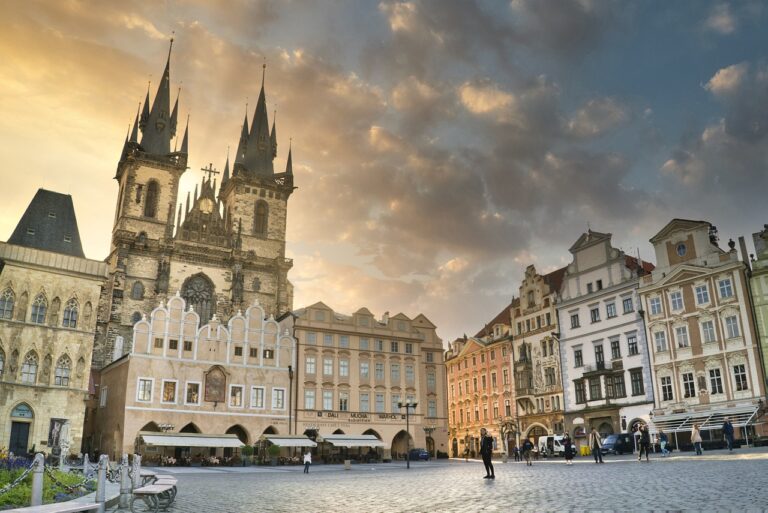
The next 2 days we spent in Prague, the capital city of Czech Republic. More about it in my Prague post.
Days 7–8: Nuremberg — Nazi History, Medieval Old Town & Nuremberg Castle
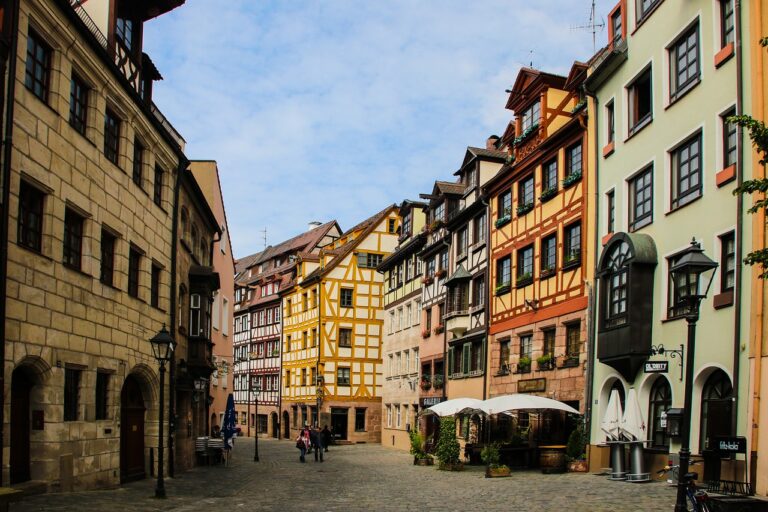
We returned to Nuremberg, Germany, and faced a tight train connection with just a 10-minute layover, prompting us to opt for the Flix bus from Prague to Nuremberg. To our surprise, the bus proved to be a comfortable mode of travel, though it’s advisable to carry some snacks for the 3-hour ride. It was on time and a very smooth ride. We arrived around noon and leisurely explored the Old Town area. In the evening, we took a taxi to the Documentation Center Nazi Party Rally Ground and the Nuremberg Trials Memorial, where high-ranking Nazis faced justice between 1945 and 1949. Our friendly taxi driver doubled as a tour guide, quizzing us about our life in the U.S. in return.
On our final day, we enjoyed a walking tour through Nuremberg’s Old Town, soaking in the sights of Nuremberg Castle, St. Sebaldus Church, the Gothic Schöner Brunnen fountain from the medieval period, and artist Albrecht Dürer’s House. The experience was made even more delightful by our local guide, Anthony, whose family has a longstanding connection to this tour, dating back to his grandfather.
Germany Travel Tips: What You Need to Know Before You Go.
Getting Around
- Germany has one of the best train networks in Europe. Use the DB Navigator app (Deutsche Bahn) to book trains in advance — you’ll get cheaper fares the earlier you book
- The Deutschland-Ticket (€49/month) covers all regional trains, buses, and trams — great value if you’re staying longer than a week
- Berlin has an excellent U-Bahn (subway) and S-Bahn (overground) system — buy a day ticket for unlimited travel
- Flix Bus is a cheap and comfortable option between cities, especially Prague to Nuremberg as you mentioned
Visa & Entry
- US, UK, Canada, and Australia citizens do not need a visa for stays under 90 days
- From 2025, EU visitors will need ETIAS travel authorization — check before you travel
Money
- Germany uses the Euro (€). Cards are widely accepted but carry some cash — smaller restaurants and markets are often cash only
- ATMs (called Geldautomat) are widely available in city centers
Best Time to Visit
- May to September is the best time — warm weather, long days, and outdoor festivals
- December is magical for Christmas markets in Nuremberg, Dresden, and Berlin
- Avoid July–August if you dislike crowds — popular sites get very busy
Accommodation
- Book hotels at least 2–3 months in advance for summer travel — Berlin especially fills up fast
- Stay in the city center (Mitte in Berlin, Old Town in Nuremberg) to be walking distance from major sights
Museum & Attraction Tips
- Pre-book tickets online for major Berlin museums — the Pergamon, Jewish Museum, and DDR Museum all sell out
- The Berlin Museum Pass (3-day pass) gives access to 30+ museums — worth it if you’re a museum lover
- Most major sights in Nuremberg and Dresden can be explored on foot — comfortable walking shoes are a must
Food & Drink
- Try local specialties — Nuremberg is famous for its small Rostbratwurst sausages, Berlin for Currywurst, and Dresden for Eierschecke (a local cake)
- Beer gardens (Biergarten) are a staple in summer — a great way to relax after sightseeing
- Most restaurants open for dinner from 6pm — lunch is often the bigger, cheaper meal of the day
Language
- Most people in tourist areas speak English, but learning a few basic German phrases goes a long way
- “Danke” (thank you), “Bitte” (please), “Entschuldigung” (excuse me) will be appreciated
Safety
- Germany is very safe for tourists. Standard precautions apply — watch for pickpockets in crowded train stations and markets
- Emergency number: 112
If you loved reading this post, please check out my other posts here.
Few recent posts
-
- Spain – Barcelona, Valencia, Seville, Madrid
- Belgium – Brussels, Bruges, Ghent, Dinant
- Portugal – A week long trip to Lisbon, Porto, Nazare, Duorro valley
- Prague – A 2 day escape to Bohemian beauty
- Gibraltar – A day trip from Spain
- Australia – A 2 week itinerary
- Turkey – A 10 day trip to Istanbul and Cappadocia region
- Costa Rica – A 10 day trip to the Central American paradise
- Tanzania – A 7 day trip to African safari
- Chile – A week long trip to breathtaking Patagonia
Pingback: Brussels Travel guide - A 2 day itinerary
Pingback: Portugal Travel Guide - Lisbon, Porto and more
Pingback: Australia Travel Guide - 14 day itinerary
Pingback: The Ultimate Tanzania Travel Guide - 7 days itinerary
Pingback: Chile Travel Guide - 10 days itinerary
Pingback: Ultimate Turkey Travel Guide – 10 days in Istanbul and Cappadocia
Pingback: Ultimate Luxembourg Travel Guide - Half day in Luxembourg City