
A walking day through Pest’s synagogues, squares, and a sunset boat ride past Parliament
Travel Month – July
Planning a Budapest itinerary that fits the Pest side into a single day? You’ve come to the right place. This one day in Budapest guide covers our walk through the Jewish Quarter, the grandeur of Heroes’ Square, the marble interior of St. Stephen’s Basilica, and — the real highlight — a sunset Danube cruise past the Hungarian Parliament Building.
We visited in July, right in the middle of a heat wave, which shaped the day as much as any sight did. If you’re planning Budapest in summer, this itinerary also doubles as a guide to pacing yourself: where to slow down, when to retreat indoors, and why a mid-afternoon break isn’t a compromise — it’s the move.
A quick note on what kind of day this was: we didn’t check off every box. We skipped the ruin bars and the New York Café in favor of shade and rest, and split the day around a heat break rather than pushing straight through. If your energy holds up better than ours did, both are easy to add.
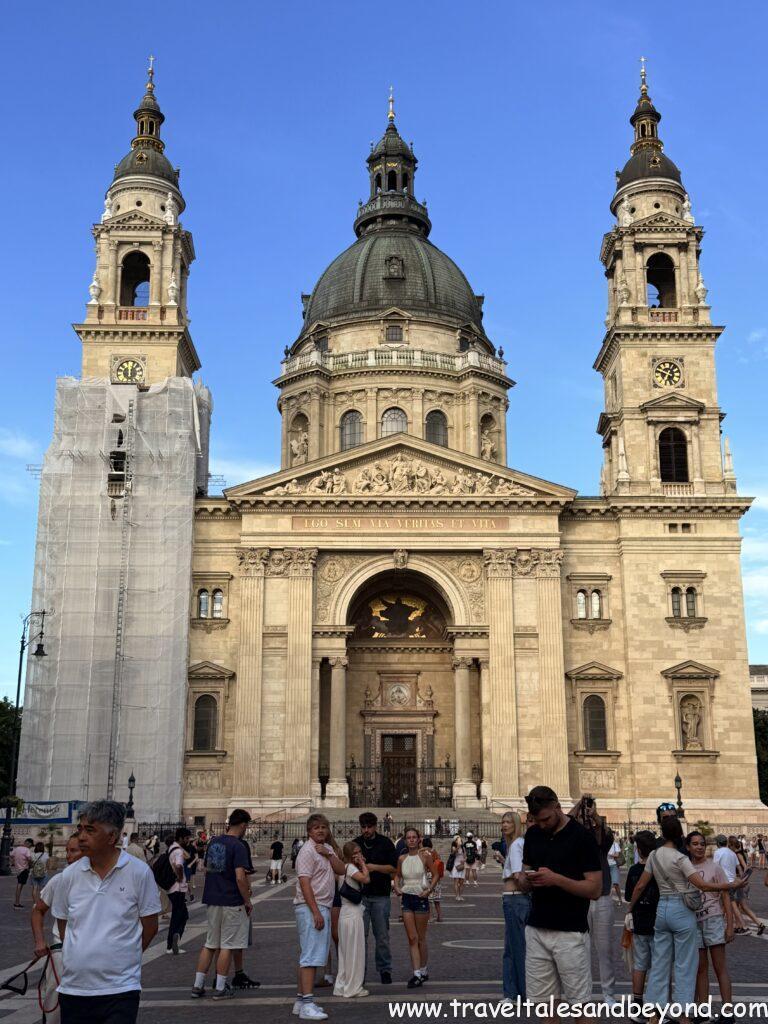
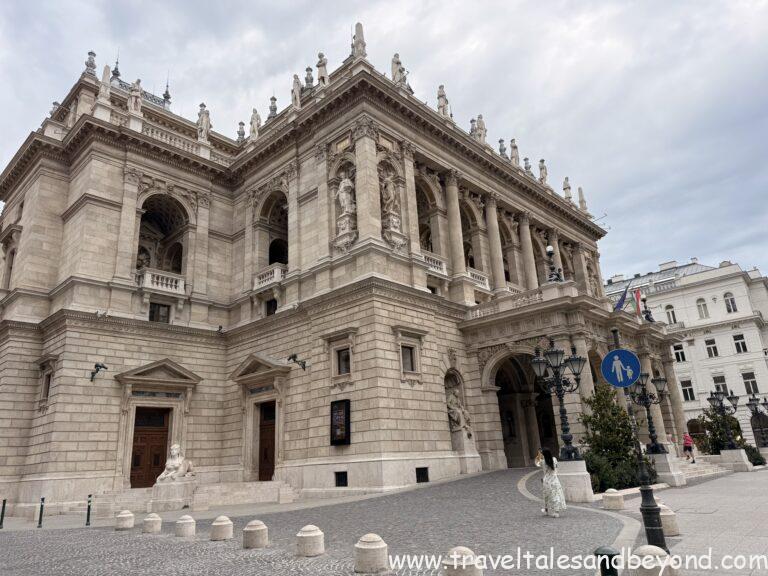
Starting Near the Opera House
We stayed near the Hungarian State Opera House, and it turned out to be the perfect base for a day of walking Pest. Even if you’re not catching a performance, the building itself is worth pausing for — a neo-Renaissance masterpiece from the 1880s, with a gilded interior said to rival Vienna and Paris. The surrounding streets have their own quiet elegance too: grand 19th-century façades, quiet side streets, and just enough cafés to make a slow morning start feel mandatory.
We started early, out the door by 8:00 am, specifically to get ahead of the summer heat. It made a real difference — the streets were still quiet, the air was still cool, and we got a good stretch of comfortable walking in before the day heated up.
Budapest travel tip: if you’re building your own Budapest itinerary, a hotel near the Opera House puts you within easy walking distance of the Jewish Quarter, the Basilica, and the Danube — worth considering for a one-day Pest visit like this one. If you’re also planning the Buda side, check out our guide to a day exploring Buda — castles, hills, and a very different pace.
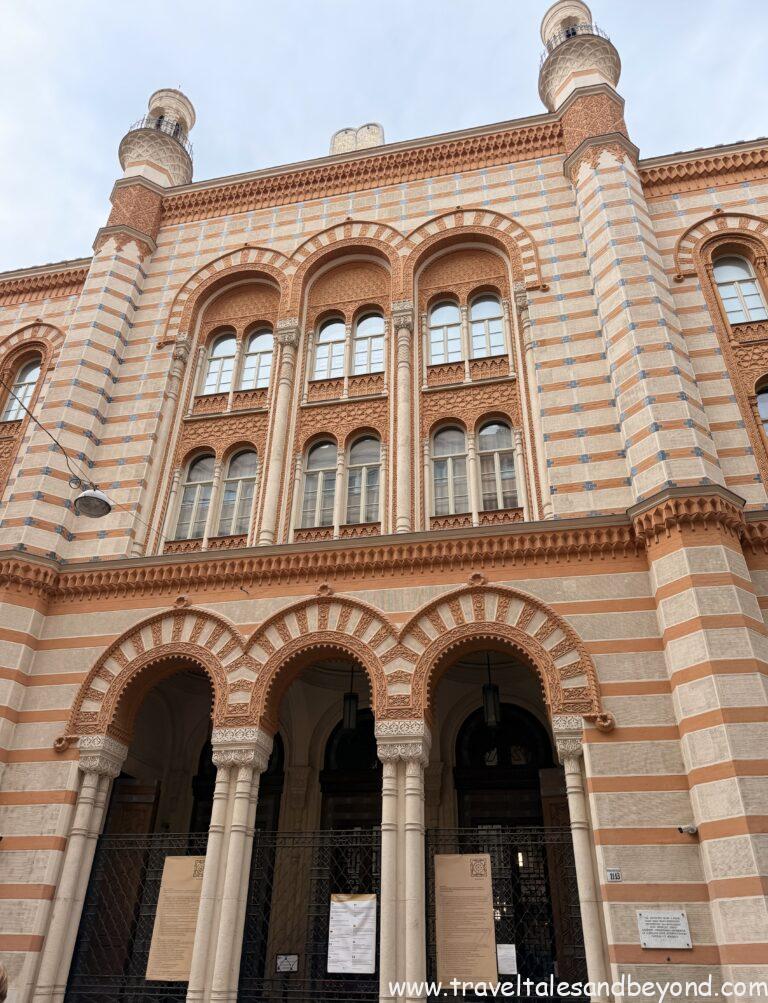
Wandering the Jewish Quarter
From there, we made our way into the Jewish Quarter, one of the most atmospheric parts of Pest. This is a neighborhood that rewards wandering rather than checklist sightseeing — crumbling courtyard buildings sit next to trendy ruin bars, street art covers old walls, and the Dohány Street Synagogue anchors the whole area with its striking façade. It’s the largest synagogue in Europe and the second largest in the world, and the complex also houses a Jewish museum and a memorial garden, worth knowing about if you want to go beyond admiring it from outside.
We didn’t have a fixed plan here, just followed the streets and let the neighborhood’s mix of history and creative energy carry us for a couple of hours.
Worth knowing: we didn’t make it inside any of the famous ruin bars (Szimpla Kert being the big one) or the ornate New York Café — both are on our “next time” list. The heat wave shifted our priorities toward shade and rest rather than long café stops or bar-hopping, but if you have more flexible energy that day, both are worth building into your own Jewish Quarter Budapest itinerary.
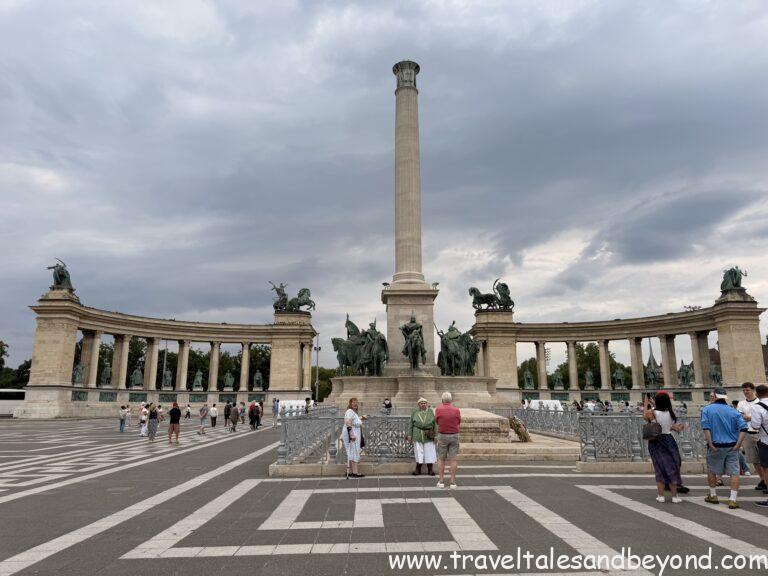
Heroes’ Square and the Vajdahunyad Castle Museum
From the Jewish Quarter, we took the metro out to Heroes’ Square (Hősök tere) — very convenient, and a nice break from walking in the morning heat. It’s hard to overstate how grand this space feels — the Millennium Monument, built to mark 1,000 years of Hungarian history, is flanked by sweeping colonnades with statues of the seven Magyar chieftains and other key figures from the country’s past. The plaza is also flanked by two major art museums (the Museum of Fine Arts and the Hall of Art), so it’s worth extra time here if museums are your thing — the whole space feels more like a stage set than a city square.
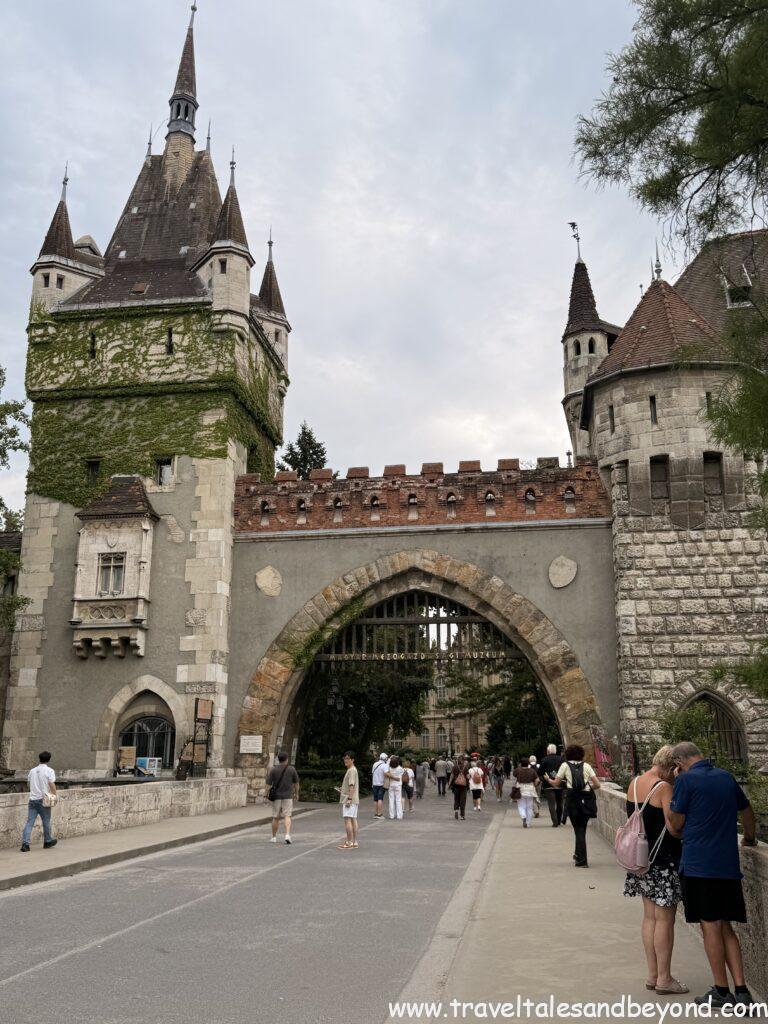
After Heroes’ Square, we walked over to a museum tucked inside Vajdahunyad Castle in City Park — a slightly unusual choice for most visitors, but a fascinating one. The castle building itself is worth the visit alone; it’s a fantasy-style structure drawing on Transylvanian architecture and blending Romanesque, Gothic, Renaissance, and Baroque styles, originally built as a temporary exhibit and later made permanent because people loved it too much to tear down.
We took a well-earned ice cream break after the museum before heading back toward the city center.
St. Stephen’s Basilica
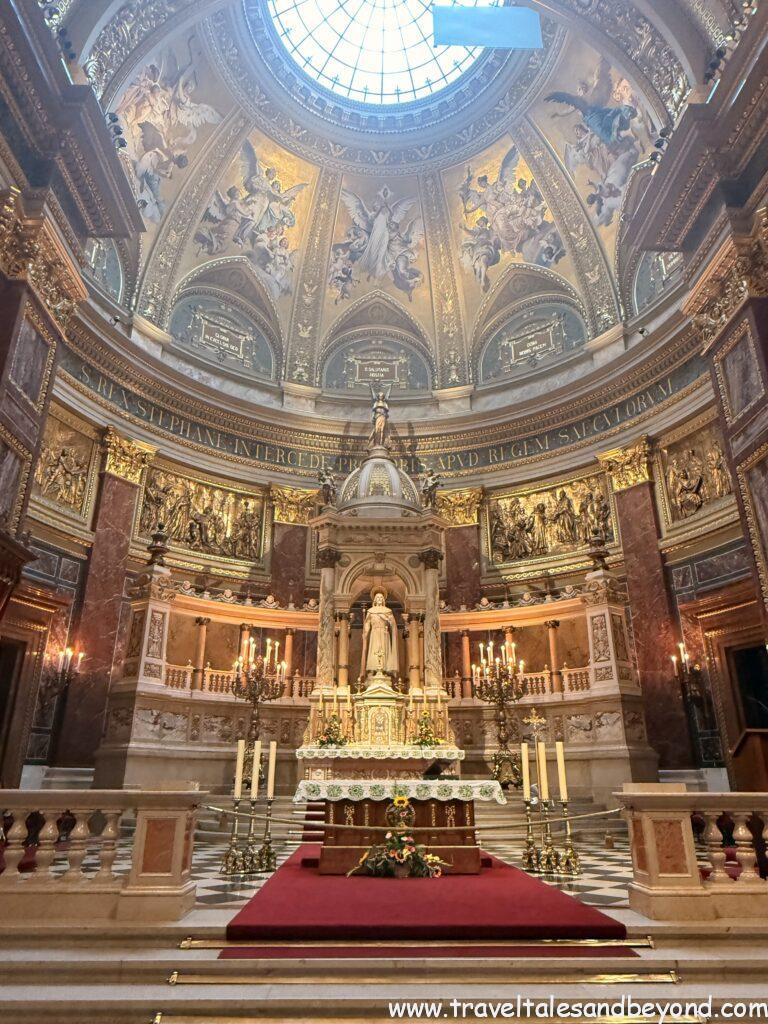
Back toward the city center, we stopped at St. Stephen’s Basilica, where we had tickets booked in advance to go inside — and it did not disappoint. The dome, the marble interior, the sheer scale of the place — it’s one of those buildings that makes you instinctively lower your voice. It’s also home to Hungary’s most famous relic, the mummified right hand of King (Saint) Stephen, on display in the reliquary chapel. If you want to climb up to the dome for panoramic city views, that’s a separate ticket and route from the ground-floor visit.
Practical tip: we booked our Basilica entry tickets online in advance, which meant walking straight in instead of queuing. Entry isn’t always free — there’s typically a small entrance donation/ticket for the church itself, and a separate paid ticket for the dome climb or treasury — so book ahead, especially in peak season.
The Afternoon Heat Break
By the time we finished at the Basilica, the July heat wave had other plans for us. Budapest in summer doesn’t offer much shade midday, so we ducked back to the hotel for a few hours to rest and rehydrate. It was one of the better calls we made on the trip — we came back out later with real energy for the evening ahead.
If you’d rather stay out and do something indoors instead of heading back to the hotel, the House of Terror Museum (Andrássy Avenue) is fully air-conditioned and covers a heavy but important chapter of Hungary’s 20th-century history — a good way to combine shade with substance if resting isn’t your style.

Sunset on the Chain Bridge and a Danube Cruise
As evening approached and the heat finally started to break, we walked toward the Chain Bridge (Széchenyi Lánchíd) — one of Budapest’s most iconic landmarks, and the first permanent bridge to connect Pest and Buda across the Danube when it opened in 1849. Before then, the two sides of the city relied on pontoon bridges or boats, so it’s a genuinely significant piece of the city’s history, not just a photo spot. Walking across it as the light softened, with the stone lion statues guarding either end, was a moment in itself.

But the real highlight of the day was still ahead: a sunset Danube cruise. Gliding along the river as the sky turned shades of orange and pink, with the Hungarian Parliament Building lit up and reflecting on the water, was one of the most beautiful things we saw on the entire trip. The Parliament is worth knowing a bit about too — it’s one of the largest parliament buildings in the world, and its riverside silhouette of spires and domes is deliberately designed to be seen from the water, which is exactly the vantage point you get on a cruise. Photos don’t quite capture it — the scale of the building, the warmth of the light, the city slowing down around you.
Frequently Asked Questions
How many days do you need for Pest in Budapest?
One full day is enough to cover the highlights in this itinerary — the Jewish Quarter, Heroes' Square, St. Stephen's Basilica, and a sunset cruise — especially if you pace around the heat in summer.
Is Pest or Buda better to visit first?
We tackled Pest first since it's flatter and easier to cover on foot in the heat, saving Buda's hills and castle grounds for a day with more energy. Either order works, but Pest's density of sights makes it a natural starting point.
Do you need to book the Danube sunset cruise in advance?
Yes, especially in peak season. Sunset cruise timing shifts with the season and slots fill up, so booking a day or two ahead is safer than walking up on the day. Some boats don't have open decks, so check that too.
What's the best time of day for a Danube sunset cruise?
Aim for a departure roughly 30–45 minutes before official sunset so you catch the Parliament Building lit up as the light fades. Check the day's sunset time before booking, since it shifts throughout the season.
How do you get around Pest without a car?
Pest is very walkable, and the metro fills in the gaps — it's fast, air-conditioned, and especially useful for longer hops like the Jewish Quarter to Heroes' Square in summer heat.

Shaminee is a U.S.-based mom and family travel blogger who designs detailed itineraries for her own family and turns them into practical guides for others. Her goal is to make family travel simpler, more organized, and more enjoyable.
Read more →
Discover more from Travel Tales And Beyond
Subscribe to get the latest posts sent to your email.