
What should a family pack for a Tanzania safari?
A Tanzania safari packing list sounds straightforward — until you realize you’ll be boarding a small bush flight, your kid will be sitting in a jeep at 6:30 am in cold Ngorongoro air, and everyone will tell you different things about what to wear.
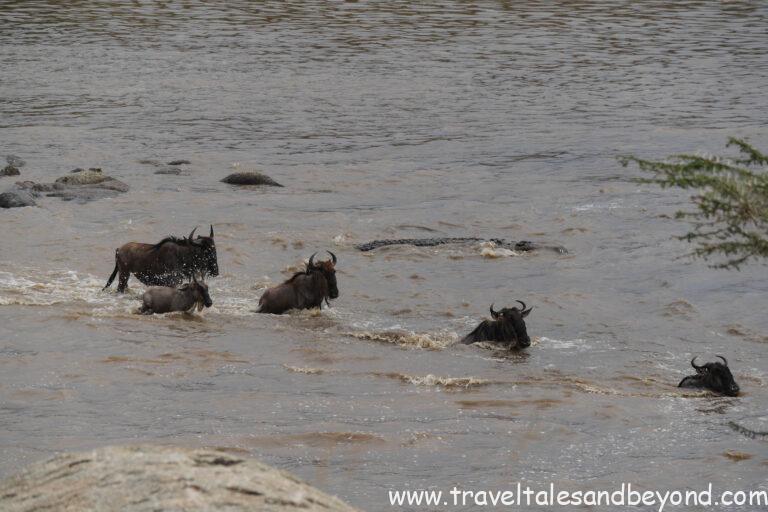
In July, we traveled to Tanzania as a family of three — my husband, our son (8 years old), and me — together with close friends who travel with us, making a group of eight across two jeeps. We covered Tarangire, Ngorongoro Crater, and the Serengeti over seven days. It was our first ever wildlife safari, and honestly every single day felt memorable — from our first elephant sighting in Tarangire to watching the Great Migration crossing at the Mara River, with our son buzzing with questions the entire time. First safaris have a way of exceeding every expectation you arrive with.
Speaking of planning — here’s what we actually packed. We traveled with a mix of carry-on bags and personal backpacks, which worked perfectly. What matters far more than the bag is what’s inside it — especially when you’re traveling with a kid.
This isn’t a generic checklist. It’s built from the actual bags we carried, the things that saved us on long dusty drives, and the items we left untouched all week. If you’re planning a Tanzania safari with kids, bookmark this.
At a Glance
| Trip duration | 7 days |
| Parks covered | Tarangire, Ngorongoro Crater, Serengeti |
| Travel month | Late July (dry season) |
| Best time for Migration | July–August |
| Tour operator | Duma Explorer |
| Cost (family of 3) | ~$13,000 mid-to-luxury all-inclusive |
| Group | Two families of close friends, 8 people, 2 jeeps |
| Suitable for kids? | Absolutely yes |
| Full itinerary Maasai village visit | 7-Day Tanzania Safari Guide Maasai village experience |
Before You Pack — Key Things to Know
Your bag doesn’t need to be a soft duffel
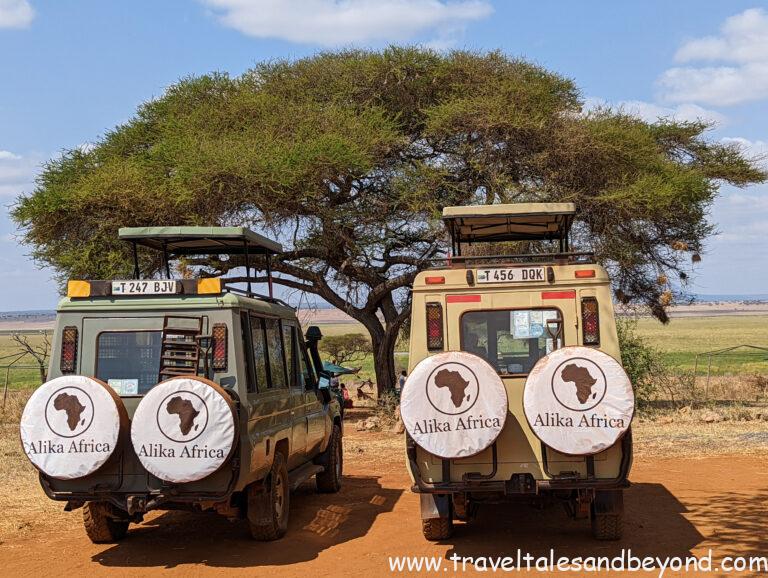
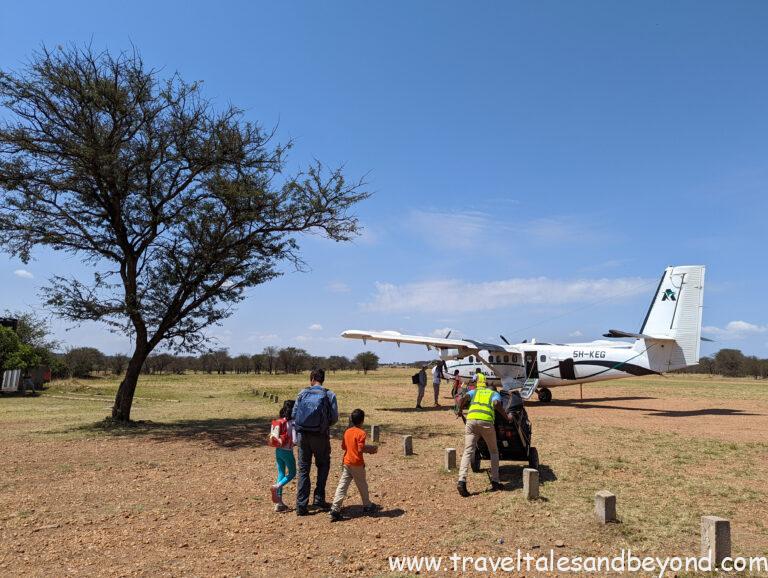
You’ll read this everywhere — “safari requires soft duffel bags only for bush flights.” Our experience was more relaxed than that. We were a group of eight — two families of close friends — and our bush flight from Kogatende airstrip back to Arusha had just our group on board — no commercial passengers, no shared overhead bins, no strict airline rules. We traveled with a mix of carry-on sized bags and personal backpacks without any issues. What actually matters is keeping things compact and manageable for loading in and out of jeeps daily. Don’t let the duffel rule cause unnecessary stress when you’re planning.
Neutral colors — helpful but not essential
You’ll read everywhere that you must wear neutral colors on safari — khaki, olive, tan — and avoid blue at all costs because tsetse flies are attracted to it. The truth is more specific than that. It’s actually dark blue that attracts tsetse flies, not blue generally. We noticed this firsthand — in some areas of the parks, dark blue colored cloths were hanging from trees specifically to trap tsetse flies and keep them away from tourists. A clever and genuinely fascinating thing to spot on drives.
Light blue is absolutely fine. I wore blue and yellow on our Tanzania safari and had zero issues. We saw lions, witnessed the Great Migration, and came home with no tsetse fly stories.
The one color genuinely worth avoiding is white — not because of tsetse flies, but simply because the dust from drives between parks will turn it orange within the first hour. Earthy and darker tones are just easier to manage across a week with limited laundry. But beyond that, pack what’s comfortable. Don’t stress about buying a whole new wardrobe in khaki before you go.
Layering is everything — especially at Ngorongoro
Tanzania in July is dry season, which means warm sunny afternoons but genuinely cold mornings and evenings. Of all three parks we visited — Tarangire, Serengeti, and Ngorongoro Crater — Ngorongoro caught us most off guard with the cold. The crater sits at high altitude and the temperature drops noticeably, even during the day. We managed fine with what we had, but we weren’t expecting it. If you’re visiting Ngorongoro, make sure your warmest layer is easily accessible — not buried at the bottom of your bag.
The Serengeti mornings are cold too, but it warms up quickly once the sun rises. Ngorongoro stays cooler throughout the day.
“Packing light” on safari means something different
You’re in a jeep for most of the day. You’re not sightseeing on foot, you’re not changing outfits for dinner, and you’re not walking cobblestone streets. You need far less than you think — but every item you do bring needs to earn its place. The families who overpack regret it. The families who pack smart don’t miss a thing.
What to Wear on Safari — Clothing for Adults and Kids
Most packing lists give you a generic clothing list. We’re going to break it down by adult and kid separately, because traveling with a child changes what you actually need.
The golden rule: pack for 4-5 days, not 7
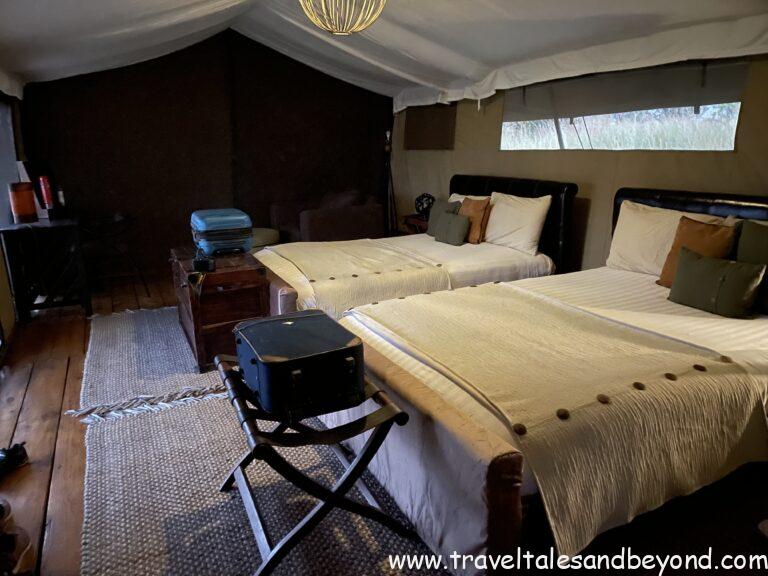
Don’t count on doing laundry at every camp — it depends entirely on the camp and your operator. Of the three camps we stayed at across seven days, only one offered laundry service, roughly mid-trip. That was enough to freshen things up for the second half, but we were glad we hadn’t packed light assuming we’d wash clothes every night. Our advice: pack enough for five to six days comfortably, treat the mid-trip laundry as a bonus if it’s available, and don’t stress if it isn’t. Neutral colors help here too — dust and dirt show far less on khaki and olive than on white or light grey.
For Adults
Tops
- 3–4 lightweight long-sleeve shirts in neutral tones — and this is important: get athletic dri-fit material, not cotton. We wore long sleeves the entire trip for insect protection but never felt overheated because the dri-fit fabric wicks moisture and dries fast. Cotton long sleeves in African heat would be miserable. Dri-fit long sleeves are not.
- Long sleeves do double duty — insect protection during the day and an extra layer when it gets cold at Ngorongoro
Bottoms
- 2 pairs of comfortable full-length pants — again, dri-fit or lightweight synthetic material. We kept covered throughout for insect protection and the right fabric makes all the difference.
- Skip the shorts for game drives. Many packing lists suggest convertible zip-off pants but our advice based on experience is to stay fully covered, especially during morning and evening drives when insects are most active.
Layers — don’t skip these
- 1 fleece or light down jacket — you will wear this every single morning game drive without exception
- 1 extra warm layer specifically for Ngorongoro Crater — of all three parks we visited, Ngorongoro was the coldest and it genuinely caught us off guard. The crater sits at high altitude and stays cool even when the sun is up. This is the one place where your warmest layer earns its place.
Footwear
- 1 pair of comfortable closed-toe shoes for game drives
- 1 pair of sandals or slip-ons for around camp
Accessories
- Wide-brim hat — not a baseball cap. The sun through the pop-up roof is relentless and a cap leaves your neck and ears exposed.
- Sunglasses
- A light buff or scarf — the dust on drives between parks is real, especially on the roads to the Serengeti. This doubles as a neck warmer on cold morning drives.
For Kids
Kids need almost the same list as adults but with two important differences — they get colder faster, and they’re messier.
Clothing
- 3–4 long-sleeve dri-fit tops — same as adults, athletic moisture-wicking material keeps kids comfortable in the heat while staying fully covered for insect protection
- 2 pairs of full-length lightweight pants — keep kids covered during game drives, not just for warmth but insects too
- 1 hoodie or fleece they can sleep in during long drives between parks
- An extra complete outfit in the daypack every single day — dust, spills, and mud are guaranteed
The layering rule for kids Every morning before the game drive, your child needs one more layer than you think. Our jeeps had a pop-up roof that opened for game viewing — wonderful for spotting wildlife, but cool morning air flows in from 6:30am onwards. Kids feel the cold more than adults and don’t always say so until they’re miserable. Our son was fully layered every morning and we were still glad he had everything on. By mid-morning he was peeling layers off — that’s exactly right.
Footwear
- Closed-toe shoes for game drives — sandals are fine for camp but not for the jeep
- One pair of easy slip-on shoes for evenings
One thing we’d tell every parent Pack a small personal backpack for your child that they carry themselves on game drives. Put their water bottle, a snack, their own layer, and something small for entertainment on long drives between parks. It keeps them engaged, gives them ownership of the trip, and means you’re not digging through the main bag every time someone is hungry or cold.
One thing that made a genuine difference for us: our son had his friend along — the other family’s child — and the two of them kept each other entertained across every long bumpy drive between parks. If you’re traveling with another family, don’t underestimate how much easier the jeep hours become when kids have a companion their own age. The drives that might feel long for a solo child flew by for ours.
What We’d Leave Home (Clothing)
- Formal dinner clothes — camp dinners are casual and relaxed. One slightly nicer shirt is plenty.
- More than two pairs of shoes — you simply won’t wear them
- Heavy cotton anything — it’s bulky, takes forever to dry after laundry, and weighs down your bag for no reason
Safari Gear — The Items That Made a Real Difference
Binoculars — Useful But Not Essential
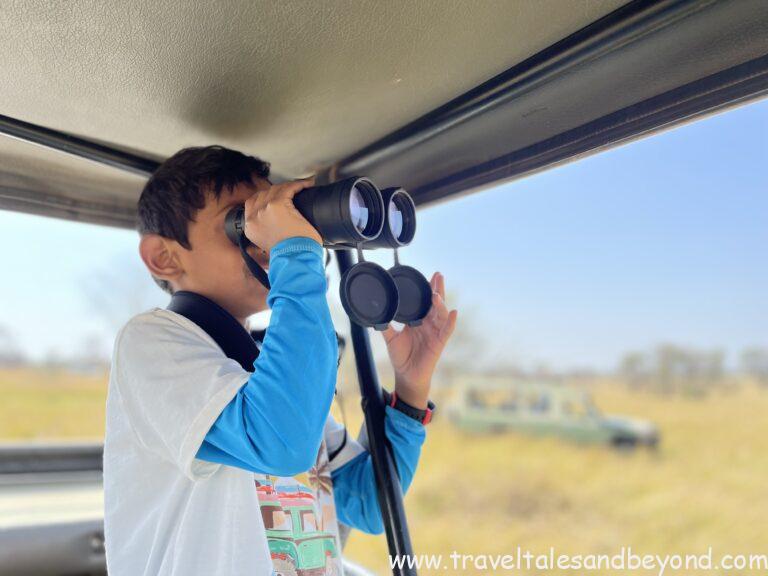
Most safari packing lists put binoculars at the top as an absolute must. Our experience was more relaxed — our guides Msuyia and Msanghi carried spare pairs which they shared with us throughout the drives. Helpful, but passing them around eight people across a jeep means you sometimes miss the moment.
Having your own pair is better. When your guide spots a lion in the grass half a kilometre away with his naked eyes and everyone lunges for the shared binoculars, you’ll wish you had your own.
Before you pack, check with your tour operator — many guides carry extras. If yours do, you can travel lighter. If not, bring at least one pair per jeep.
And if you do buy a pair — get good ones. Cheap low-zoom binoculars will frustrate you more than none at all. Look for at least 10×42 magnification, which handles both distance and low morning light well. It’s worth the extra spend.
Camera — Your Phone May Not Be Enough
A phone camera works for camp photos, group shots, and anything close by. But safari wildlife is often at a distance — a lion in tall grass, a cheetah on a termite mound, elephants crossing the Mara River. At those distances a phone struggles.
If you have a DSLR or a camera with a decent zoom lens, bring it. The Great Migration crossing we witnessed at the Mara River — crocodiles lunging at wildebeest mid-crossing — was one of the most dramatic things we’ve ever seen. You want a camera that can capture it from the riverbank.
- Extra memory cards — you will fill them faster than you expect
- Extra batteries — charging schedules at camps are limited
- A dustproof bag or zip-lock for your camera — the drives between parks are extremely dusty
Charging — Less Stressful Than You’d Think
Most safari packing lists will tell you to bring a power bank as if charging is impossible on the road. Our experience was different. Our jeeps had charging points and we were able to charge our phones during drives — which, given that game drives run from 6:30am to evening, actually gave us plenty of time to top up.
Camps run on generators with limited hours, so don’t rely solely on your room for overnight charging. But between the jeep during the day and whatever charging time your camp allows in the evening, we never ran out of battery across the whole seven days.
A power bank is still worth packing if you have one — it doesn’t weigh much and gives peace of mind. But it’s not the critical item other lists make it out to be. What matters more is bringing a good camera with a spare battery, since DSLRs typically can’t charge via the jeep’s USB points the way phones can.
Small Daypack Per Person — Underrated
Every person in the jeep benefits from a small bag that sits between their knees during drives. It holds water, snacks, camera, sunscreen, a layer, and wet wipes. Without it you’re constantly digging through a shared bag in a moving vehicle on bumpy roads. For kids especially, having their own pack gives them something to manage and keeps them occupied on long drives.
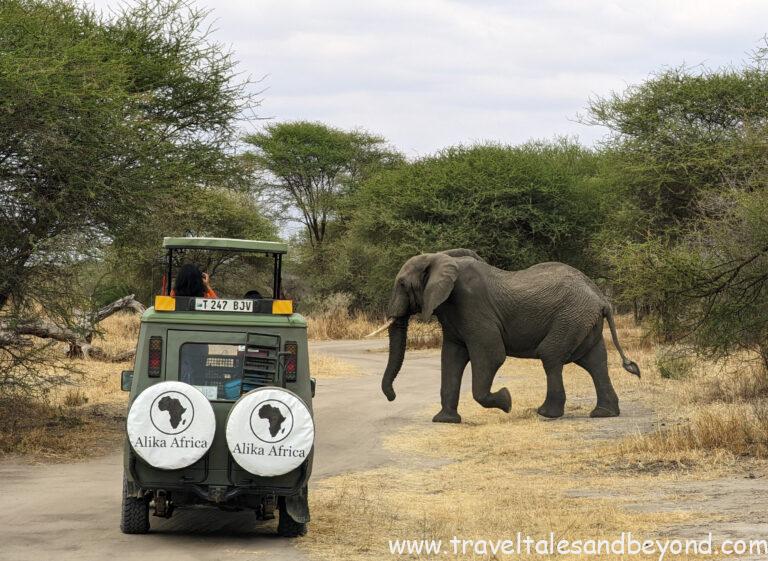
The Drives Between Parks Are Rough — Prepare for Them
- Anything fragile needs to be wrapped and protected
- Motion sickness tablets are worth having, especially for kids
- Snacks and water in your daypack are not optional on long transfer days
- A neck pillow is genuinely useful if you have space
Quick Gear Checklist
- Binoculars (at least 1 per jeep)
- Camera with zoom lens + extra batteries and memory cards
- Dustproof bag for camera
- Small daypack per person
- Reusable water bottle
- Motion sickness tablets
- Neck pillow for long drives (optional but useful)
- Universal travel adapter (Tanzania uses Type G plugs)
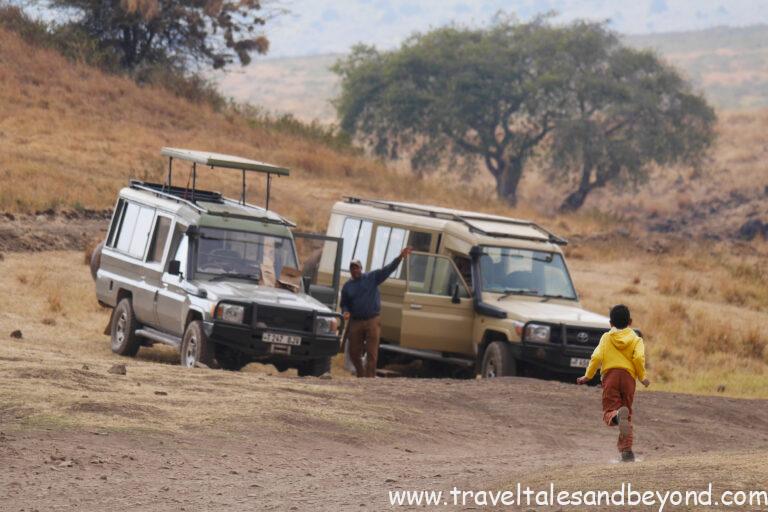
Health & Safety Essentials
Malaria Prevention — Take This Seriously
Tanzania is a malaria zone. Consult your doctor before travel and start any prescribed anti-malarial medication before departure. Don’t leave this until the last minute.
Beyond medication:
- Apply DEET-based insect repellent of 30% or higher before every game drive and every evening outdoors
- Camps provide mosquito nets over beds — use them every night without exception
- Long sleeves and pants at dusk and dawn — which conveniently overlaps with your game drive clothing anyway
For kids: make sure their anti-malarial dose is age and weight appropriate — confirm with your pediatrician specifically.
Yellow Fever Vaccination Card
Depending on which countries you’re transiting through on your way to Tanzania, a yellow fever vaccination card may be required. We traveled from the US and needed to show ours. Check requirements for your specific routing well in advance and keep the physical card with your passport — not in your luggage.
Basic First Aid Kit
- Fever medication — Tylenol and Advil (pack both, they work differently)
- Band-aids and antiseptic wipes
- Blister patches
- Any personal prescription medications in their original packaging
- Oral rehydration sachets — the heat and long drives dehydrate you faster than you realize
For kids specifically: Bring whatever fever or stomach medication your child uses at home. Familiar brands are hard to find in remote areas of Tanzania.
Sunscreen — More Than You Think You Need
You are in a vehicle from 6:30am to around 6:30pm, with the equatorial sun overhead for most of that time. Our jeeps had a pop-up roof which is brilliant for game viewing — but it means direct sun exposure whenever the roof is open. The breeze makes it feel cooler than it is, which means you don’t notice how much sun you’re getting until it’s too late. Bring SPF 50 minimum. Reapply after every stop and every picnic lunch. Don’t forget ears, the back of the neck, and the tops of hands.
Wet Wipes and Hand Sanitizer — Non-Negotiable
You will spend long hours in a jeep far from any bathroom or running water. Wet wipes become your best friend — for hands before picnic lunches, for dusty faces, for sticky kids, for everything. Pack more than you think you need.
Toilet Paper — Pack Some in Every Bag
Rest stops on long drives between parks are often nothing more than a bush off the side of the road. There are no facilities. Put a small travel pack of tissues in every daypack before every long drive. Every single person in your group will thank you at some point.
Health Checklist
- Anti-malarial medication (prescribed by doctor before departure)
- DEET insect repellent 30%+
- Yellow fever vaccination card
- Fever medication — adults and kids
- Band-aids and antiseptic wipes
- Blister patches
- Oral rehydration sachets
- SPF 50+ sunscreen
- Lip balm
- Wet wipes (pack generously)
- Toilet paper / travel tissues in every bag
- Motion sickness tablets
- Any personal prescription medications
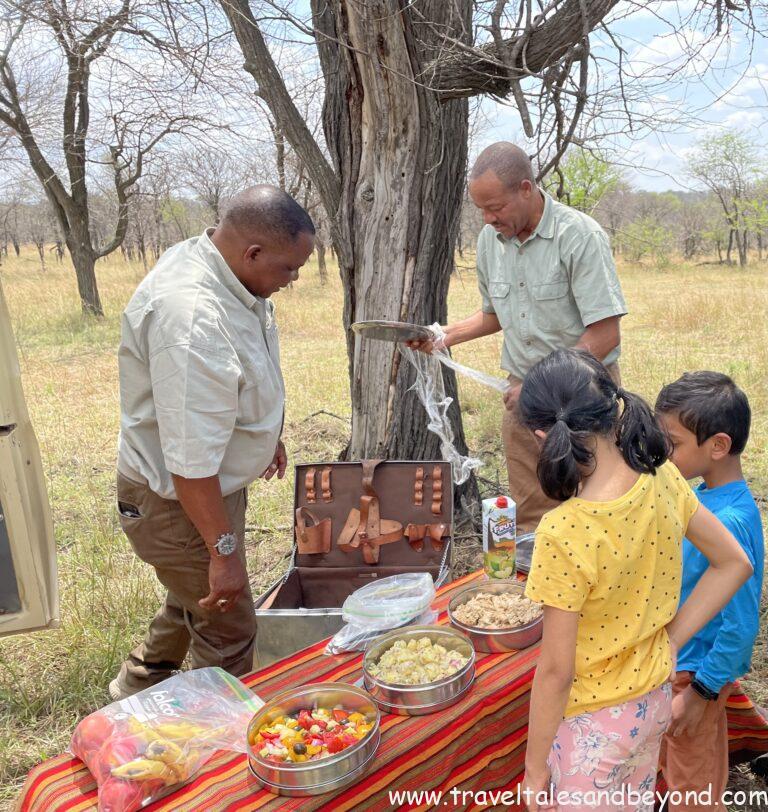
Food & Snacks — What to Expect and What to Bring
The Food Is Better Than You Expect
If you’re traveling with a reputable operator, the food on safari is genuinely excellent. Every morning our camp packed us a full picnic lunch to take into the field — and we genuinely looked forward to it each day. Eaten at a viewpoint over Ngorongoro Crater, or parked by the Mara River watching elephants, a good packed lunch in the middle of the African bush feels like a small luxury.
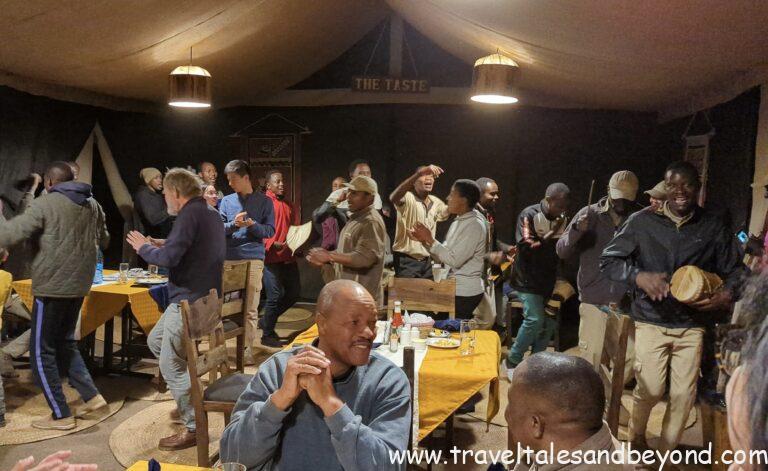
Camp dinners were equally impressive. Three courses in a large dining tent every evening, well prepared and with real variety. Our group of eight — two families of close friends — ate well across all three camps without exception.
Don’t worry that you’re heading into the bush to survive on energy bars. You’re not.
Then Why Bring Snacks At All?
Game drives run long — typically 6:30am to around 6:30pm with a midday lunch break. By mid-morning, especially after an early start and a cold jeep, everyone gets a little hungry. Our solution was simple and it worked perfectly: we’d save the fruit from our packed lunch — usually an apple or banana — and eat it in the afternoon as a snack in the jeep. Small thing, but it was the perfect amount to keep everyone going between lunch and returning to camp.
Beyond that, we brought some snacks from home for the longer drives between parks — particularly the rough multi-hour transfer to the Serengeti. Having something familiar to reach for on a bumpy road with a child in the jeep is just good sense.
What to Bring From Home
- Granola or cereal bars — individually wrapped, easy to pass around in a moving vehicle
- Crackers — sturdy enough to survive a week in a bag
- Dried fruit and nuts — light, no mess, calorie-dense
- Familiar snacks for kids — brands they know from home
What doesn’t work well:
- Anything that melts — chocolate becomes a disaster in a warm afternoon jeep
- Anything crumbly — dust is already everywhere, crumbs make it worse
Pack Enough for the Whole Trip
Once you leave Arusha there is nowhere to restock. Whatever you bring is what you have for seven days. We brought enough for eight people — two families — across the whole trip and finished with very little left over — which is exactly right. Err slightly generous rather than lean.
A Note on Water
Your operator will provide water throughout the trip. Ours went a step further — our jeeps had a cooler with cold water inside. After a hot morning game drive under the equatorial sun, cold water waiting in the vehicle is a small but genuinely welcome detail.
We never ran short across the whole seven days. That said, bring a reusable water bottle — fill it from the cooler each morning so you always have water in your hand without reaching into the cooler every time the jeep hits a bump.
Food Checklist
- Granola or cereal bars
- Crackers
- Dried fruit and nuts
- Familiar snack brands for kids from home
- Reusable water bottle per person
- (Save the apple or banana from your packed lunch for the afternoon — perfect jeep snack)
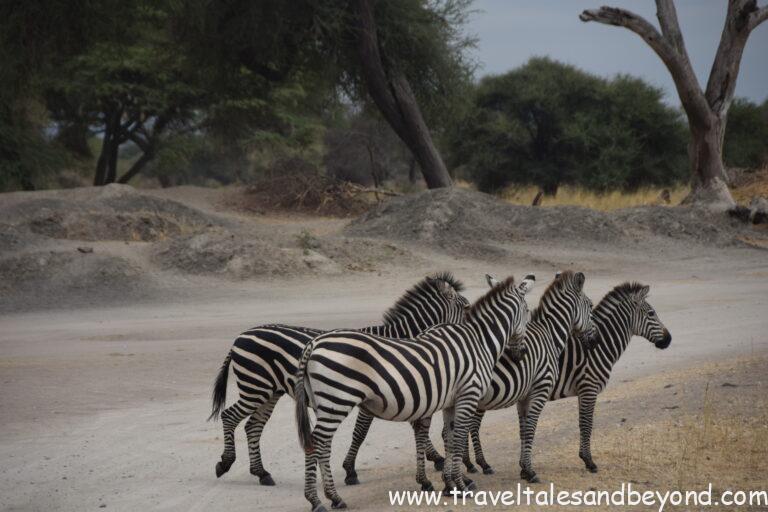
Documents & Money — What to Organise Before You Go
Documents & Money
Documents — Quick Checklist
- Passport (valid 6+ months beyond travel dates)
- Tanzania e-visa — apply online early, processing takes several days
- Yellow fever vaccination card — keep with your passport, not your luggage
- Travel insurance — print a copy. Medical evacuation from remote areas is expensive.
- Tour operator confirmation — printed and digital copies
Money — Bring New US Dollar Bills
Cards don’t work once you leave Arusha. Bring US dollars cash for the entire trip — and they must be new. Check with your tour operator on tipping the camp staffs.
Here’s why. At our mid-trip camp, the manager approached us politely, a little shyly, with an unusual request — could we exchange any new dollar bills for his older ones? Worn or pre-2013 notes are rejected by Tanzanian banks and vendors, leaving camp staff unable to spend the tips they’ve earned. We were glad we could help.
It’s a small thing that matters more than you’d think. Call your bank before you leave and ask specifically for new bills in mixed denominations — $1, $5, $10, and $20.
Tipping — What We Actually Did
- Guides: We tipped Msuyia and Msanghi generously — significantly more than camp staff. A great guide is the difference between a good safari and an unforgettable one. At the end of the trip my husband gave one of them his high quality binoculars as a personal gesture. It felt exactly right.
- Camp staff: Roughly 10% of the camp cost, distributed among the team
- Practical tip: Pool tips across your group — it simplifies logistics and makes the amounts more meaningful
- Reminder: Tip envelopes, prepared the night before departure from each camp. All notes new.
What We’d Leave Home
This is the section we wish every safari packing list had — the honest edit. Everything on this list came home untouched or barely used.
Shorts We left them at camp the entire trip. Insects — particularly in the morning and evening when you’re most active outdoors — made long sleeves and full-length pants the practical choice throughout. Many packing lists suggest convertible zip-off pants or shorts for warm afternoons, but our experience was that staying covered was simply more comfortable. Pack one pair if you want something easy for camp downtime, but don’t count on wearing them during game drives.
More than two pairs of shoes You wear closed-toe shoes on game drives and sandals around camp. That is the full rotation for seven days. A third pair is dead weight.
Heavy cotton clothing Cotton is bulky, takes forever to dry after the one mid-trip laundry, and weighs down your bag for no benefit. Lightweight synthetics or merino wool take up half the space and dry overnight.
Too many books or physical entertainment Long drives between parks sound like reading time but the roads are too bumpy to read comfortably and the landscape outside is too interesting to look away from. Download books and podcasts to your phone before you go.
Anything you’d be devastated to lose or damage Dust gets into everything. Jeeps are bumpy. Things fall. Leave irreplaceable jewelry and anything fragile at home. The exception — as my husband demonstrated — is a good pair of binoculars, which might just end up being the best gift you ever give.
One Last Thing Before You Go
A Tanzania safari is one of the most extraordinary trips a family can take. The planning feels overwhelming from the outside — vaccinations, visas, packing lists, bush flights, tipping etiquette — but once you’re in that jeep at 6:30am watching the Serengeti come to life through the pop-up roof, none of it feels complicated anymore.
Pack smart, bring new dollar bills, save your apple for the afternoon, and let your guides do the rest.
For the full day-by-day itinerary, cost breakdown, and details on the tour operator we used, read our complete Tanzania Safari Guide →
Pin this post for your Tanzania safari planning!
If you loved reading this post, please check out my other posts here.
Recent posts :
- Spain – Barcelona, Valencia, Seville, Madrid
- Chile – A week long trip to breathtaking Patagonia
- Prague – A 2 day escape to Bohemian beauty
- Gibraltar – A day trip from Spain
- Australia – A 2 week itinerary
- Fiji – A four-day stopover
- Costa Rica – A 10 day trip to the Central American paradise
- Germany – Berlin, Dresden, Nuremberg
- Portugal – A week long trip to Lisbon, Porto, Nazare, Duorro valley
Shaminee is a U.S.-based mom and family travel blogger who designs detailed itineraries for her own family and turns them into practical guides for others. Her goal is to make family travel simpler, more organized, and more enjoyable.
Read more →
Discover more from Travel Tales And Beyond
Subscribe to get the latest posts sent to your email.