
Seven days in Portugal gave us the perfect first-timer route: two days in Lisbon (history, hills and custard tarts), a day trip to Sintra’s palaces in the clouds, the medieval town of Óbidos plus Nazaré, the Douro Valley’s terraced vineyards, and two days in Porto — port wine, the Ribeira district and the Dom Luís Bridge. This itinerary covers exactly how we split each day.
A week long trip to Lisbon,Obidos, Porto, Douro Valley and Nazare.
Travel Date – April, 2025
This spring break, we packed our bags and headed to Portugal, trading routine for tiled streets, ocean air, and endless views. Our journey took us from the vibrant hills of Lisbon to the charming riverside lanes of Porto, through the rolling vineyards of the Douro Valley, and on to the dramatic waves of Nazaré. We also wandered the streets of Óbidos, where time seems to slow behind medieval walls. What followed was a week of unforgettable scenery, incredible food, and moments that made us fall a little more in love with travel—and with Portugal itself.
If you’re planning a bigger Iberian adventure, our Spain trip pairs beautifully with this Portugal itinerary — together they make an incredible 2–3 week journey through the best of the peninsula.
Our 7-day Portugal route — Lisbon, Sintra, Óbidos, the Douro Valley and Porto. Tap a numbered stop for the highlights.
Day 1 : Arriving in Lisbon
We landed in the late afternoon and took an Uber straight into the city — our first glimpse of Lisbon coming through the car window as we wound through streets of terracotta rooftops and tiled facades. A good sign of things to come.
We dropped our bags and headed straight to dinner. We had reserved a table weeks ahead at Cantinho do Avillez in Chiado — the relaxed bistro from celebrated Portuguese chef José Avillez. It’s the kind of neighbourhood restaurant that feels instantly comfortable: warm, unpretentious, and with a menu that puts a modern spin on traditional Portuguese flavours. The food was genuinely delicious and set the bar high for the rest of the trip. If you’re looking for a great first dinner in Lisbon, this is a solid choice — just book ahead as it fills up quickly.
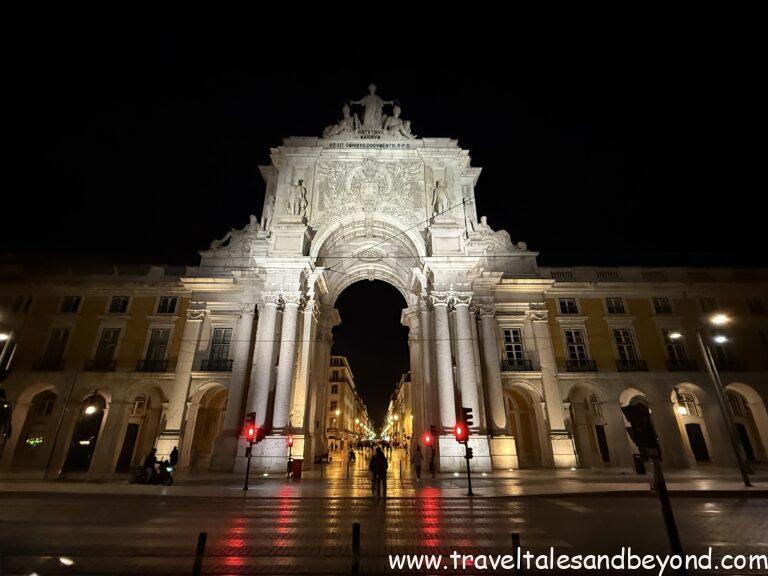
After dinner we took a leisurely walk through the Praça do Comércio and down to the Tagus River. The city was pleasantly busy in that easy evening way — people out for a stroll, cafés spilling onto the pavements, the river quietly reflecting the city lights. It was a lovely, low-key introduction to Lisbon, and exactly the kind of start a trip needs.
Day 2: Lisbon – History, Hills & Custard Tarts
Lisbon was the perfect place to kick off our Portugal trip. Colorful streets, historic neighborhoods, and that relaxed riverfront vibe made it easy to fall in love with the city. Even with just two days, we fit in a lot without feeling rushed.
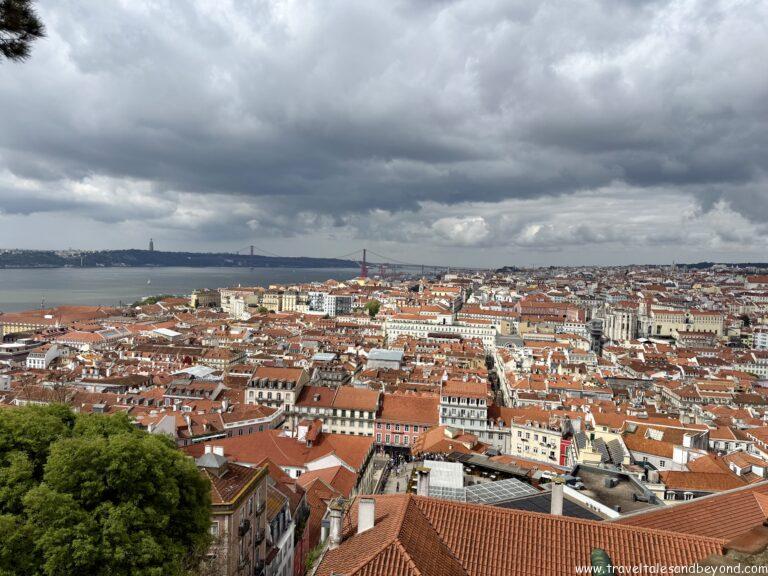
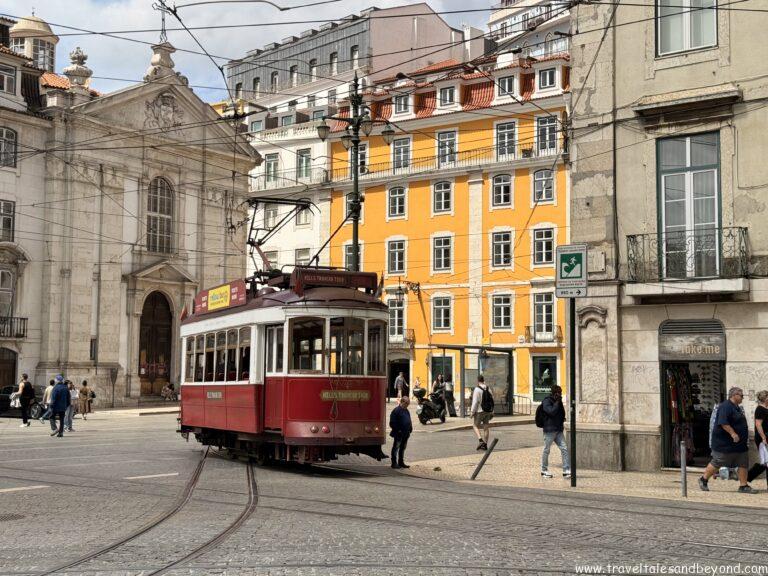
We explored São Jorge Castle, walking along the old stone walls and soaking in the views over the city and the Tagus River. Nearby, we stopped by the Lisbon Cathedral, one of the city’s oldest landmarks, before wandering through Alfama’s narrow streets. We also rode the Santa Justa Lift and the Funicular which gave us another great perspective of Lisbon from above. An interesting fact – Lisbon’s trams are over a century old and are part of the city’s charm.
Food was a highlight, especially a stop at Time Out Market, where we sampled a little bit of everything and soaked up the lively atmosphere. Of course, no day was complete without at least one pastel de nata (custard tarts).
Belém — A Must-Do Half Day
Set aside a half day for Belém, about 6 kilometres west of the city centre along the Tagus River. The star of the show is the Jerónimos Monastery. It’s a UNESCO World Heritage Site with stunning Manueline stone carvings and peaceful cloisters — among the most beautiful we saw anywhere in Portugal. A short walk along the riverfront brings you to the Tower of Belém. This 16th-century fortress is the symbol of Lisbon. It’s gorgeous from the outside and even lovelier at sunrise before the crowds arrive. Before you leave, stop at Pastéis de Belém. This is the original bakery, making custard tarts to the same secret recipe since 1837. Eat them warm, dusted with cinnamon, with an espresso on the side. You will want a second one immediately.
Day 3: A Day Trip to Sintra — Palaces in the Clouds
On our second day, we took the train from Lisbon’s Rossio Station to Sintra — a journey of just 40 minutes that deposits you in what feels like an entirely different world. Sintra is a UNESCO World Heritage Site draped across a wooded hillside, filled with extravagant royal palaces, mystical gardens, and the kind of fairy-tale architecture that makes you feel like you’ve wandered into the pages of a storybook.
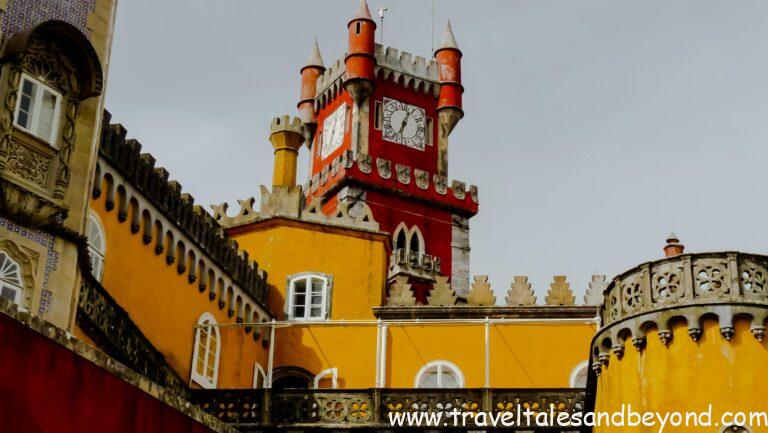
The undisputed highlight is the Palácio Nacional da Pena. This wildly colourful palace sits at the very top of the hill, painted in vivid shades of yellow and red. It’s visible for miles around. Inside, the royal apartments are preserved almost exactly as they were in the 19th century — making it feel wonderfully intimate and real. On a clear day, the views from the terraces stretch over forested hills all the way to the Atlantic.
We also wandered through the Quinta da Regaleira — a mysterious, Gothic estate with secret tunnels, underground wells, and a garden full of symbolic architecture that kept us exploring for hours. If you only have time for two stops in Sintra, make it Pena Palace and Quinta da Regaleira.
A few tips for Sintra:
- Go early — it gets extremely crowded by mid-morning, especially in summer
- Buy Pena Palace tickets online in advance — they sell out on busy days
- Wear comfortable shoes — the hill up to Pena Palace is steep, though a shuttle bus is available
- The train from Rossio Station runs every 15–20 minutes and costs just a couple of euros each way
- Allow a full day — Sintra rewards those who linger
Tram 28 — The Ride You Can’t Miss
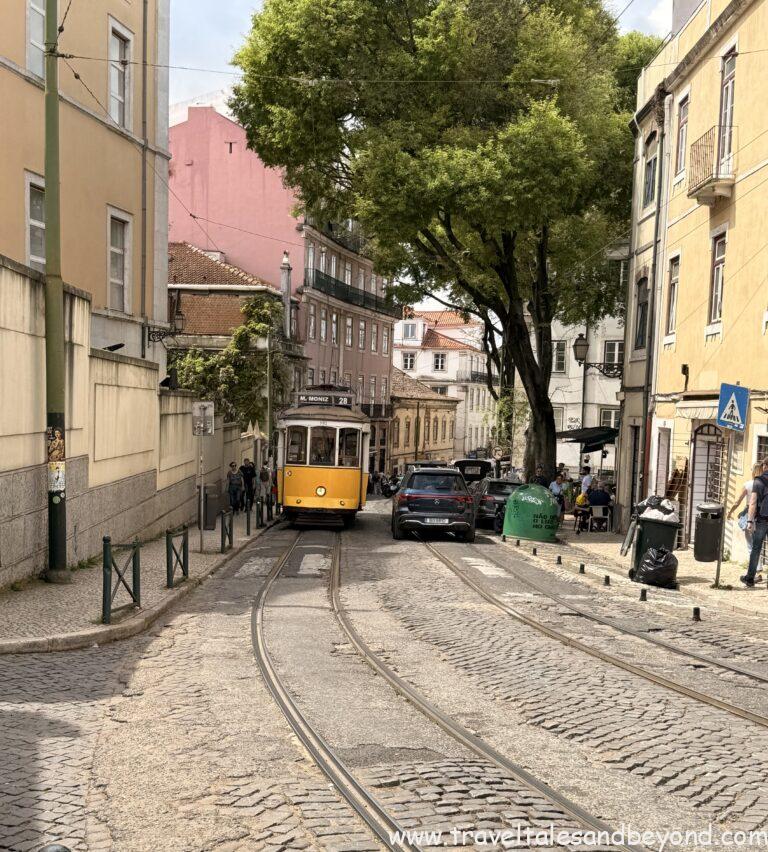
No visit to Lisbon is complete without riding the iconic Tram 28 — the small, rattling, wonderfully vintage yellow tram that winds its way through the steep, narrow lanes of Alfama and Chiado. The full journey takes about 40 minutes and offers glimpses of Lisbon life. Go early morning to avoid the crowds, board at Martim Moniz for the best chance of a seat, and keep an eye on your belongings. It’s slow, it’s charming, and it’s absolutely worth it.
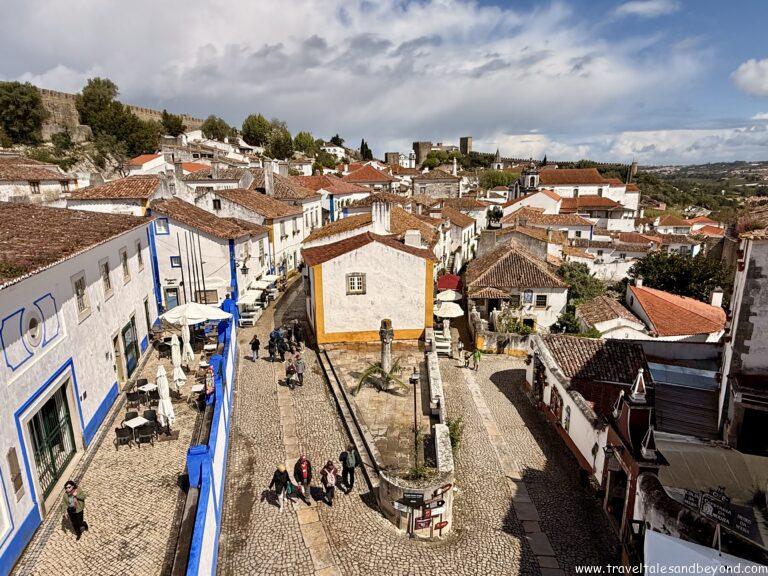
Day 4 : A visit to the medieval town Obidos
The drive to Óbidos took about two hours and was smooth and scenic, winding through the Portuguese countryside with rolling hills and terracotta rooftops dotting the landscape.
The moment we passed through the medieval gate into Óbidos, it felt like stepping back in time. This tiny, walled town is one of Portugal’s best-kept secrets — no towering skyscrapers, no busy highways, just cobblestone lanes, whitewashed houses trimmed in vivid yellow and blue, and flower pots spilling colour from every windowsill. It’s the kind of place where you slow down without even trying.
We spent a couple of hours simply wandering — no rush, no agenda. We walked along the top of the ancient town walls, which gave us the most gorgeous panoramic views over the terracotta rooftops and the green countryside beyond. It’s a little narrow in places and the drop is real, so watch your step — but absolutely worth it!
One thing you absolutely cannot leave Óbidos without trying is Ginjinha — a traditional Portuguese cherry liqueur served in a tiny edible chocolate cup. The combination sounds odd but tastes magical. We found a little shop just off the main lane and stood there happily sipping in the morning sunshine like locals. It was one of those small, spontaneous moments that end up being a trip highlight.
The town’s main street, Rua Direita, is lined with charming craft shops, ceramic stalls, and small cafés. It’s touristy, yes — but in the most delightful way. We picked up a few hand-painted tiles as souvenirs, which felt very fitting.
A few tips for Óbidos:
- Arrive in the morning to beat the tour groups — it gets busy by midday
- Parking is available just outside the town walls and is free or very cheap
- The town is small — two to three hours is the perfect amount of time
- Don’t skip the walls walk, but wear comfortable shoes
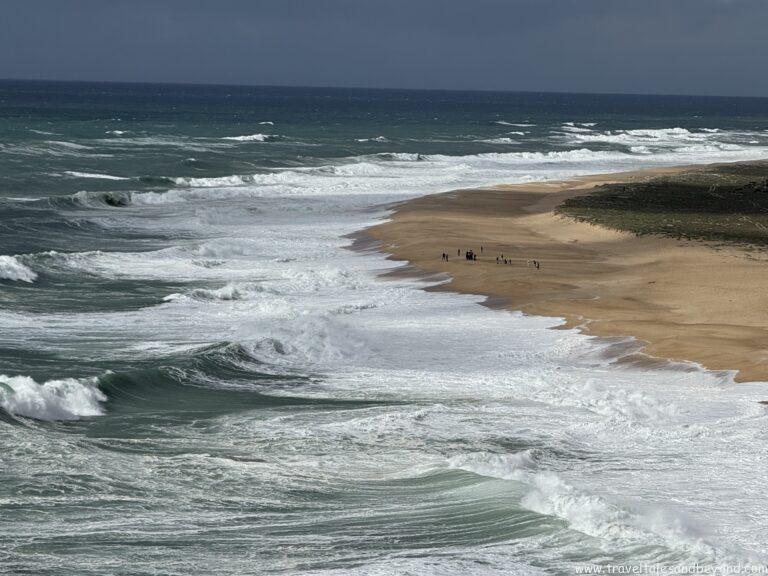
Day 4 continued: Nazaré – The home of the biggest world’s waves
From Óbidos, we got back in the car and continued north to Nazaré — but that fairytale calm was about to be replaced by something far more dramatic.
The first thing we did was make our way to Praia do Norte, Nazaré’s famous north beach, and it stopped us in our tracks. This is the beach that put Nazaré on the world map — it’s where big-wave surfers from across the globe come to ride waves that can reach over 30 metres (100 feet) in height. The reason these waves grow so enormous is a fascinating underwater phenomenon — a deep underwater canyon called the Nazaré Canyon funnels the Atlantic swells upward as they approach the shore, amplifying them to record-breaking heights.
We visited in April, so the giant surf season was winding down (October to March is peak season for the monster waves), but the ocean was still wild and powerful. Standing on the cliffs above Praia do Norte, watching the waves crash and roll in, we felt very, very small — in the best possible way.
After spending few hours here, we headed out towards Porto where we had booked our Airbnb.
A few tips for Nazaré:
- Visit Praia do Norte between October and March if you want to witness the legendary giant waves
- Take the funicular up to Sítio — it costs just a couple of euros and the views are worth every cent
- Allow at least half a day, more if you want a long lunch by the sea
- It can be very windy on the clifftops — bring a light jacket even in summer
- Nazaré is about 1.5 hours from Lisbon and 45 minutes from Óbidos, making it perfect as part of a road trip day
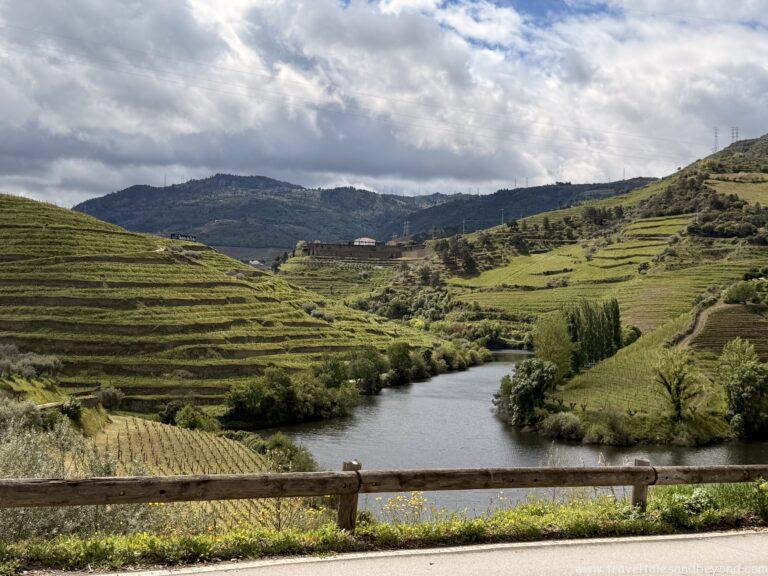
Day 5 – Douro Valley – Terraces, Vines & Rustic Roads
The Douro Valley is about 1.5 to 2 hours east of Porto by car, and the drive itself is part of the experience. As you leave the city behind and head inland, the landscape gradually transforms — flat roads give way to winding mountain passes, and then suddenly, around a bend, the valley opens up beneath you and takes your breath away completely.Tier upon tier of terraced vineyards cascade down impossibly steep hillsides, all the way to the silvery ribbon of the Douro River snaking through the valley floor below. The terraces were carved by hand over centuries — some of the oldest vineyards here date back over 2,000 years — and looking out over them, you feel the full weight of that history. This is one of the oldest wine regions in the world, and it shows in every vine and stone wall.Getting to the Douro Valley
There are a few ways to explore the valley depending on your preference:Rental car — by far the best option if you want flexibility. You can stop at any viewpoint, drive up into the hills, and visit smaller quintas that aren’t on the tour circuit. The roads are narrow in places but manageable with care.Guided day tour from Porto — a great option if you’d rather not drive. Tours typically include transport, a quinta visit, wine tasting, and sometimes a short river cruise. Book in advance, especially in summer.Train from Porto — the train journey along the Douro River is considered one of the most scenic rail routes in Europe and is an experience in itself. The train stops at Pinhão, making it a lovely option for a more relaxed day. The downside is you won’t be able to explore the hillside vineyards without a car or local taxi.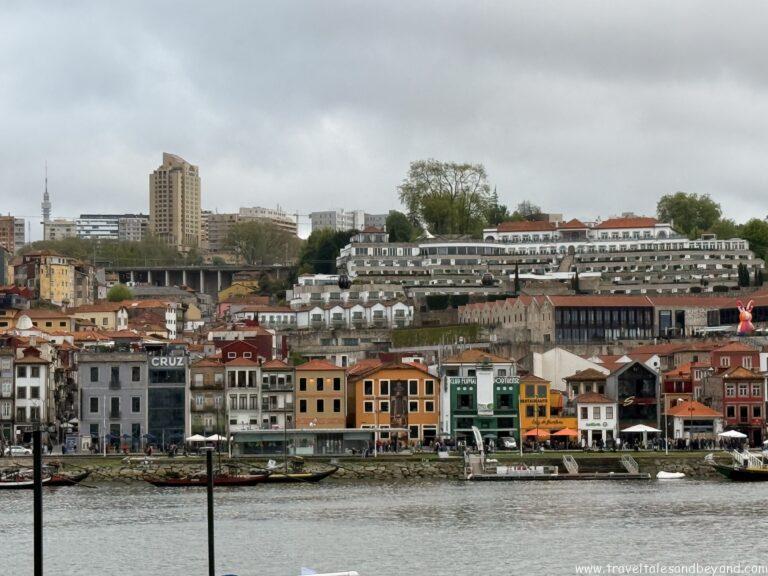
Day 6 : Porto — Port Wine, Ribeira & the Dom Luís Bridge
We spent our final day in Portugal in Porto, a city renowned for its world-famous port wine, the historic riverside district of Ribeira, and its striking tiled façades. From the iconic Dom Luís I Bridge to its maze of charming narrow streets, Porto captivates with a rich cultural scene where centuries-old traditions blend seamlessly with a vibrant, modern energy.
Livraria Lello — The Bookshop Worth Queuing For
One of our most memorable stops in Porto was Livraria Lello, widely regarded as one of the most beautiful bookshops in the world — and having seen it, we’d have to agree. Built in 1906, it’s a stunning Neo-Gothic building with an ornate red staircase, stained glass ceiling, and carved wooden shelves that make you feel like you’ve walked into a fairy tale. It’s said to have inspired J.K. Rowling when she lived in Porto in the 1990s.Fair warning — it gets very busy. Tickets cost a few euros (redeemable against a book purchase), and we’d recommend arriving early in the morning or later in the afternoon to avoid the worst of the crowds. But please don’t skip it — it’s genuinely one of the most beautiful interiors we’ve seen anywhere in Europe.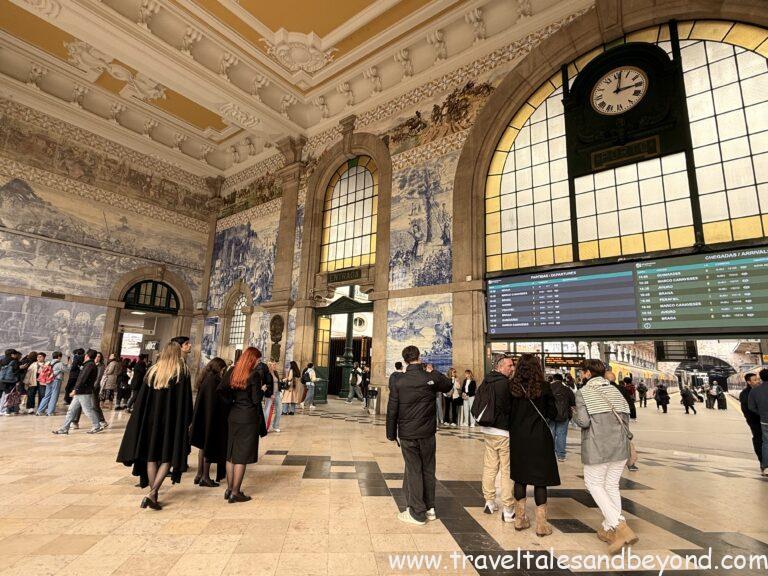
São Bento Railway Station
Just a short walk from Livraria Lello, São Bento Station is one of those places that stops you in your tracks even if you have no train to catch. The entrance hall is covered floor to ceiling in over 20,000 hand-painted blue and white azulejo tiles depicting scenes from Portuguese history. It took 11 years to complete and is considered one of the world’s most beautiful train stations. We spent a good 20 minutes just standing there, looking up.
A few tips for Porto:
- Book Livraria Lello tickets in advance online — the queues without a ticket can be very long
- Porto is very hilly — wear your most comfortable walking shoes
- Allow at least a full day, ideally two if your itinerary allows
- The Foz do Douro area, where the river meets the Atlantic, is a lovely evening walk if you have extra time
Fun fact: Porto’s name is where the famous “Port” wine comes from — and the river was historically used to transport barrels downstream to export them globally.

Day 7 – Porto to Home
We boarded our flight back home from Porto.
The one region we had to leave for next time? The Algarve — with its dramatic limestone cliffs, hidden sea caves, and long golden beaches, it deserves its own dedicated trip. If you’re planning 7 days in Portugal, this route gives you the ideal balance of cities, coastline, history, and wine. Portugal is endlessly rewarding — and we’re already planning the return.

Portugal Travel Tips: What You Need to Know Before You Go.
Visa & Entry Requirements
Most visitors from the US, UK, Canada, and Australia can enter Portugal visa-free for up to 90 days within any 180-day period under the Schengen Agreement — no visa or pre-approval needed today.
Note: The EU’s ETIAS travel authorization, once expected to launch in late 2026, has been delayed with no confirmed new date — 2027 is the current working estimate. There’s nothing to apply for yet, and any site charging a fee for “ETIAS applications” right now isn’t legitimate. Check the official EU Travel page before booking closer to your trip.
You may also notice the EU’s newer Entry/Exit System (EES) at the border — it uses fingerprint and facial scans instead of a passport stamp for non-EU travelers, and it’s added wait time at some airports this year, so budget a little extra time when landing.
Getting Around
Portugal’s major cities are very walkable, but you’ll want a car for the rural parts of this itinerary. We used public transport in Lisbon and Porto — both cities have reliable metro and bus networks, and a day pass in Lisbon costs around €7–11 (€10.80 if you’re heading out to Sintra). For Nazaré, Óbidos, and the Douro Valley, renting a car gives you far more flexibility than tours or taxis. Just avoid driving in Lisbon and Porto city centers — parking is a nightmare and you won’t need it.
Getting Between Cities
The high-speed train between Lisbon and Porto takes under 3 hours and costs around €20–30 per person — comfortable, scenic, and much easier than driving. For Nazaré and Óbidos, a car is really the best option as bus connections are infrequent.
What to pack: If you’re visiting in April, pack light layers. A light jacket and a compact umbrella can come in handy for cooler evenings and occasional showers.
Currency: Credit and debit cards are widely accepted, but it’s always useful to carry some cash in euros for small shops and local cafés
Connectivity: Don’t forget a universal power adapter to keep your devices charged throughout your trip.
Don’t leave Portugal without eating: pastel de nata (custard tarts — best warm, straight from the oven), bacalhau (salt cod, prepared a hundred different ways), francesinha (a hearty sandwich unique to Porto), grilled sardines, and a glass of Vinho Verde in the north or Port wine in Vila Nova de Gaia. The menu do dia — a three-course lunch with a drink — is available at most local restaurants for €8–12 and is the best value meal you’ll find anywhere in Europe.
Portugal is one of Europe’s safest countries for tourists. The main thing to watch for is pickpocketing on Lisbon’s famous Tram 28 and in crowded tourist areas — use a cross-body bag and keep your phone in a front pocket.
Did you know? Portugal produces around half of the world’s cork — chances are your wine stopper is Portuguese! Be sure to check out locally made cork accessories, which make for unique and sustainable souvenirs.
Frequently Asked Questions
Is 7 days enough to visit Portugal?
Yes, 7 days is a great starting point for Portugal. You can comfortably cover Lisbon (2 days), a day trip to Sintra, a stop in Óbidos and Nazaré, the Douro Valley, and Porto — which is exactly the route covered in this itinerary. If you have more time, pairing it with a Spain trip makes for an incredible 2–3 week Iberian adventure.
What is the best time of year to visit Portugal?
April is an excellent time — the weather is warm and pleasant, the crowds are lighter than peak summer, and the Douro Valley vineyards are lush and green. For Nazaré's legendary giant waves, visit between October and March. Summer (June–August) is the busiest and hottest period.
Do I need a car to travel around Portugal?
A rental car gives you the most flexibility, especially for the Douro Valley, Óbidos, and Nazaré which are harder to reach by public transport. Within Lisbon and Porto, public transport — trams, metro, and buses — is excellent and easy to use. The Lisbon–Sintra train takes just 40 minutes and costs a couple of euros.
Do you need to book Sintra tickets in advance?
Yes, absolutely. Pena Palace tickets sell out on busy days, especially in summer. Book online in advance to avoid disappointment. Also go early — Sintra gets extremely crowded by mid-morning. Wear comfortable shoes as the hill up to Pena Palace is steep, though a shuttle bus is available.
How do you get to the Douro Valley from Porto?
The Douro Valley is about 1.5 to 2 hours east of Porto by car, which is the most flexible option. You can also take a guided day tour from Porto (which typically includes a quinta visit, wine tasting, and sometimes a river cruise) or travel by train — the scenic rail route along the Douro River to Pinhão is considered one of the most beautiful train journeys in Europe.
If you’d like to see more of our Portugal photos, head over to our Travel Photo Gallery for more images from our adventures.
Where to next? Explore more of our travel guides
- Spain – Barcelona, Valencia, Seville, Madrid
- Prague – A 2-day escape to Bohemian beauty
- Gibraltar – A day trip from Spain
- Belgium – Brussels, Bruges, Ghent, Dinant
- Netherlands – Amsterdam – Canals, Dykes, Zaanse Schans, Giethoorn & the Johan Cruyff Arena
- Germany – Berlin, Dresden, Nuremberg
- Tanzania – A 7-day trip to African safari
- Chile – A week long trip to breathtaking Patagonia
- Turkey – A 10-day trip to Istanbul and Cappadocia region
- Costa Rica – A 10-day trip to the Central American paradise
- Australia – A 2-week itinerary
Let’s talk travel 

If you were planning this trip, would you focus more on beach time in the Algarve or city hopping between Lisbon and Porto?
Drop your answer in the comments — I’d love to know your travel style!

Shaminee is a U.S.-based mom and family travel blogger who designs detailed itineraries for her own family and turns them into practical guides for others. Her goal is to make family travel simpler, more organized, and more enjoyable.
Read more →
Discover more from Travel Tales And Beyond
Subscribe to get the latest posts sent to your email.