
Luxembourg City – Day trip from Brussels, Belgium
Travel Month – August
Luxembourg City is the capital and most populous city of the Grand Duchy of Luxembourg, a historic fortress city perched on cliffs overlooking the Alzette and Pétrusse rivers, known for its UNESCO-listed Old Quarters, powerful fortifications, and status as a vital European financial and political hub. It’s a diverse, multilingual city blending medieval history with modern development, featuring stunning valleys, casemates, museums, and grand ducal residences.
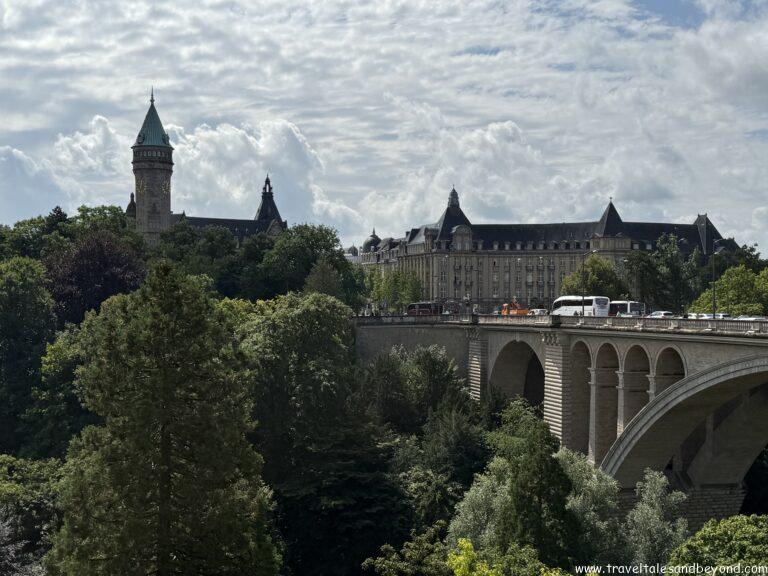
Guided tour from Brussels
We visited as part of a guided day tour from Brussels — you can read about how that trip came together in my [Belgium itinerary post]. The coach journey takes around three hours each way, which sounds long, but the flat Belgian and Luxembourg countryside rolls past pleasantly, and it’s a comfortable ride. If you prefer to go independently, direct trains from Brussels-Midi to Luxembourg City run several times a day and take roughly the same time — usually around €30–50 return depending on when you book.
Half a day is genuinely enough to see the highlights. Luxembourg City is compact, the main sights are all within easy walking distance of each other, and the pace of a guided tour — with someone pointing out the history as you go — means you absorb a lot in a short time. Here’s exactly what we saw.
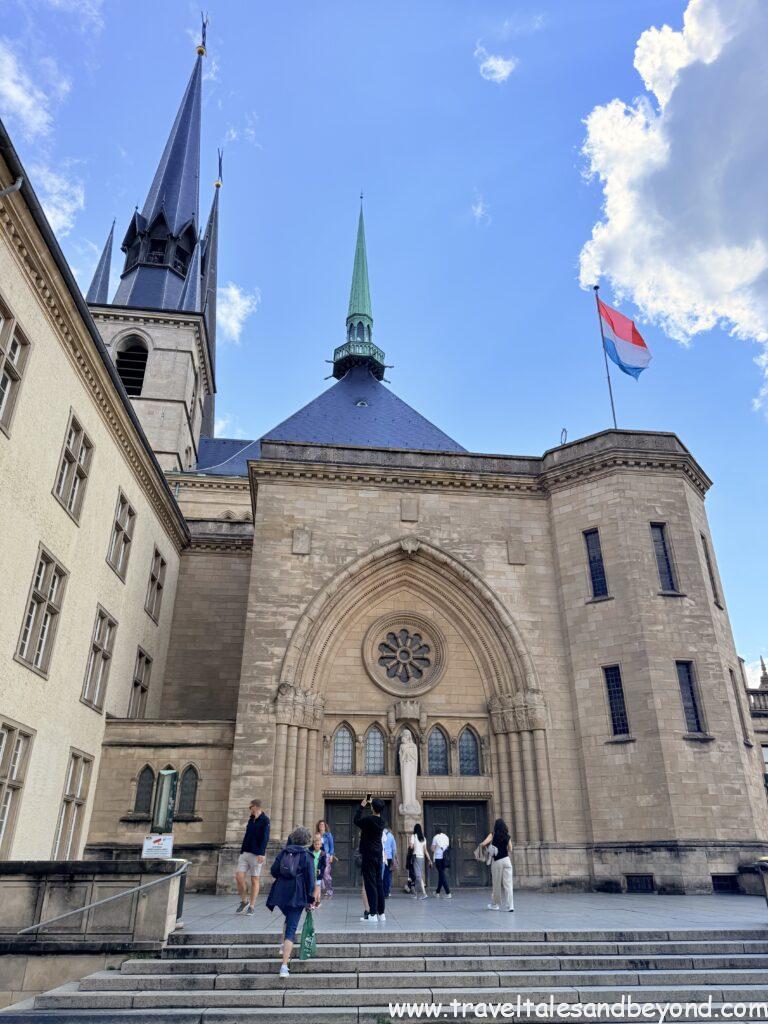
Notre-Dame Cathedral
Our tour began at the Notre-Dame Cathedral, right in the heart of the old city, and it was a calm and grounding way to start. Built in the early 17th century by the Jesuits, the cathedral blends Gothic architecture with Renaissance and Baroque detail — you can see it in the ornate stone carvings, the tall pointed arches, and the elaborate side chapels. It’s not an overwhelming space; it has a quiet dignity to it.
The stained glass is particularly beautiful in the morning when the light is coming through from the east. Take a few minutes to walk slowly around the interior rather than rushing through — the details reward a slower look. Entry is free, and the cathedral is open daily from around 9am.
One thing worth knowing: the cathedral houses the tomb of John the Blind, King of Bohemia, who died at the Battle of Crécy in 1346. He’s something of a national hero in Luxembourg and his coat of arms — three lions — forms the basis of the Luxembourg state emblem.
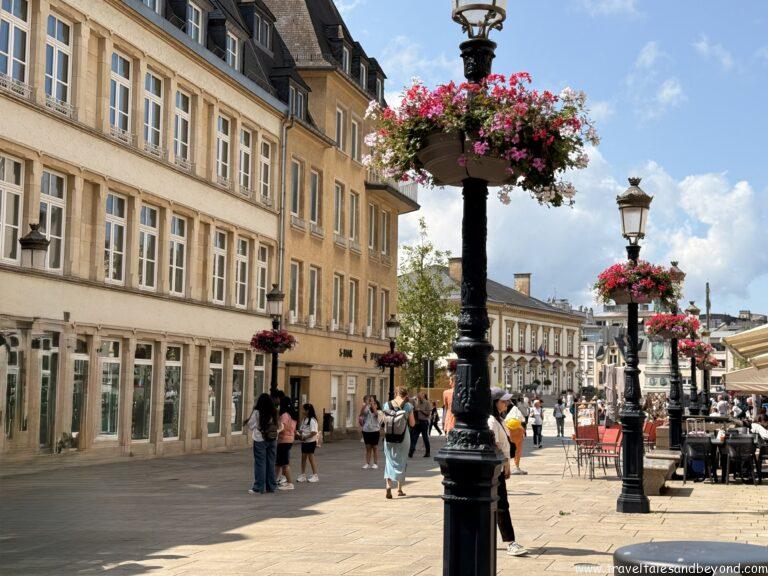
Grand Ducal Palace
A five-minute walk from the cathedral brings you to the Grand Ducal Palace, the official residence of the Grand Duke of Luxembourg. Even if you can’t go inside — and outside of the summer guided tour season, you can’t — the exterior is worth lingering over. The façade is Flemish Renaissance, intricate and almost delicate, with wrought iron balconies and carved stonework that looks more like lacework than fortification.
The square in front of the palace is usually busy with visitors, but not uncomfortably so. If your timing works out, you may catch the changing of the guard ceremony, which happens at midday on certain days — worth checking before you go. The two royal guards in their distinctive uniforms standing either side of the entrance are a good photo opportunity regardless.
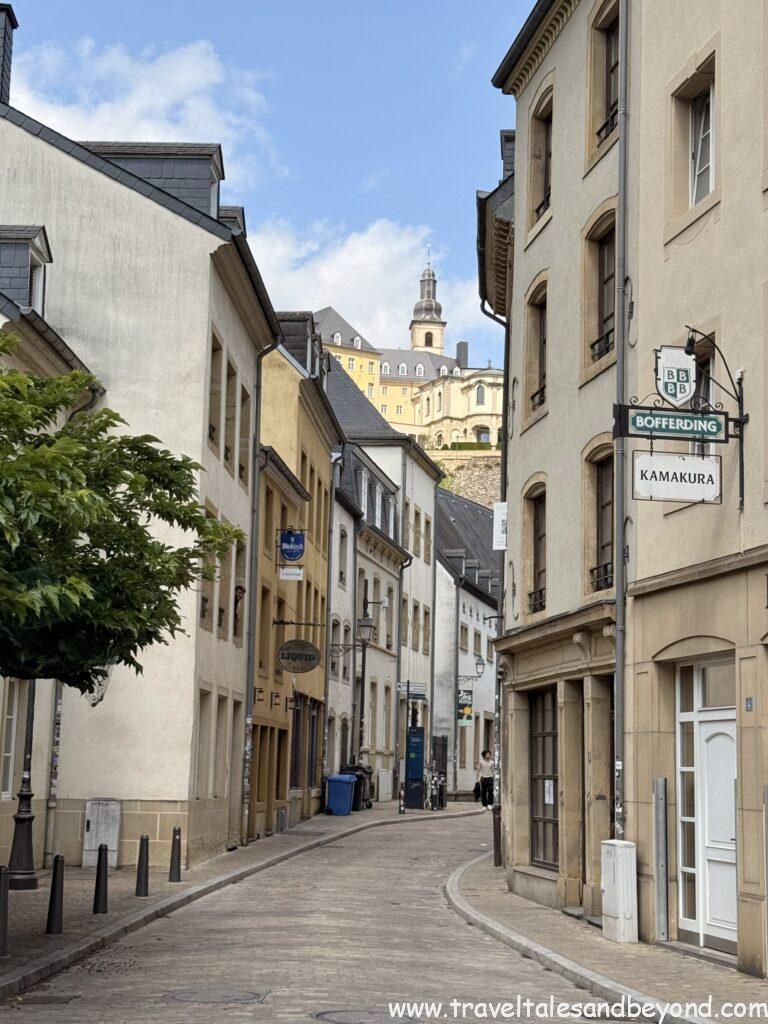
This part of the old city, the so-called Ilot Sacré (Sacred Isle), is the historical and symbolic core of Luxembourg — the cathedral and the palace within a few steps of each other, surrounded by cobbled streets lined with small boutiques, chocolatiers, and cafés. If you have twenty spare minutes, the streets immediately around the palace are lovely to wander.
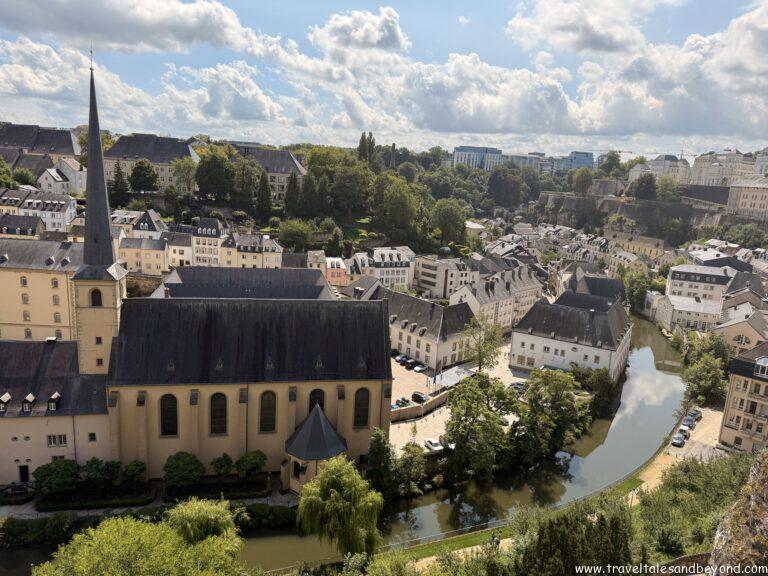
Chemin de la Corniche
This is the one not to miss. The Chemin de la Corniche is a pedestrian walkway that follows the line of the 17th-century city walls along the edge of the old town cliff, and it offers what many people genuinely call the most beautiful urban view in Europe — we wouldn’t argue with that.
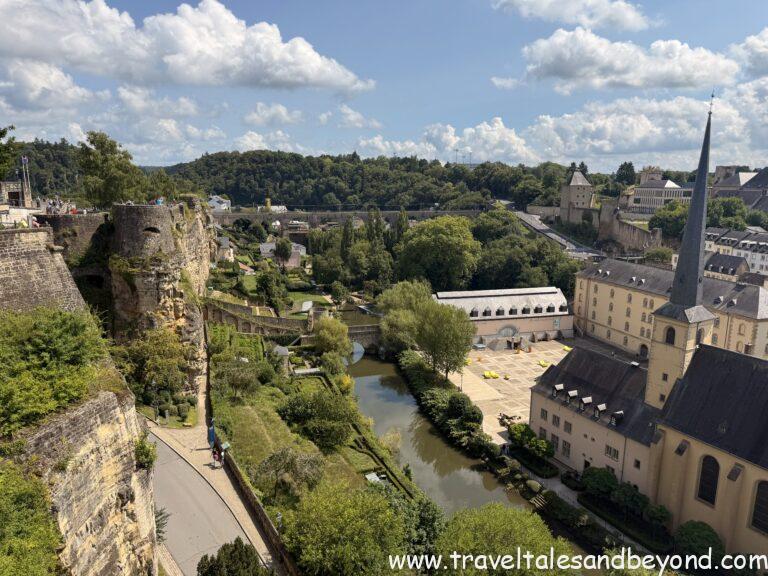
As you walk the path, the valley opens up below you in stages: first the deep green of the Pétrusse valley, then the lower town of Grund with its terracotta rooftops and stone bridges, then the Alzette river winding through it all. On a clear day the depth of the view is remarkable — you’re standing on medieval fortifications looking down at a valley that looks almost too picturesque to be real.
The walk along the Corniche takes about fifteen to twenty minutes at a gentle pace, and every few metres the view shifts slightly. Stop as often as you want — there’s no rush and no crowds forcing you along.
At the far end, we took the glass-fronted elevator down from the clifftop into the Grund district below. The descent itself is worth it just for the view on the way down. The elevator is free to use and drops you into a completely different version of the city — quieter, older-feeling, with the cliff wall rising dramatically above you.
Lunch in Grund
We had lunch down in Grund after descending from the Corniche, and this was one of the highlights of the day. The lower town has a completely different character to the clifftop city — it feels like a village tucked inside a capital, with restaurants and bars spilling out onto terraces along the riverbank. After a leisurely lunch, we took a slow stroll through the Grund district before the tour moved on. Next up was Dinant — a stop we hadn’t thought much about, but one that completely stole the show.
Getting there from Brussels
By guided tour: Several operators run Brussels-to-Luxembourg day tours. We used a group tour that also included a stop in Dinant on the return — check Viator or GetYourGuide for current options and prices.
By train: Direct trains from Brussels-Midi to Luxembourg City run throughout the day and take around 3 hours. Book in advance via the SNCB/NMBS app or website. A big bonus: all public transport within Luxembourg — buses and trains — is completely free once you arrive. Luxembourg became the first country in the world to make all public transit free in 2020, so you can hop on any bus or train in the country at no cost.
Half-day Luxembourg City: practical tips
- Start at the cathedral and work your way to the Corniche — the route flows naturally downhill
- The elevator to Grund is free and saves your legs for the walk along the Corniche
- Wear comfortable shoes — the old town is all cobblestones
- Arrive on a weekday if possible — weekends bring larger tour groups to the main sights
- Currency: Luxembourg uses the Euro. Card is accepted almost everywhere
- Language: French, German, and Luxembourgish are all official — English is widely spoken in tourist areas
If you loved reading this post, here are some other posts. For complete list, click here
- Belgium – Brussels, Bruges, Ghent, Dinant
- Spain – Barcelona, Valencia, Seville, Madrid
- Prague – A 2-day escape to Bohemian beauty
- Portugal – A week long trip to Lisbon, Porto, Nazare, Duorro valley
- Gibraltar – A day trip from Spain
- Tanzania – A 7-day trip to African safari
- Chile – A week long trip to breathtaking Patagonia
- Turkey – A 10-day trip to Istanbul and Cappadocia region
- Costa Rica – A 10-day trip to the Central American paradise
- Germany – Berlin, Dresden, Nuremberg
- Australia – A 2-week itinerary
Over to you
Luxembourg was one of those happy additions to our Belgium trip that ended up being one of the most memorable parts. If you’re on the fence about whether half a day is worth it — trust me, it is. Have you been, or is it on your list? Let me know in the comments — I love hearing where you’re headed next!

Shaminee is a U.S.-based mom and family travel blogger who designs detailed itineraries for her own family and turns them into practical guides for others. Her goal is to make family travel simpler, more organized, and more enjoyable.
Read more →
Discover more from Travel Tales And Beyond
Subscribe to get the latest posts sent to your email.