
Planning a trip to Agra, India in December? You are in exactly the right place. This is a complete travel guide for international visitors — covering the Taj Mahal, Agra Fort, and Fatehpur Sikri across two unforgettable days, with everything you need to know about getting there from Delhi, navigating the winter fog, ticket prices, hiring a guide, and where to stay close to the world’s most famous monument.
There is a moment — and every traveller who has been here will know exactly what it is — when you walk through a sandstone gateway, the city noise drops away, and the Taj Mahal appears before you in full. White, vast, and completely, impossibly still. No photograph has ever done it justice. No description ever will. You simply have to go.
Agra sits 200 kilometres south of Delhi along the Yamuna Expressway — a smooth, five to six hour road trip that feels like a journey back through centuries. In December, when the winter light falls low and golden across the plains of Uttar Pradesh, the city is at its most atmospheric. Cold mornings wrapped in fog. Afternoons when the Taj Mahal’s marble shifts from white to amber to deep rose as the sun drops. And on full moon nights, something that borders on the otherworldly.
Three UNESCO World Heritage Sites. Centuries of Mughal history. Two days that you will not forget.
Let’s go.
Table of contents
- Getting There: Delhi to Agra by Road
- A Note on December in Agra: The Fog Factor
- Ticket Prices for International Tourists
- Hire a Guide — It Changes Everything
- Afternoon: Taj Mahal (2:30 PM – Sunset)
- Day 2: Fatehpur Sikri in the Morning
- Day 2: Agra Fort in the Afternoon
- Where to Stay: Hotels Near the Taj Mahal
- If You Have Extra Days: Beyond the Golden Triangle
- Practical Information for International Tourists
- A Final Thought
Getting There: Delhi to Agra by Road
The drive from Delhi to Agra is one of India’s most rewarding road trips — roughly 200 kilometres along the Yamuna Expressway, a smooth, well-maintained six-lane highway that cuts through the flat plains of Uttar Pradesh. Budget around 5 to 6 hours each way, including a comfort stop.
Hiring a taxi is the most flexible and comfortable option for international visitors. You have two choices:
- Book in advance through platforms like Cleartrip, MakeMyTrip, or a hotel concierge. A pre-booked air-conditioned cab (sedan or SUV) typically costs ₹3,000–₹5,000 one way (~USD 35–60). Highly recommended if you’re arriving late or want guaranteed pickup.
- Hire at the airport — both Terminal 2 and Terminal 3 at Indira Gandhi International Airport have authorised prepaid taxi counters outside arrivals. Stick to the official counters and avoid touts inside the terminal. Rates are fixed and metered.
Tips for the drive: Start early — leaving Delhi by 6–7 AM puts you in Agra before noon, giving you the afternoon for your first sightseeing. The expressway has toll plazas (around ₹500 for a round trip in a car) and a well-known dhaba stop near Agra for a quick bite. Keep some Indian rupees handy for tolls and tips.
A Note on December in Agra: The Fog Factor
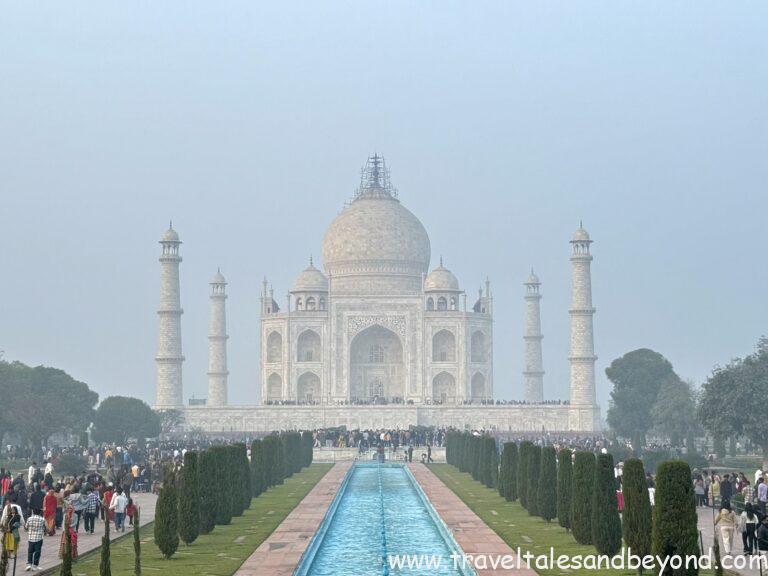
December is peak winter in the Gangetic plains. Temperatures hover between 5°C and 22°C (41°F–72°F), and mornings often bring dense fog that rolls in overnight and can linger until 10 or 11 AM. This is especially important for Taj Mahal visits.
The golden rule: visit the Taj Mahal in the afternoon in December. The fog lifts to reveal the marble dome in all its glory under soft winter light. Afternoon visits — roughly 2 PM onwards — also mean fewer crowds than the frantic morning rush, and the low winter sun casts a warm golden glow across the white marble that photographers dream about.
Save your foggy mornings for indoor-friendly starts: a leisurely breakfast, checking into your hotel, or visiting Agra Fort, where the red sandstone looks dramatic even in haze.
Ticket Prices for International Tourists
Note: Prices are subject to change — always verify at the official Archaeological Survey of India (ASI) website or at the gate before visiting.
| Monument | Indian Nationals | International Tourists | Extra (Main Tomb, Taj) |
|---|---|---|---|
| Taj Mahal | ₹50 | ₹1,300 (~USD 15) | ₹200 (~USD 2.50) |
| Agra Fort | ₹40 | ₹650 (~USD 8) | — |
| Fatehpur Sikri | ₹35 | ₹610 (~USD 7) | — |
Important: Entry to the Taj Mahal’s main mausoleum (the inner tomb chamber) requires a separate additional ticket bought on-site. The outer gardens are included in the base price. Carry your passport — international tourist tickets require ID verification.
All three sites are managed by the ASI and are open every day except Taj Mahal, which is closed on Fridays.
Hire a Guide — It Changes Everything
The three monuments in Agra are among the most historically layered sites in the world. Walking around them without context means missing the story entirely. A licensed guide transforms the experience.
Official guides are available at the entrance of each monument and can be pre-booked through your hotel or a reputable travel agency. Expect to pay around ₹800–₹1,500 for a 2–3 hour guided tour (negotiate beforehand and agree on a fixed price). Many guides speak excellent English and several other European languages.
What a good guide will tell you that you’d never read on a sign: the acoustic engineering inside the Taj’s dome, the optical illusions built into Agra Fort’s corridors, and why Fatehpur Sikri was mysteriously abandoned just 14 years after it was completed.
Afternoon: Taj Mahal (2:30 PM – Sunset)
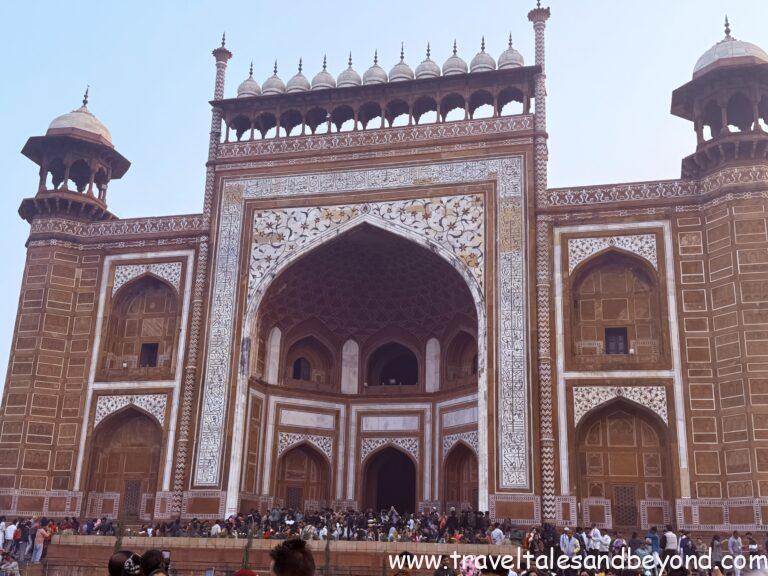
This is the moment. Walk through the Darwaza-i-Rauza — the great sandstone gateway — and let the Taj Mahal reveal itself in full. That first sight never loses its power, no matter how many photographs you’ve seen.
Built between 1632 and 1653 by Shah Jahan as a mausoleum for his beloved wife Mumtaz Mahal, the Taj Mahal is the finest example of Mughal architecture, blending Persian, Ottoman, Indian, and Islamic styles with a perfection that has never been matched.
Seeing the Taj Mahal by Moonlight
This is one of the most extraordinary — and least known — experiences available to visitors in Agra. On the night of the full moon, and for two nights on either side of it, the Archaeological Survey of India opens the Taj Mahal for moonlight viewing between 8:30 PM and 12:30 AM.
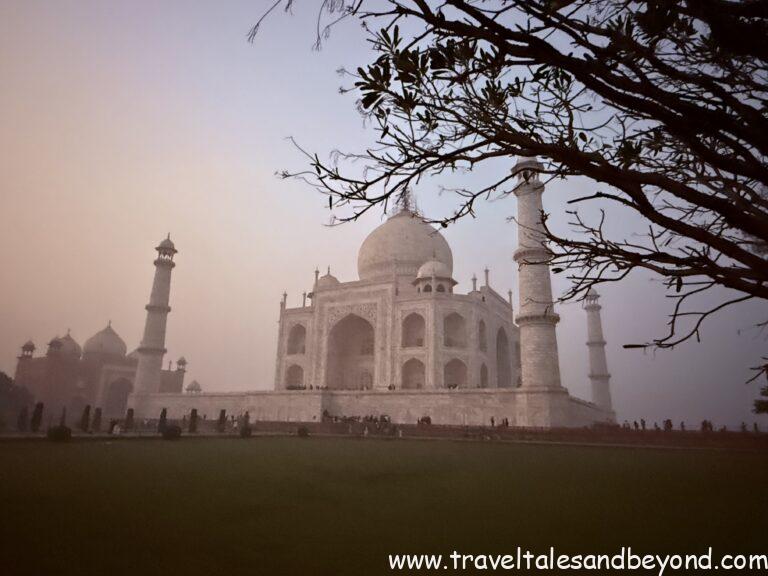
The Taj Mahal was designed with this in mind. The white Makrana marble contains tiny reflective crystals that respond to light — in bright sunshine it appears dazzling white, at dusk it turns gold and pink, and under a full moon it glows with a cool, almost luminous blue-white light. The Yamuna mist that rolls in on December nights adds a softening haze that makes the whole scene feel dreamlike, barely real.
The experience is deliberately limited: only 400 tickets are issued per night for moonlight viewing, divided across five batches of 50 people. Tickets must be booked in advance through the ASI office or authorised agents — they sell out quickly, especially in the peak winter months. The ticket price for international tourists is approximately ₹750 on top of the regular entry fee.
If your two-day visit happens to fall near a full moon in December — check the dates before you travel and plan around it. It is, by most accounts, the single most memorable way to see the Taj Mahal.
Note: Moonlight viewing is not available on Fridays (when the Taj is closed) or during Ramadan. Always confirm availability with your hotel or a local travel agent before making plans.
What to see and do:
- Walk the central reflecting pool axis slowly — the Taj appears to grow larger as you approach
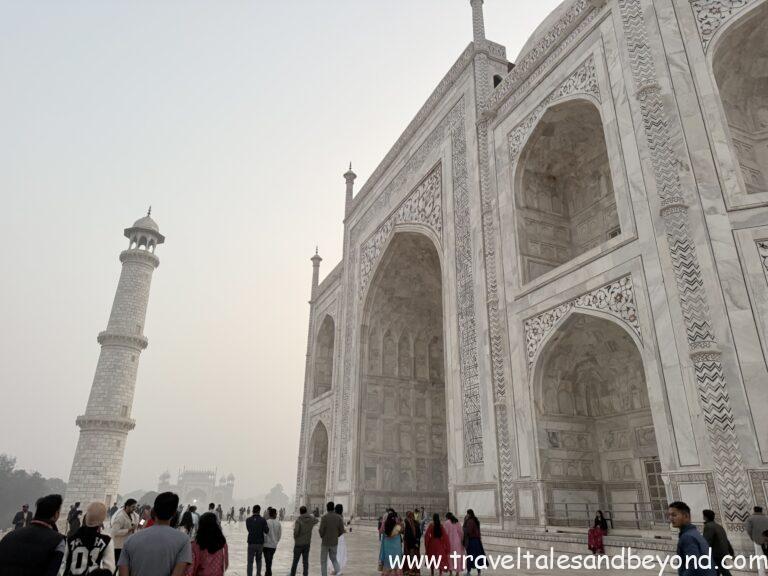
- Examine the pietra dura inlay work up close: thousands of semi-precious stones (lapis lazuli, carnelian, malachite, turquoise) set into white Makrana marble in floral and calligraphic patterns
- Enter the main mausoleum (extra ticket required) to see the cenotaphs of Mumtaz Mahal and Shah Jahan, surrounded by a delicate marble screen. The real graves lie in a chamber below
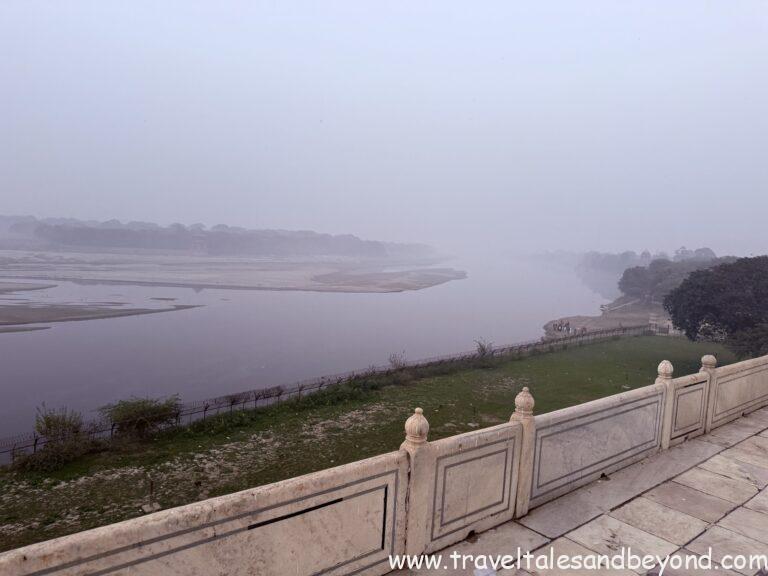
- Walk around to the back terrace for the Yamuna River view — far fewer tourists, and the afternoon light on the dome from this angle is extraordinary
- Visit the mosque on the western side (the identical building on the east is the Mehman Khana, a guesthouse built to maintain symmetry)
December afternoon light: The winter sun sits low in the sky by 3–4 PM, casting a golden amber light across the marble that turns the Taj from brilliant white to a warm, almost rose-tinted glow. By sunset (around 5:30 PM in December), the dome turns a deep orange-pink. Plan to stay until closing, which is 30 minutes before sunset.
Inside the Mausoleum — Shoe Covers
When you approach the main mausoleum, you will be asked to cover your footwear before stepping onto the white marble plinth. Shoe covers are available for purchase right at the entrance — they cost a few rupees and slip over your shoes easily. You can also simply remove your shoes and carry them, but the marble in December can be cold and the covers are a practical solution. Socks alone work fine if you prefer not to buy them.
Practical notes: No food, tobacco, or large bags are permitted inside. Photography is not allowed inside the mausoleum. The complex can be entered from the East, West, or South gates — the South Gate near Taj Ganj is most popular with tourists.
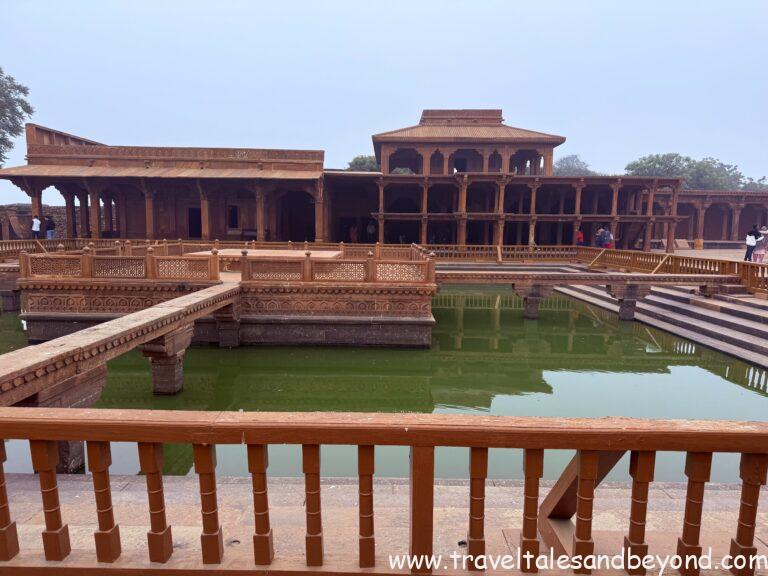
Day 2: Fatehpur Sikri in the morning
Fatehpur Sikri is a 40-kilometre drive from Agra (about an hour each way). Ask your taxi driver to take you in the morning so you arrive by 9–10 AM, when the light is good and it’s still relatively cool.
This is one of the most hauntingly beautiful — and most underrated — UNESCO World Heritage Sites in India. Emperor Akbar built this entire city between 1569 and 1585 as his new imperial capital, only to abandon it barely 14 years later. Historians debate why — water scarcity, military pressures, or Akbar’s wandering interests — but the result is a perfectly preserved Mughal ghost city, almost entirely intact.
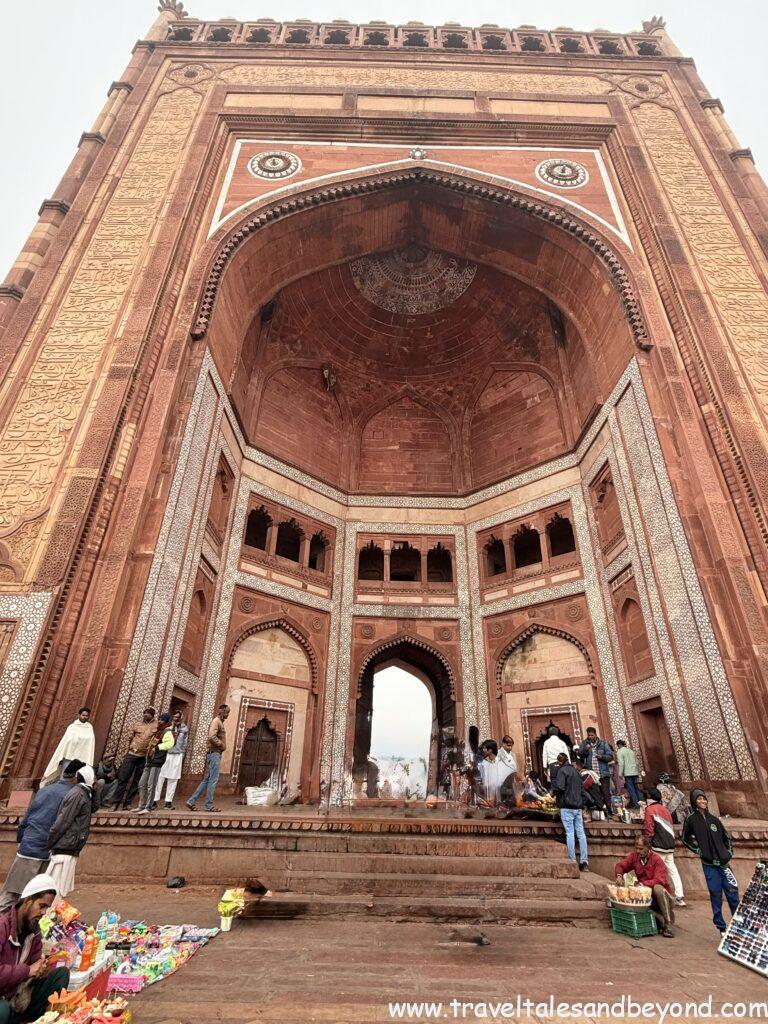
Buland Darwaza — The Gate of Magnificence
Do not walk past this gateway without stopping to absorb its scale. Built by Emperor Akbar in 1601 to commemorate his military victory over Gujarat, the Buland Darwaza stands 54 metres tall — one of the largest gateways ever constructed in the world. You approach it from below, climbing 42 steep steps, and the sheer mass of the red and buff sandstone above you grows more staggering with every step. At the top, turn around: the view across the plains of Uttar Pradesh stretching into the distance puts the ambition of Akbar’s empire into perspective.
The Persian and Quranic inscriptions carved into the arch are worth asking your guide to translate — they are unusually humble words for a victory monument, a reflection of Akbar’s complex and enquiring character.
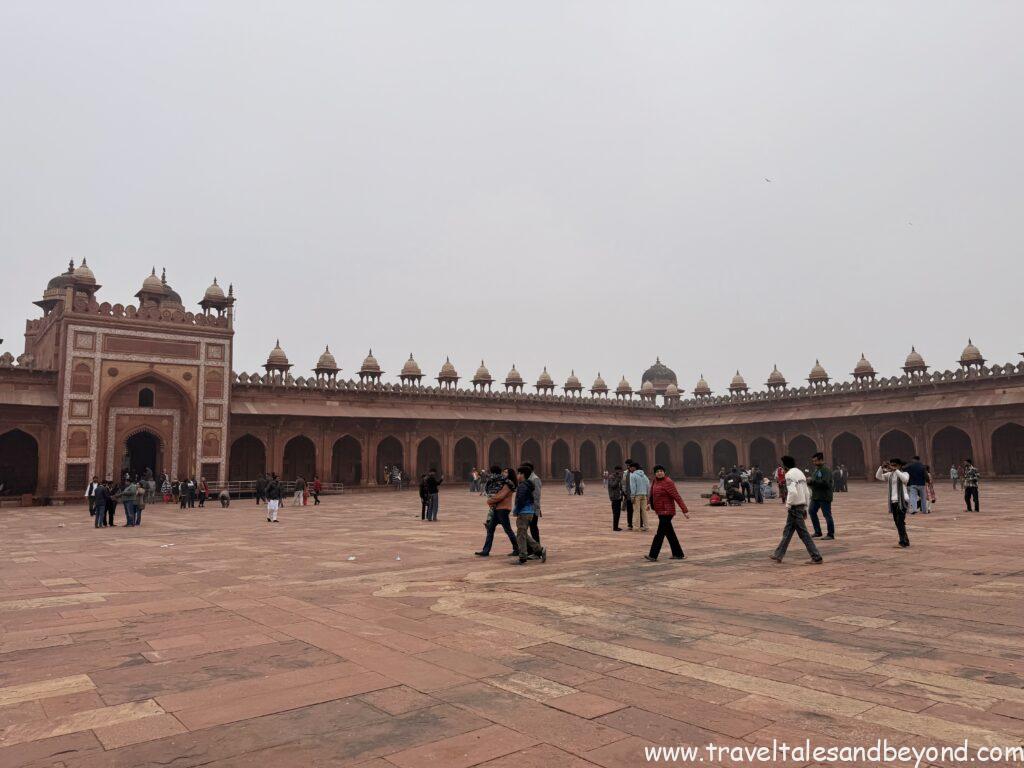
The Mosque and Sheikh Salim Chishti’s Tomb — What to Know Before You Enter
The Jama Masjid at Fatehpur Sikri is one of the finest mosques in India and is still an active place of worship. When you enter, remove your shoes. Shoe racks are provided at the entrance — leave your footwear there and walk across the courtyard in socks or bare feet. The marble can be cold in December mornings, so wearing socks is a good idea.
Inside the courtyard sits the dargah of Sheikh Salim Chishti, the Sufi saint whose blessing Akbar credited with the birth of his son and heir. The white marble shrine is breathtakingly delicate — a lattice of carved jali screens surrounds it on all sides, and the interior is draped in a canopy of mother-of-pearl.
Visitors traditionally tie a thread on the jali screen and make a wish, a practice observed by people of all faiths.
One important warning: As you approach the shrine, you will almost certainly be approached by men offering a piece of red or green cloth to drape over the tomb as an offering, presenting it as a religious requirement. Do not pay for this. It is not a religious obligation and is a well-known tourist scam in the area. Politely decline and walk past. The experience of the shrine itself — the craftsmanship, the atmosphere, the centuries of devotion embedded in the place — needs no paid accessory to be profound.
If you enjoy exploring grand mosques and Ottoman architecture, our 10 Days in Istanbul & Cappadocia guide covers a similar experience across Turkey’s most iconic sites.
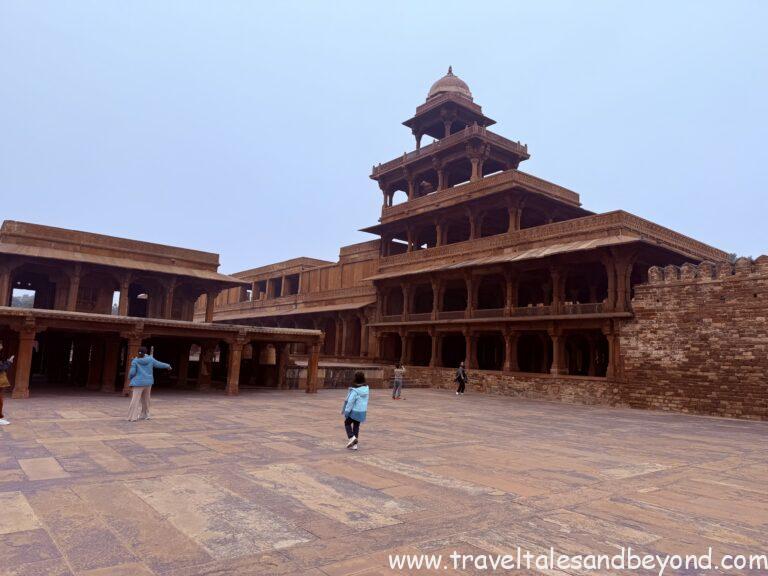
More Highlights at Fatehpur Sikri
- Panch Mahal — a five-storey open pavilion with 176 columns, each different, built for the royal ladies to observe the courtyard below.
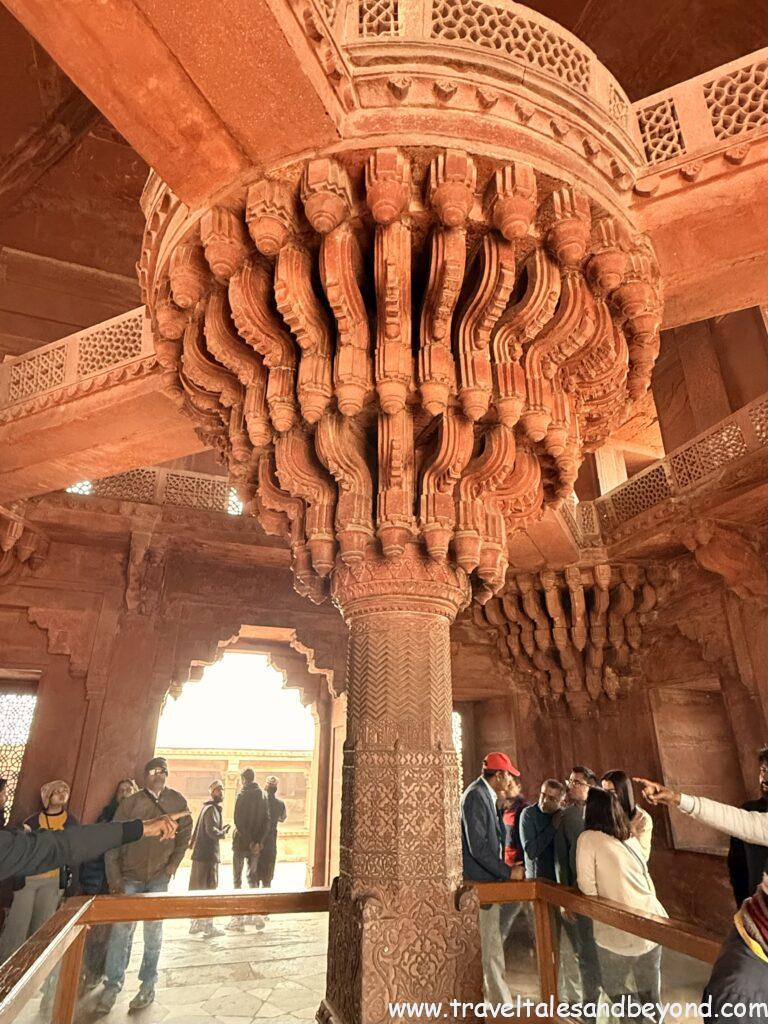
- Diwan-i-Khas — Akbar’s private audience hall with a remarkable single central pillar that fans out at the top to support a circular walkway — there is nothing quite like it architecturally
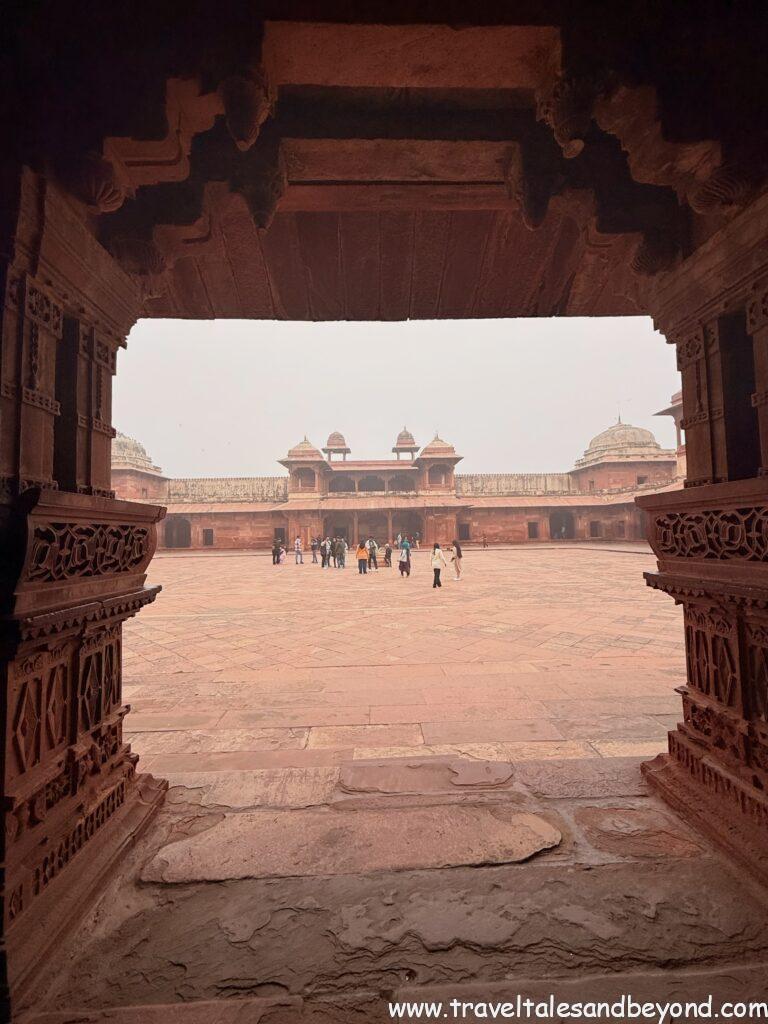
- Jodha Bai’s Palace — the largest residential structure, combining Hindu temple architecture with Mughal Islamic detailing in a way that reflects Akbar’s celebrated religious tolerance
Plan 2.5 to 3 hours here. A guide is especially valuable at Fatehpur Sikri — the stories behind each building are what make the place come alive.
Return to Agra for lunch and spend the afternoon at leisure — shopping in Sadar Bazaar for marble inlay crafts, leather goods, or carpets. The artisans of Agra have kept the pietra dura tradition alive for 400 years and their workshops are worth a visit.
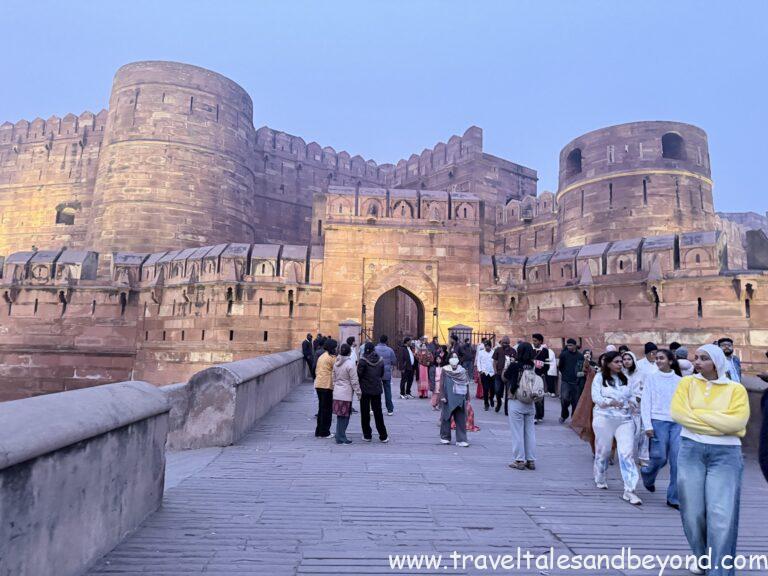
Day 2: Agra Fort in the afternoon,
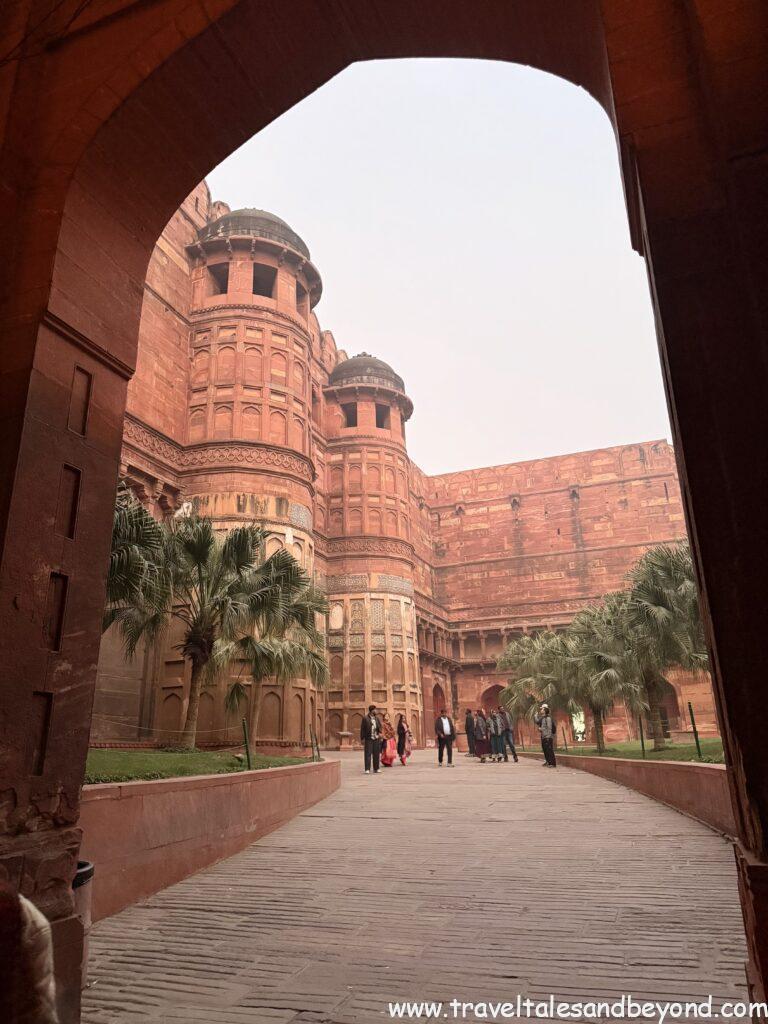
Agra Fort, a UNESCO World Heritage Site that served as the seat of Mughal power for generations. Built primarily by Emperor Akbar in 1565 and later embellished by Jahangir and Shah Jahan, the fort is a world in itself — part military stronghold, part imperial palace.
Give yourself at least 2.5 to 3 hours here and get a guide .
Don’t miss inside the fort:
- Diwan-i-Am (Hall of Public Audience) — where the emperor held court for ordinary citizens
- Diwan-i-Khas (Hall of Private Audience) — the exquisite white marble hall reserved for nobility and foreign dignitaries
Practical notes: The main entrance is through Amar Singh Gate (the Lahore Gate is closed to visitors). Wear comfortable shoes — the complex is large and the cobbled surfaces uneven in places. Washrooms are available inside.
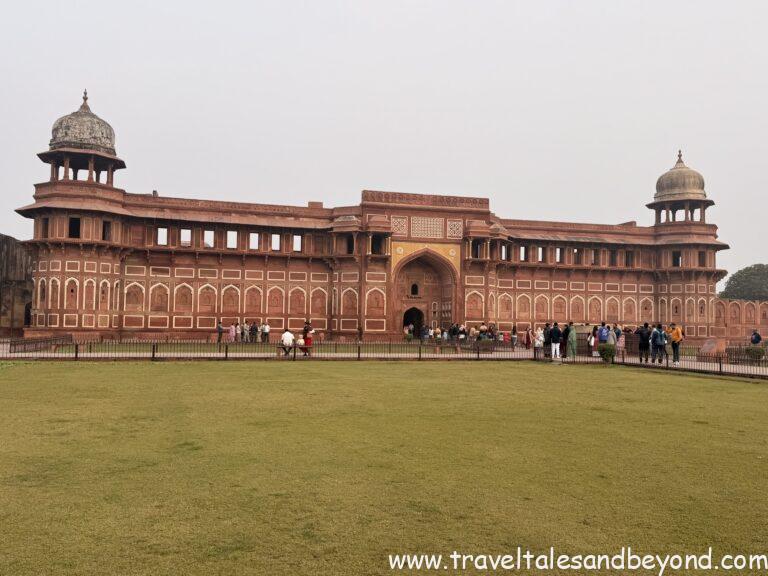
- Jahangir’s Palace — the largest residential structure in the fort, a fascinating blend of Hindu and Islamic architectural styles. The palace was built by Akbar for his Hindu wives.
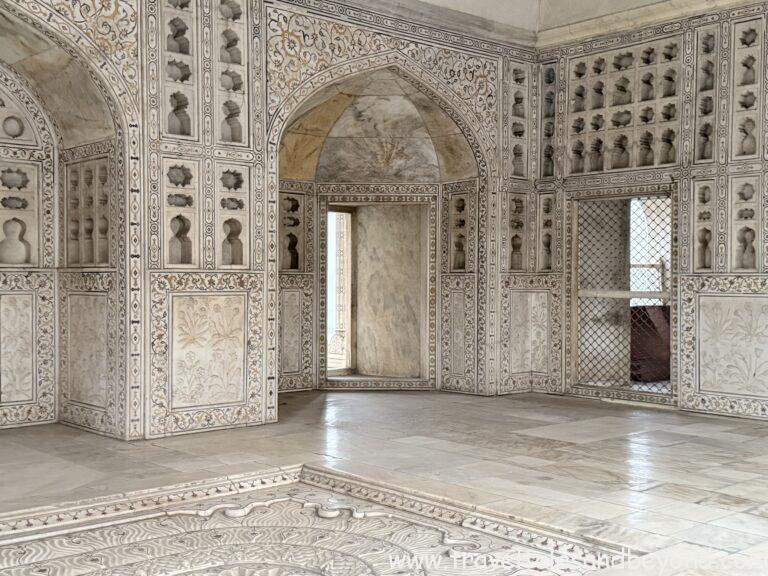
- Musamman Burj — the octagonal tower where Shah Jahan spent the last 8 years of his life imprisoned by his own son Aurangzeb. From here, on a clear day, you can see the Taj Mahal shimmering in the distance — the view Shah Jahan reportedly gazed at until his death
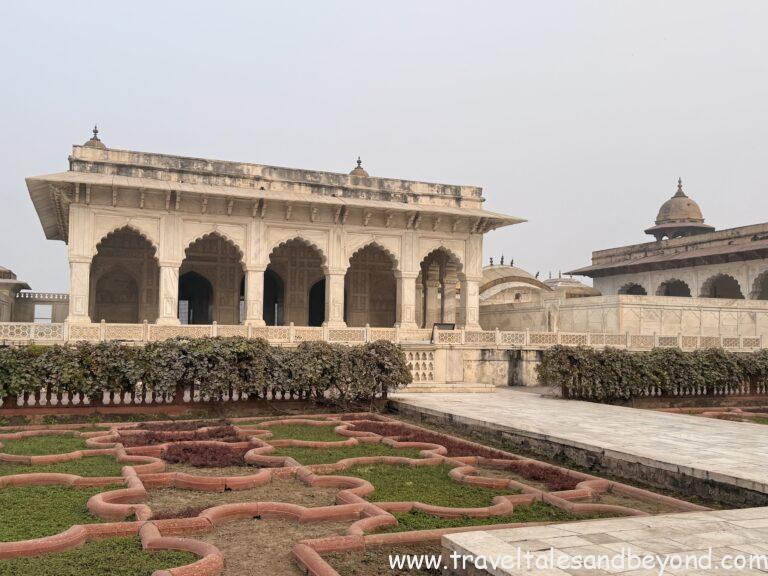
- Khas Mahal — the private royal apartments with delicate marble jali screens. It was built by Emperor Shah Jahan around 1631 and was the residence of the princesses
Where to Stay: Hotels Near the Taj Mahal
The best area to base yourself is Taj Ganj, the neighbourhood that wraps around the south and east gates of the Taj Mahal. Staying here means no long commute in the morning, easy access to rooftop restaurants with Taj views, and a quieter, more atmospheric corner of Agra than the busy city centre.
The area immediately surrounding the Taj Mahal is a restricted vehicle zone — no petrol or diesel vehicles are allowed within 500 metres of the monument. You’ll arrive by e-rickshaw, golf cart (if your hotel offers it), or on foot. This is actually a blessing: the streets around Taj Ganj are quieter, cleaner, and far more pleasant than the rest of Agra.
Luxury: The Oberoi Amarvilas
For international travellers who want the definitive Agra experience, there is simply no equal. Located just 600 metres from the Taj Mahal, The Oberoi Amarvilas draws inspiration from traditional Mughal palace architecture, featuring terraced lawns, reflection pools, fountains and elegant pavilions. Every single room in the hotel offers an unobstructed view of the Taj Mahal. Guests are transported to and from the Taj by golf cart — a five-minute ride.
In December, waking up to the Taj Mahal framed in winter mist from your room window is an experience worth every rupee. Book well in advance — this is one of the most sought-after hotel rooms in India.
Upper Mid-Range: ITC Mughal & Trident Agra
ITC Mughal, A Luxury Collection Resort & Spa sits on Fatehabad Road, about 1.5 kilometres from the Taj. A 5-star property with expansive Mughal garden grounds, yoga and steam rooms, tennis courts, and a spa. Slightly more affordable than the Oberoi, and a strong option if gardens and facilities matter more to you than direct Taj views.
Trident Agra, around 1.5 kilometres from the monument, features an outdoor pool, restaurant, bar, and some rooms with garden views. A reliable, well-run property at a notch below the top luxury tier.
Mid-Range: Courtyard by Marriott & Grand Mercure Agra
Both are solid international-brand options for travellers who want familiar comforts and consistent service. Grand Mercure Agra is located in the Taj Ganj district with rooms featuring flat-screen TVs and safety deposit boxes. The Courtyard Marriott offers an outdoor swimming pool, fitness centre, spa, and multiple dining options.
Budget: Taj Ganj Guesthouses
The lanes around the West Gate and East Gate of the Taj Mahal are lined with small family-run guesthouses, many with rooftop terraces offering direct Taj views — at a fraction of the cost. Hotel Sheela is located just 100 metres from the Taj Mahal with free Wi-Fi. Hotel Sidhartha is a short walk from the Taj Mahal Garden, with a restaurant and room service. For backpackers and solo travellers, Taj Street Hostel on East Gate Road has spacious rooms with western en-suites and a daily sunset walk at 5:30 PM.
Prices vary significantly by season — December is peak tourist season in Agra, so book at least 6–8 weeks in advance, especially for the Oberoi.
If You Have Extra Days: Beyond the Golden Triangle
With one or two more days, Agra opens up considerably.
Itimad-ud-Daulah (Baby Taj)
Often called the Baby Taj, this smaller mausoleum across the Yamuna River was built by Nur Jahan for her father. It predates the Taj Mahal by 22 years and is considered the first Mughal structure built entirely in white marble with pietra dura inlay — essentially the prototype that inspired the Taj. Far fewer tourists, and the inlay work here is arguably more delicate. Half a day, a short auto-rickshaw ride from the city.
Mehtab Bagh (Moonlight Garden)
Directly across the Yamuna from the Taj Mahal, this Mughal garden offers the best unobstructed rear view of the Taj — and at sunset, the reflection in the river is extraordinary. Archaeological evidence suggests Shah Jahan planned to build a black marble Taj here as his own mausoleum, though the project never materialised. An easy hour’s detour.
Sikandra (Akbar’s Tomb)
Located 10 kilometres northwest of Agra, Akbar’s mausoleum at Sikandra is a fascinating architectural experiment — Akbar designed it himself, blending Buddhist, Hindu, Islamic, and Christian motifs in a single structure. A large garden complex with resident deer and monkeys adds to its charm. Half a day.
Mathura and Vrindavan (Day Trip)
For a complete change of pace, the twin holy cities of Mathura (birthplace of Lord Krishna) and Vrindavan are about 60 kilometres north of Agra on the Yamuna Expressway. Among Hinduism’s most sacred sites, the ancient ghats and hundreds of ornate temples offer a vivid contrast to the Mughal monuments. In December, the winter festival season is in full swing. Full day trip.
Practical Information for International Tourists
Currency: Indian Rupees (INR). ATMs are widely available in Agra city. Card payments accepted at most hotels and larger restaurants, but carry cash for entry tickets, guides, rickshaws, and markets.
Getting around Agra: Your taxi driver can stay for the day (negotiate a full-day rate — typically ₹2,000–₹3,000 within the city). Auto-rickshaws and e-rickshaws are plentiful for shorter hops.
Photography: Permitted freely at all three monuments in outdoor areas. Tripods require special permission. No photography inside the Taj mausoleum chamber.
Dress code: Modest clothing is respectful and practically wise for December. Cover shoulders and knees at the mosque at Fatehpur Sikri. Remove shoes before entering the mosque — bring socks for the cold marble floors.
Water and health: Drink only bottled water. Avoid raw salads and unpeeled fruit from street stalls if you have a sensitive stomach.
Best time of day: Taj Mahal in the afternoon, everything else in the morning.
Language: Hindi is the local language, but English is widely spoken by guides, hotel staff, and most tourist-facing businesses throughout Agra.
Frequently Asked Questions:
1. Is the Taj Mahal open in December? Yes — the Taj Mahal is open every day except Fridays.
December is actually one of the best months to visit, with cool temperatures and beautiful winter light.
2. How much is the Taj Mahal ticket for international tourists?
The entry fee for international visitors is ₹1,300 (~USD 15). An additional ₹200 ticket is required to enter the main mausoleum. Carry your passport for ID verification.
3. What is the best time of day to visit the Taj Mahal in December?
Afternoon, from around 2 PM onwards. December mornings are often foggy, and the low winter sun in the afternoon casts a warm golden light across the marble that is truly stunning.
4. Can you visit the Taj Mahal by moonlight?
Yes — on the night of the full moon and two nights on either side, the ASI opens the Taj Mahal for moonlight viewing between 8:30 PM and 12:30 AM. Only 400 tickets are issued per night, so book well in advance.
5. How do you get from Delhi to Agra?
The most comfortable option for international visitors is a hired taxi along the Yamuna Expressway — approximately 5–6 hours each way. Pre-book through your hotel or platforms like MakeMyTrip for a guaranteed pickup.
6. Is Fatehpur Sikri worth visiting from Agra?
Absolutely. Just 40 kilometres from Agra, Fatehpur Sikri is a perfectly preserved Mughal ghost city and one of India's most underrated UNESCO World Heritage Sites. Allow 2.5 to 3 hours and hire a guide — the history behind each building is what makes it extraordinary.
A Final Thought
Agra in December is cold, occasionally foggy, and endlessly rewarding. The Taj Mahal has been described more times than almost any building on earth — yet the moment you walk through that gateway and see the white dome floating above the gardens, every description falls short. And if fortune places you there on a full moon night, standing before it as the marble glows silver-white in the mist, you will understand why it has moved travellers to silence for four centuries.
Give yourself time to simply stand still. Let the fog clear. Watch the afternoon light change the marble minute by minute.
That is what this journey is for.
If you loved reading this post, here are some other posts
- Spain – Barcelona, Valencia, Seville, Madrid
- Prague – A 2-day escape to Bohemian beauty
- Gibraltar – A day trip from Spain
- Belgium – Brussels, Bruges, Ghent, Dinant
- Netherlands – Amsterdam – Canals, Dykes, Zaanse Schans, Giethoorn & the Johan Cruyff Arena
- Germany – Berlin, Dresden, Nuremberg
- Tanzania – A 7-day trip to African safari
- Chile – A week long trip to breathtaking Patagonia
- Turkey – A 10-day trip to Istanbul and Cappadocia region
- Costa Rica – A 10-day trip to the Central American paradise
- Australia – A 2-week itinerary

Shaminee is a U.S.-based mom and family travel blogger who designs detailed itineraries for her own family and turns them into practical guides for others. Her goal is to make family travel simpler, more organized, and more enjoyable.
Read more →
Discover more from Travel Tales And Beyond
Subscribe to get the latest posts sent to your email.