Sun, sea, shipwrecks, and a few surprises — here’s what five days on One Happy Island actually looks like.
Planning 5 days in Aruba? You’ve chosen one of the most reliably beautiful islands in the entire Caribbean — and as a family that has island-hopped across the Caribbean from Turks and Caicos to the Bahamas, we can say that honestly and without hesitation.
What makes Aruba different from every other Caribbean destination is simple: the weather. Aruba sits completely outside the hurricane belt, which means 365 days of sunshine, consistent trade winds, and calm turquoise water virtually guaranteed no matter when you visit. For families planning a Caribbean vacation, that reliability is everything.
We traveled in November 2025 with our family — staying at an all-inclusive Barcelo Aruba resort on Palm Beach — and spent five days exploring beaches, shipwrecks, street art, national parks and hidden corners of the island that most visitors never find. This Aruba travel guide covers everything from our firsthand experience, including honest tips on costs, what’s worth it and what isn’t, and exactly how to spend 5 days in Aruba as a family.
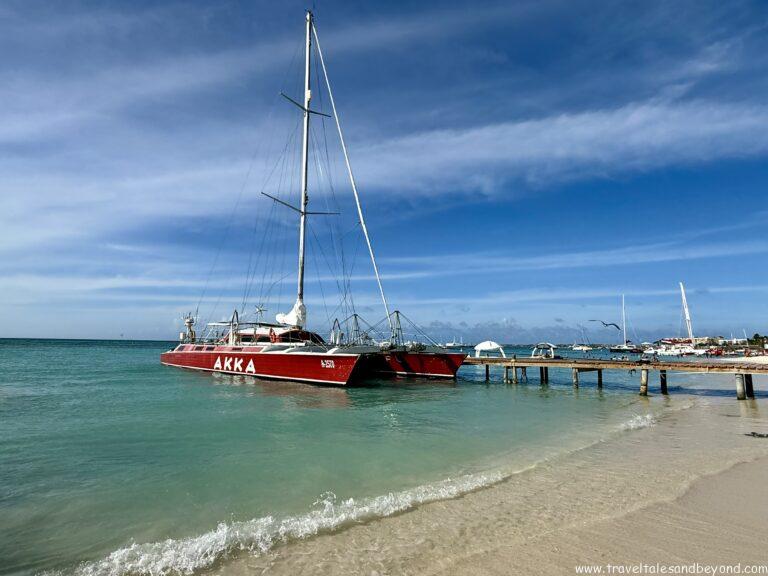
Days 1 & 2: Arriving in Aruba & Palm Beach
We landed at Queen Beatrix International Airport mid-afternoon, grabbed our bags, and within forty minutes we were standing on Palm Beach with our feet in the sand. That’s one of Aruba’s great gifts — the transition from airport chaos to Caribbean calm happens remarkably fast.
We based ourselves at an all-inclusive resort right on Palm Beach — and for a trip built around beach time and water activities, the location was perfect. Palm Beach is Aruba’s main resort strip — a long, calm, sheltered stretch of white sand where the water is gentle enough for the whole family and clear enough that you can see your feet in chest-deep water. For families traveling with kids, the calm sheltered water here is genuinely ideal.
The first day we kept things deliberately easy. After long flights, our family needed to decompress — so we did exactly what Palm Beach is made for.
- Long slow walks along the shoreline
- Swimming in that impossibly clear turquoise water
- Watching the sun go down with cold drinks in hand
By day two we were ready to move. We tried jet skiing — racing across that bright blue water with the wind in our faces — and the banana boat, which descended into absolute chaos and laughter within about thirty seconds. We almost fell off twice. Our son thought it was the greatest thing that had ever happened to him.
The rest of the time we simply soaked up the slow island rhythm that Aruba does so effortlessly. No rushing, no itinerary, no agenda. Just the kind of unhurried beach days that remind you why you travel in the first place.
Palm Beach Tips:
- Water is calm and shallow — perfect for young kids and nervous swimmers
- Morning hours before 10am are quietest on the beach
- Book water activities like jet skiing and banana boat directly on the beach — no need to pre-book
- Sunrise walks are magical and completely crowd-free
- There are lot of restaurants right outside the hotel too.
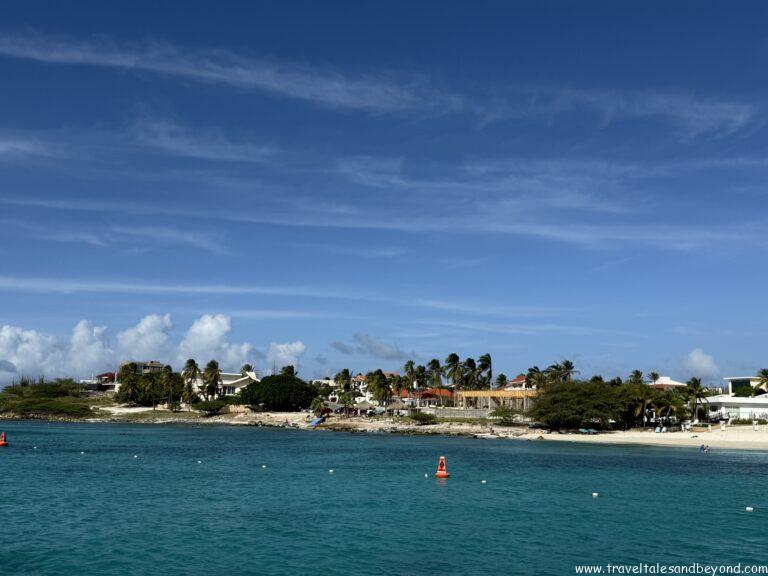
Day 3: Snorkeling & Scuba — Aruba Underwater
Day three was our underwater day, and easily one of the highlights of the trip.
My son and I went snorkeling while my husband, a certified diver, joined a guided dive separately.
We’ve snorkeled plenty of times before, but Aruba’s water quality is genuinely something else. The visibility was outstanding — you could see everything clearly in about ten feet of calm, sheltered water.
My husband headed to the Antilla Shipwreck — a 400-foot German freighter scuttled in 1940, now resting on the seafloor and completely covered in coral and marine life. It’s considered one of the best wreck dives in the Caribbean.
Water Adventure Tips
- Book snorkel and dive trips through Barceló’s concierge or a certified PADI operator on Palm Beach
- Morning trips offer better visibility before afternoon trade winds pick up
- The Antilla Shipwreck is the top dive site — prioritize it if you only do one dive
- Always use reef-safe, mineral-based sunscreen to protect Aruba’s coral ecosystems
- Sea turtle sightings are common — never chase or touch them
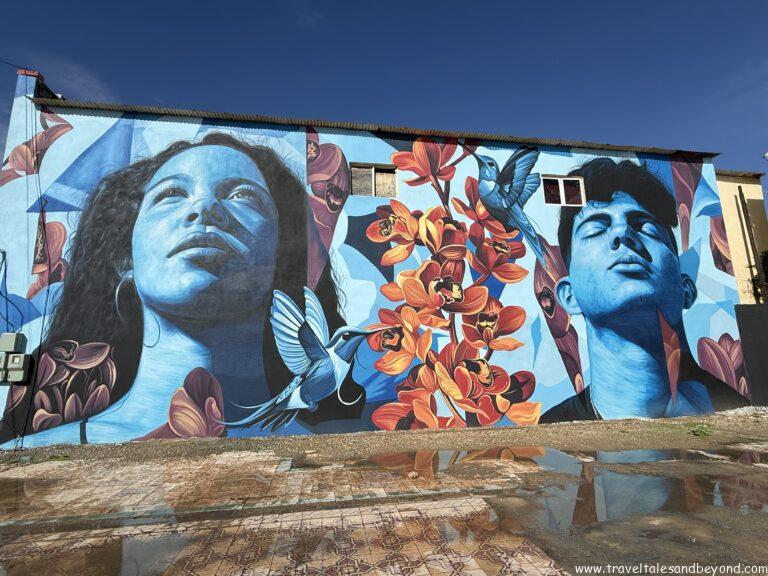
Day 4: San Nicolas, Arikok National Park & the Baby Pool Reality Check
We had a booked a Jeep tour that would take us to San Nicolas, Arikok National Park and Baby Pool.
San Nicolas — The Caribbean’s Street Art Capital
On our way to Arikok National Park, we passed through San Nicolas — Aruba’s second city and, as Forbes has dubbed it, the Caribbean’s Street Art Capital. What was once a quiet town that lost its energy when the oil refinery closed has been completely transformed by the Aruba Art Fair, which brings local and international artists together to paint large-scale murals across the city’s buildings. There are 82 murals in total, and even just driving through gives you a vivid taste of how extraordinary the collection is.
Large-scale murals covered building after building — local scenes, indigenous imagery, carnival figures, bursts of Caribbean color that felt completely at home against the blue sky. It was one of those unplanned stops that lodges itself in memory more firmly than anything on the itinerary. San Nicolas also pairs naturally with Baby Beach nearby, which made it a perfect waypoint on our Arikok day. Don’t just drive through — get out and walk a block or two.
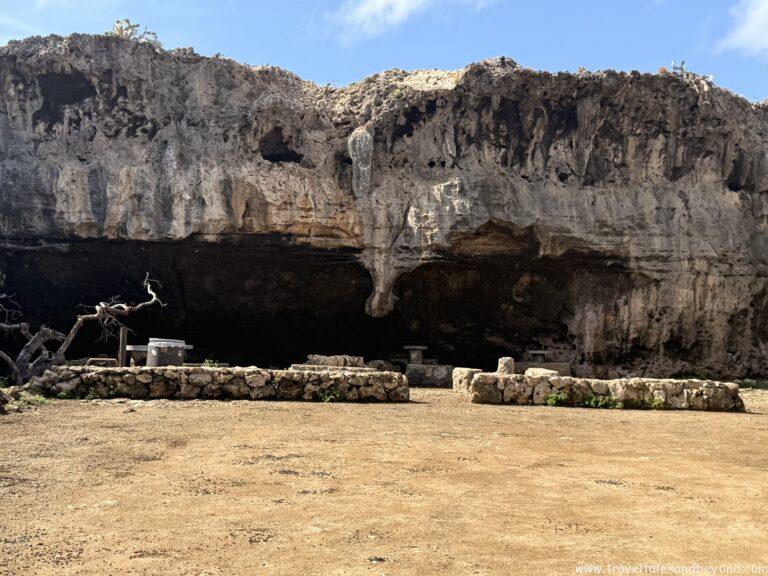
Arikok National Park
Our jeep tour through Arikok National Park felt like stepping into a completely different side of Aruba.The scenery turned dry, rugged, and a little wild—nothing like the polished Palm Beach strip. You’ve got tall kadushi cacti everywhere, dramatic volcanic rocks, and those iconic divi-divi trees all leaning in the same direction thanks to the constant trade winds.
We bounced our way through the park on a guided jeep tour, which made the whole experience even more fun. Along the way, our guide pointed out shocos (Aruba’s tiny burrowing owls), lizards darting across the rocks, and a bunch of formations with names that go way back. One of the stops was Fontein Cave, a small cave that has ancient Arawak drawings on the walls.
The highlight, though, was definitely Natural Pool (Conchi). It’s this natural pool carved into volcanic rock on the rough northeastern coast, with waves from the Atlantic crashing right outside. It feels remote, a little dramatic, and totally worth the bumpy ride to get there.
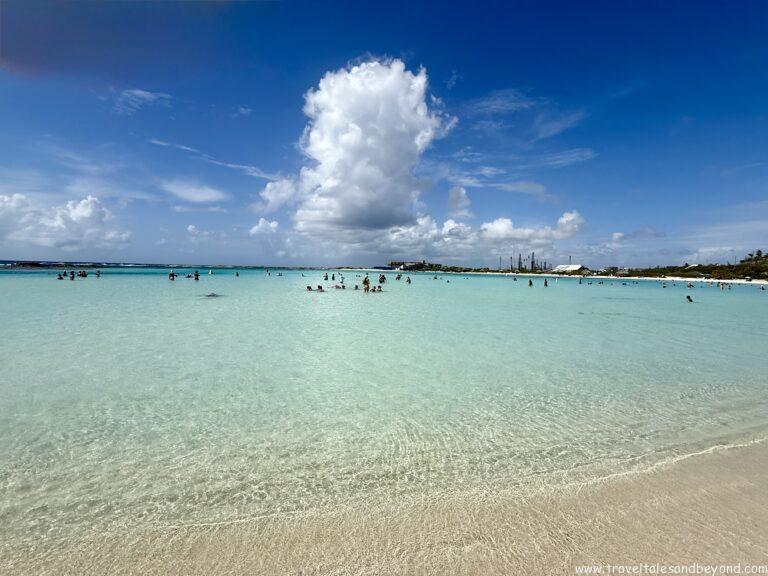
The Baby Beach
After the jeep tour, we headed to Baby Beach—often called the Baby Pool—and it’s easy to see why people love it. The water here is shallow, calm, and almost lagoon-like, making it perfect for just floating around and unwinding after a dusty day in the national park. It’s especially great for families or anyone who just wants a relaxed, no-waves kind of swim. You can also snorkel right where the lagoon meets the ocean—it’s full of colorful fish.
Let’s be honest: the prices being asked for a couple of beach chairs at this spot were, frankly, insane. We’re not going to pretend otherwise. It’s one of those Caribbean tourist-trap moments where you’re asked to pay a jaw-dropping amount to sit down near the water. Whether you negotiate, bring your own gear, or just plant yourself in the water to make a point — go in knowing that beach areas outside your resort operate on a very different pricing logic.
Arikok & San Nicolas Tips:
- Join a guided jeep, ATV, or UTV tour for Arikok — the roads require 4WD and a guide adds enormous value
- Wear closed-toe shoes for the Natural Pool hike; the volcanic rock is sharp
- Bring a hat, sunglasses, and at least two liters of water — shade is scarce in the park
- In San Nicolas, get out of the car and walk — the best murals are on side streets
- Bring your own beach chairs or towels to Baby Pool area to avoid the overpriced vendors.
Day 5: Oranjestad & Eagle Beach
Oranjestad
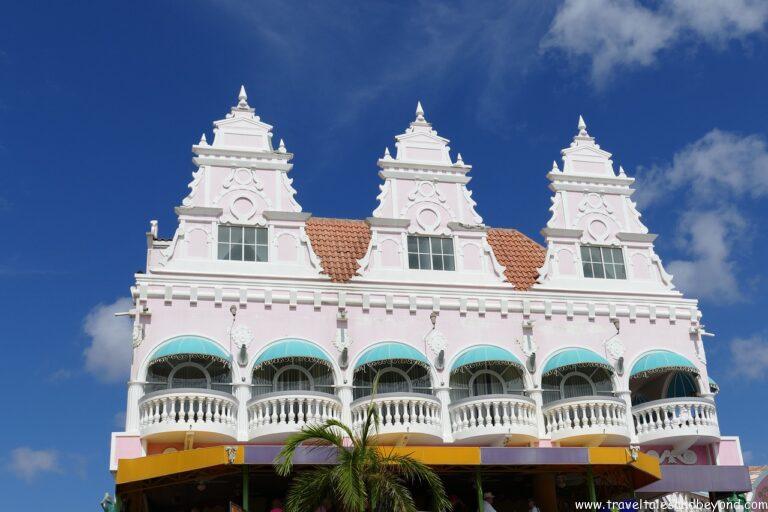
We took a taxi to Oranjestad in the late afternoon—just about fifteen minutes from our Hotel Barceló—and spent our time wandering without any real plan.The capital is charming, with colorful Dutch colonial buildings in shades of yellow, blue, and terracotta lining the streets along the harbor. It’s compact enough that you can explore a lot on foot without much effort.
Eagle Beach
On the way back we stopped at Eagle Beach, and if Palm Beach is Aruba’s most famous beach, Eagle Beach is its finest. Wider, quieter, and almost entirely undeveloped behind it, the sand here is whiter and the water even clearer. We didn’t swim — just walked the length of it slowly, letting the late afternoon light do what Caribbean light does best.
It’s the kind of beach that makes you stop mid-sentence because the view interrupts the thought. We stayed until the colors changed, then headed back to Barceló for a last dinner and a sunset we didn’t photograph — just watched.
Travel Tips: What to know before you go.
Getting There & Around
- Aruba’s Queen Beatrix International Airport is well connected from the US, Canada, and Europe — flights from the US East Coast are typically around 4–5 hours
- Taxis are plentiful, safe, and metered. Palm Beach to Oranjestad is about 10 minutes and very affordable
- Rent a car or book a jeep tour for Arikok — public transport doesn’t reach the national park
- Most of Aruba is navigable without a car if you’re staying on the Palm Beach strip
Best Time to Visit Aruba
- November is an excellent choice — lighter crowds, still reliably sunny, and slightly better rates than peak season
- Aruba sits outside the hurricane belt, so there’s no bad month weather-wise
- Peak season runs December through April — book well in advance if traveling then
Money & Costs
- Aruba uses the Aruban Florin but US dollars are accepted virtually everywhere
- Be prepared: Aruba is one of the more expensive Caribbean destinations
- The all-inclusive format genuinely helps — you’ll be grateful for it every time you order a cocktail without thinking twice.
Water Activities
- Book snorkeling and scuba trips in the morning for the best visibility
- The Antilla Shipwreck is the single best dive site on the island — don’t miss it
- Reef-safe, mineral-based sunscreen is a must — it’s better for the coral and better for your skin
- No scuba certification? No problem — Discover Scuba sessions are available for complete beginners
Exploring Beyond the Beach
- San Nicolas is worth at least a couple of hours — walk the side streets, not just the main road, for the best murals
- Arikok National Park requires a half day minimum — book a guided jeep or UTV tour
- Oranjestad is best in the late afternoon into evening when the light hits the colored facades beautifully
- Eagle Beach is quieter and more beautiful than Palm Beach — make time for at least one visit
How Much Does 5 Days in Aruba Cost?
Aruba is one of the more expensive Caribbean islands — we won’t sugarcoat that. But with the right planning, especially an all-inclusive resort, the costs become much more predictable and manageable. Here’s exactly what we spent: Accommodation| Hotel | Approximate Cost |
|---|---|
| Barceló Aruba all-inclusive (5 nights) | ~$400–600/night |
| Total for 5 nights | ~$2,000–3,000 |
| Activity | Approximate Cost |
|---|---|
| Guided Jeep tour (Arikok + San Nicolas + Baby Beach) | ~$80–120/person |
| Snorkeling trip (half day) | ~$50–75/person |
| Antilla Shipwreck dive (certified divers) | ~$80–100/person |
| Discover Scuba session (beginners) | ~$100–150/person |
| Taxi to Oranjestad (one way) | ~$15–30 |
| Travelers | Estimated total (excluding flights) |
|---|---|
| Couple (2) | $3,000–4,500 |
| Family of 4 | $5,000–7,000 |
| Family of 6 | $7,000–10,000 |
Recent posts
- Spain – Barcelona, Valencia, Seville, Madrid
- Tanzania – A 7-day trip to African safari
- Prague – A 2 day escape to Bohemian beauty
- Gibraltar – A day trip from Spain
- Australia – A 2 week itinerary
- Turkey – A 10 day trip to Istanbul and Cappadocia region
- Costa Rica – A 10 day trip to the Central American paradise
- Germany – Berlin, Dresden, Nuremberg
- Portugal – A week long trip to Lisbon, Porto, Nazare, Duoro valley
- Belgium – Brussels, Bruges, Ghent, Dinant
- Luxembourg – A guided half day tour from Brussels
If you loved reading this post, please check out my other posts here.
Over to you
Which is your favourite Caribbean destination and why? Drop it in the comments below — we’d love to hear where you’ve been and what made it special!